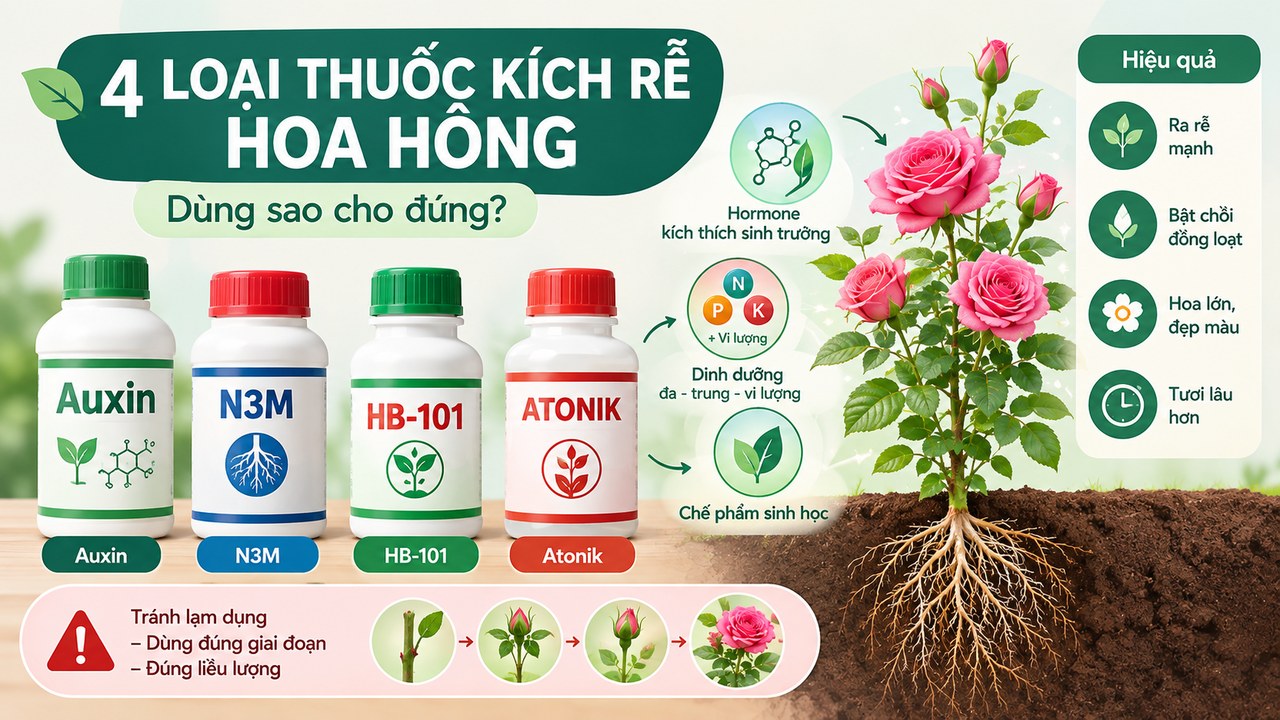
When growing potted roses, understanding the exact difference between plant hormones, organic biostimulants, vitamin coenzymes, and mineral rooting fertilizers separates a rose bush bursting with crimson shoots from one suffering root burn, chemical shock, and dieback.
This comprehensive handbook breaks down the 6 most widely used root stimulators and growth regulators for roses (HB-101, N3M, Atonik, Vitamin B1, Auxin, and Cytokinin), complete with a side-by-side biochemical comparison, exact dosage conversions scaled for a single 20-liter potted rose, a stage-by-stage care protocol, and the 5 fatal mistakes every grower must avoid.
1. Biochemical Profiles of the 6 Core Stimulators & Regulators
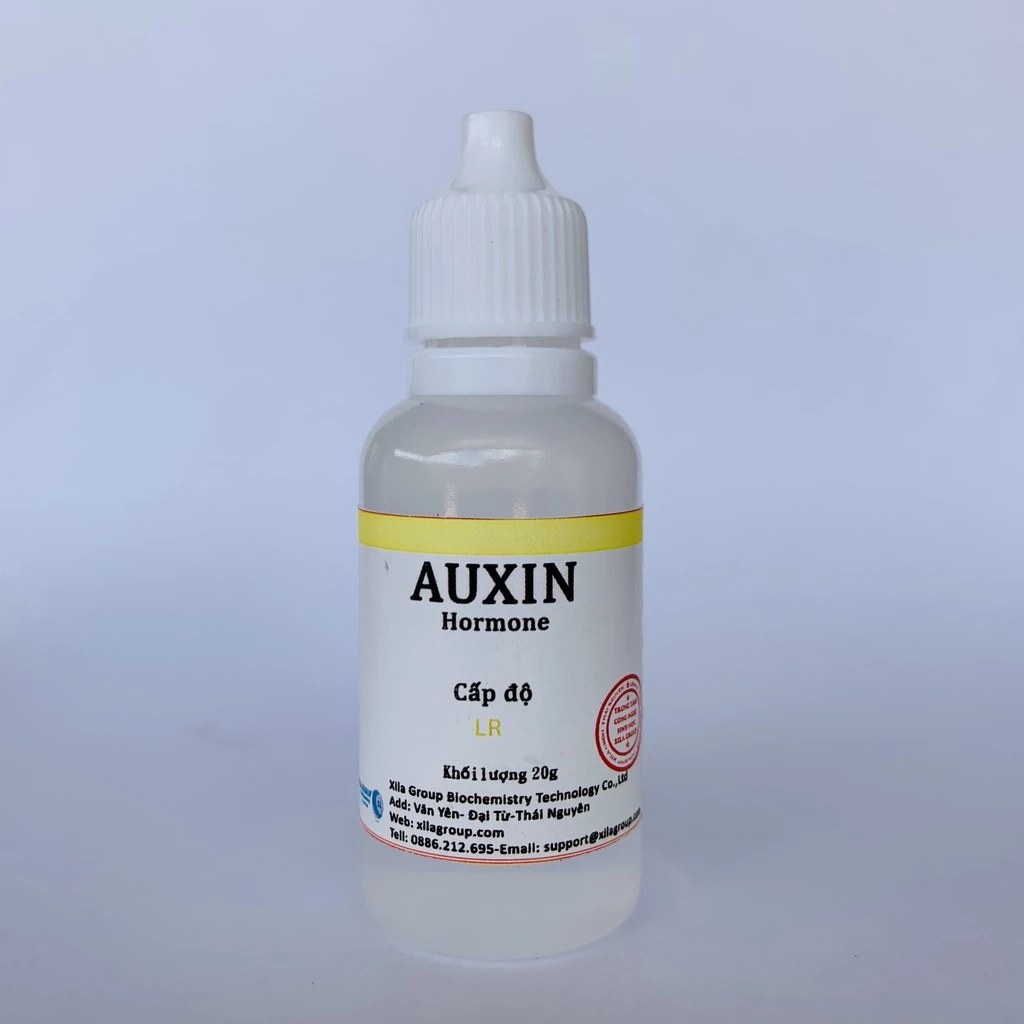
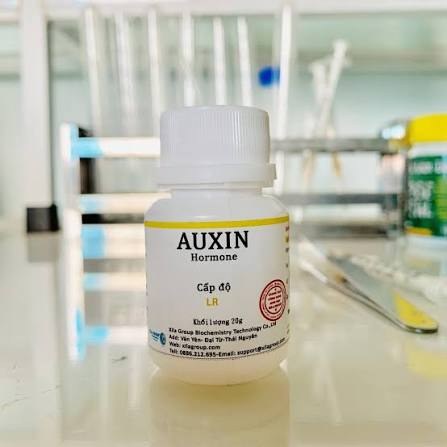
1.1. Auxin (NAA, IBA, K-IAA, IBA-K) — Root Initiation & Stem Elongation Hormones
Auxins are natural or synthetic phytohormones that control cell division, cell elongation, adventitious root initiation, and apical dominance. On roses, each derivative plays a distinct role:
- K-IAA: Structurally closest to natural Auxin; gentle and exceptionally safe for weakened roses recovering from waterlogging, yellowing, or chemical shock. Highly photolabile (breaks down quickly in direct sunlight).
- IBA-K: Stronger and more stable than K-IAA; the go-to choice for cutting propagation, air-layering, and root embryo induction.
- NAA: Applied as a foliar spray at 25 ppm, NAA elongates flowering stems (> 27 cm), enlarges flower buds, and extends bloom longevity on the bush by more than 6 days.
1.2. Cytokinin (6-BA / Benzylaminopurine) — Bud-Break & Basal Shoot Hormone
Cytokinin (6-BA) is an adenine-type phytohormone that suppresses the dormancy gene RhBRC1, releasing apical dominance to trigger lateral bud break and vigorous basal shoots.
Beyond accelerating cell division, Cytokinin creates a strong nutrient sink toward emerging shoots and inhibits chlorophyll-degrading enzymes, keeping foliage deeply green and glossy. Paired with NAA at 25 ppm, 6-BA boosts leaf chlorophyll index (SPAD > 50), stretches flower stems, and prolongs bloom retention.
1.3. Vitamin B1 (Thiamine / Thiamine-HCl) — Energy Coenzyme & Immune Primer
Vitamin B1 is not a tissue-reprogramming hormone; rather, it is a biological coenzyme (precursor to Thiamine Pyrophosphate — TPP) linking glycolysis to the Krebs cycle to convert sugars into usable energy (ATP) for tender shoots, preventing blind shoots.
On roses, Thiamine delivers two high-value benefits:
- Stimulates meristematic cell division at root tips, multiplying fibrous feeder roots and root hairs.
- Activates Systemic Acquired Resistance (SAR) via the Salicylic Acid pathway and the NPR1 gene through "Priming," boosting natural defense against black spot and powdery mildew for up to 15 days.
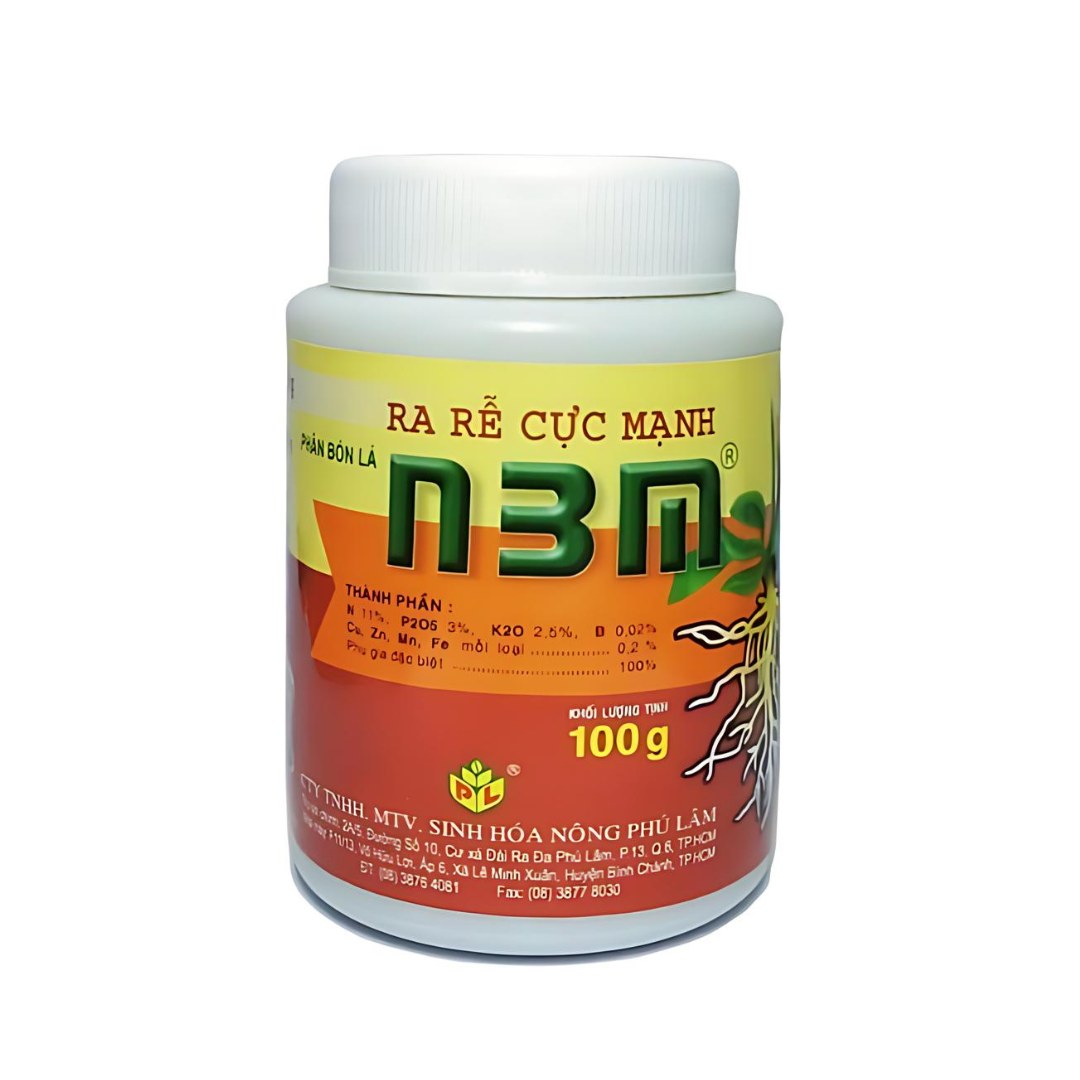
1.4. N3M — Concentrated Micronutrient Rooting Fertilizer
Many growers mistake N3M for a pure hormone. In reality, it is a concentrated chemical micronutrient fertilizer containing:
- Base NPK: 11% Nitrogen (N), 3% Phosphorus (), 2.5% Potassium ().
- Micronutrients & Vitamins: Boron (B), Copper (Cu), Zinc (Zn), and Vitamin B1.
- Synthetic Rooting Hormones: Blended IBA and NAA.
Combining minerals with rooting hormones makes N3M fast-acting for white root growth and vigorous shoot flushes. However, because it is a concentrated salt-based fertilizer, overusing N3M readily causes root scorch, fertilizer burn, blackened stems, and plant death.
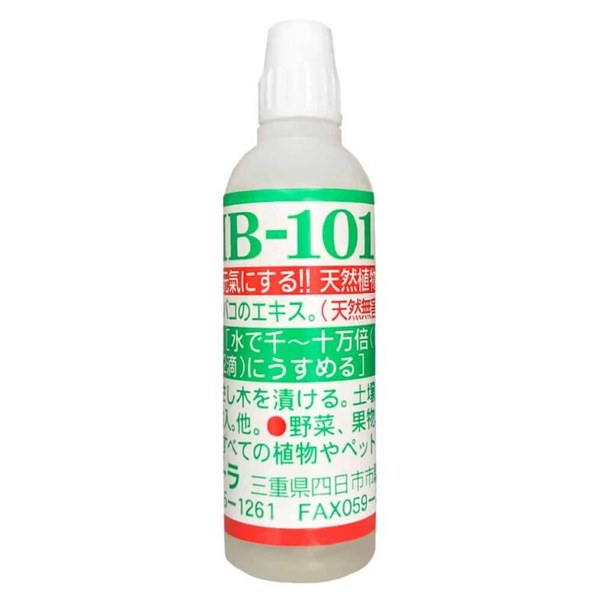
1.5. HB-101 — 100% Natural Organic Plant Vitalizer (Japan)
HB-101 is an organic liquid plant vitalizer extracted purely from cedar, cypress, pine, and plantain, containing zero synthetic chemicals or artificial fertilizers.
HB-101 works by restoring plant immunity, conditioning soil biology, and rehabilitating damaged roots (from overwatering, root rot, or repotting). Its standout advantage is absolute safety—zero risk of root burn or tender leaf scorch, even on delicate 5 cm shoots.
1.6. Atonik 1.8 SL — Nitrophenolate Biostimulant (Zero NPK)
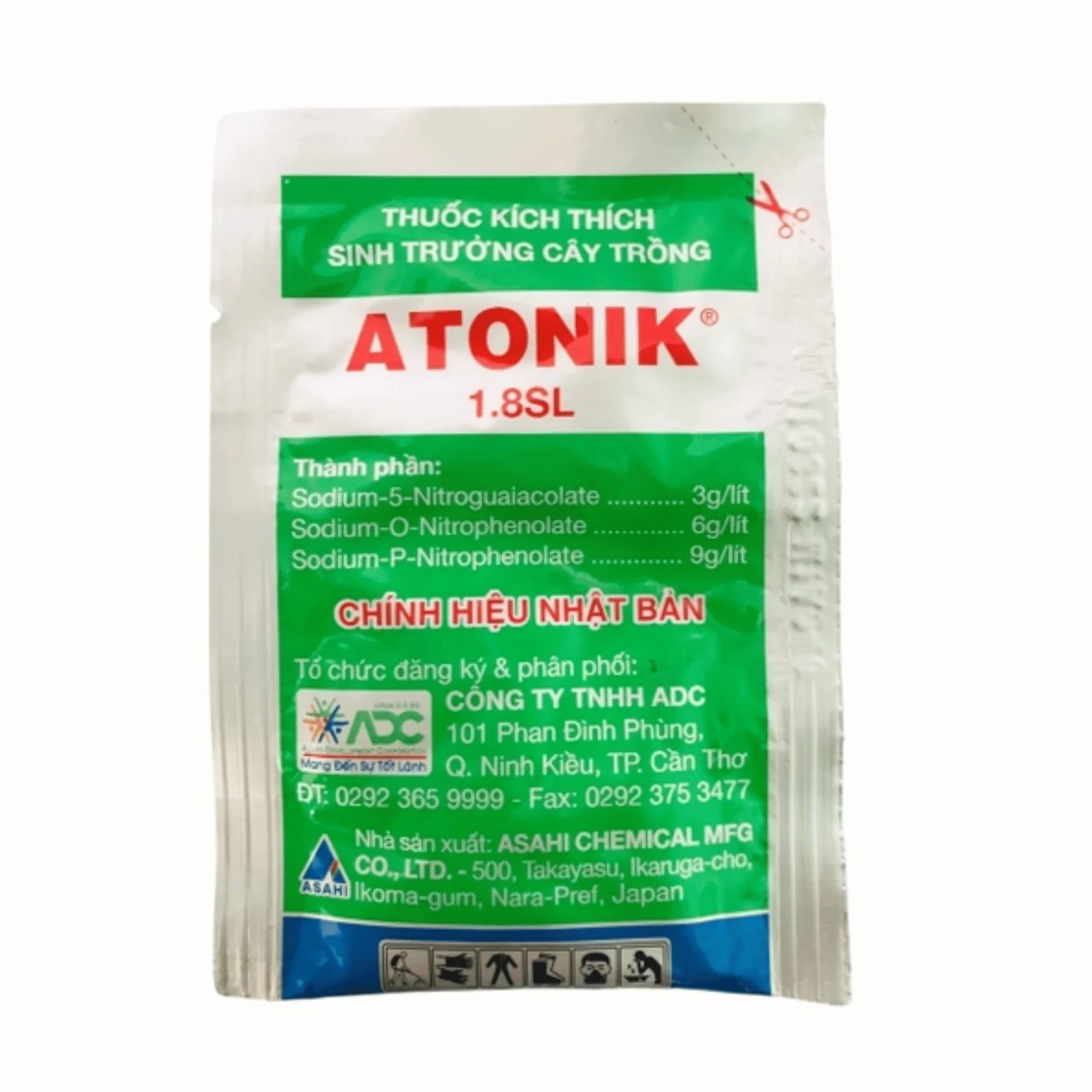
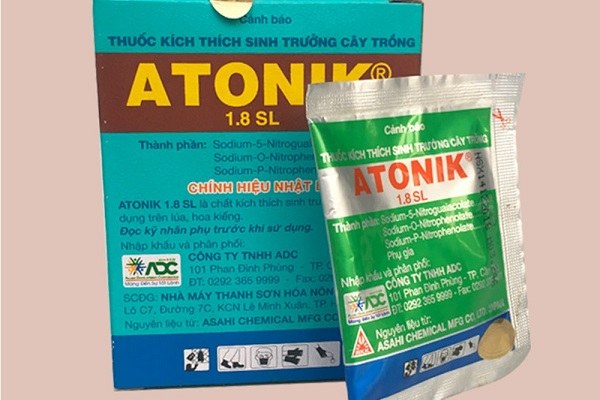
Atonik is a plant biostimulant composed of three Nitrophenolate salts (Sodium Nitrogualacolate, Sodium Nitrophenolate, and Sodium P-Nitrophenolate). Atonik contains zero NPK nutrition.
It works by accelerating cytoplasmic streaming, activating endogenous antioxidant enzymes (SOD, CAT, APX), and generating a powerful biological wake-up signal. This drives synchronized post-pruning bud break, encourages rooting, and delivers rapid recovery from environmental, waterlogging, or chemical stress.
2. Common Commercial Formulations Available to Growers
| Active Group | Representative Commercial Products | Common Packaging | Manufacturer / Origin |
|---|---|---|---|
| HB-101 | HB-101 Vitalizer Organic | 6 ml, 50 ml, 100 ml, 500 ml bottles | Flora Co., Ltd (Japan) |
| N3M | N3M High-Strength Rooting Fertilizer | 100 g, 500 g jars; 20 g sachets | Sinh Hoa Nong Phu Lam Co. (Vietnam) |
| Atonik | Atonik 1.8 SL | 10 ml sachets (box of 10), 100 ml bottles | Asahi Chemical Mfg (Japan) / ADC |
| Vitamin B1 | Grow More Vitamin B1, Start B1 (Thailand), Bioroot B1 | 100 ml, 235 ml, 500 ml, 1 L bottles | Grow More (USA) / Imported from Thailand |
| Auxin | Auxin K-IAA 99%, IBA-K 99%, NAA 99% | 20 g, 50 g, 100 g powder jars or liquids | Chelate Asia / Delong Chemical |
| Cytokinin | Cytokinin 6-BA (2% SL / 99% TC) | 20 g powder jars, 100 ml liquid bottles | Panpan / Delong Chemical |
3. Side-by-Side Comparison of All 6 Rose Stimulators
| Criterion | HB-101 | Cytokinin (6-BA) | Vitamin B1 (Thiamine) | Auxin (NAA / IBA / K-IAA) | Atonik (1.8 SL) | N3M |
|---|---|---|---|---|---|---|
| Chemical Nature | 100% botanical extract (pine, cedar, cypress, plantain); zero synthetic chemicals | Adenine-type phytohormone | Biological coenzyme (TPP precursor) | Natural or synthetic phytohormones | 3 Nitrophenolate salts; zero NPK | Concentrated fertilizer: NPK (11-3-2.5) + B, Cu, Zn + B1 + IBA/NAA |
| Primary Mode of Action | Vitalizer restoring immunity & vigor | Suppresses RhBRC1, drives cell division, slows chlorophyll loss | Generates ATP (Krebs cycle); SAR immune priming (NPR1); root meristem growth | Cell division & elongation; adventitious rooting; apical dominance | Speeds cytoplasmic flow; activates SOD, CAT, APX; bud-break signal | Supplies macro/micro minerals + rooting & shoot hormones |
| Key Benefits on Roses | Heals damaged roots; safely nourishes 5 cm shoots; cutting soak | Breaks lateral/basal buds; 25 ppm yields SPAD > 50, stems > 27 cm, +6 days bloom life | Multiplies root hairs; prevents blind shoots; 15-day black spot/mildew priming | K-IAA: revives weak plants; IBA-K: cuttings; NAA 25 ppm: long stems, +6 days bloom | Synchronized shoot flush; fast shock recovery | Rapid white roots; strong foliar shoot break & leaf expansion |
| Standard Dose (per 1 L water) | Root recovery: 2 drops; Maintenance: 1 drop; Cuttings: 2.5 drops | Foliar: 25–50 ppm (0.025–0.05 g); Bud paste: 100–200 ppm | Drench/foliar: 1–2 ml (2–10 ppm) | Foliar NAA: 25 ppm (0.025 g/L); IBA-K per cutting guide | 0.2–0.25 ml/L (1 ml per 4–5 L water) | Root drench: 2 g/L; Foliar: 1 g/L; Cuttings: 20 g/L |
| Critical Safety Warnings | Never mix with Urea, strong base fertilizers, or chemical stimulators | Plant must have ample sugar & sun; > 300 ppm deforms shoots | Light-sensitive; apply early morning or late afternoon | K-IAA degrades in sunlight; overdose burns tender roots | Must pair with Phosphorus (10-60-10) every 14 days; solo use exhausts plant | Never drench every 1–2 days (causes root burn & stem dieback) |
4. Compatibility Rules: Solo Use vs. Safe Combinations
- Never mix multiple root stimulators at the roots: Combining concentrated rooting fertilizers or hormones in a single root drench spikes salt and hormone levels, scorching feeder roots and causing stem blackening. HB-101 in particular is strictly contraindicated for mixing with Urea, heavy base fertilizers, or synthetic stimulators.
- Proven safe Atonik combinations: Atonik mixes cleanly with foliar fertilizers and crop-protection products. Two practical rose pairings:
- Atonik + Vitamin B1:
1 ml Atonik + 1 ml Vitamin B1per 2 L water for gentle shock recovery and root hair stimulation. - Atonik + N3M:
1–2 ml Atonik + 1 g N3Mper 2 L water, applied every 15 days to deliver both the bud-break signal and the mineral nutrition needed to support it.
- Atonik + Vitamin B1:
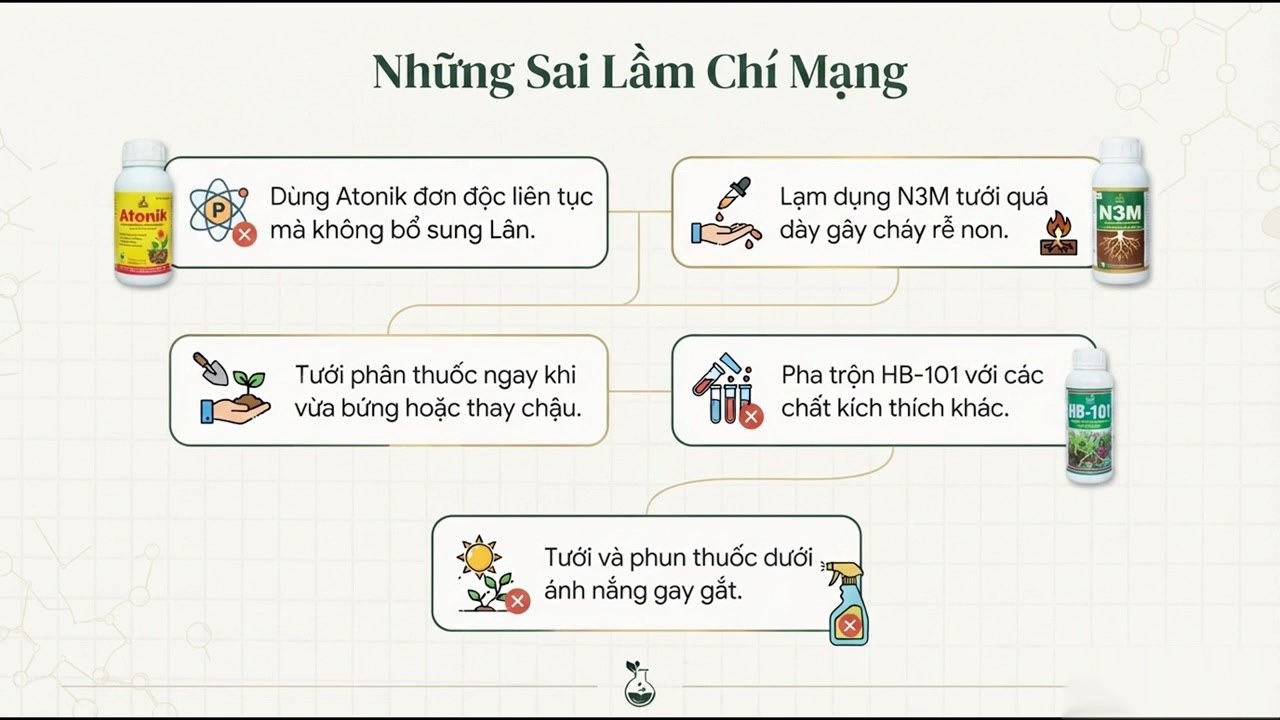
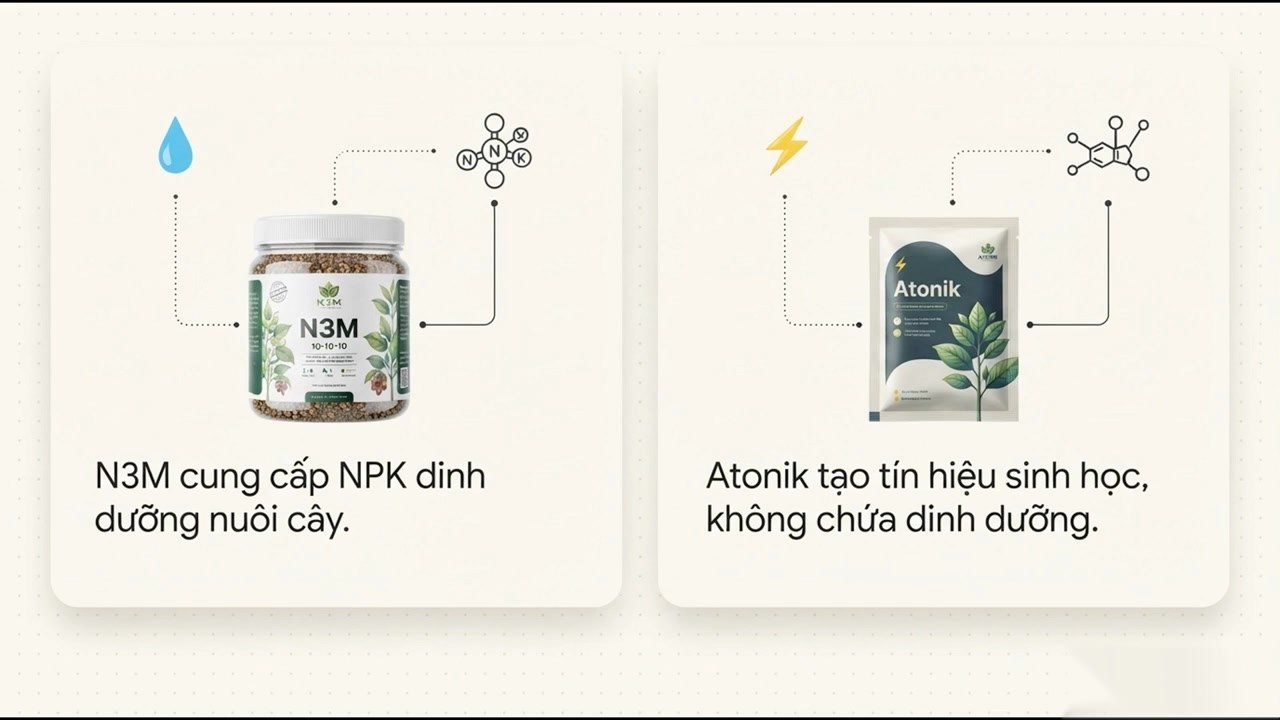
- Critical distinction between N3M and Atonik: N3M supplies NPK food, whereas Atonik only triggers growth signals without supplying nutrients. Repeated Atonik sprays without Phosphorus and NPK produce weak, leggy shoots that outpace the root system, leading to metabolic collapse and plant death.
5. Exact Dosage Conversion Table for a Single 20-Liter Potted Rose
For one 20-liter rose container (holding roughly 15–20 kg of potting mix):
- Standard root drench volume: 1.5–2.0 liters of solution per application (saturates the root ball evenly without excessive runoff).
- Standard foliar spray volume: 300–500 ml of solution per application (thoroughly coats both leaf surfaces and canes).
| Product | Root Drench Dose (in 2 L water) | Foliar Spray Dose (in 0.5 L water) | Frequency / Interval | Purpose & Practical Notes |
|---|---|---|---|---|
| HB-101 | 4 drops / 2 L | 1–2 drops / 0.5 L | Every 7–10 days | Heals damaged roots, post-repotting recovery, safe for 5 cm tender shoots. Never mix with Urea |
| N3M | 4 g / 2 L | 0.5 g / 0.5 L | Every 7–10 days (early cycle), then monthly | Rapid white root & shoot initiation. Never drench every 1–2 days |
| Atonik | 0.4–0.5 ml / 2 L | 0.1–0.2 ml / 0.5 L | Use sparingly (1–2 times post-pruning or for shock) | Synchronized bud break & stress relief. Must alternate with Phosphorus (10-60-10) every 14 days |
| Vitamin B1 | 2–4 ml / 2 L | 1–2 ml / 0.5 L | Every 7–10 days (rooting) or 14–21 days (disease priming) | Regenerates root hairs; primes defense against black spot/mildew. Apply in cool light |
| Auxin (NAA) | Not recommended as high-dose drench | 0.0125 g / 0.5 L (25 ppm) | Every 15 days | Start Day 15 post-pruning; elongates stems > 27 cm, enlarges buds, extends bloom > 6 days |
| Cytokinin (6-BA) | Direct basal bud paste: 100–200 ppm | 0.0125 g / 0.5 L (25 ppm) | Every 15 days | Co-spray with NAA to break lateral buds, boost chlorophyll (SPAD > 50), and keep foliage glossy |
6. Stage-by-Stage Application Protocol
6.1. Propagation, Repotting, and Root Rehabilitation
- Cuttings & Air-Layering:
- N3M: Mix 20 g/L; dip cutting bases for 5–10 minutes or brush directly onto a 1 cm air-layering girdle before wrapping.
- HB-101: Mix 2.5 drops/L (5 drops/2 L); soak cuttings for 30–60 minutes before sticking.
- Atonik: Mix 1–2 ml/L to soak cuttings or seeds for faster initiation.
- Freshly Potted / Bare-Root / Damaged Roots:
- Mandatory waiting window: Never drench fertilizer or rooting chemicals immediately after repotting! Wait 3–5 days (healthy root balls) or 15–20 days (heavily root-pruned or damaged plants) so root wounds callus cleanly.
- Safest recovery choice: Drench HB-101 (2 drops/L — 4 drops/2 L for a 20 L pot), Auxin K-IAA, or ultra-dilute Atonik (1 ml per 4–5 L) combined with Vitamin B1 to regenerate root hairs without burning open wounds.
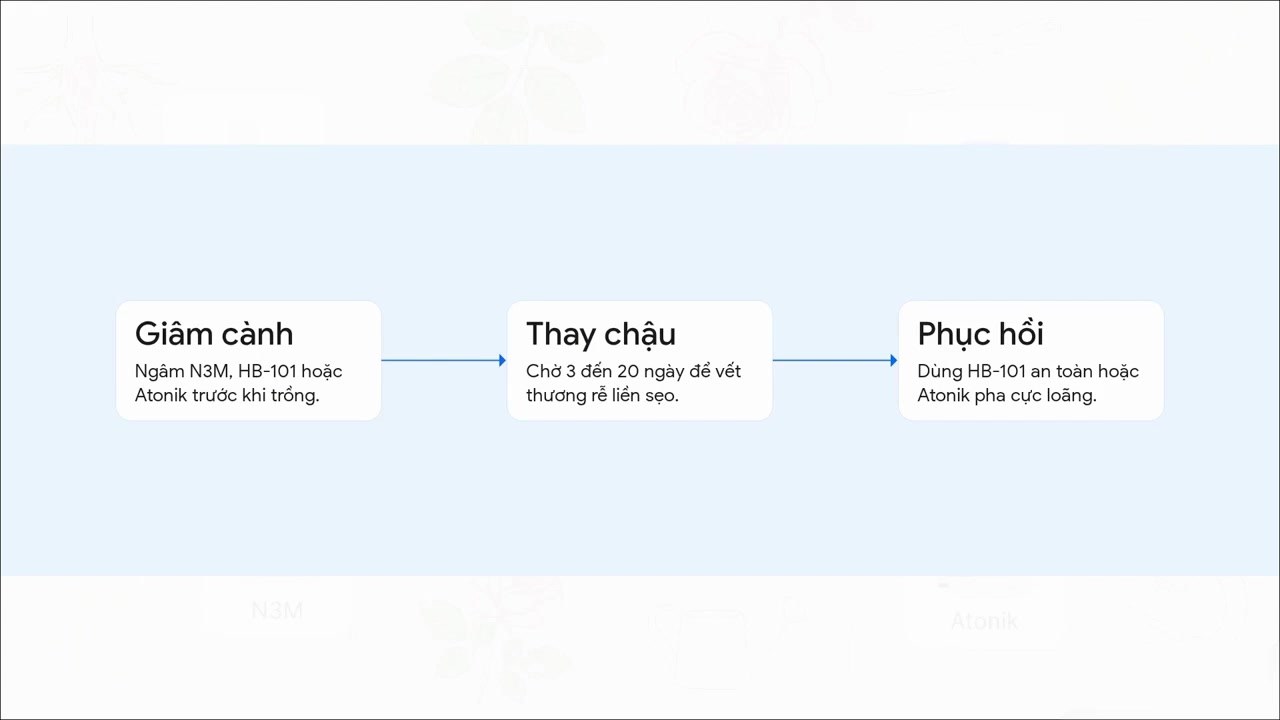
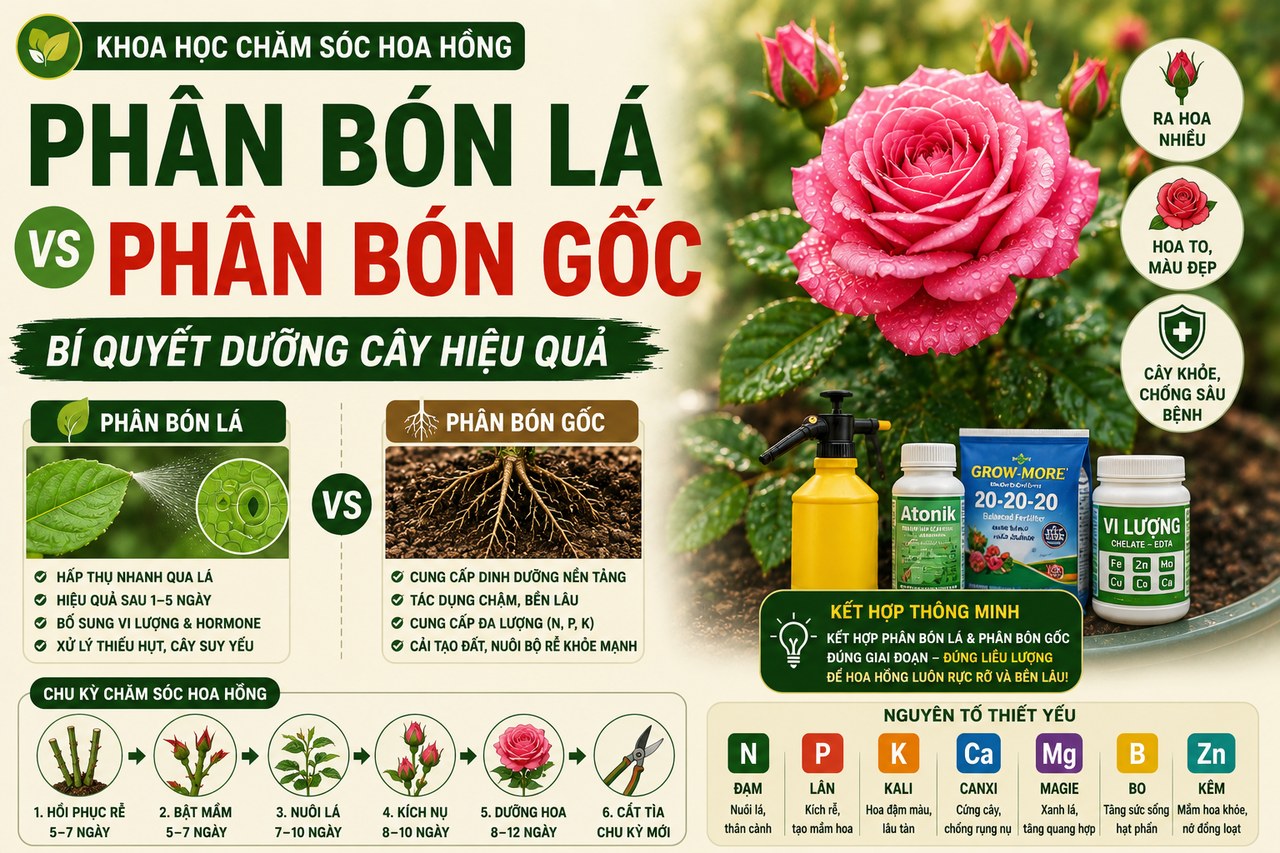
6.2. The 3-Stage Post-Pruning Protocol for a 20 L Potted Rose
- Stage 1 — Immediately After Pruning (Days 1–3):
- Foliar spray: Mix 0.1–0.2 ml Atonik (1 ml/4–5 L rate) or 0.5 g N3M (1 g/L rate) in 0.5 L water and spray canes evenly to awaken dormant buds.
- Root drench: After waiting 3–5 days for cuts to seal, drench 4 drops HB-101 or 2–4 ml Vitamin B1 in 2 L water.
- Stage 2 — Tender Shoots Reaching ~5 cm (Days 7–12):
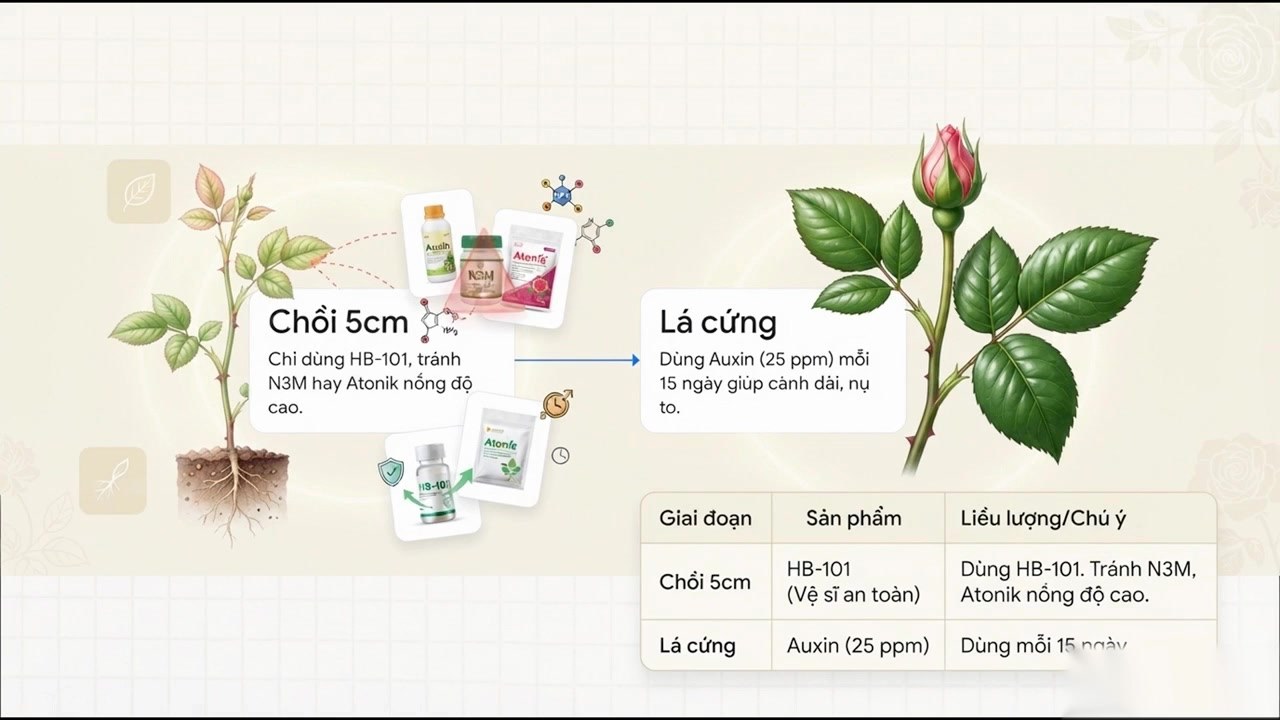
- Caution: Emerging leaves and young root tips are highly vulnerable. Avoid concentrated N3M or Atonik sprays, which easily scorch tender tissue.
- Safe shoot support: Switch to HB-101 (1–2 drops/0.5 L foliar, or 2–3 drops/1–2 L across foliage and soil surface) or Vitamin B1 (1 ml/L) every 7 days.
- Stem-hardening nutrition: Alternate a high-Phosphorus fertilizer (e.g., 10-60-10) every 14 days to thicken soft shoots and prevent phosphorus deficiency.
- Stage 3 — Mature Foliage, Bud Set & Pre-Bloom (Day 15 to Opening):
- Bloom-maximizing spray: Apply Auxin NAA + Cytokinin 6-BA at 25 ppm (~0.0125 g per 0.5 L for a 20 L pot) every 15 days. This elevates chlorophyll (SPAD > 50), stretches flower stems beyond 27 cm, plumps buds, and adds more than 6 days of bloom life on the plant.
- Root maintenance: Space N3M root drenches out to once per month to sustain roots without salt buildup.
7. Five Fatal Mistakes to Avoid at All Costs
- Repeated solo Atonik sprays without Phosphorus/NPK: Forces relentless shoot flushing without food, exhausting carbohydrate reserves and causing biochemical collapse, leaf scorch, and death.
- Over-drenching N3M every 1–2 days: Turns a mild dose into a toxic salt concentration, scorching white roots and triggering blackened canes and stem canker dieback.
- Applying stimulators immediately after repotting: Freshly broken roots need 3–5 days (healthy) or 15–20 days (severely damaged) to heal; early chemical drenches invite fungal root rot.
- Mixing HB-101 indiscriminately: Never combine HB-101 with Urea, concentrated base fertilizers, or synthetic growth regulators.
- Spraying or drenching under harsh midday sun: Vitamin B1 and Auxin K-IAA photodegrade rapidly under UV light, and droplets magnify heat to cause sunburn on young foliage. Always apply in the early morning or late afternoon.