RoseDoctor
Black Spot

Black Spot

Fungal

Description

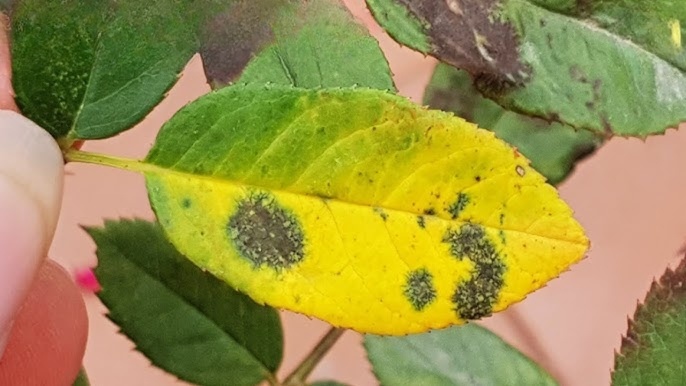
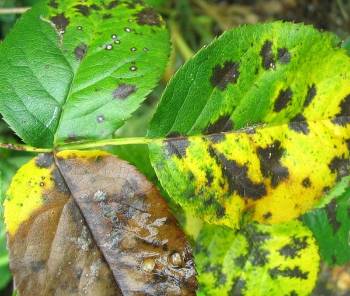
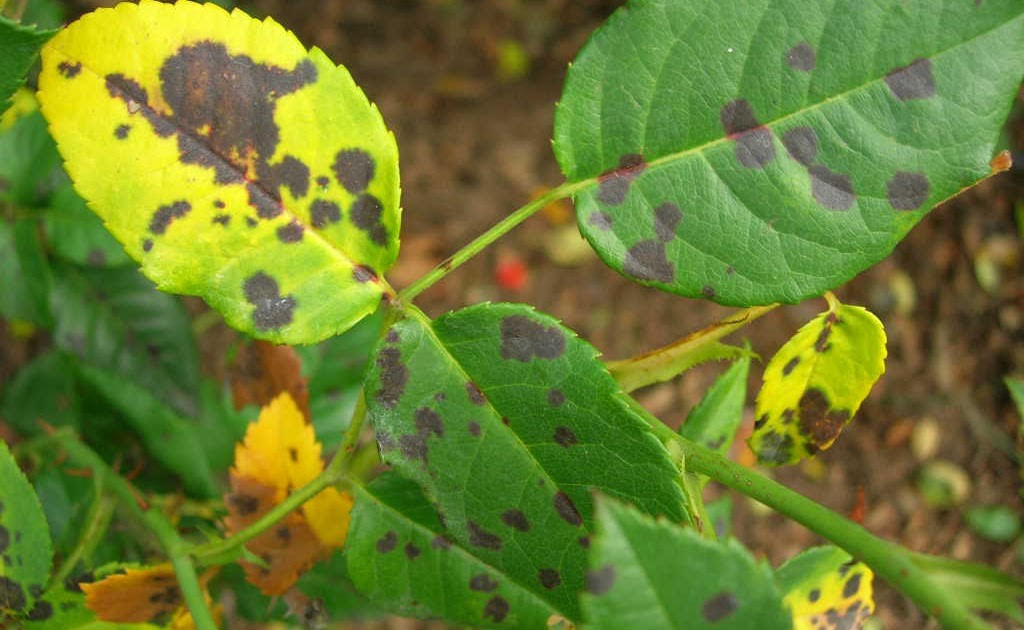
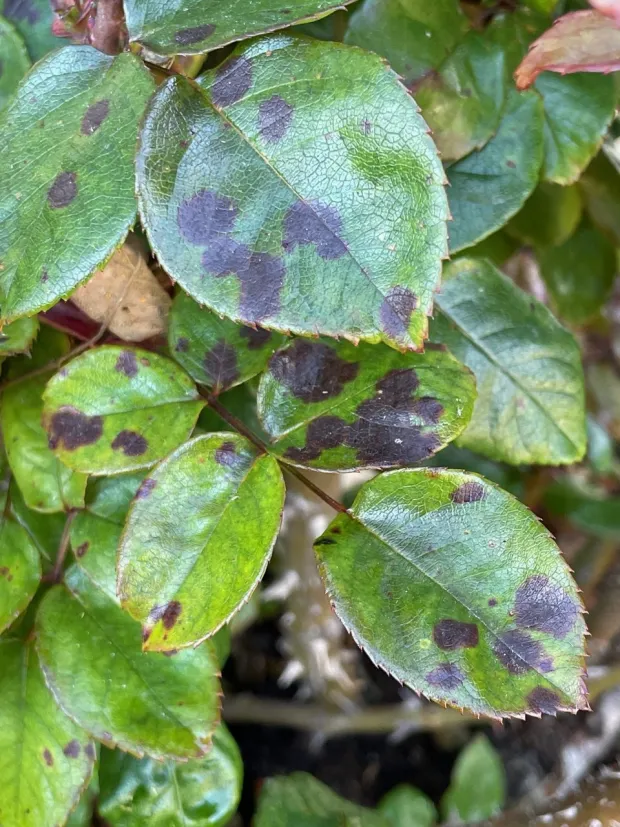
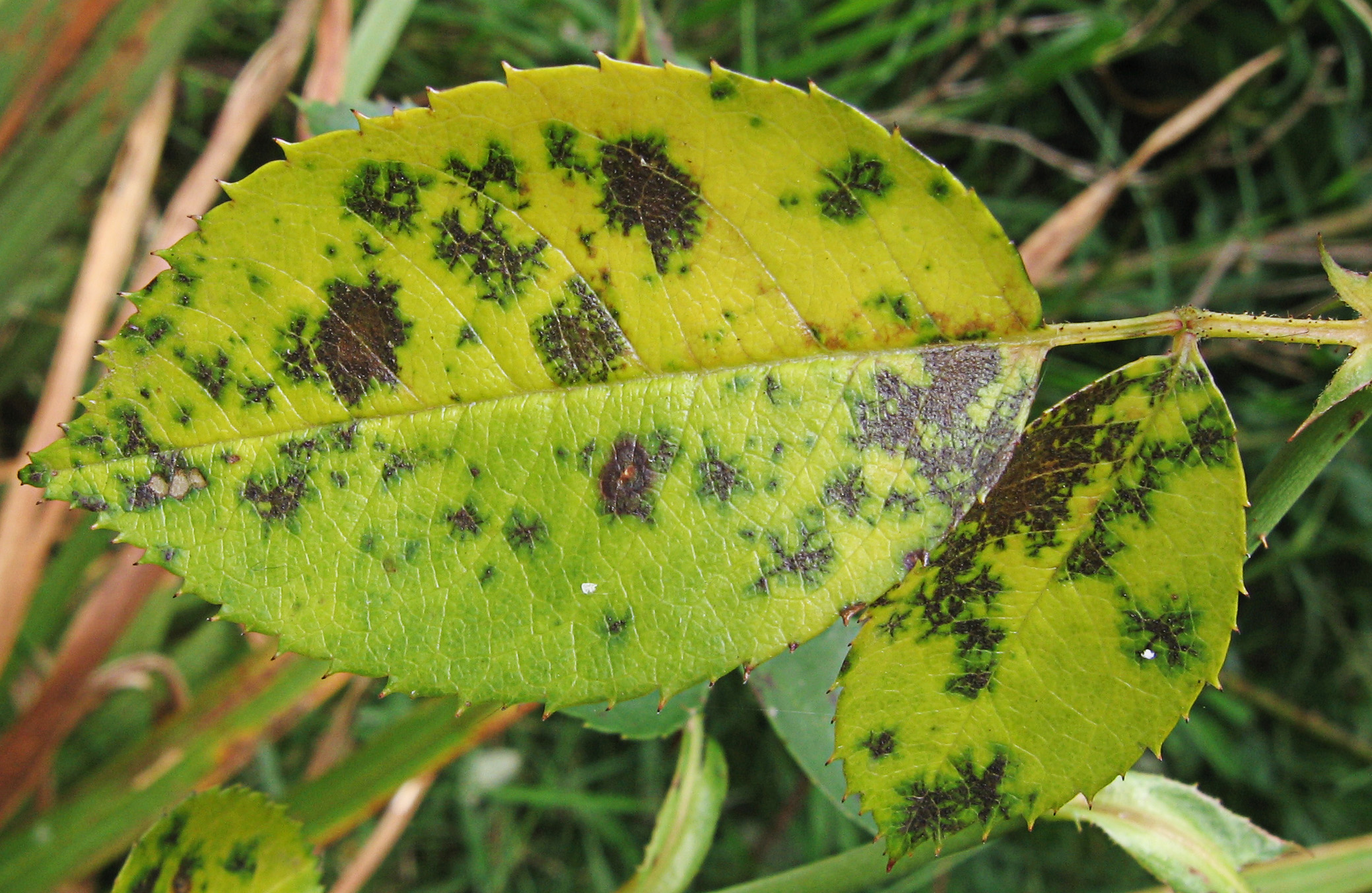
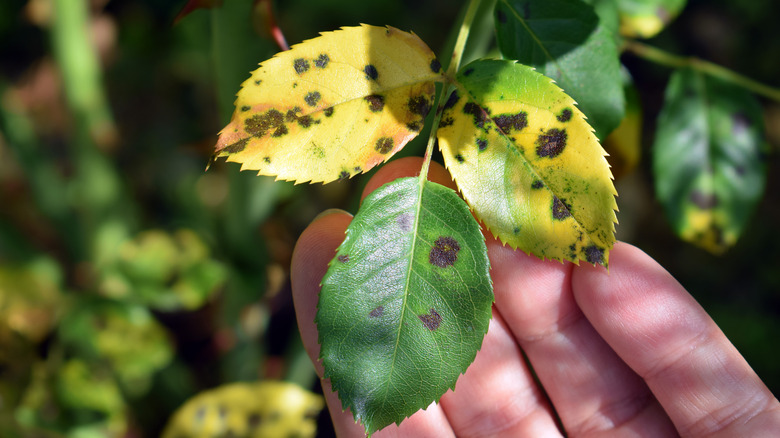
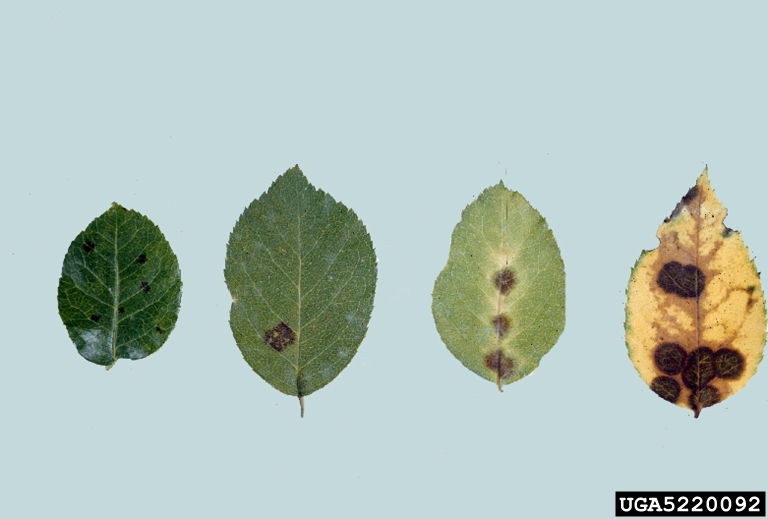
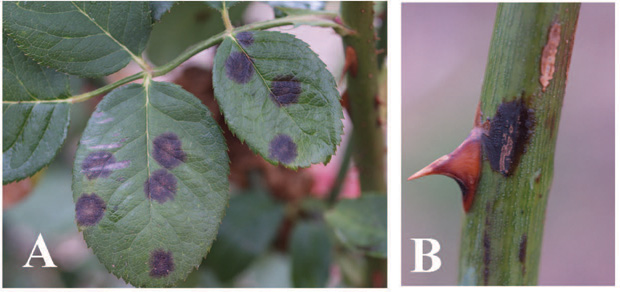
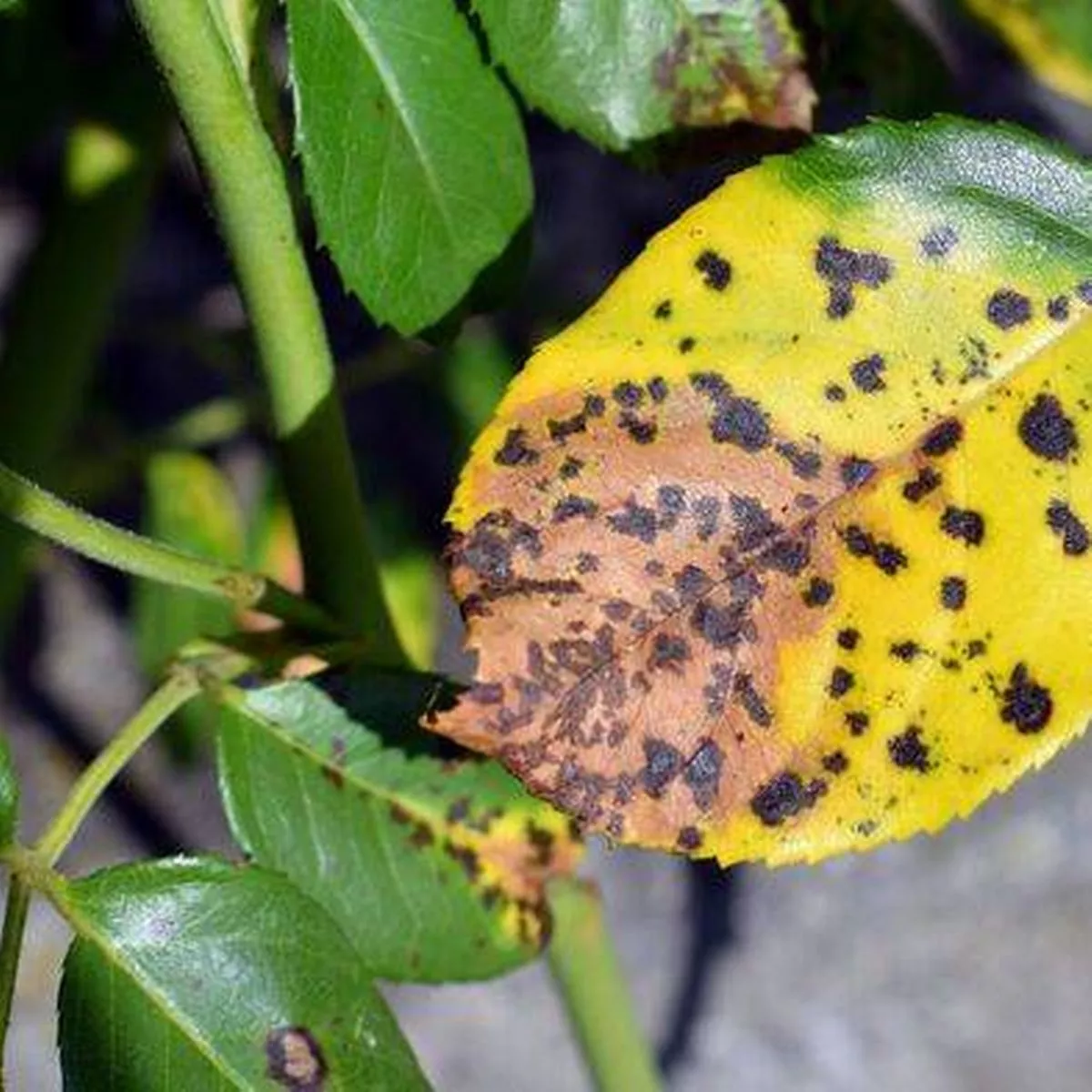
Black spot is caused by the fungus Diplocarpon rosae. It is one of the most prevalent diseases on roses, producing rounded black lesions on the foliage and triggering heavy defoliation. The disease typically appears under high humidity (rainy season, overnight dew), warm-humid weather, or erratic sun-and-rain cycles. Affected plants often shed leaves prematurely, sometimes losing their canopy entirely.

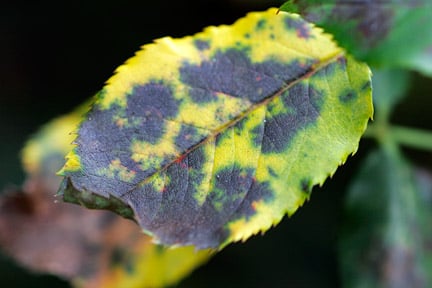
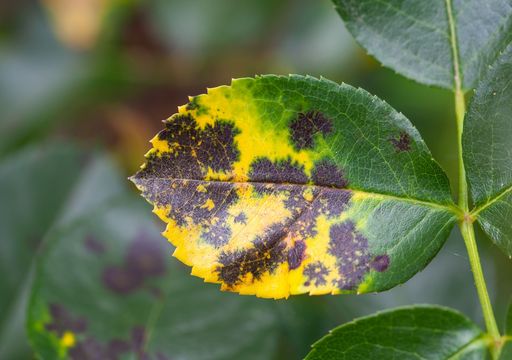
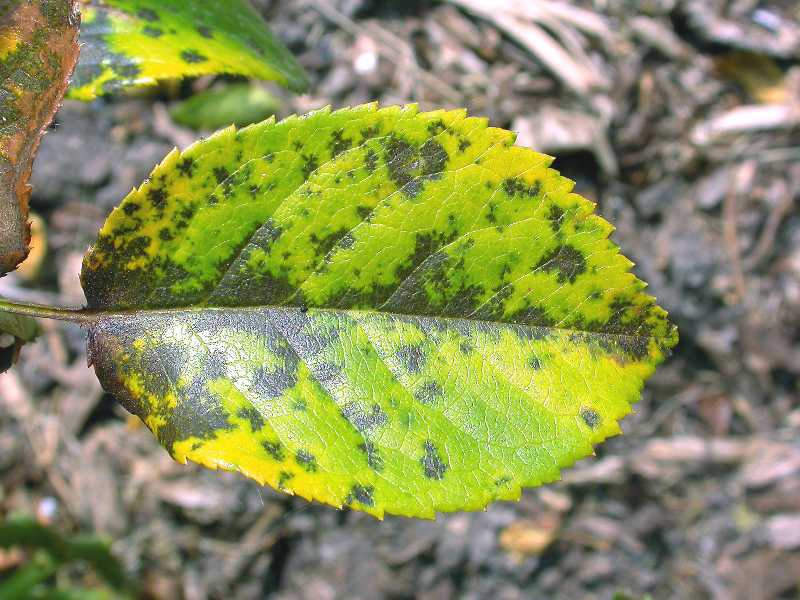
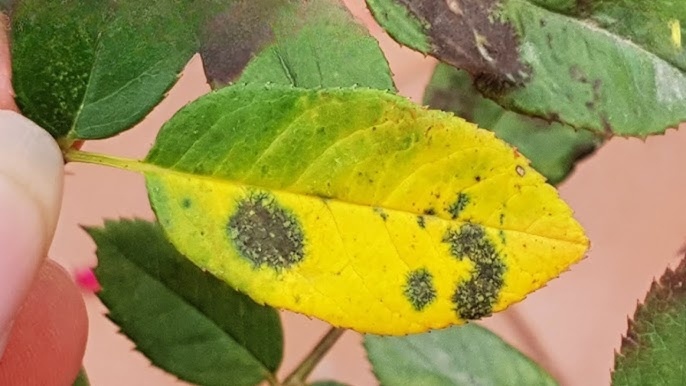
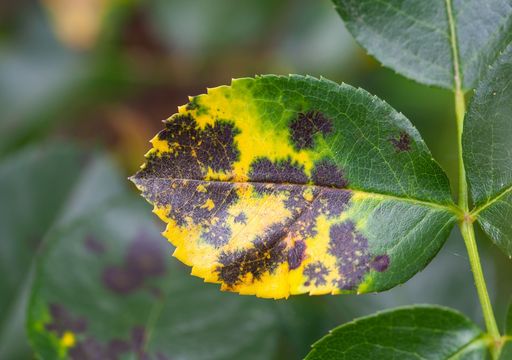
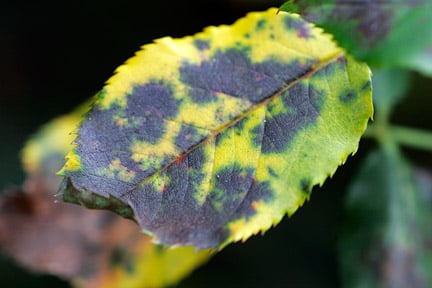
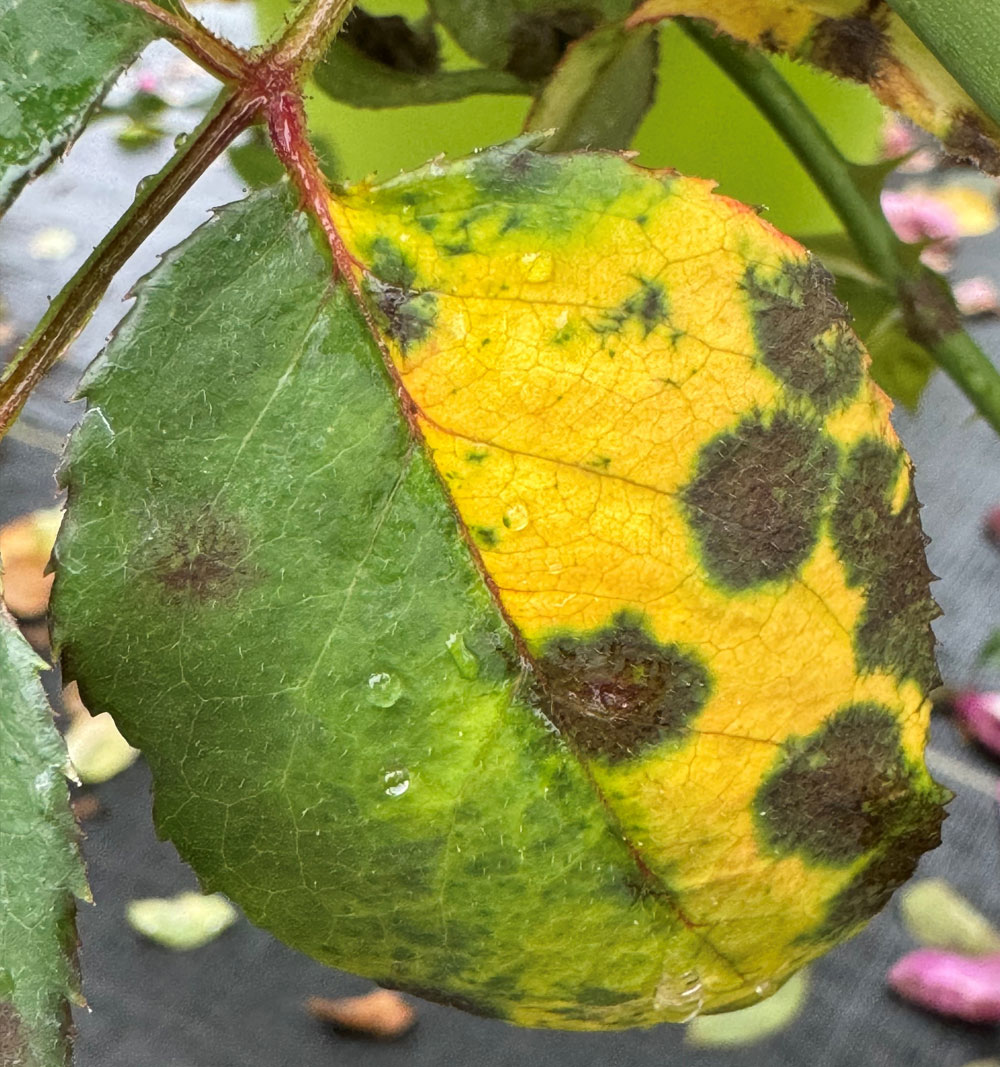
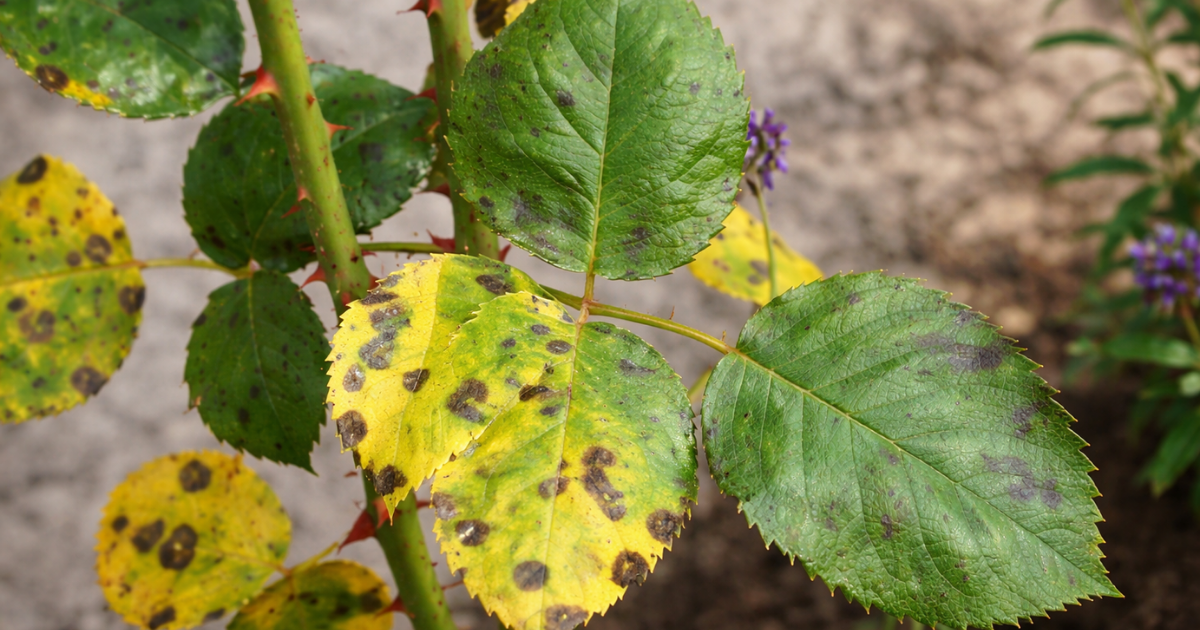
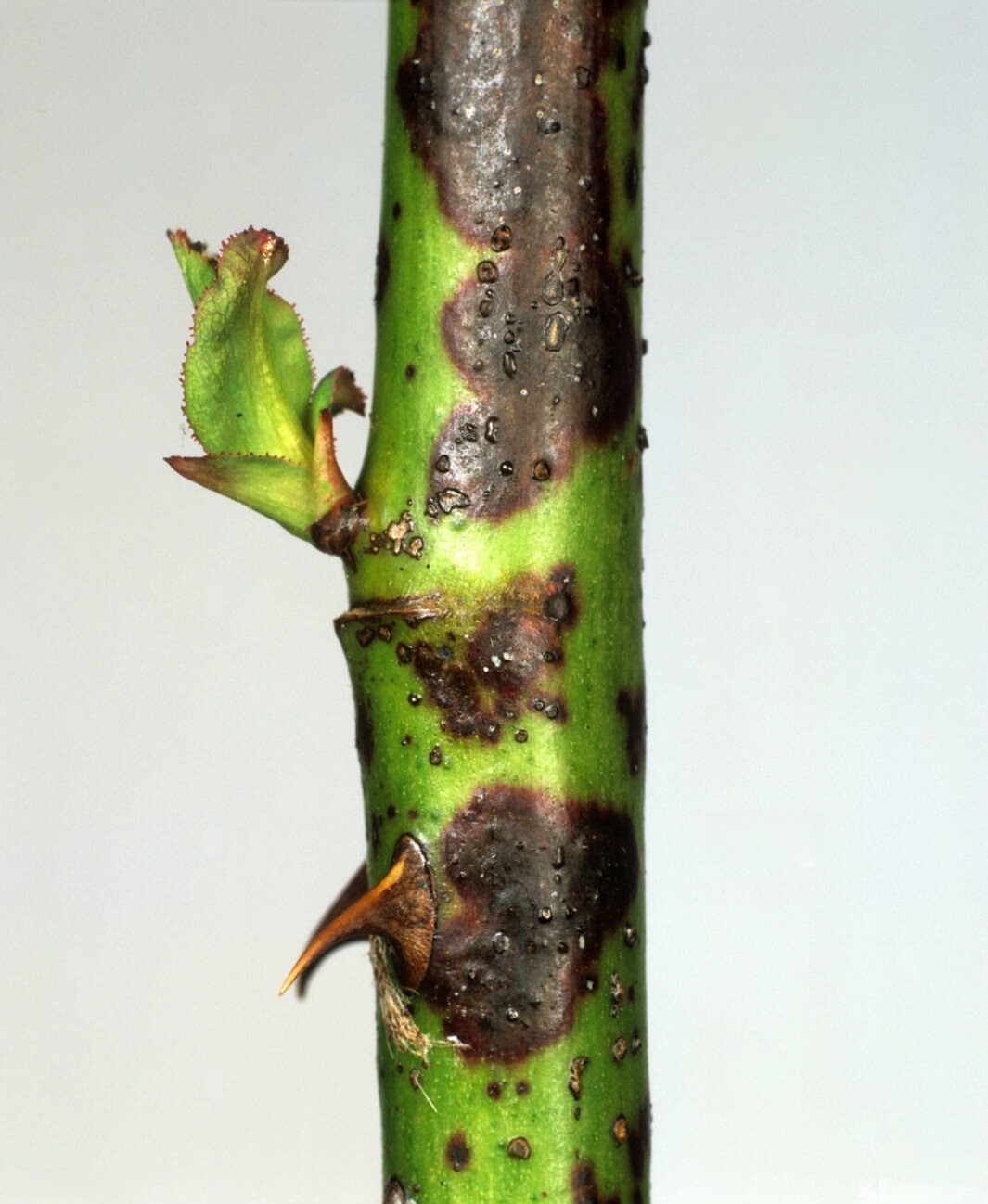
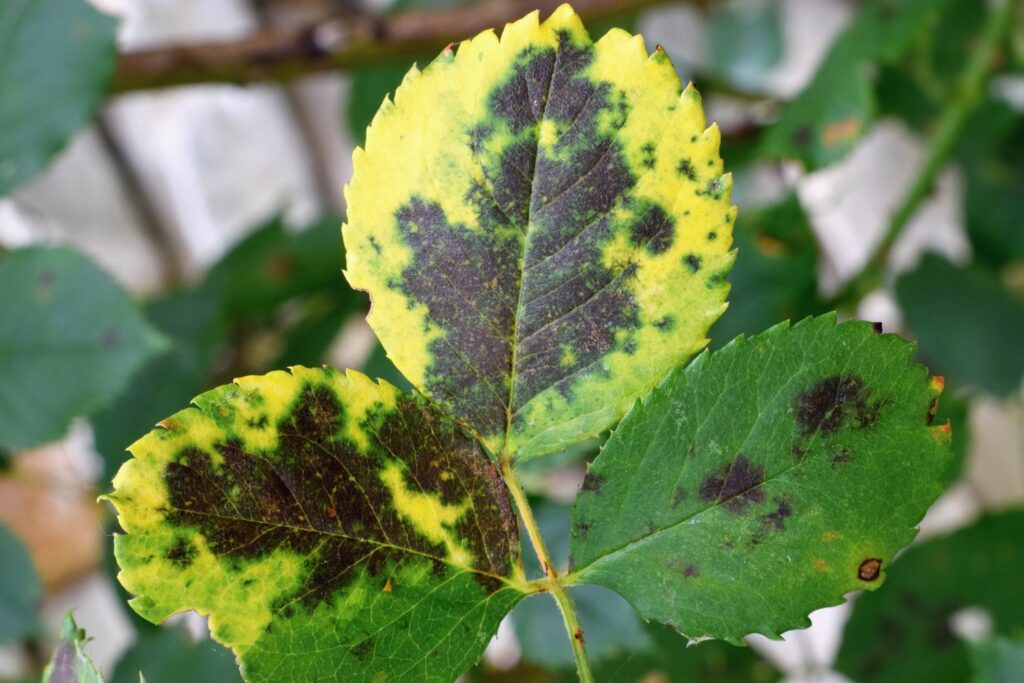
The pathogen first appears as black, brown, or occasionally purplish lesions on the lower leaves and gradually progresses upwards. A chlorotic halo usually develops around the lesions before the leaf abscises. Brown to rust-coloured streaks may also appear along the stems.

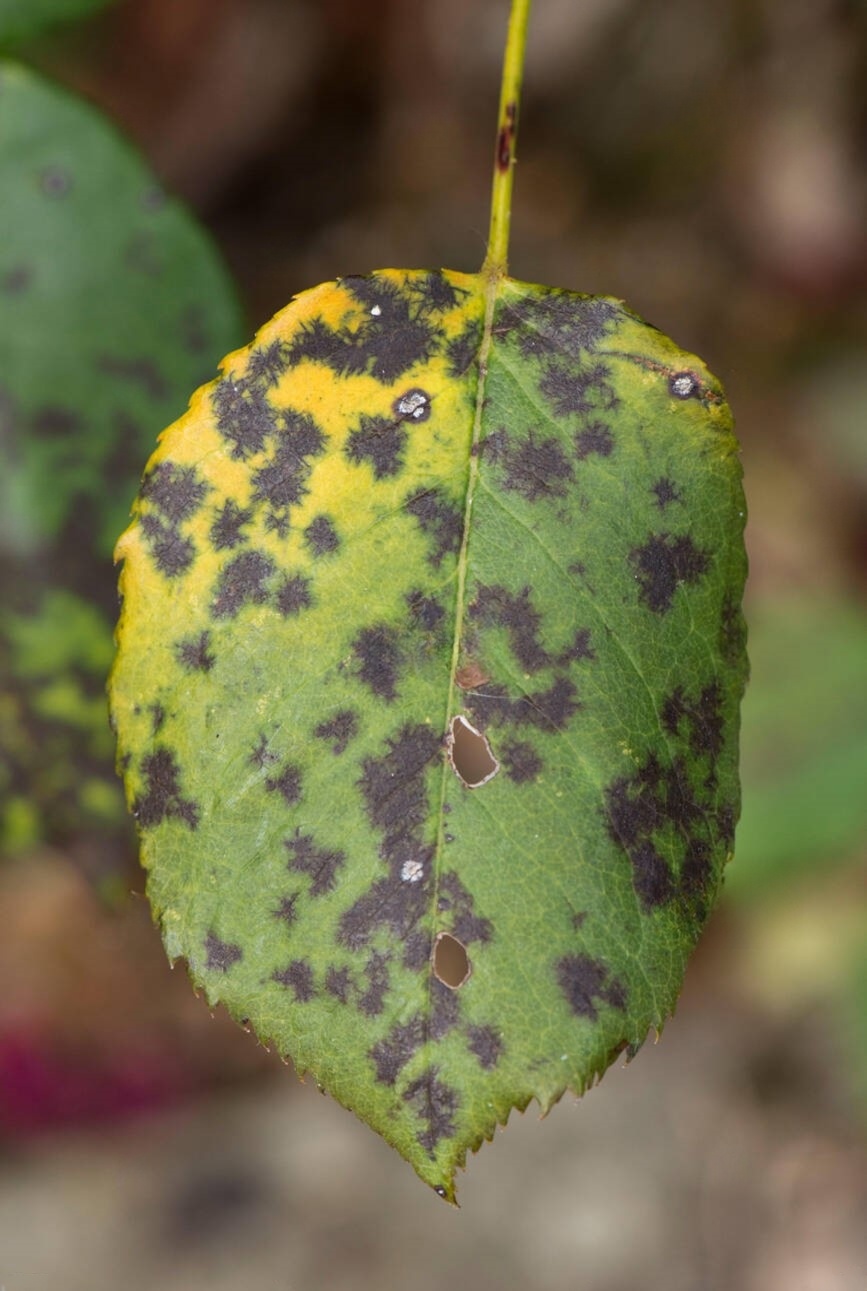
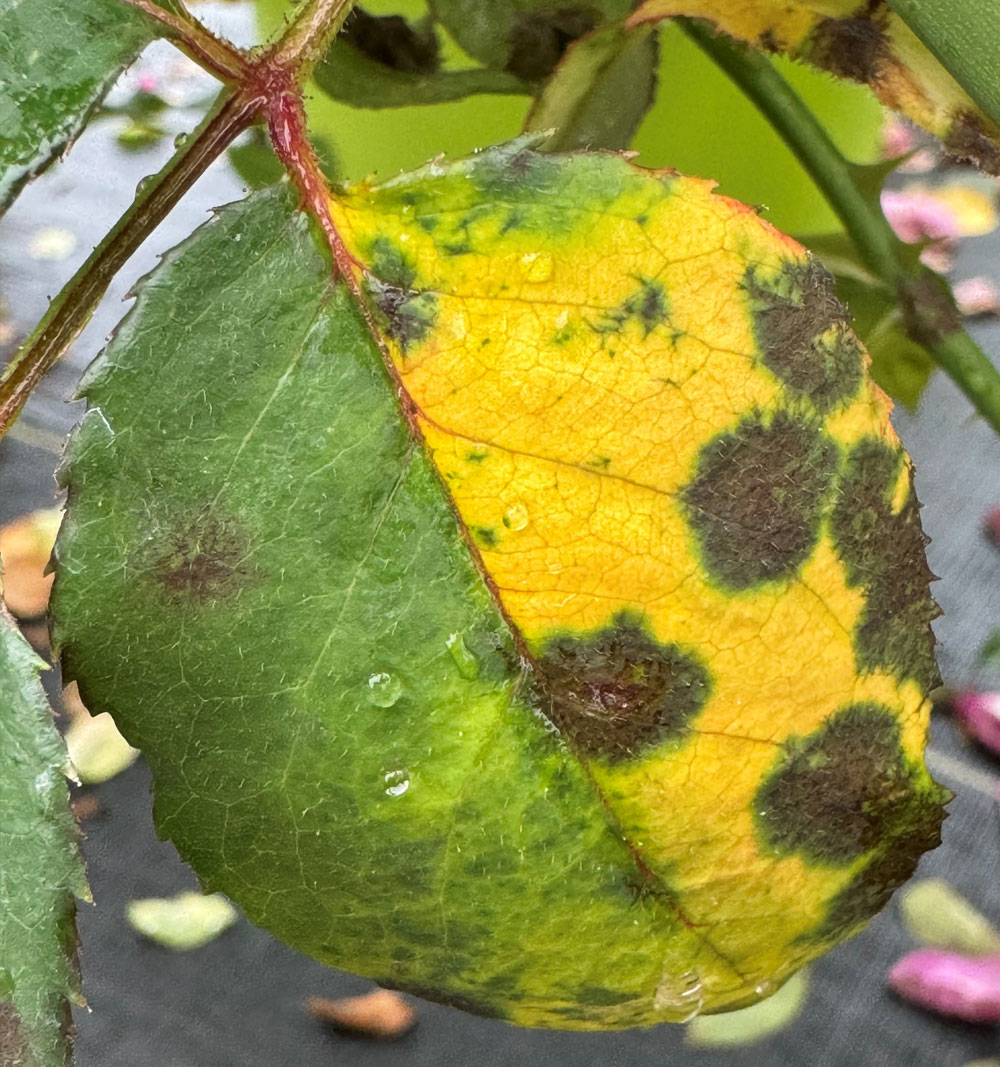
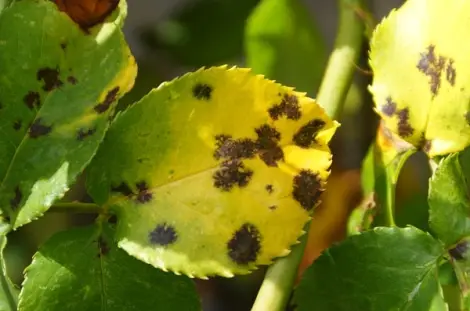
Why the feathered margin and yellow halo? Diplocarpon rosae is an epibiotic fungus — once spores germinate, the hyphae grow and spread directly beneath the upper-leaf cuticle. Because that surface is smooth and unobstructed by internal leaf structure, the hyphae radiate outward in every direction like root tips; it is the advancing hyphal tips probing fresh epidermis that produce the characteristic feathered, serrated margin. The yellow halo around each lesion is the result of ethylene released by the fungus (a plant hormone that triggers senescence): the gas rapidly degrades chlorophyll in the surrounding tissue, turning the leaf bright yellow before mass abscission.

Symptoms

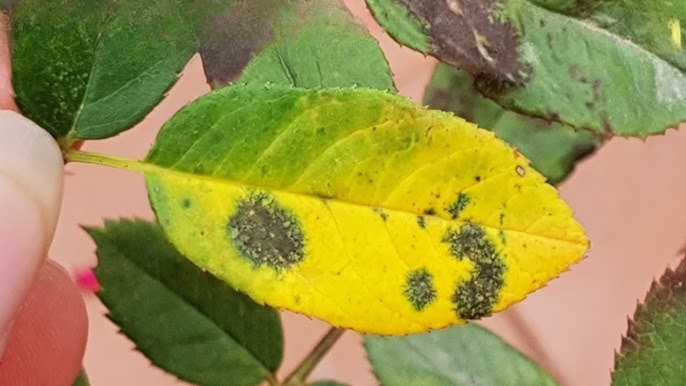
  • Distinct rounded black lesions with a feathered, serrated margin.
    Distinct rounded black lesions with a feathered, serrated margin.Distinct rounded black lesions with a feathered, serrated margin.Distinct rounded black lesions with a feathered, serrated margin.Distinct rounded black lesions with a feathered, serrated margin.Distinct rounded black lesions with a feathered, serrated margin.Distinct rounded black lesions with a feathered, serrated margin.
  • Well-defined circular spots, typically surrounded by a yellow halo.
    Well-defined circular spots, typically surrounded by a yellow halo.Well-defined circular spots, typically surrounded by a yellow halo.Well-defined circular spots, typically surrounded by a yellow halo.Well-defined circular spots, typically surrounded by a yellow halo.Well-defined circular spots, typically surrounded by a yellow halo.
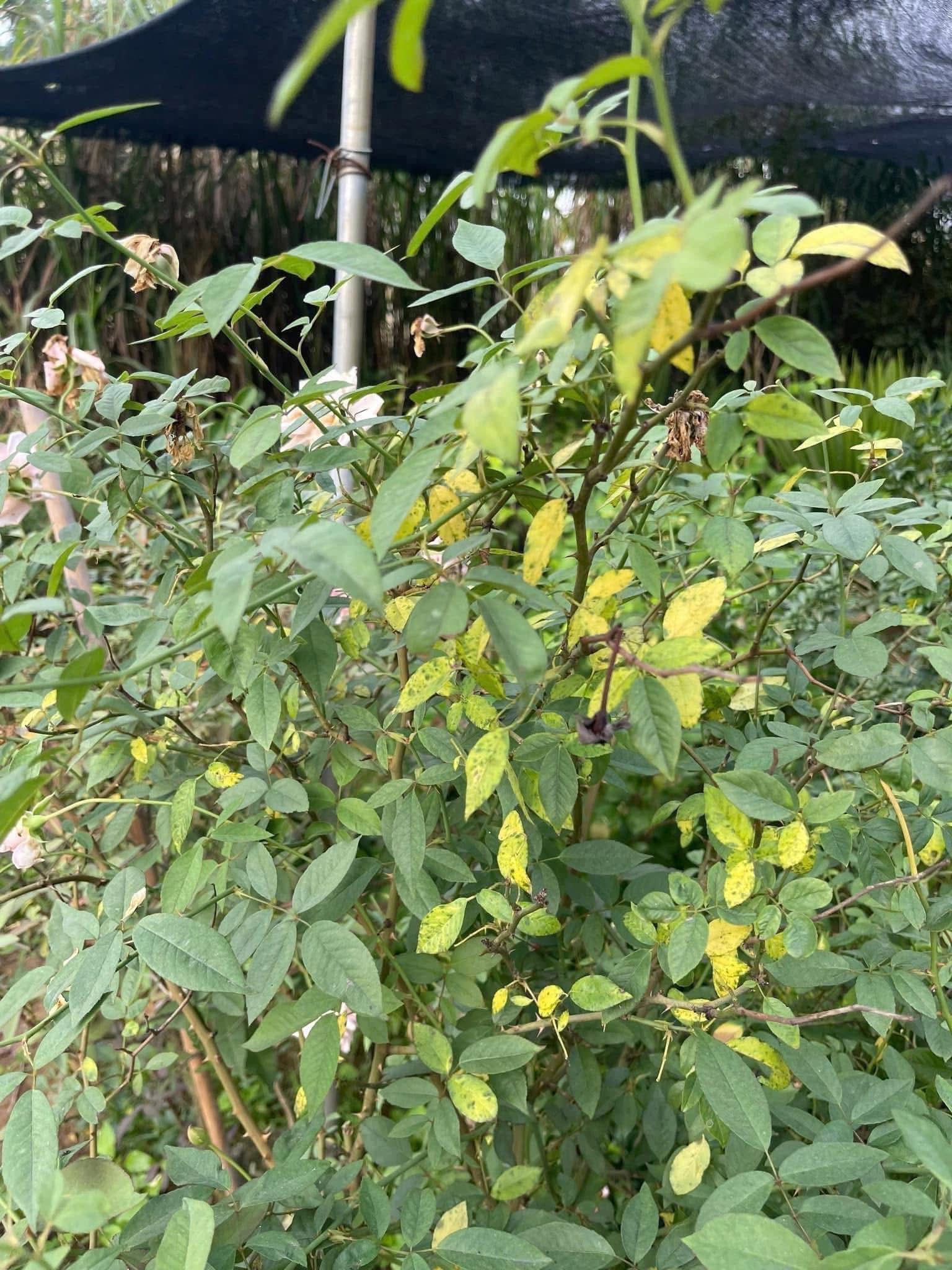
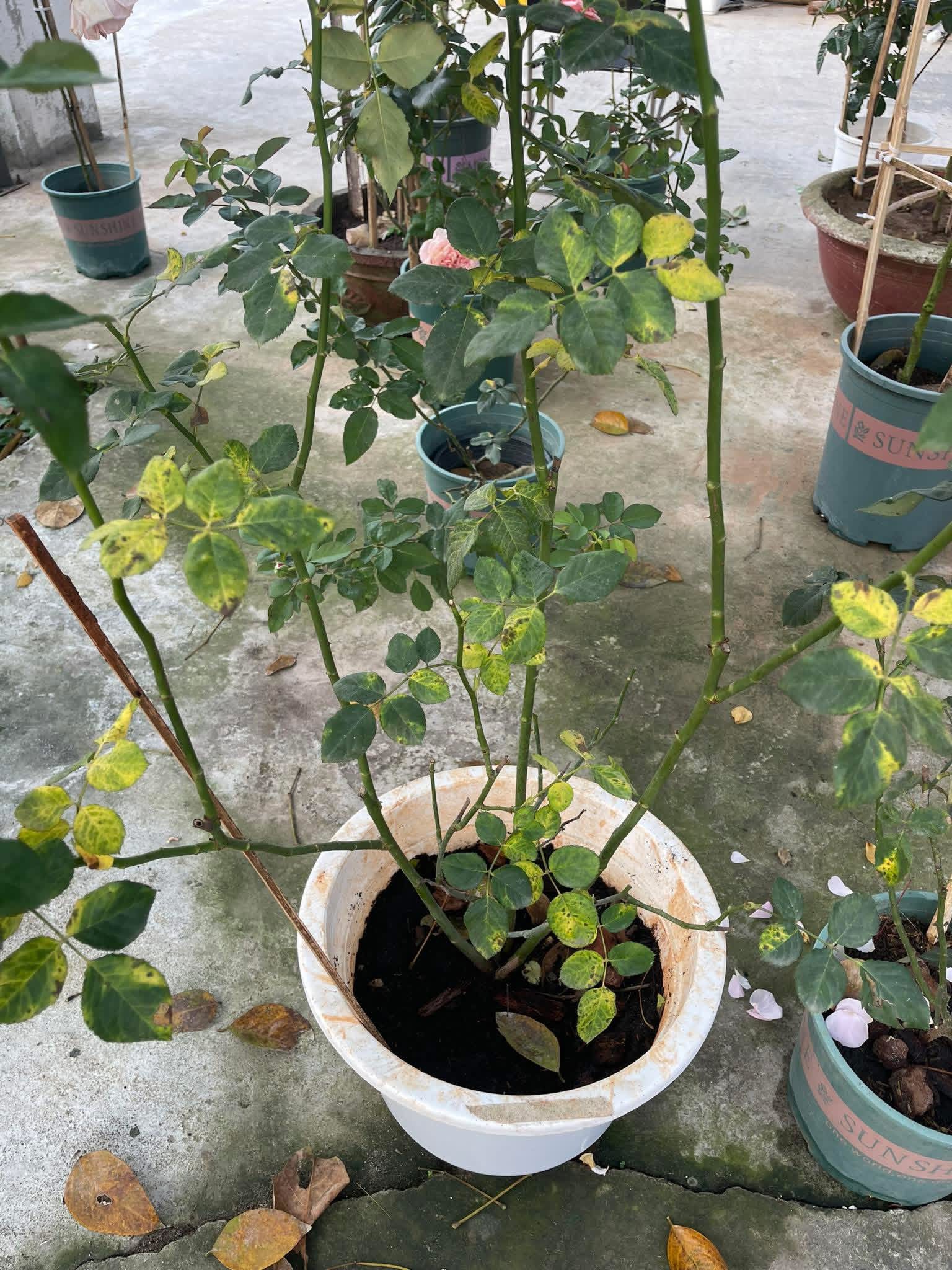
  • Leaves yellow around the black spots
    Leaves yellow around the black spotsLeaves yellow around the black spotsLeaves yellow around the black spotsLeaves yellow around the black spotsLeaves yellow around the black spots
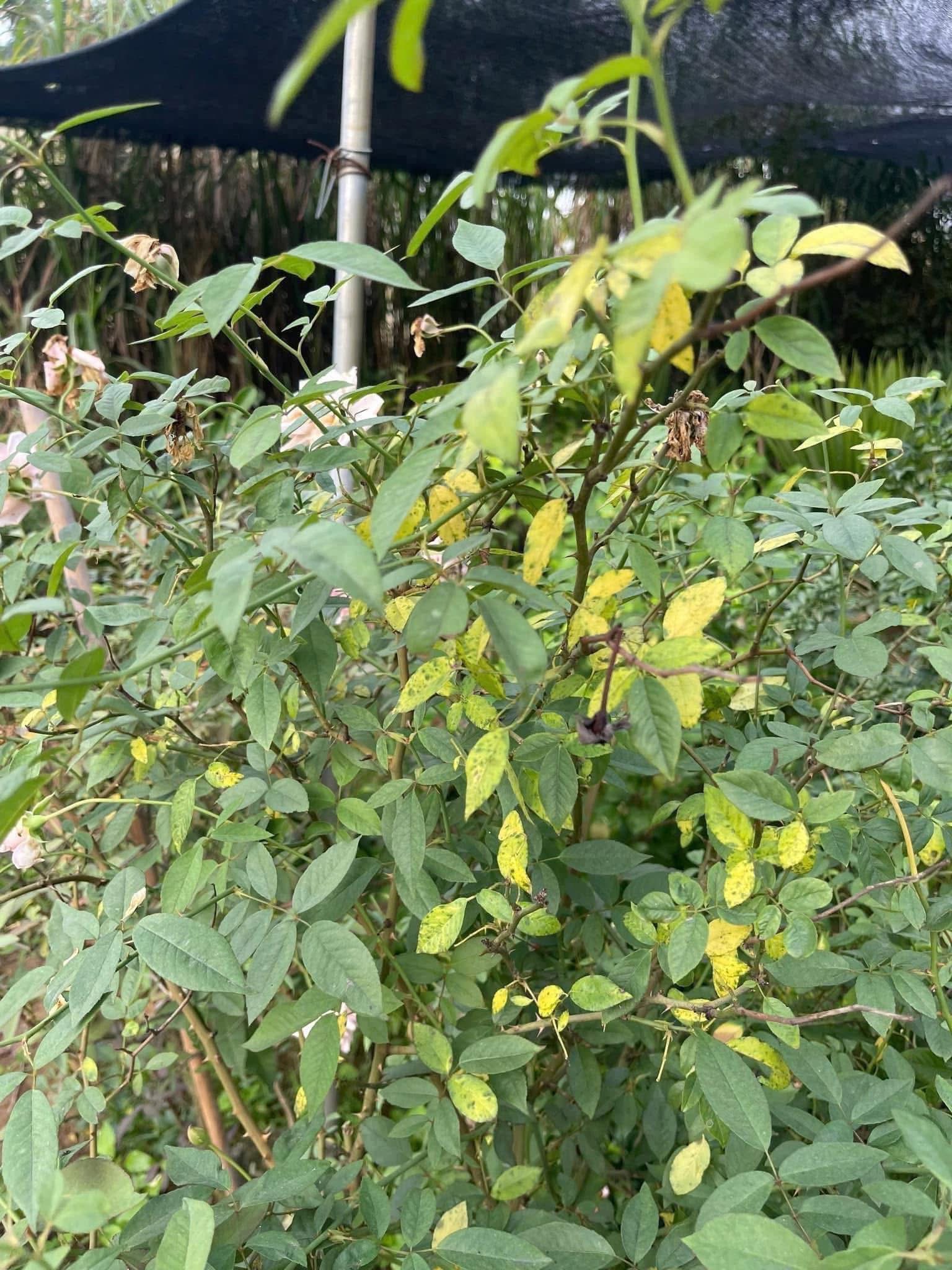
  • Premature leaf drop starting from the lower canopy and progressing upwards.
    Premature leaf drop starting from the lower canopy and progressing upwards.
  • Young shoots turning a dark purplish-black.
    Young shoots turning a dark purplish-black.Young shoots turning a dark purplish-black.
  • Leaves drop on light contact because the underlying tissue has already become necrotic.
    Leaves drop on light contact because the underlying tissue has already become necrotic.Leaves drop on light contact because the underlying tissue has already become necrotic.
  • Leaf edges turn dry and black as the fungal infection destroys the tissue
    Leaf edges turn dry and black as the fungal infection destroys the tissue

Treatment plan

As soon as the characteristic black, serrated-edge lesions appear, act decisively:

  • Remove and destroy infected leaves immediately (including any that are just starting to yellow); collect fallen debris at the base, bag it tightly, and dispose of it. Never add it to a compost heap, as the fungal spores remain viable.
  • Avoid foliar watering; water at the base in the morning so leaves dry before nightfall.
  • Improve air circulation around the canopy; for potted roses, move the infected plant away from healthy specimens.
  • Apply a copper- or mancozeb-based fungicide as soon as the disease is detected; spray thoroughly on both leaf surfaces and the soil surface, in early morning or late afternoon.
  • [After 7 days] Reapply the fungicide to knock down the next spore flush; rotate active ingredients (Hexaconazole or Mancozeb) to avoid resistance build-up.
  • [After 14 days] Check new growth for fresh black spots; if lesions persist, continue spraying and prune more aggressively.

Recommended products

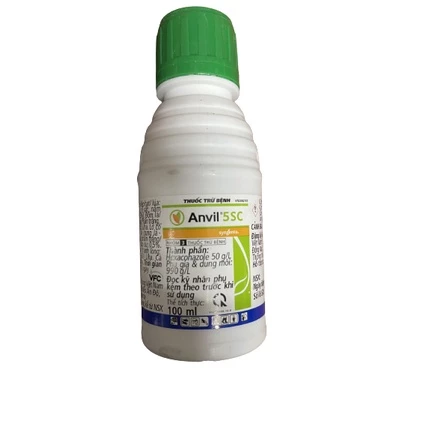
  1. Anvil 5SC (active ingredient: Hexaconazole) — Systemic fungicide with deep translaminar penetration, providing rain-fast protection.

    • Dosage: 20 ml per 16 L of water (roughly 1.25 ml per 1 L).
    • Application: Spray evenly across the canopy. For severe infections, apply twice with a 5-day interval. For prevention, spray once a month.
    • Where to buy: Shopee — Anvil 5SC
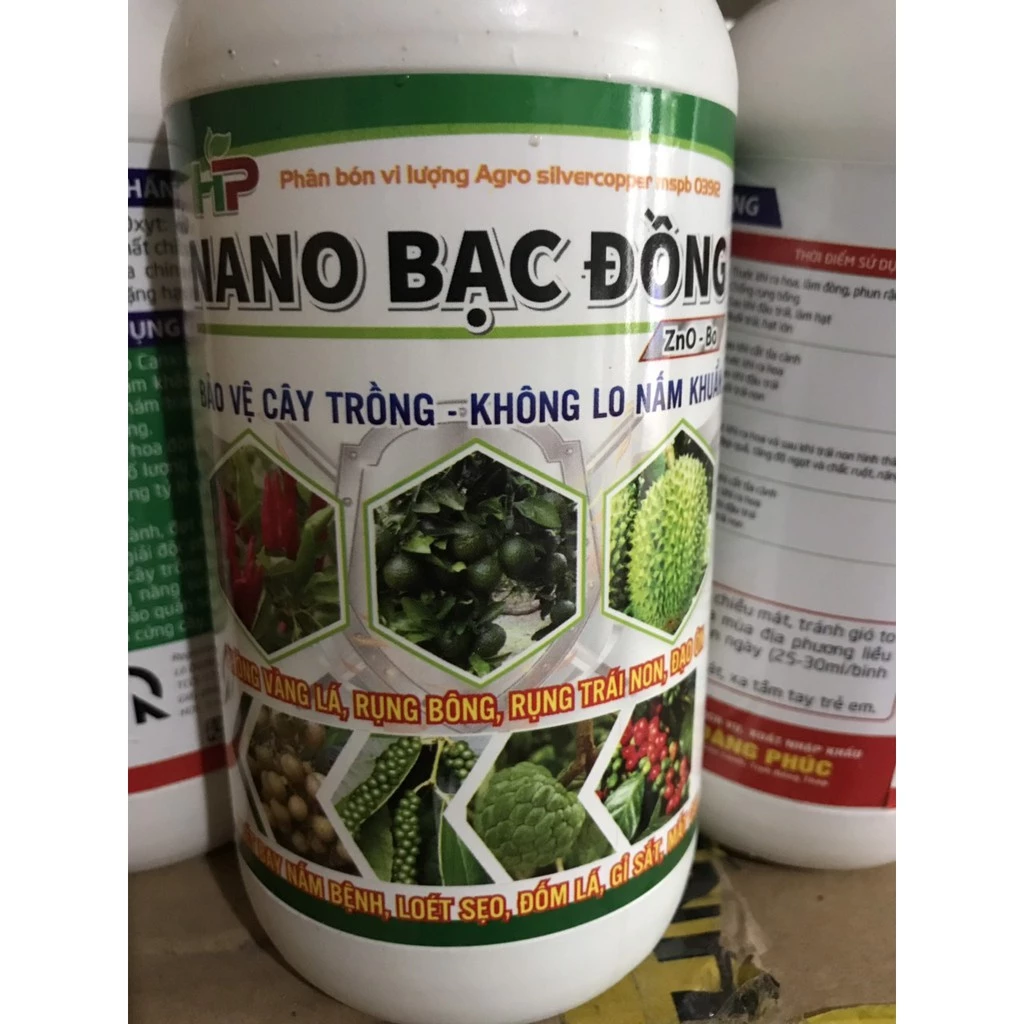
  2. Nano Silver-Copper (biological product) — A safer option for households with young children or pets — the nanoparticles destroy bacteria and fungi through a physical mechanism.

    • Dosage: 5 ml per 1 L of water.
    • Application: Spray every 7–10 days as a preventive, or every 3 days when actively treating disease.
    • Where to buy: Available on Tiki/Shopee — search for "Nano Bạc Đồng".

General note: When applying chemical fungicides such as Anvil, wear a mask and gloves. During prolonged wet weather, add a spreader-sticker to the spray mix to improve adhesion and efficacy.

Prevention

  • Never water onto the foliage.
  • Thin the canopy and reduce ambient humidity in the garden.
  • Apply preventive copper- or mancozeb-based fungicide sprays on a regular schedule.
  • Maintain balanced fertilisation and avoid excess nitrogen.

Recommended products

Anvil 5SC

Anvil 5SC

- Effective fungicide: Anvil 5SC is a broad-spectrum fungicide whose active ingredient Hexaconazole kills pathogenic fungi by inhibiting ergosterol biosynthesis. - Fast and effective spray: Plant tissue absorbs the product rapidly with strong translaminar and systemic movement, providing quick and long-lasting control of fungal disease.

Nano Silver-Copper Solution

Nano Silver-Copper Solution

Strongly prevents fungal and bacterial diseases on plants increases resistance against leaf yellowing, root rot, and seedling damping-off supplements micronutrients to boost plant resistance, stress tolerance, and photosynthetic capacity

Share this page