
Downy Mildew
FungalDescription
Downy mildew is caused by the oomycete Peronospora sparsa. Damp, cool, poorly ventilated conditions allow the disease to explode rapidly.
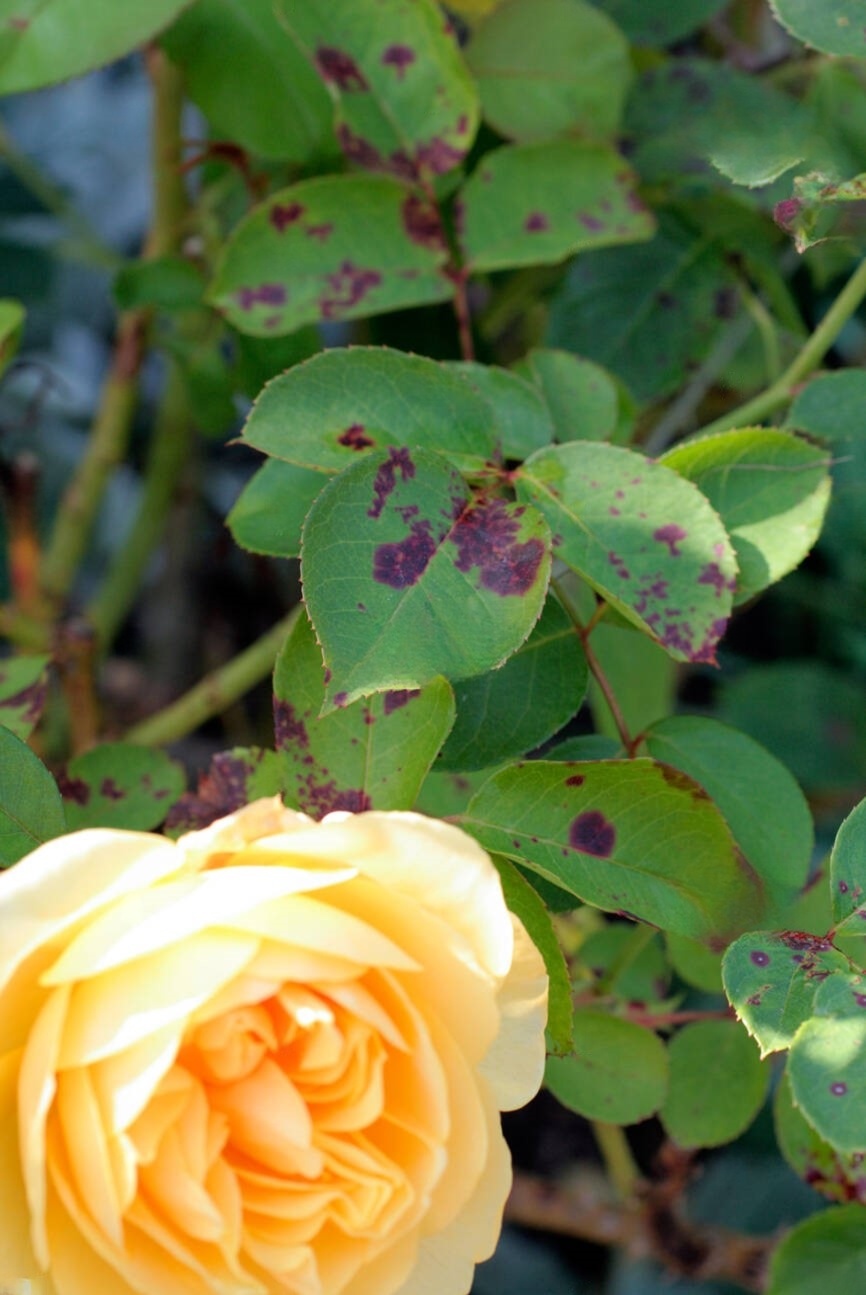
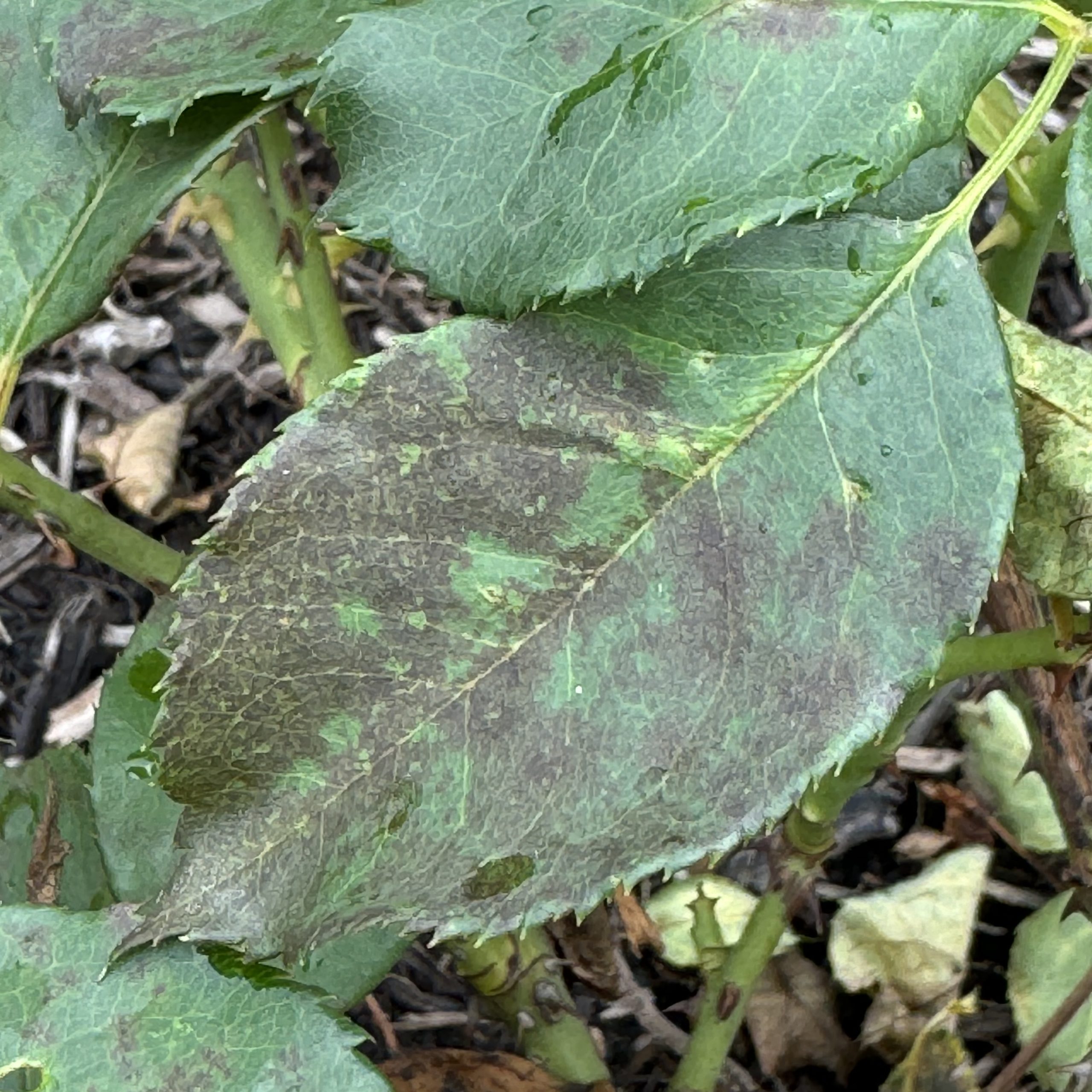
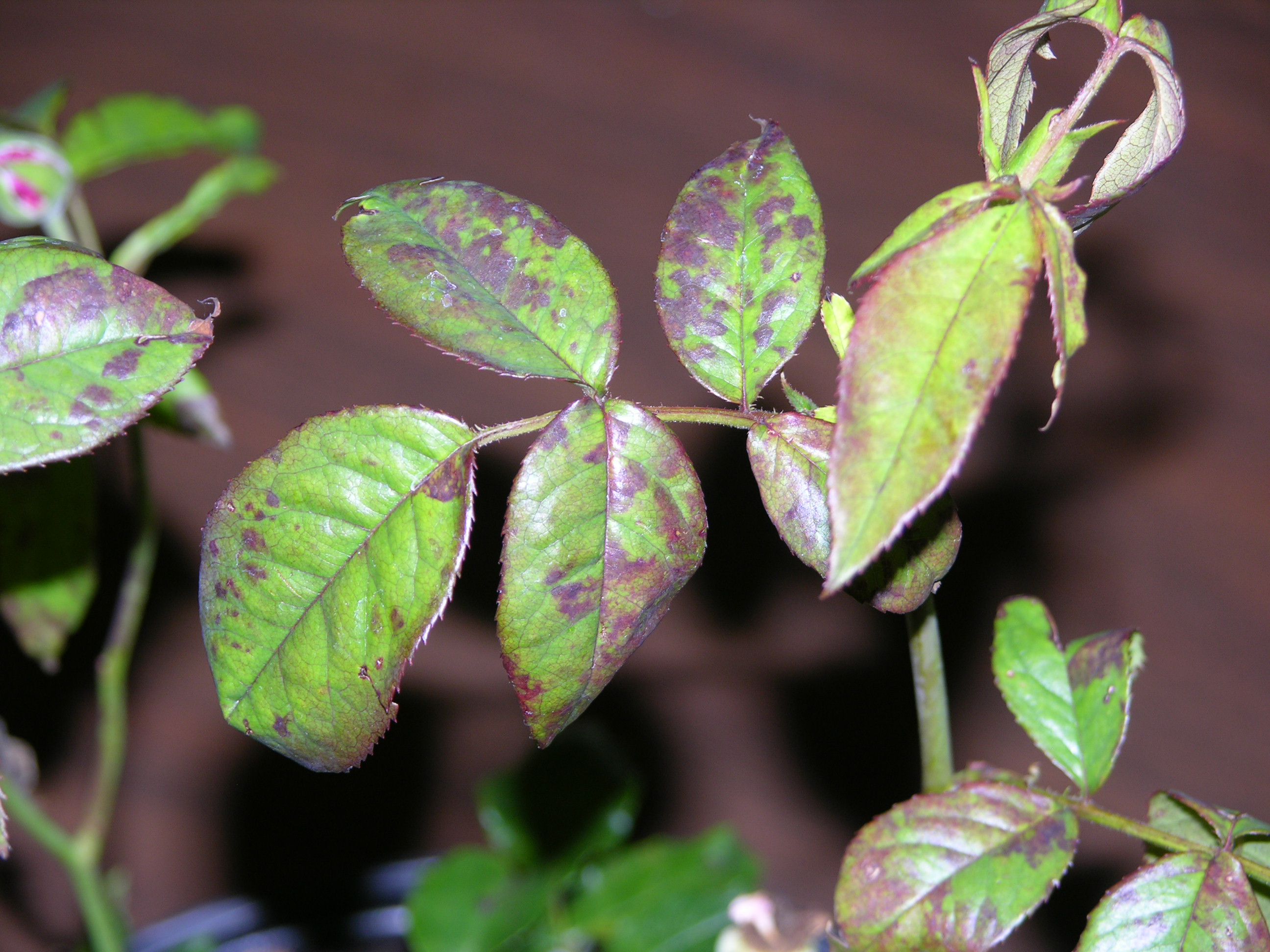
Symptom expression is highly variable. Infection usually begins as a cluster of small lesions on the underside of the leaf — purplish, bluish, or grey-green flecks. Once the pathogen has penetrated and colonised the leaf structure, corresponding pale yellow patches develop on the upper surface, mirroring the sporangia massing below. The fungus may then invade the upper surface as well, generating fresh sporangial layers and expanding the infected area.
As the yellow patches die, the fungal growth turns dark brown or a dull greyish-white powdery layer. At this stage canes become distorted, leaves dry, curl, and abscise. Spores continue to spread to neighbouring leaves and adjacent plants. The latent period is typically 7–10 days from infection to new spore production, but can collapse to as little as 4 days under favourable conditions — surface humidity above 85% is the decisive driver.
Why early lesions are round but later lesions become angular. Downy mildew can only spread through the intercellular spaces between mesophyll cells — it lacks the enzymes needed to breach lignified cell walls. Early on, while a lesion is small and has not yet reached any vein, it appears as a round or oval bruise. Once the lesion expands and meets the vascular bundle sheath surrounding a vein (a wall of thick, lignified, tightly packed cells protecting the conductive tissue), the pathogen is blocked outright — the hyphae are forced to creep along the vein boundary, producing flat purple necrotic lesions with straight edges hugging the vein network and forming angular polygonal patches. This is the single most reliable cue separating downy mildew from black spot (which overlays the veins, ignoring them) and anthracnose (whose enzymes are strong enough to eat through the smaller veins).
Symptoms
- Purple or reddish-brown lesions on the foliage.
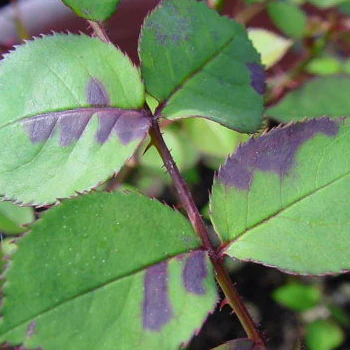
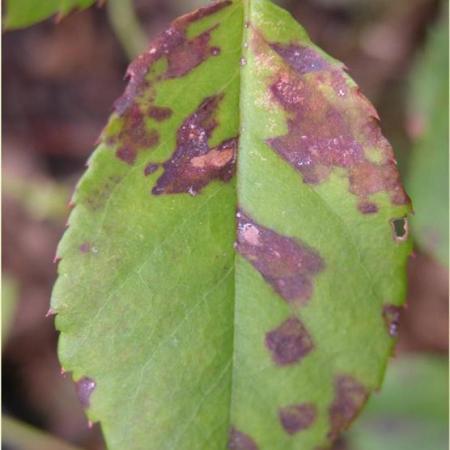
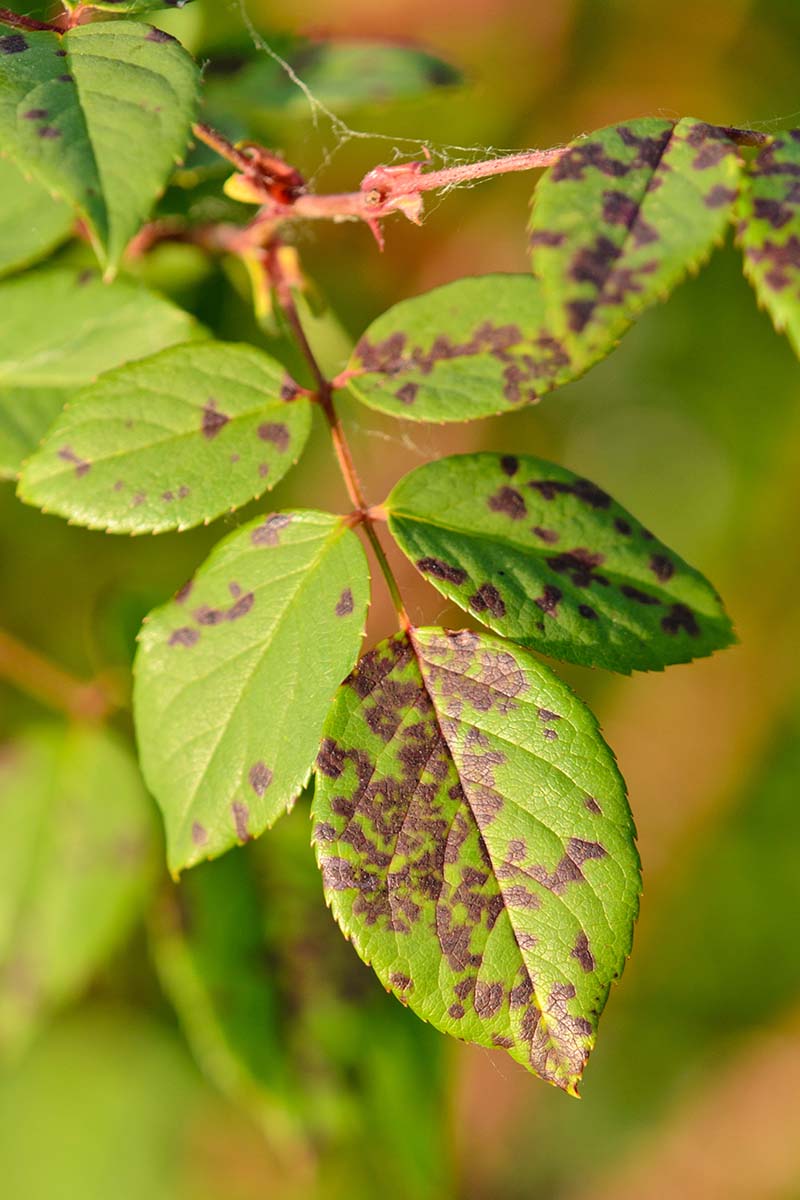
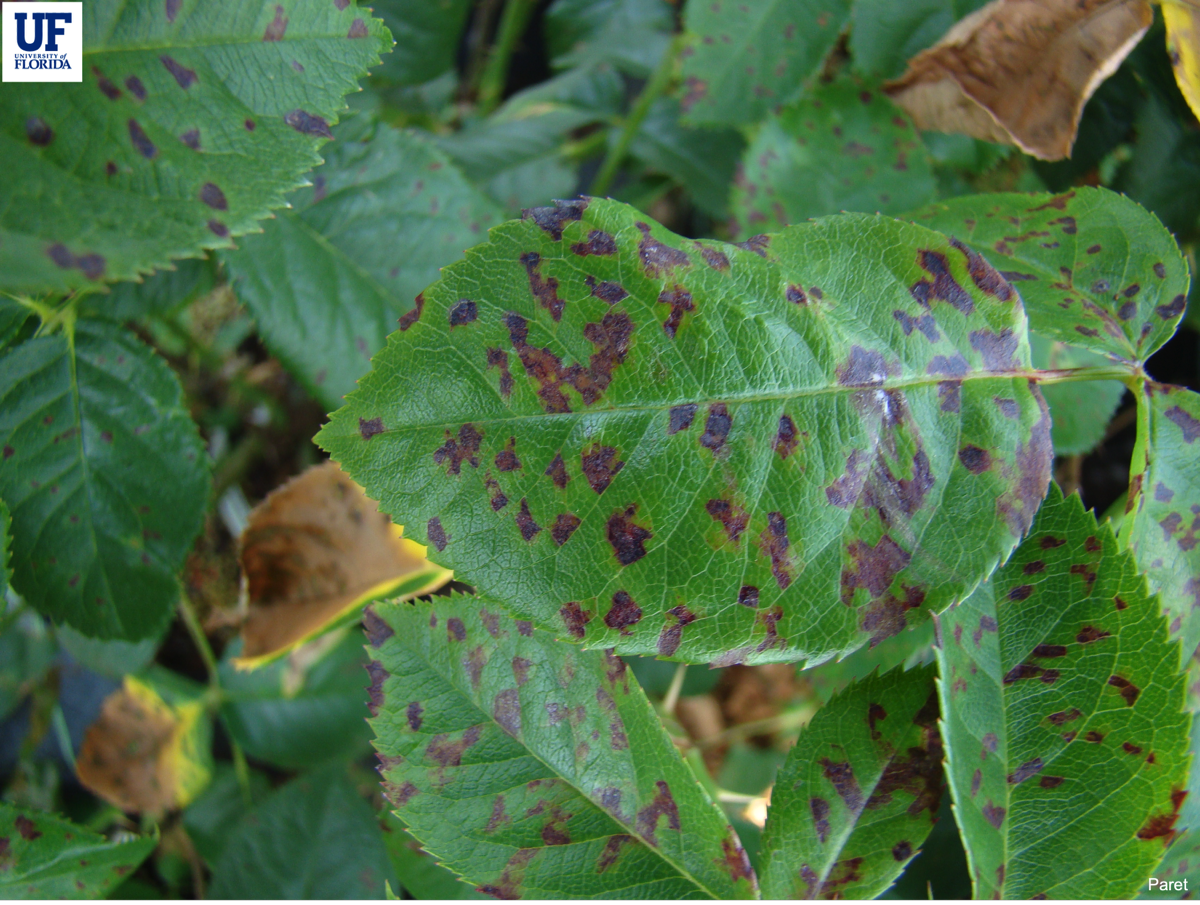
- Purple to reddish-brown patches spreading in irregular shapes with diffuse, indistinct margins.
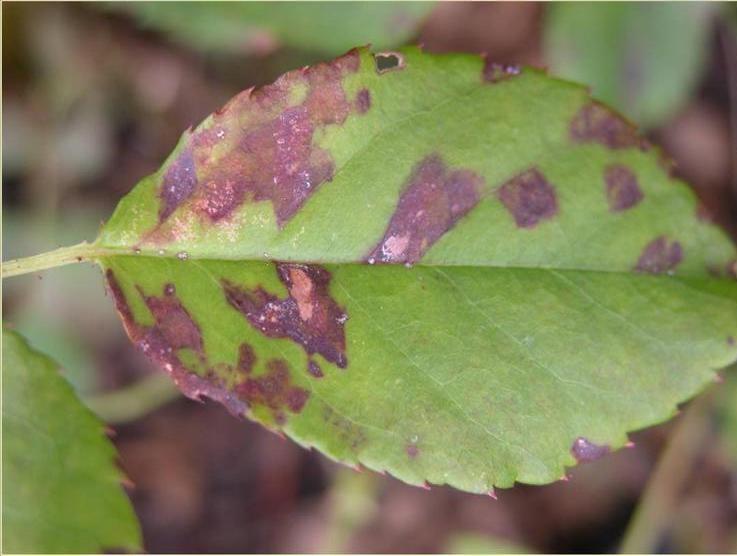
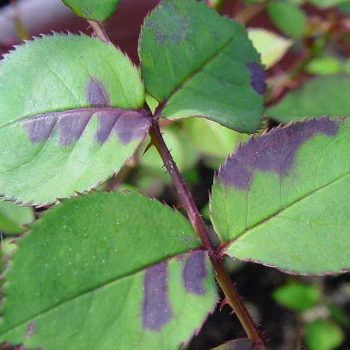
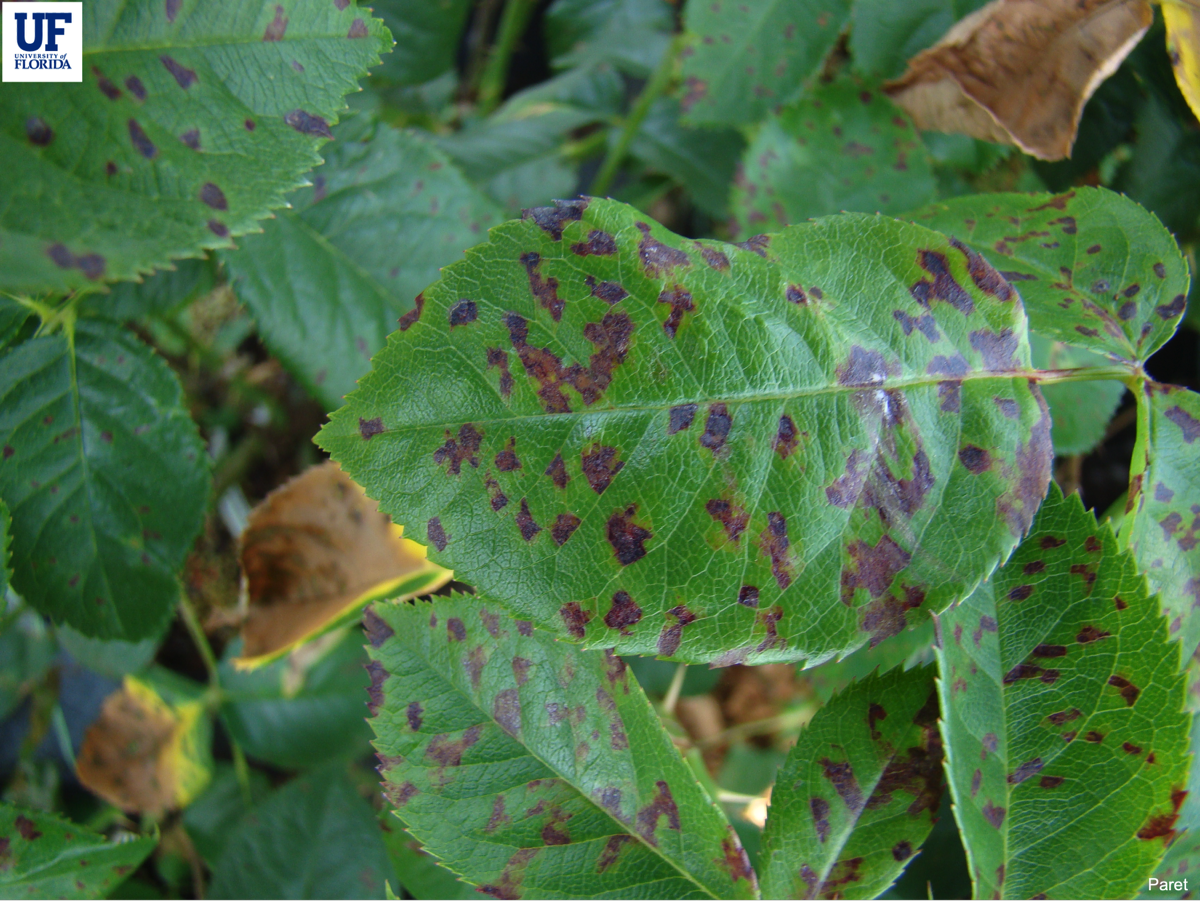
- Scorched, burn-like haloes surrounding the lesions.
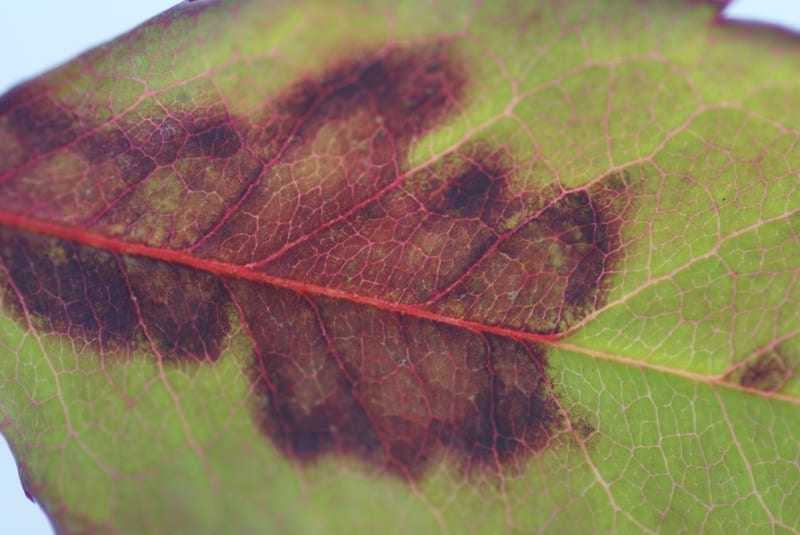
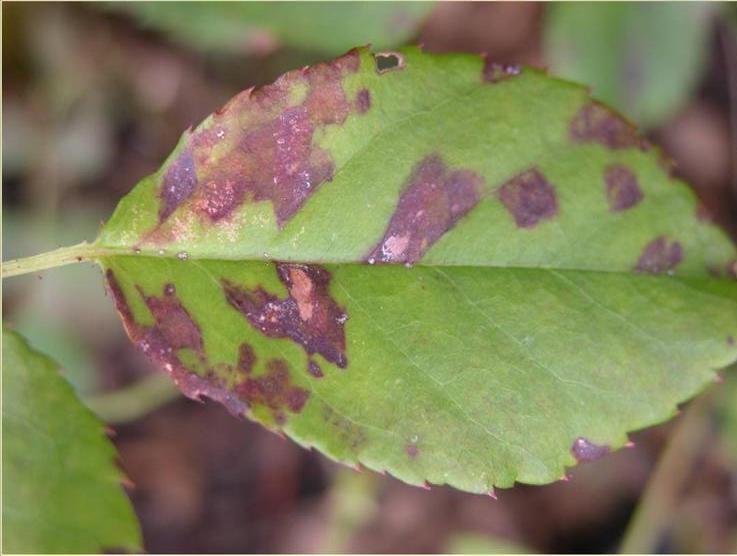
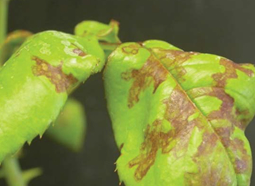
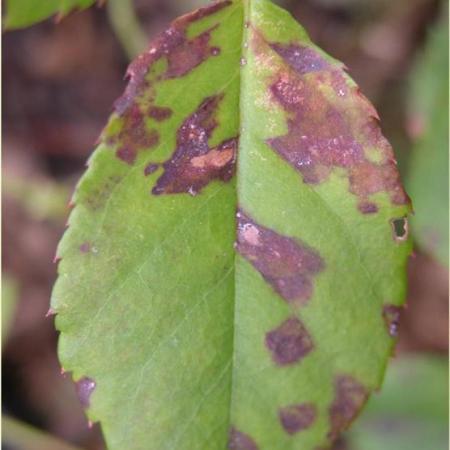
- Small clusters of purplish, bluish, or grey-green flecks on the underside of the leaf, with matching pale yellow patches on the upper surface indicating the sporangia beneath.
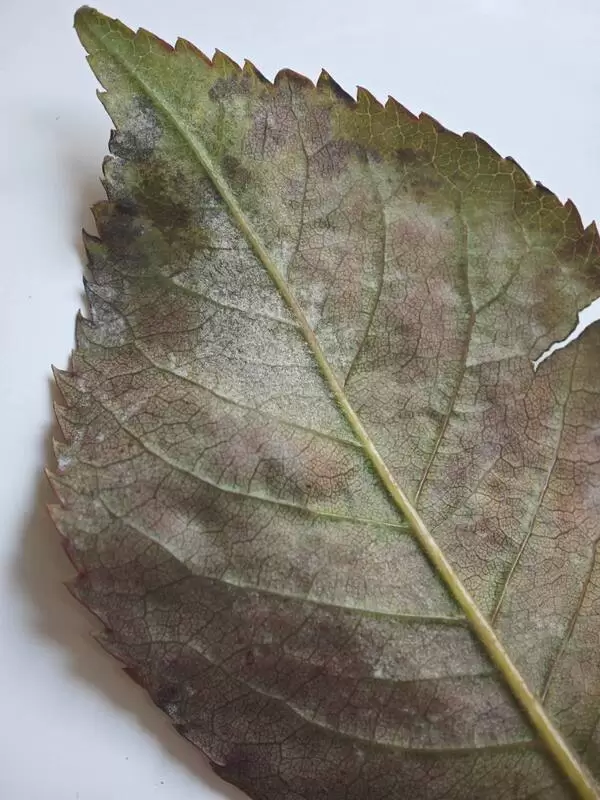
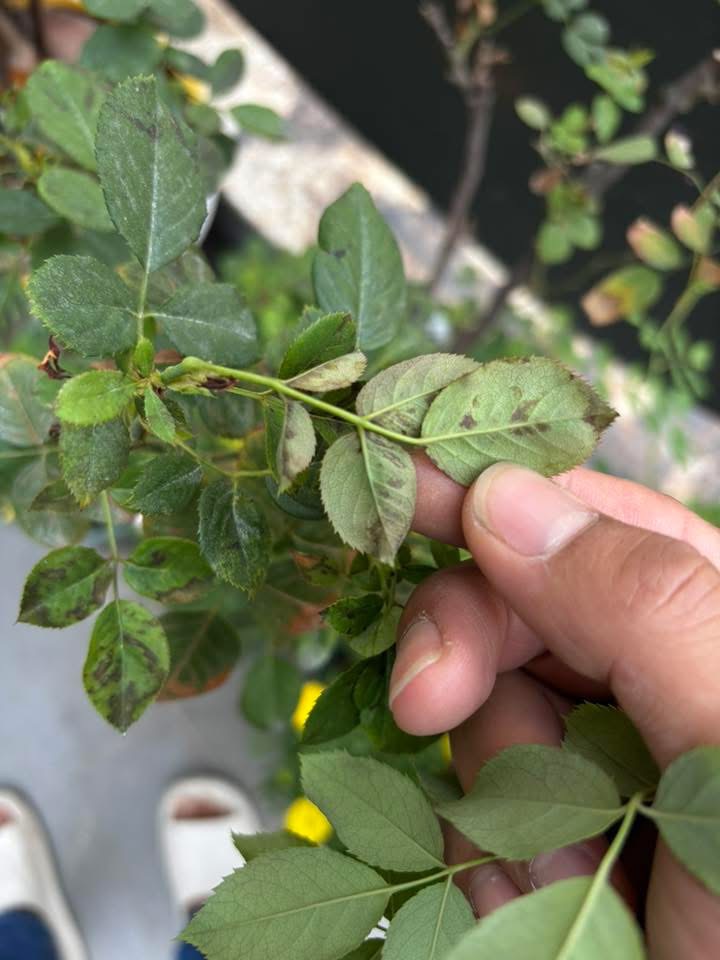
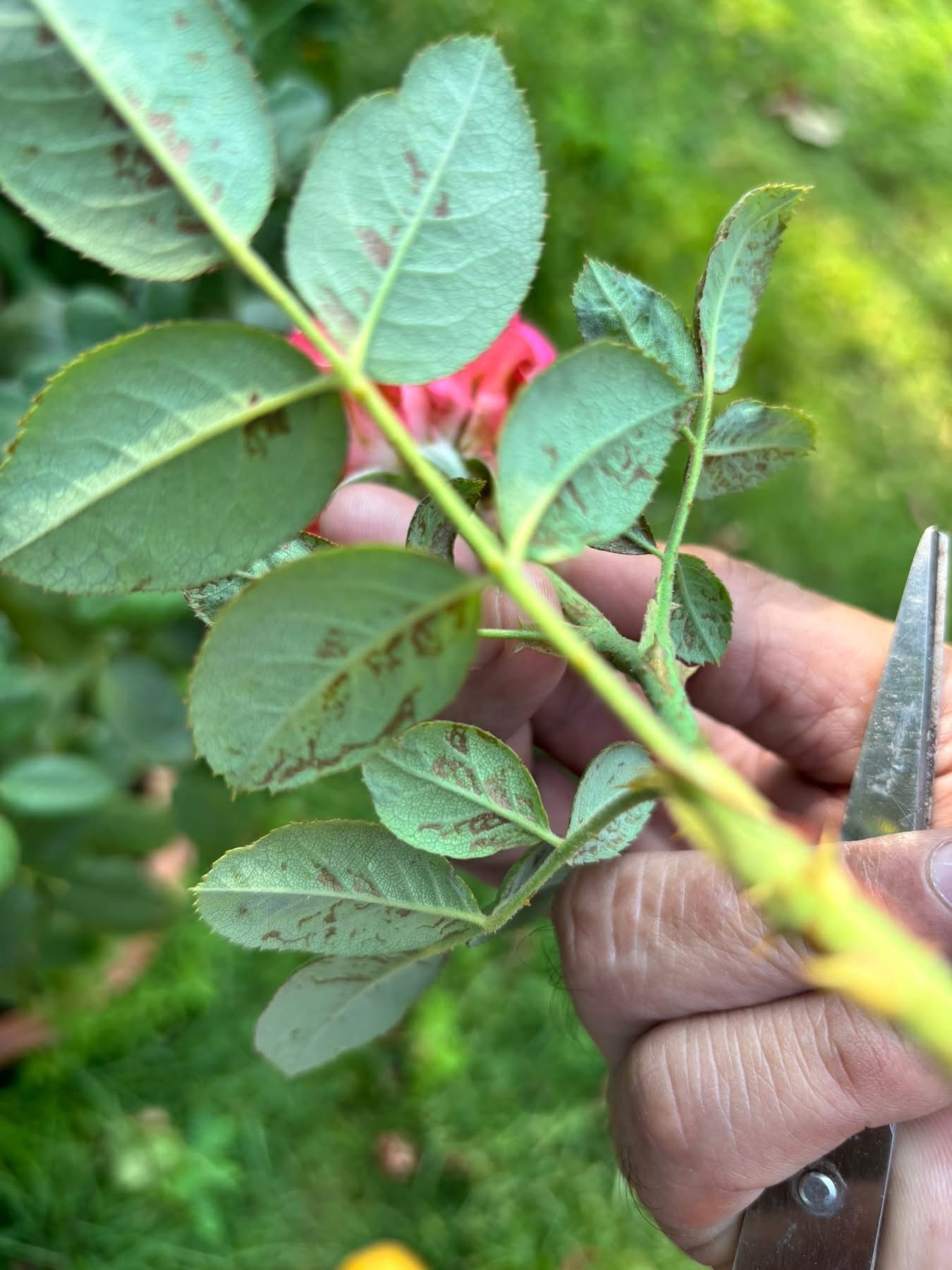
- Leaves abscise on light contact in advanced stages.
- Pale yellow halo on the upper leaf surface around the sporangia below (early-stage symptom)
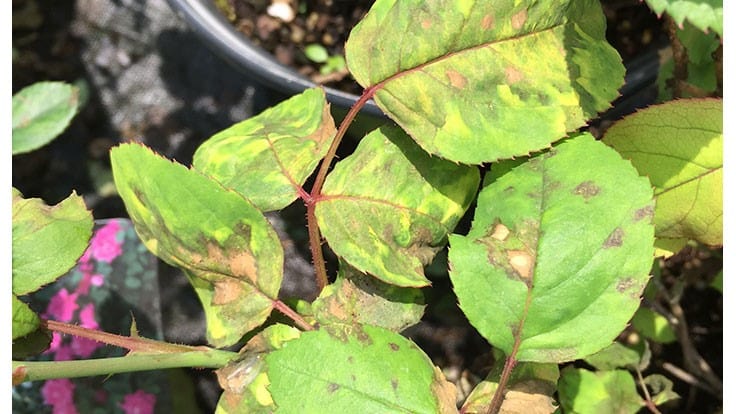
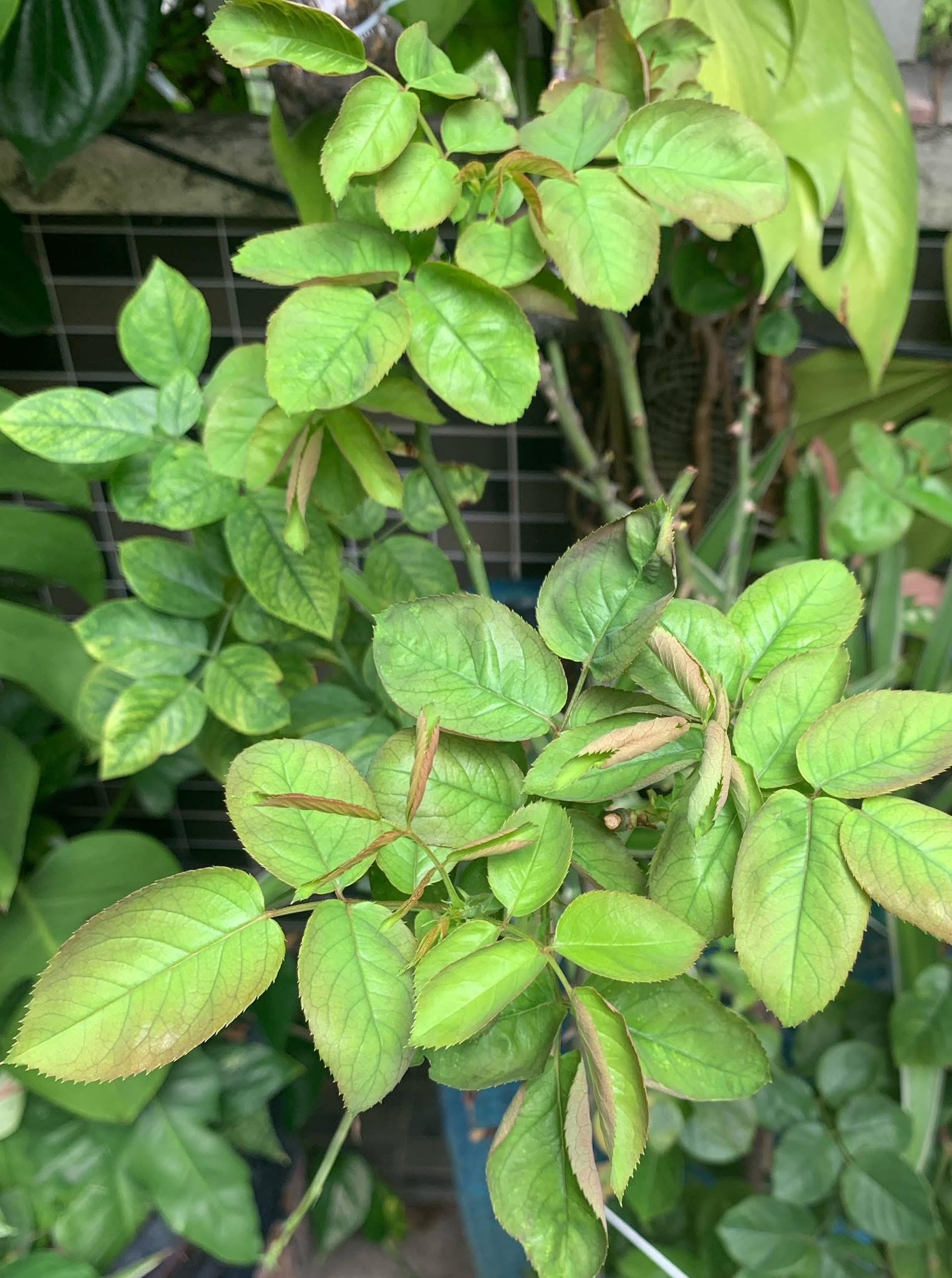
- In later stages, flat purple necrotic lesions with straight edges follow the leaf veins, forming angular polygonal patches. The pathogen cannot breach the lignified vascular bundle sheath, so hyphae are forced to creep along the veins instead of crossing them.
Treatment plan
- Prune out leaves with purple blotches and a downy underside; improve air circulation and light penetration through the canopy.
- Biological control (recommended): apply formulations containing antagonistic fungi such as Trichoderma spp., Bacillus subtilis, or Chaetomium (e.g. BS01) to suppress the pathogen.
- Chemical control: apply a systemic fungicide targeted against downy mildew — active ingredients such as Metalaxyl, Mancozeb, or Dimethomorph (e.g. NEKKO 69WP). Spray to thoroughly wet both leaf surfaces.
- [After 5 days] Reapply per label interval; rotate active ingredients to prevent resistance build-up.
- [After 10 days] Check new growth for fresh lesions; if disease pressure remains, continue spraying and pruning.
Prevention
- Reduce ambient humidity in the growing area.
- Avoid wetting the foliage.
- Prune rose foliage regularly to maintain good air circulation and let sunlight reach the canopy.
- Apply preventive fungicide sprays on a 7–10 day rotation, alternating active ingredients to prevent resistance build-up.