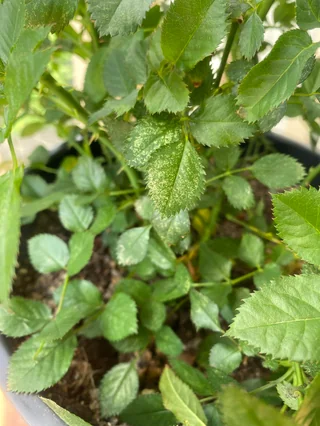
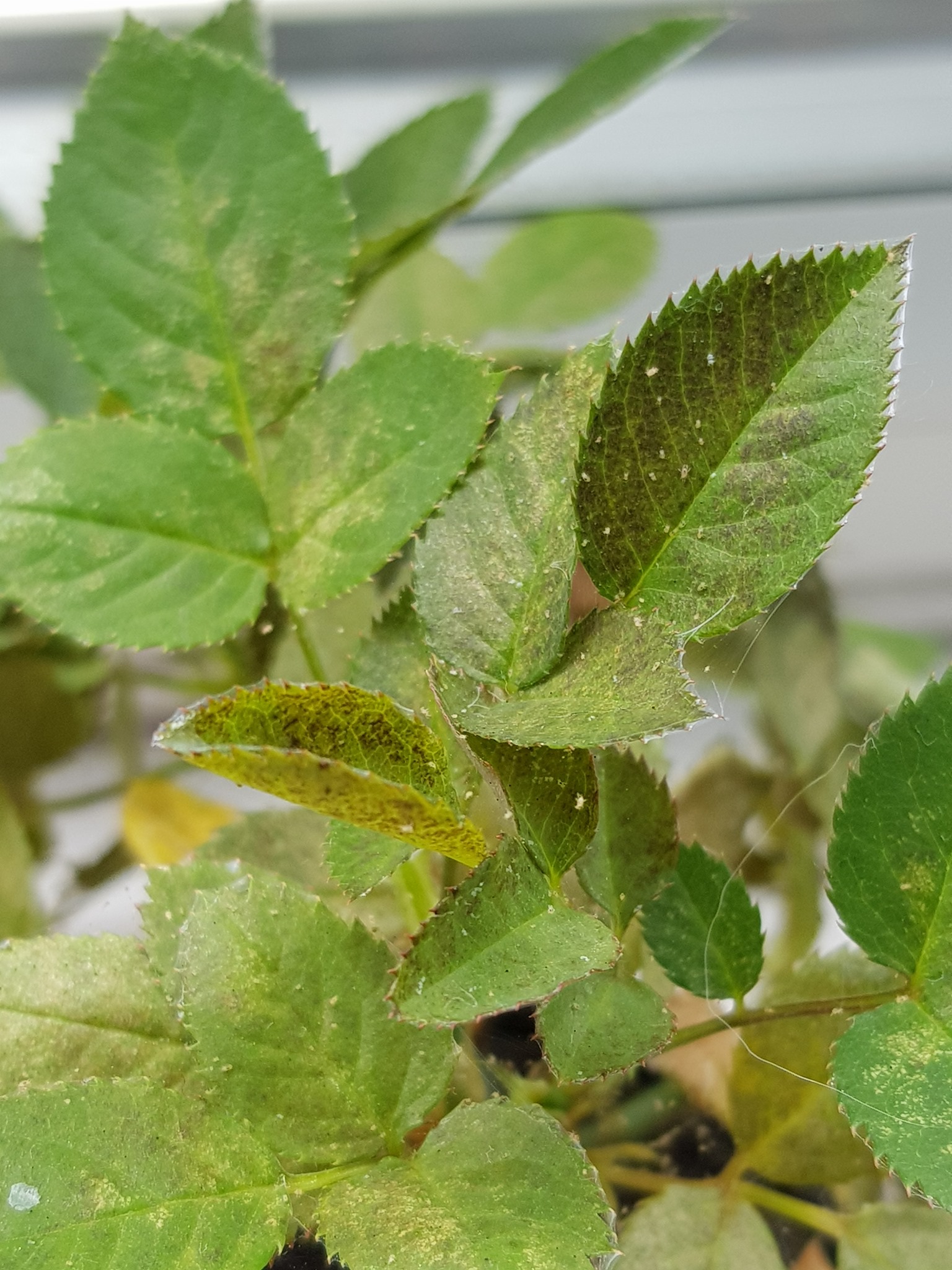
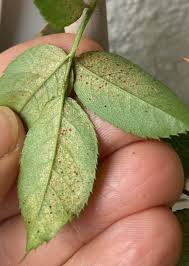
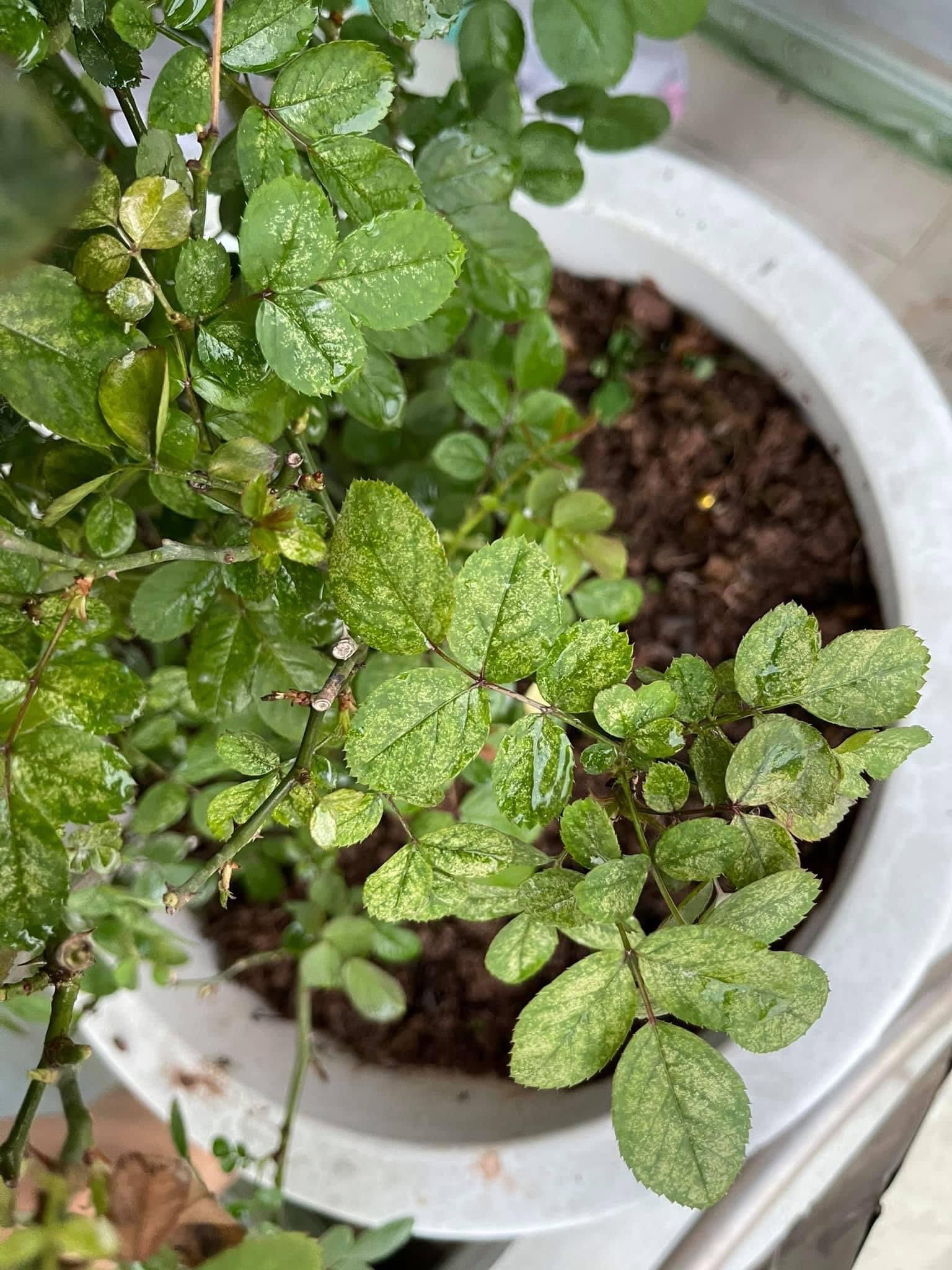
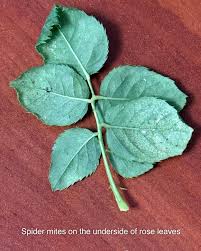
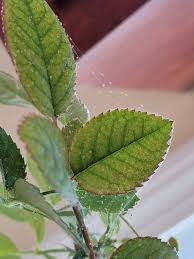
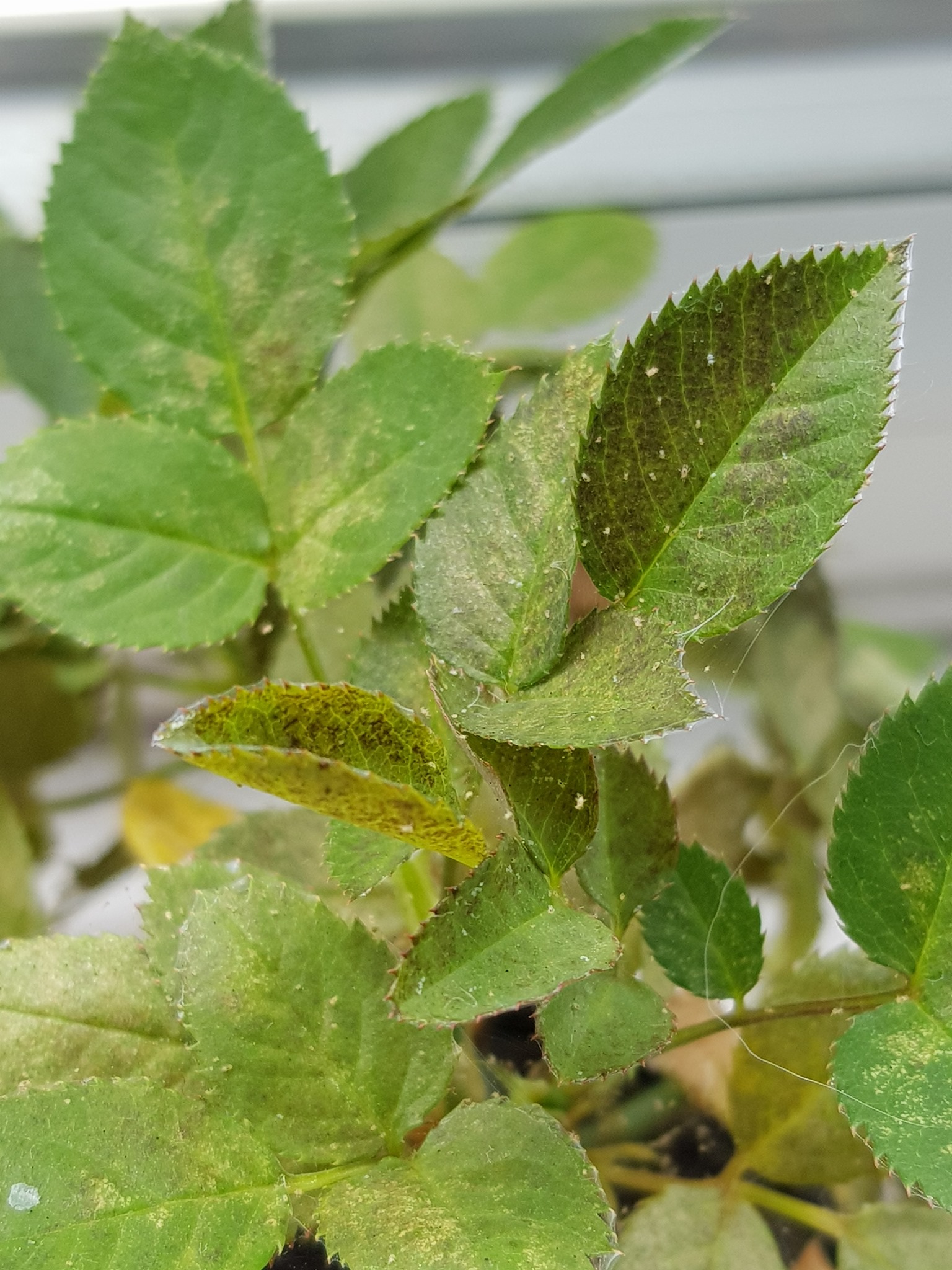
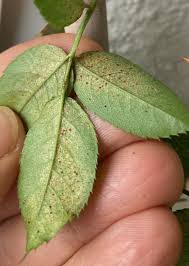
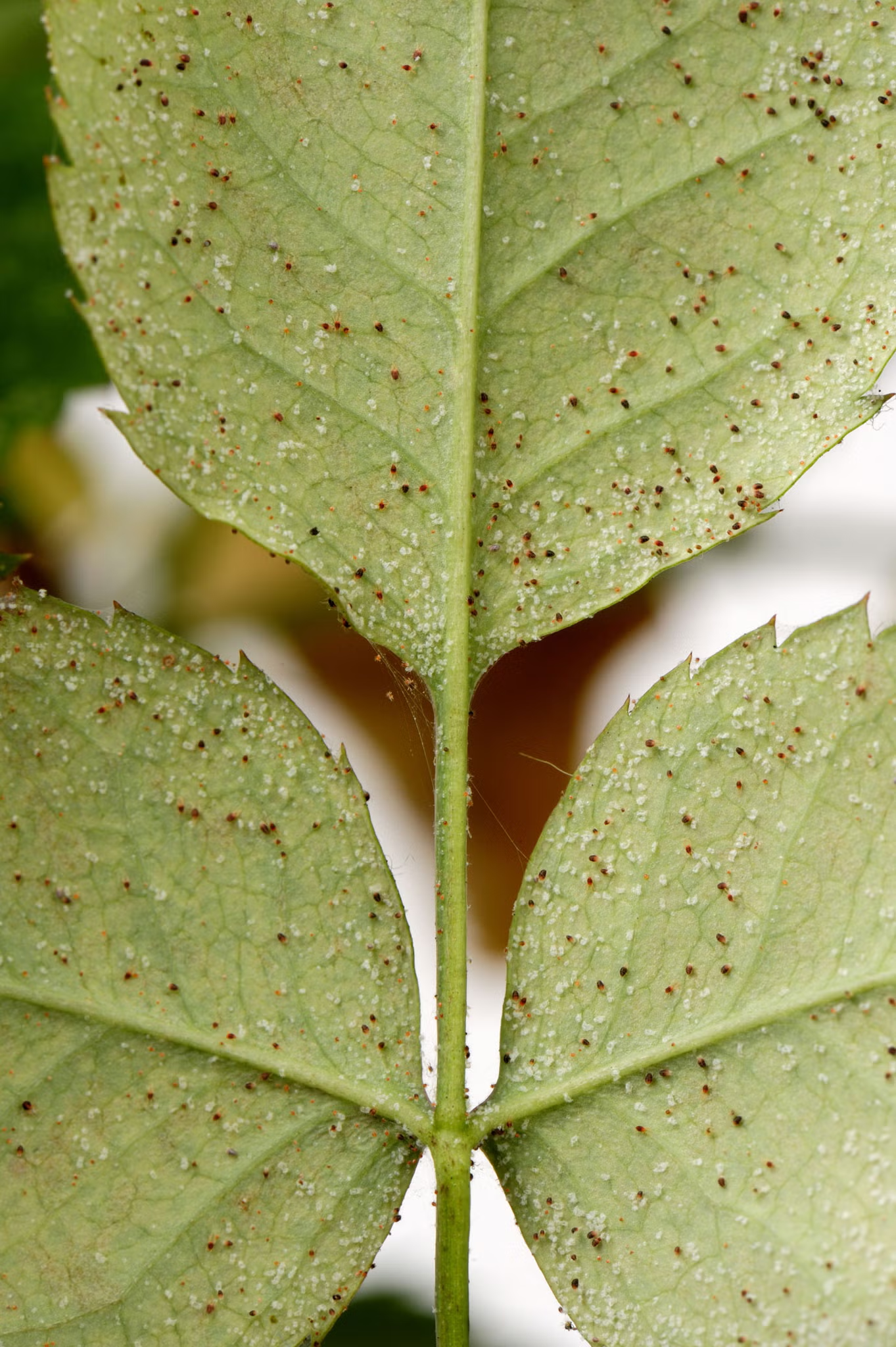
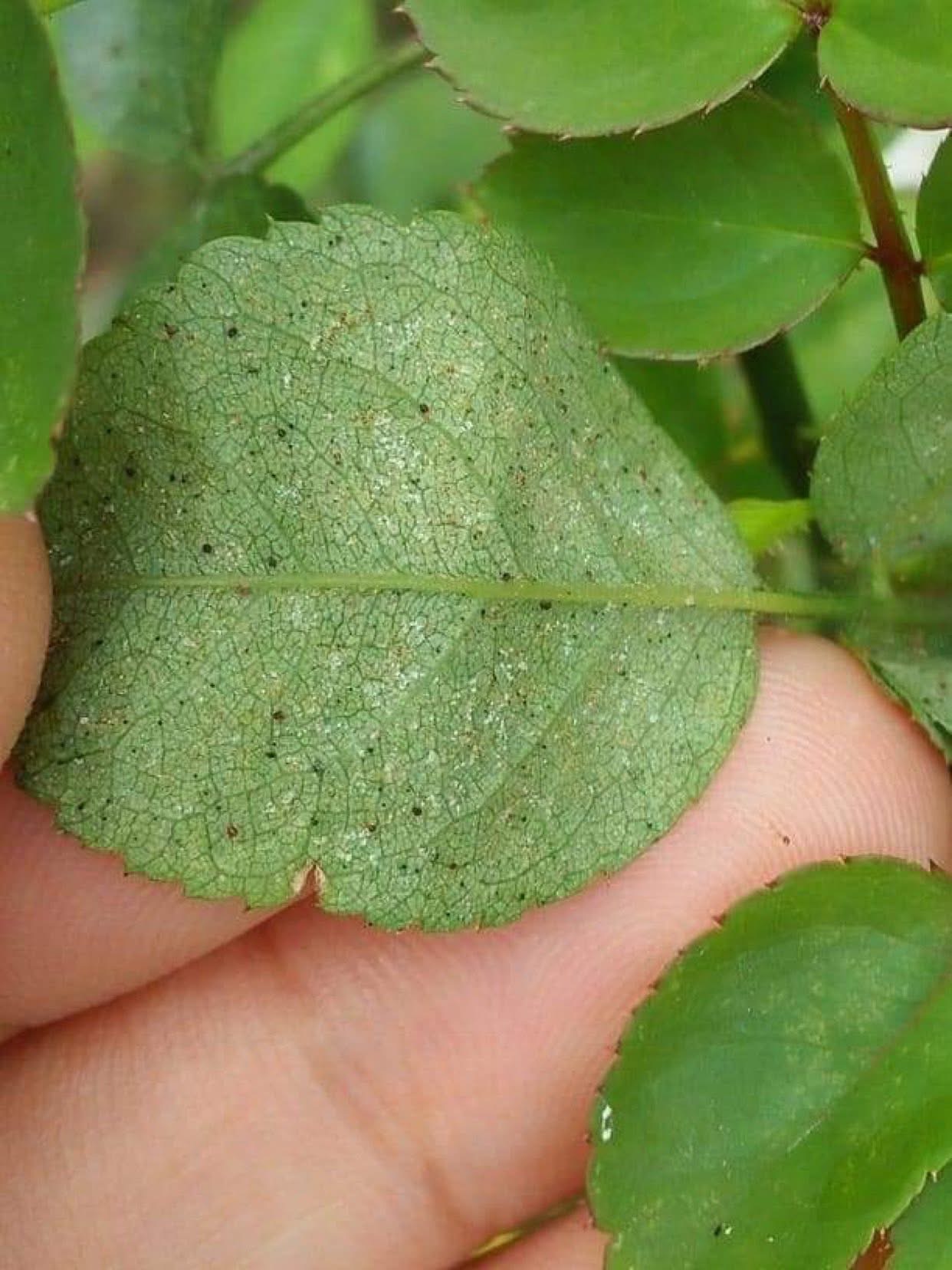
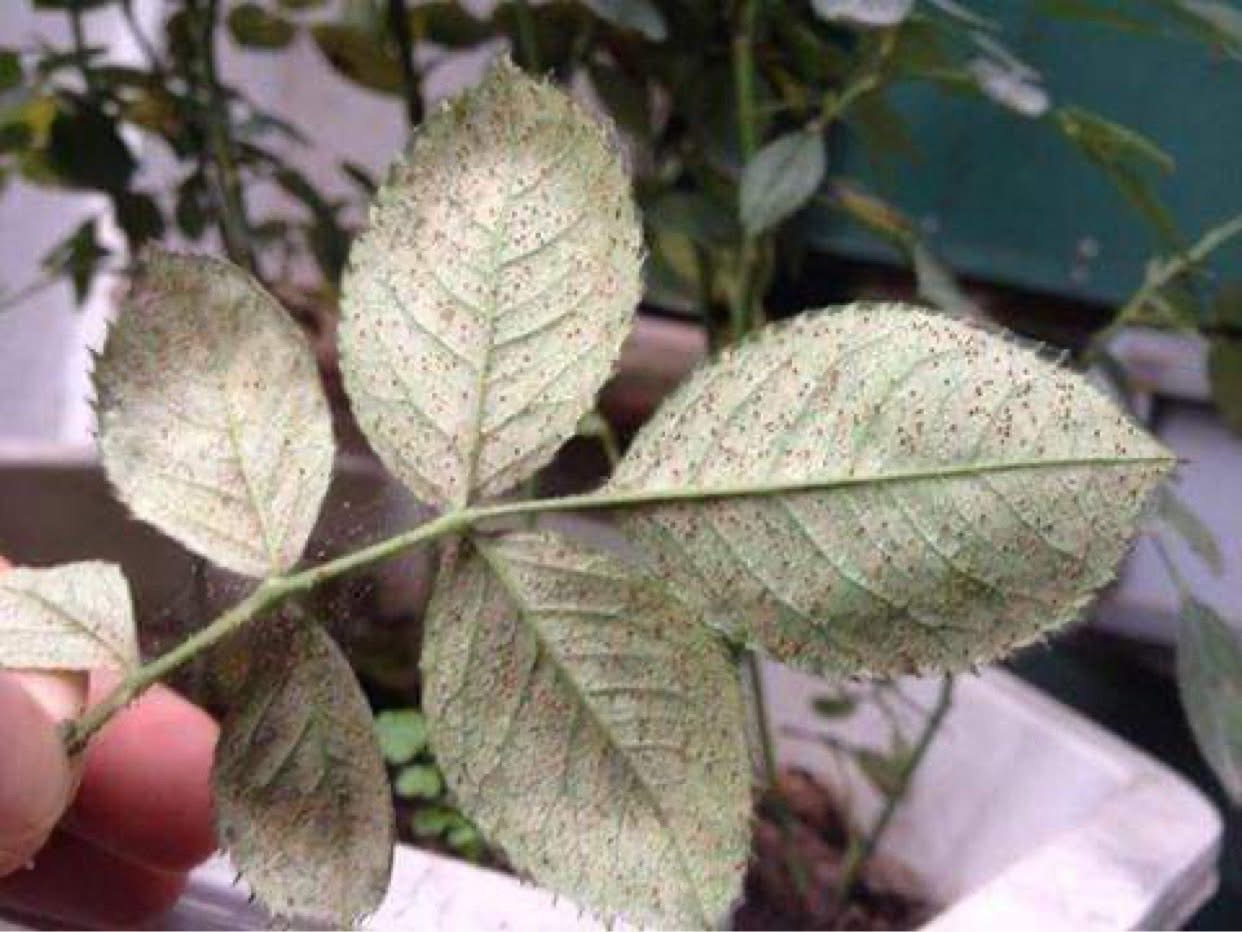
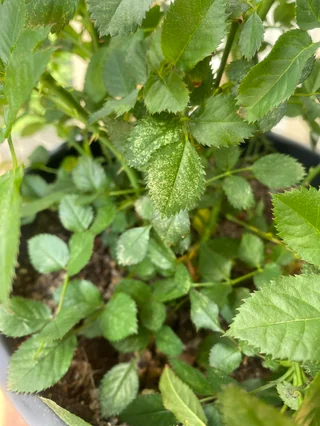
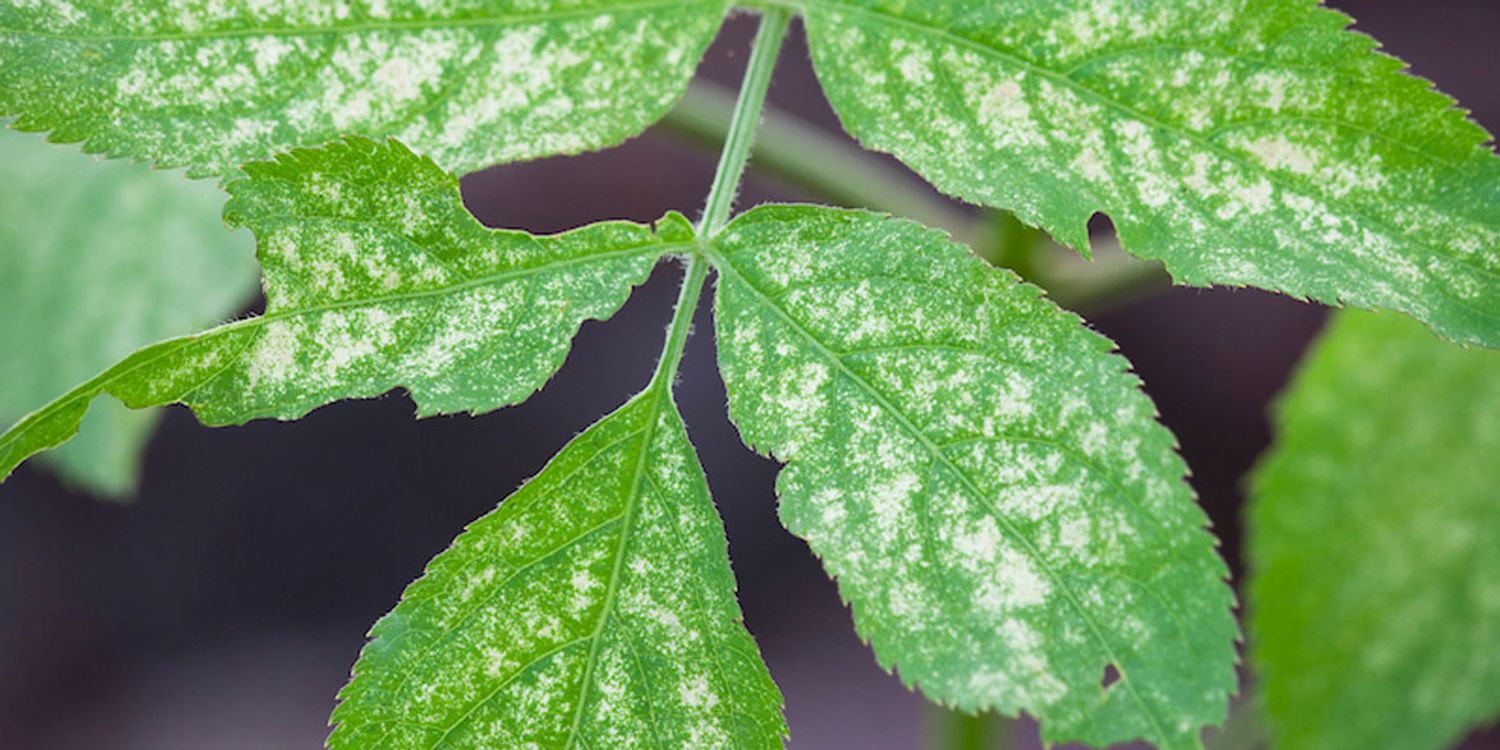
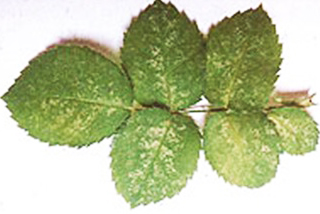
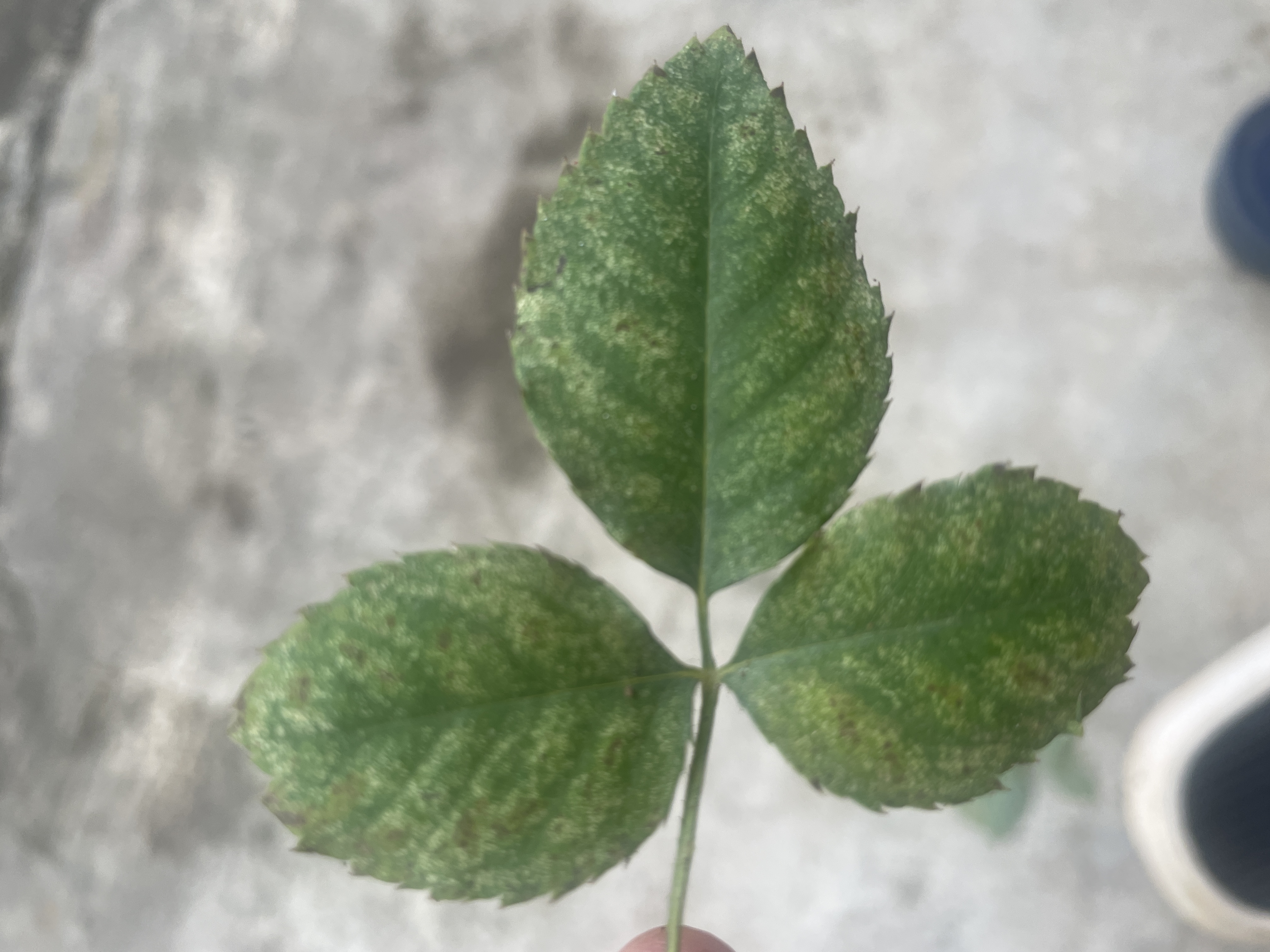
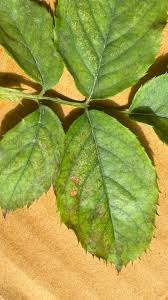
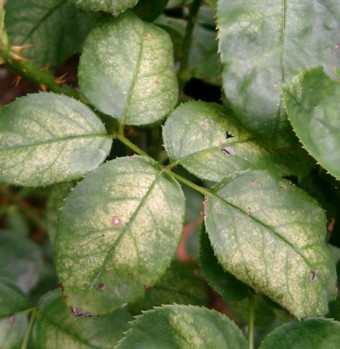
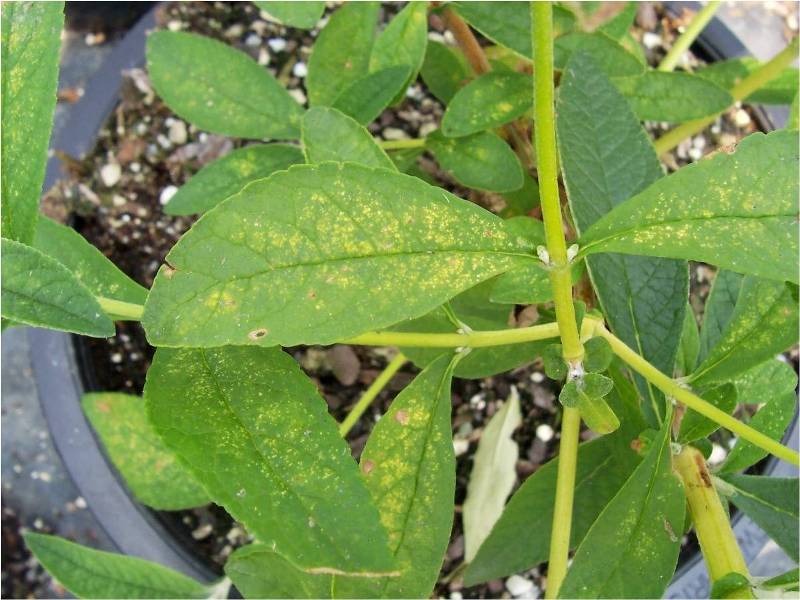
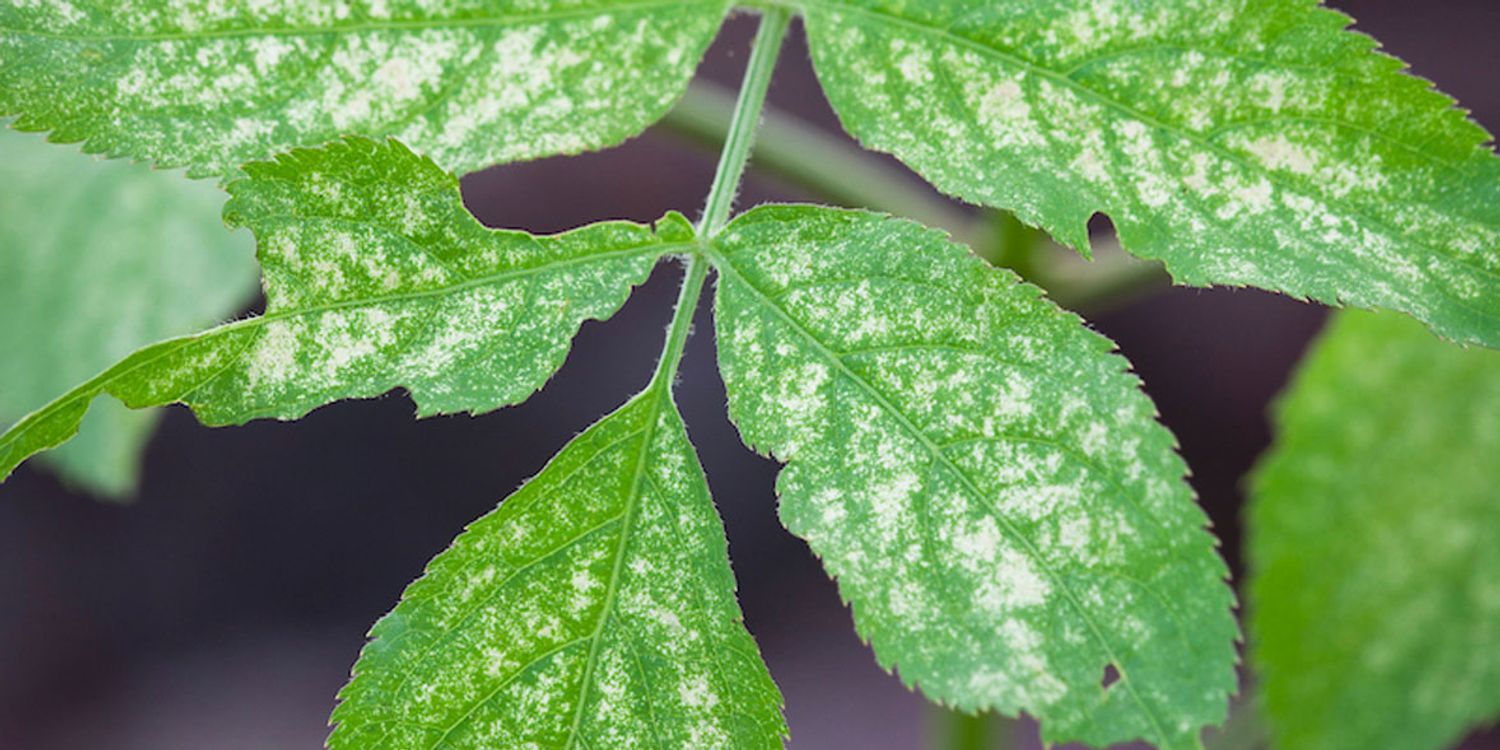
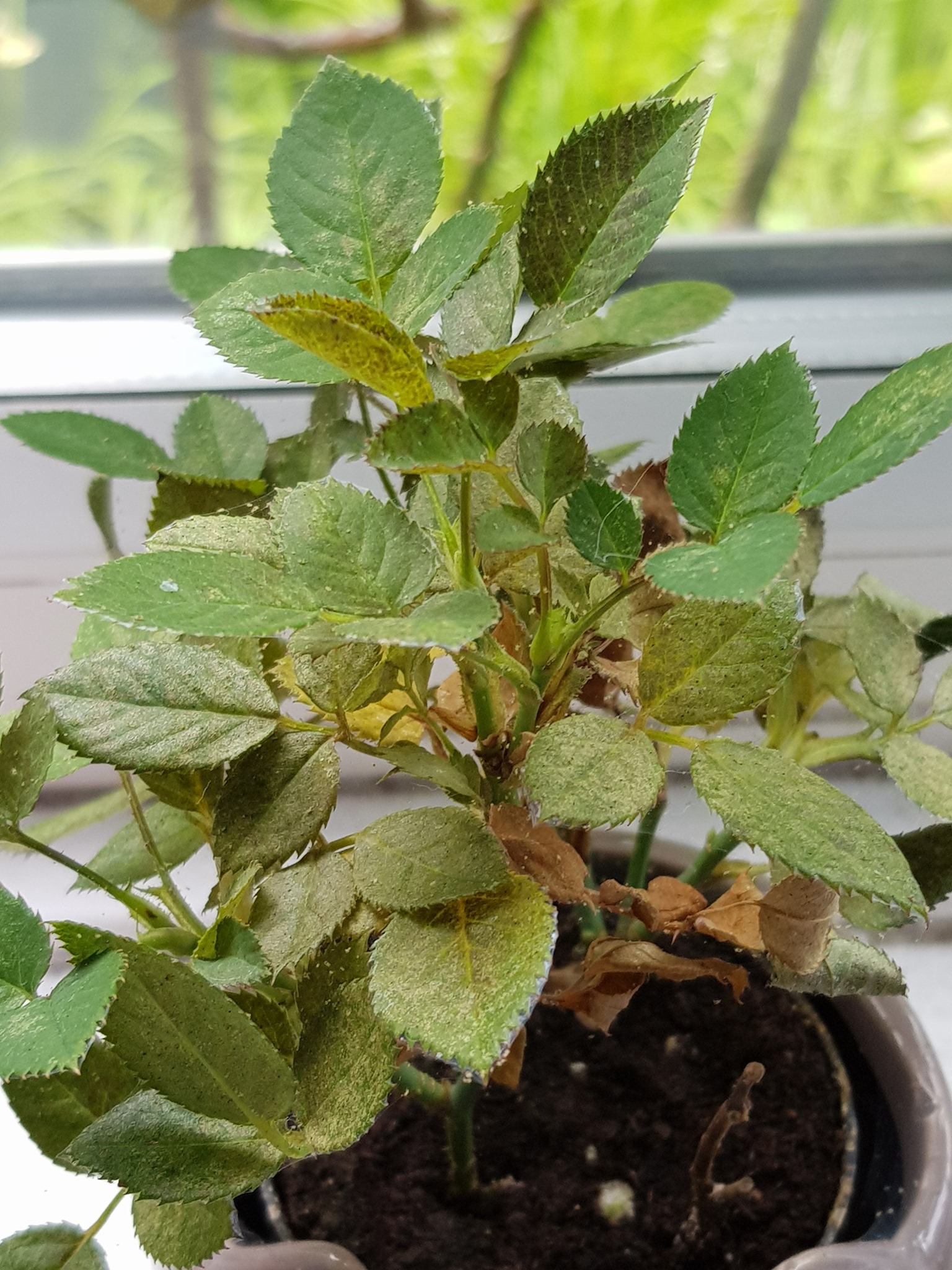
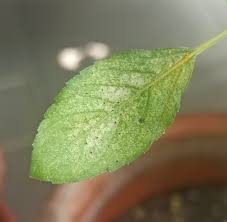
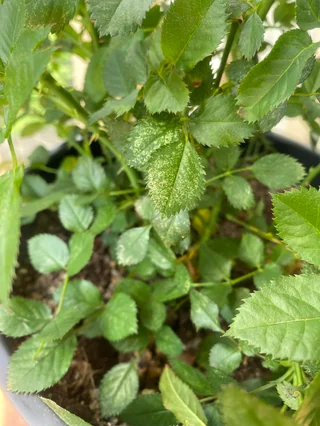
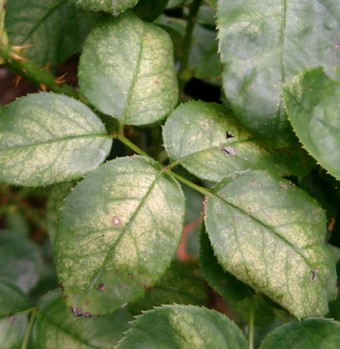
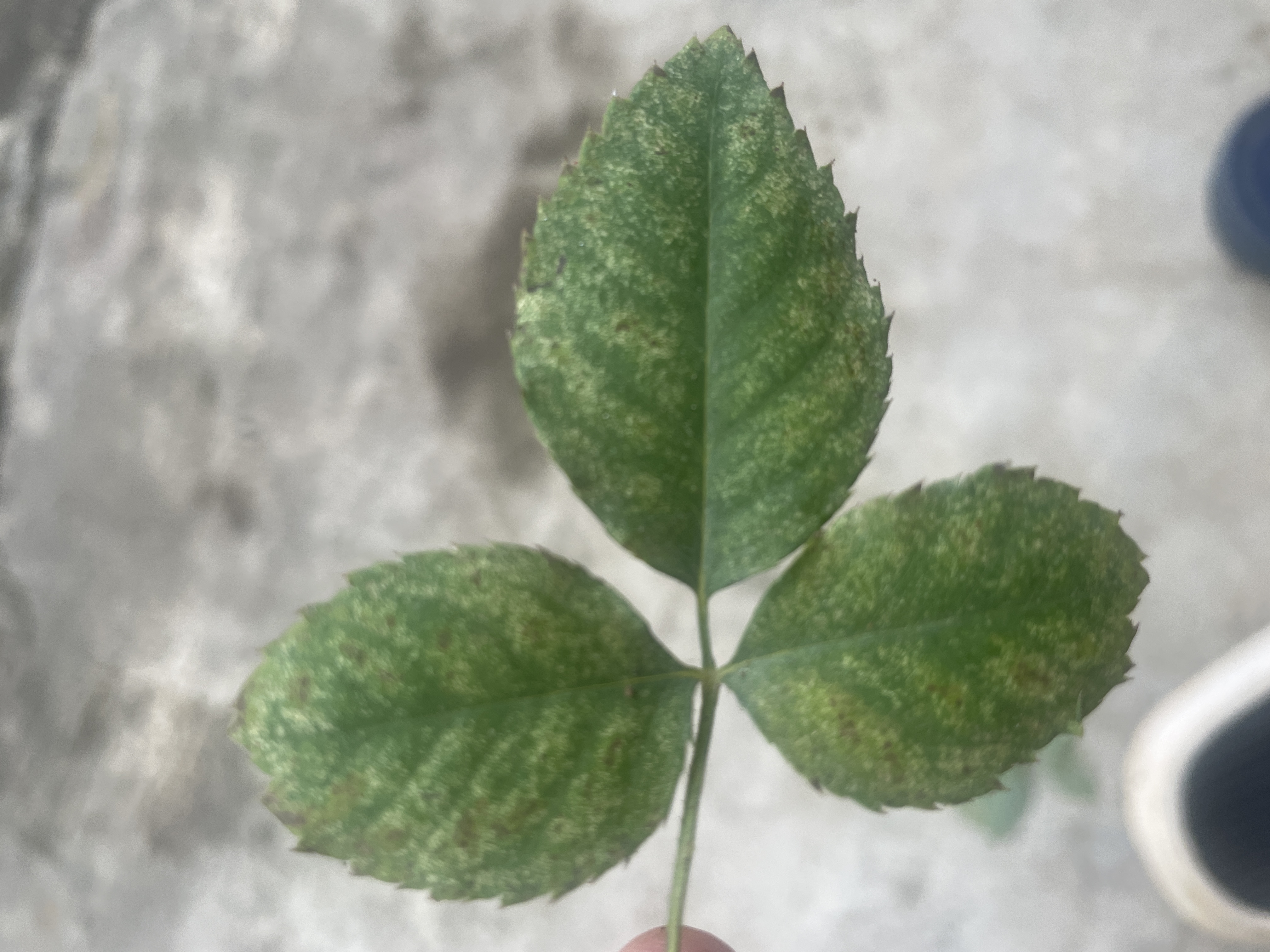
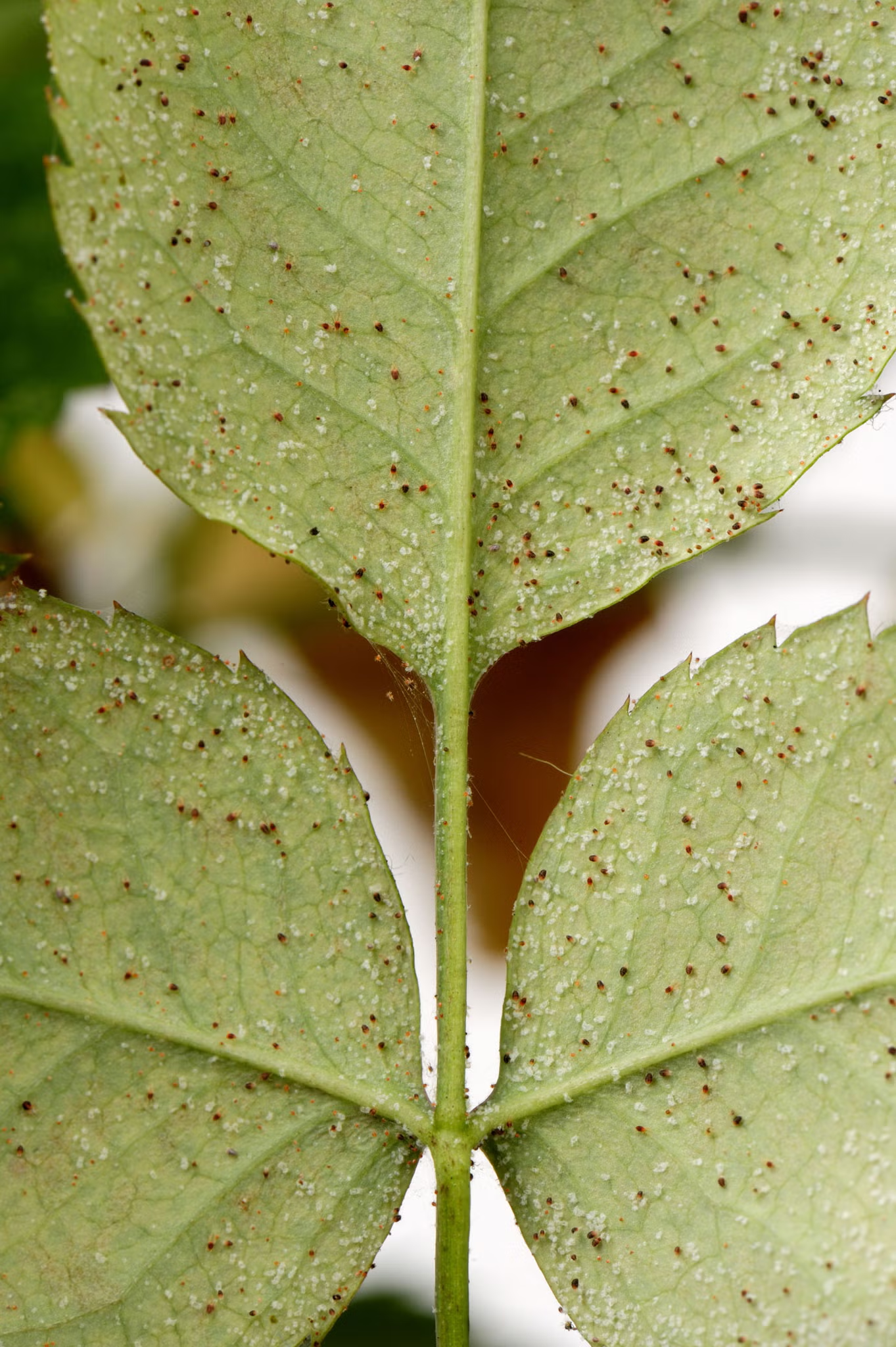
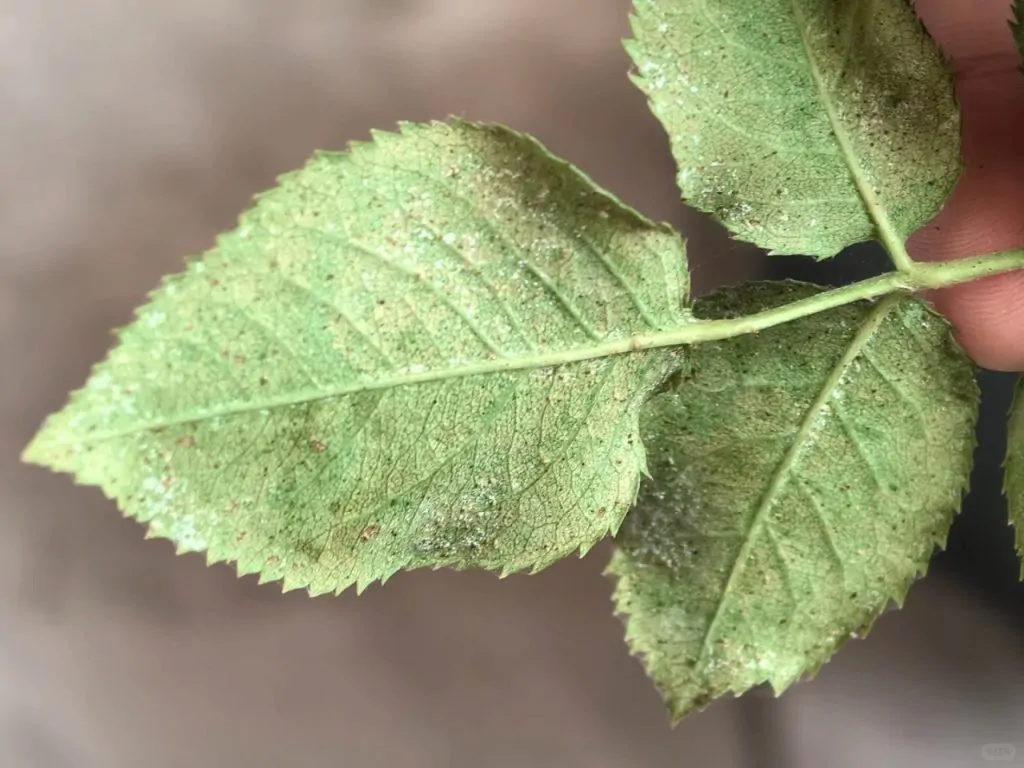
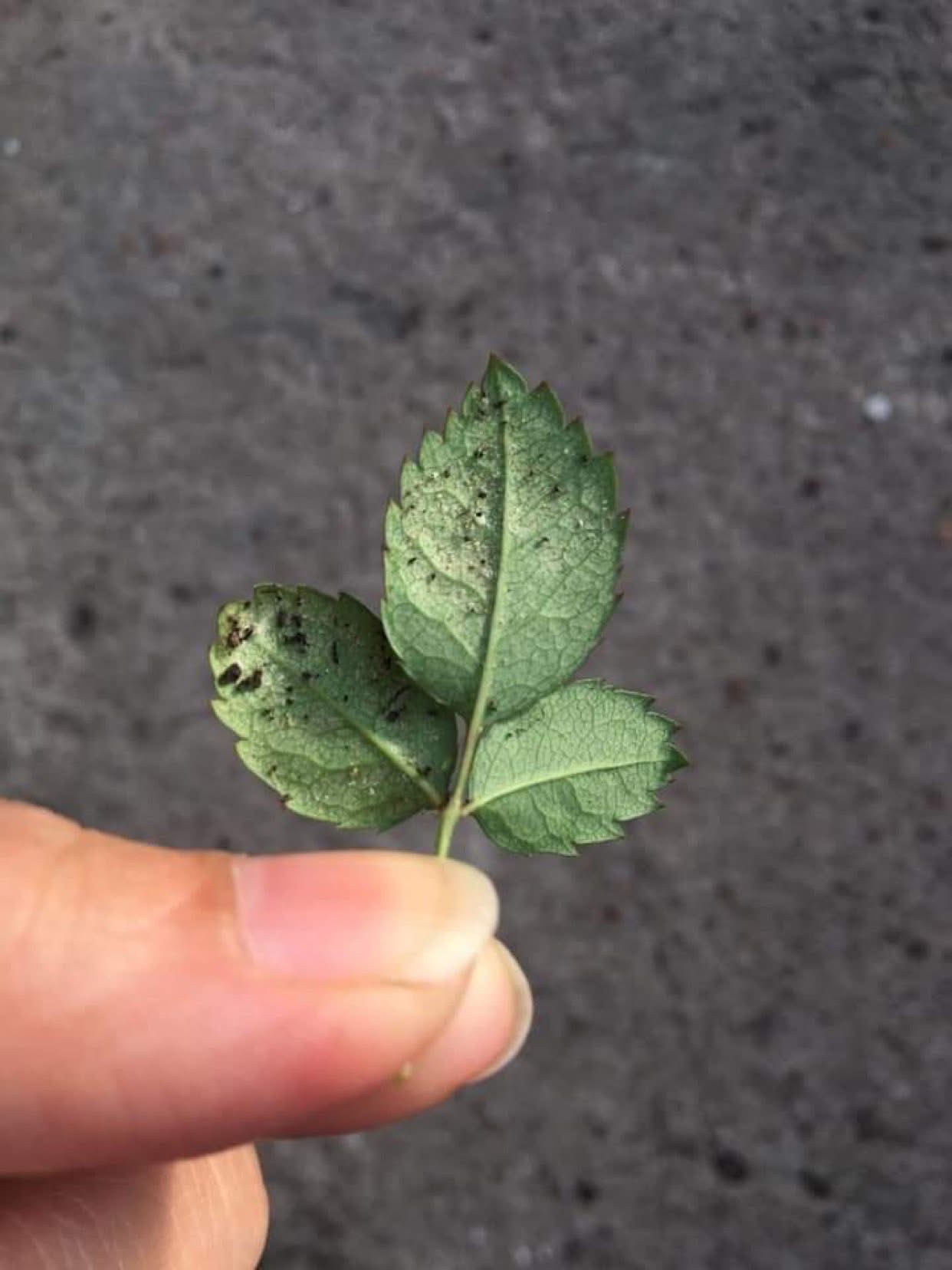
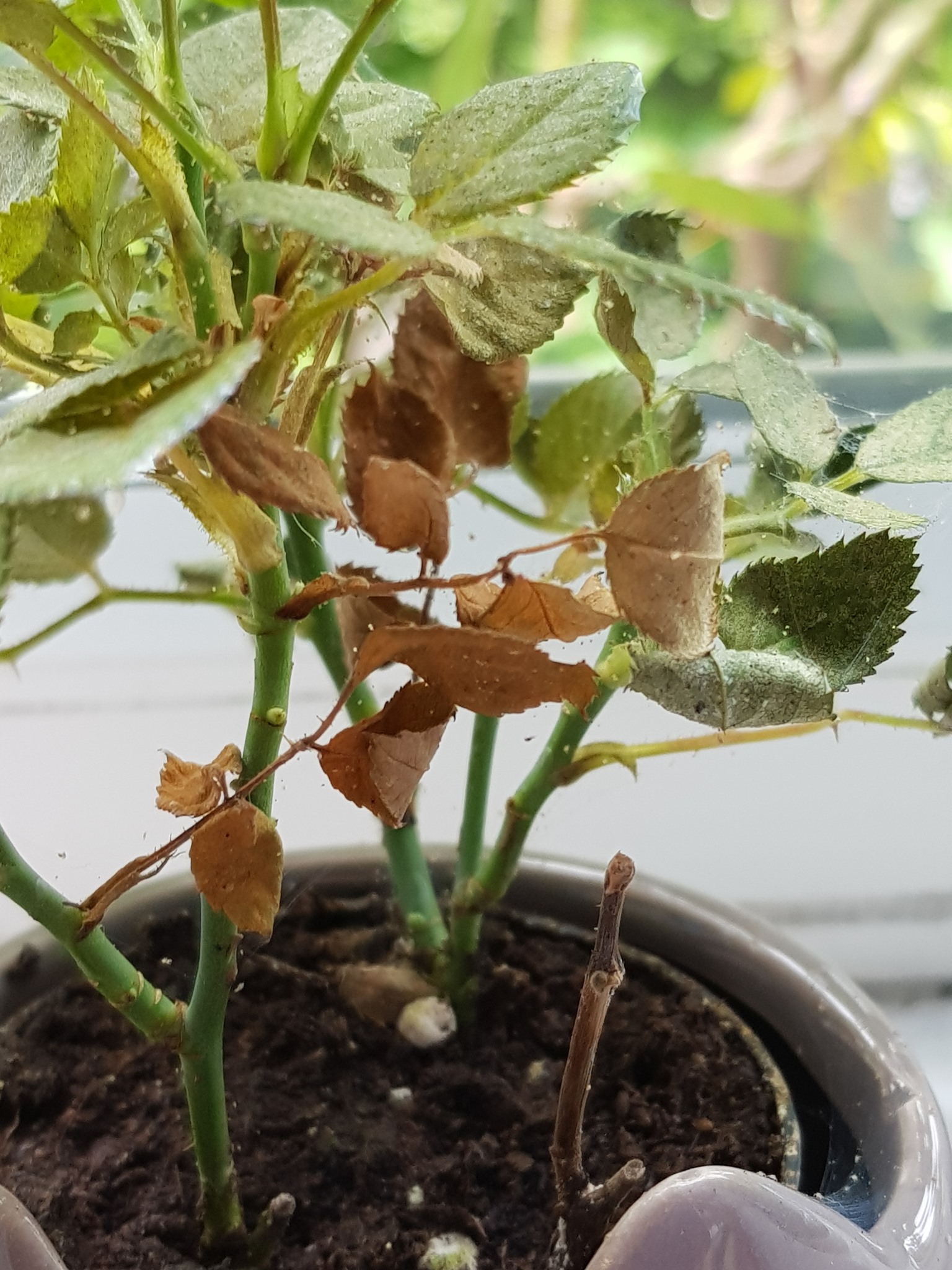
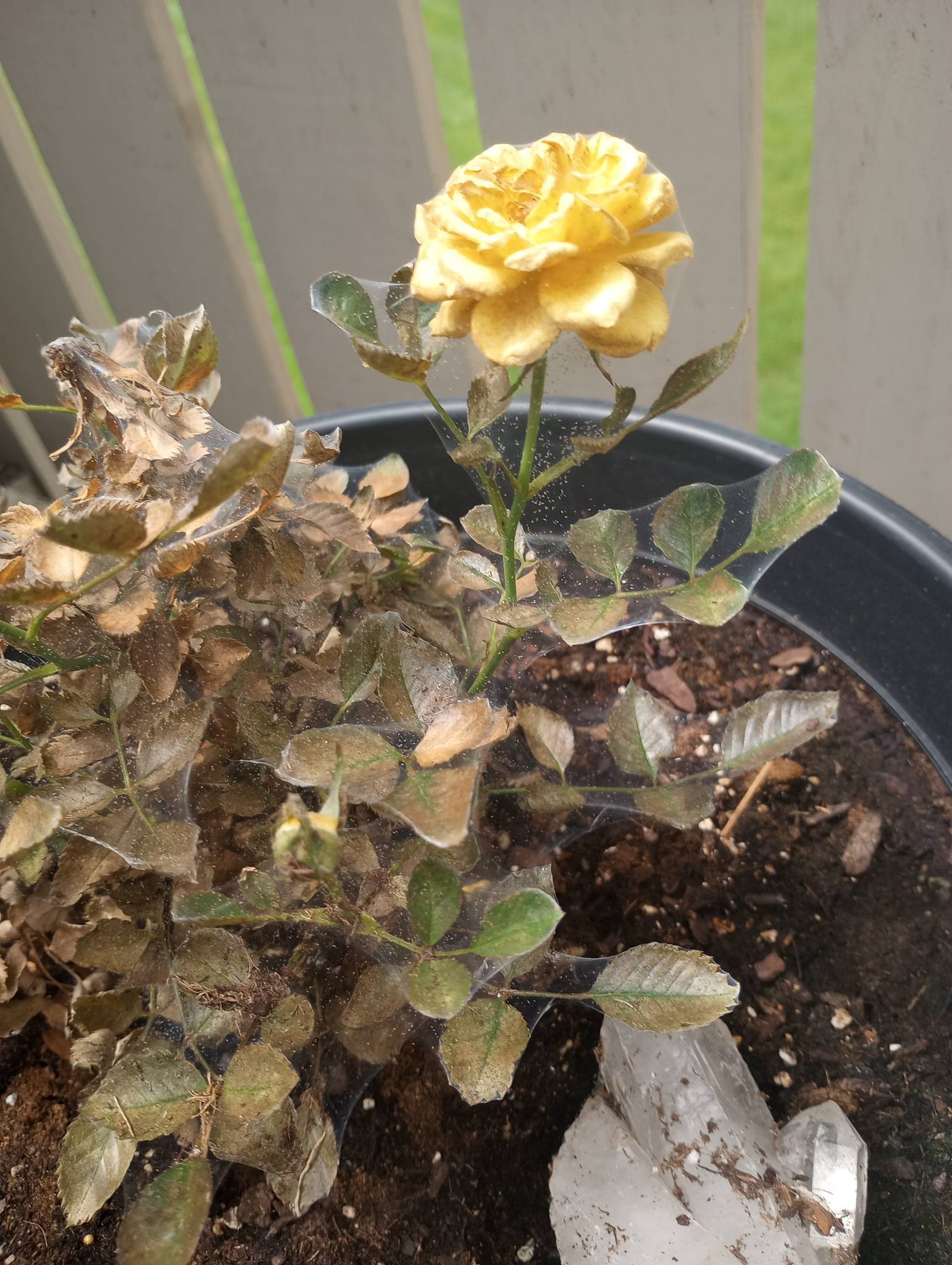
This damage is caused by the two-spotted spider mite, Tetranychus urticae. Despite the name, it is an arachnid rather than an insect — a tiny piercing-sucking pest that drains chlorophyll from leaf cells, causing progressive stippling, bronzing, and leaf drop. Outbreaks flare under hot, dry, dusty conditions where natural enemies are suppressed.
The mites feed almost exclusively on leaf chlorophyll. As the colony builds, leaves lose their green pigment and turn a dull bronze or silver, then drop. Defoliation typically progresses from the lower leaves upward toward the shoot tips, canes desiccate, and severely infested plants may die outright if the population is not brought under control.
The mechanism by which spider mites cause leaf curl is similar to that of thrips. They pierce and destroy cells on the leaf's underside. This damaged cell layer contracts while the upper surface continues to grow, forcing the leaf blade to curl upward.