
Aphids
InsectDescription
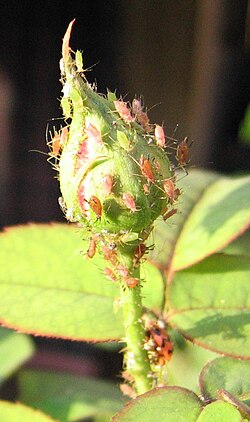
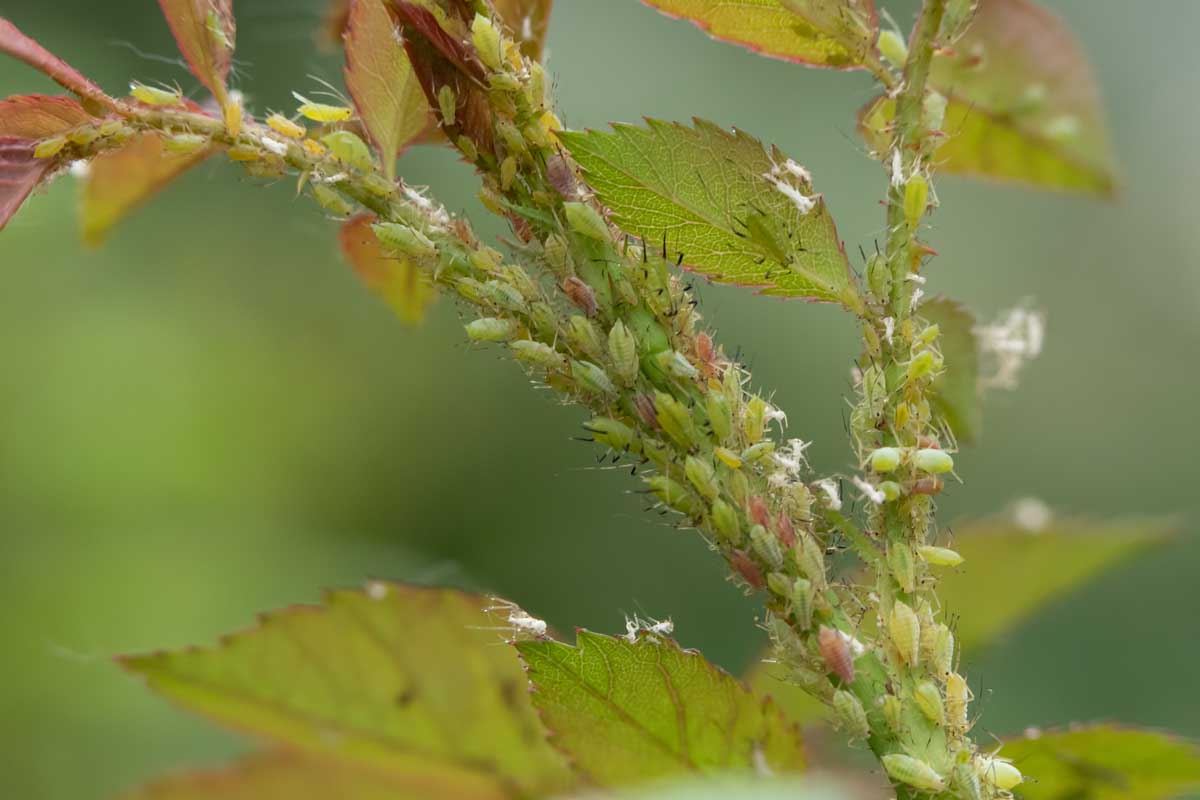
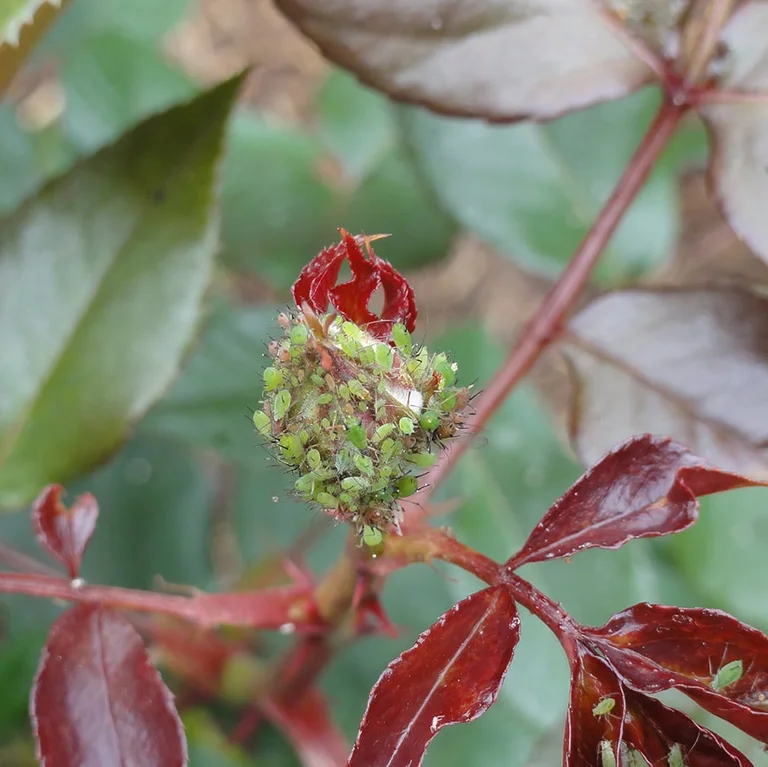
Aphids (family Aphididae — the common pest species on roses is Aphis gossypii) are soft-bodied insects, approximately 1–3 mm in size, teardrop-shaped, and vary in color, appearing green, black, yellowish-brown, or brown. Adults exist in two forms: winged and wingless. Aphids are gregarious, concentrating on sucking sap from young shoots, buds, and the undersides of young leaves. They reproduce asexually very rapidly in warm, dry weather with minimal rainfall and when plants are over-fertilized with nitrogen, leading to population outbreaks within just a few days. While feeding on sap, aphids excrete a sugary substance (honeydew), which facilitates the growth of black sooty mold. This honeydew also attracts black ants, which are known to tend aphids and transport them between plants. Aphids are also vectors for several viral diseases in roses.
Symptoms
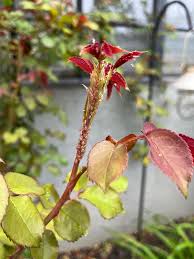
- New shoots and buds curl and become sticky with honeydew from aphid feeding.
- Direct observation of dense colonies of tiny green, brown, or black aphids clustering and moving slowly on the undersides of young leaves and soft growing shoots.
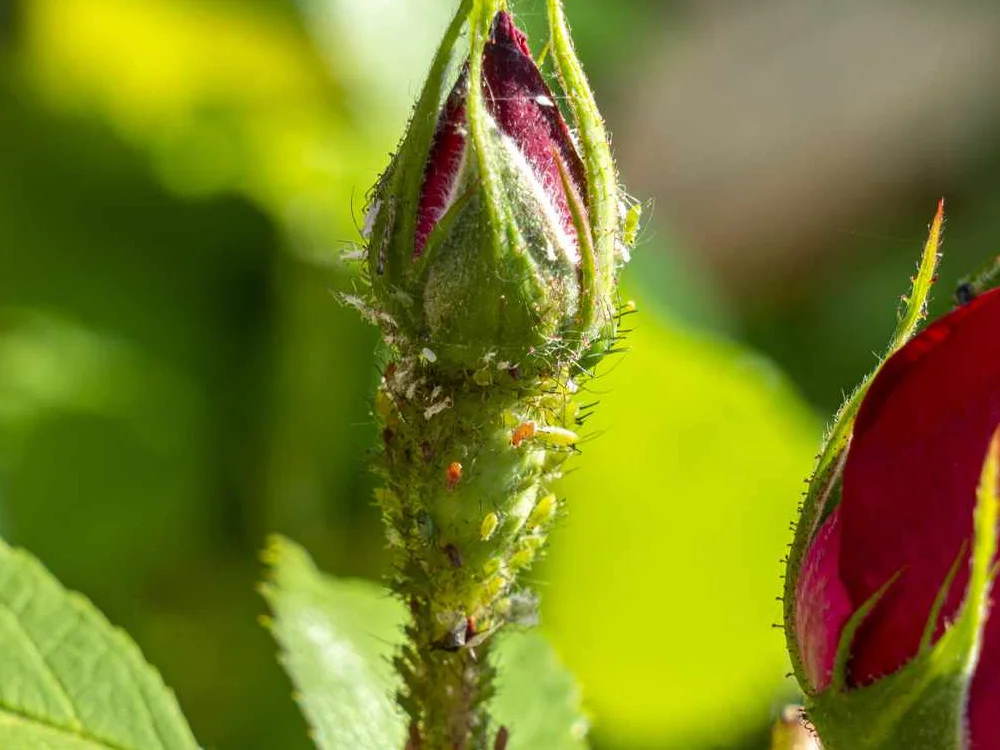
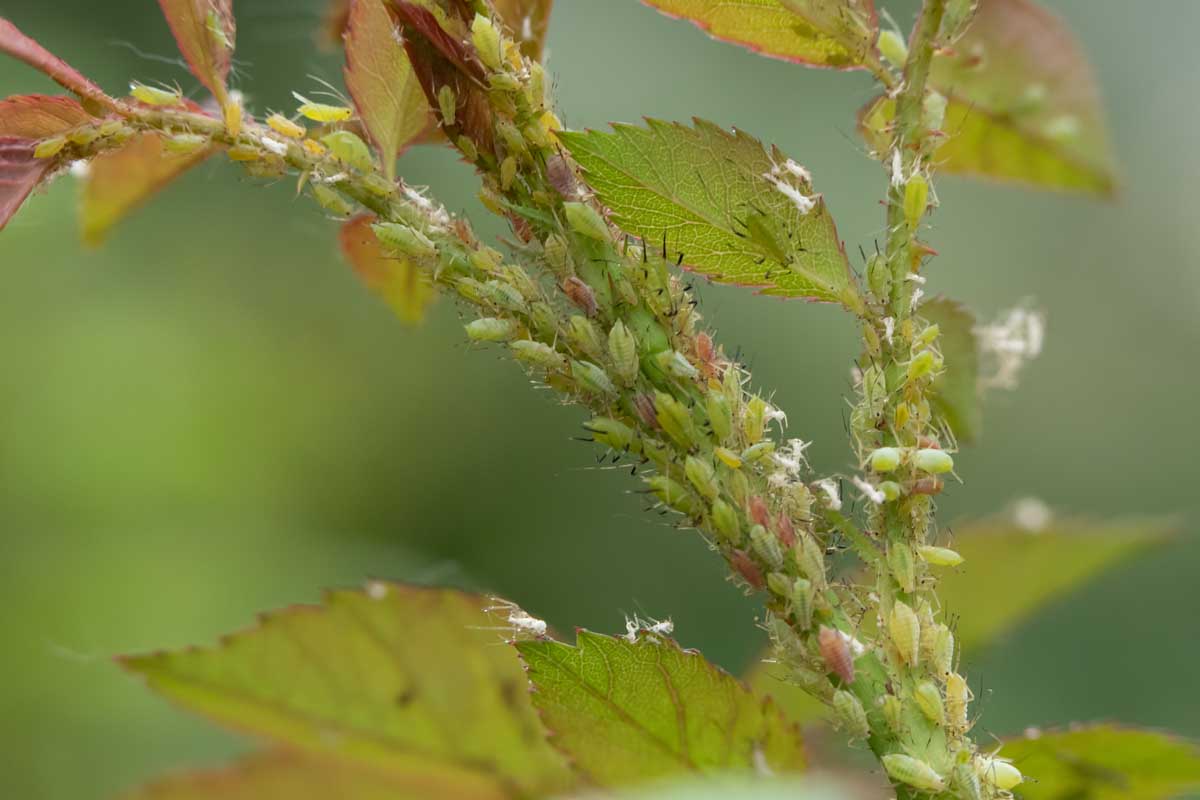
- The underside of young leaves shows tiny, localized mechanical puncture wounds and pale spot lesions directly caused by clusters of sap-feeding aphids.
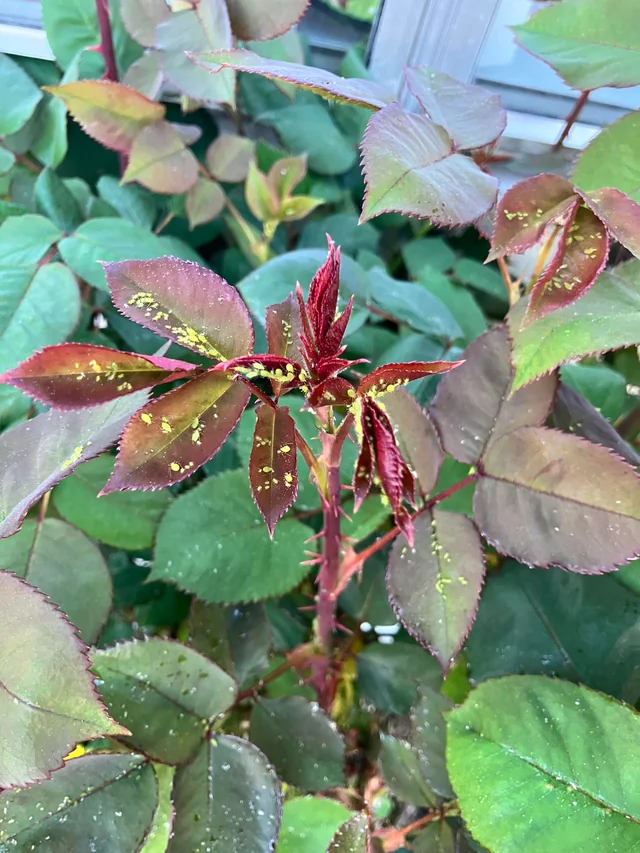
- Black sooty mould coats leaves and shoots, colonising the aphid honeydew.
- Heavy ant traffic on stems and shoots (ants farming aphids for honeydew).
- Flower buds are distorted and underdeveloped from sap loss.
- Petals and flower buds exhibit brown to black necrotic spots and dark discoloration directly caused by intense aphid feeding, which deprives tissues of nutrients and impairs bloom opening.
- Reduced bud formation and diminished flower size are characteristic; severe infestations can lead to a complete absence of buds.
- Severely stunted and slowed growth, with young shoots failing to develop and becoming deformed due to aphid feeding.
Treatment plan
- Spray with a strong stream of water to dislodge aphids from shoots and the undersides of leaves.
- Apply neem oil or insecticidal soap, ensuring thorough coverage on both sides of the leaves, and repeat after 5–7 days.
- Biological control: Utilize entomopathogenic fungal products (Metarhizium spp., Beauveria spp.) which parasitize and attack aphids internally, thus not inducing pesticide resistance.
- For severe infestations, apply broad-spectrum systemic insecticides according to manufacturer's instructions, wearing full personal protective equipment.
- Protect natural enemies (e.g., ladybugs, parasitic wasps, hoverflies) to facilitate natural control.
Prevention
- Regularly inspect young shoots and the undersides of leaves, particularly during the onset of warm seasons and extended dry periods.
- Avoid excessive nitrogen fertilization, which promotes the growth of succulent young shoots highly attractive to aphids.
- Control black ant populations around the plant base to mitigate aphid dispersal between plants.
- Remove weeds and plant debris from around the base of plants; maintain good garden ventilation and optimal humidity levels.
- Enhance plant resistance through a balanced watering regimen and appropriate nutritional management.