Description
Leaf-eating caterpillars are the larvae of moths and butterflies (Lepidoptera), such as the tobacco cutworm (Spodoptera litura) and various green caterpillars. They chew ragged holes through the leaf blade, feed on young leaves and buds, and leave frass around the feeding sites. Many species — notably older Spodoptera larvae — hide in the soil or leaf litter by day and feed at night, so growers often find holes and frass without seeing the caterpillars. Heavy populations can defoliate a plant within days.
Distinguish from leafcutter bees (neat arc-shaped cuts at the leaf margin, no frass) and rose sawfly larvae (skeletonising "windowpane" feeding on the leaf underside).
Symptoms
Irregular holes chewed through the leaf blade with ragged edges; veins are often left intact.
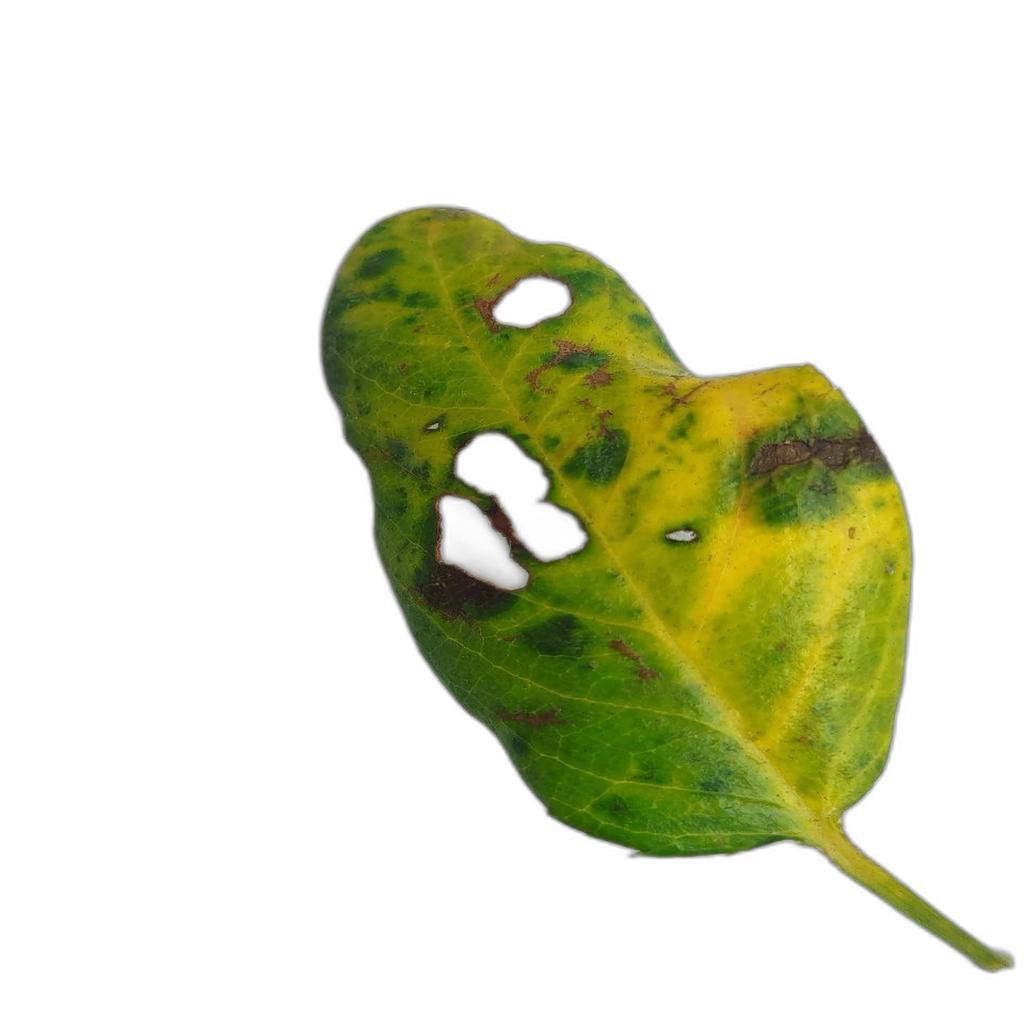
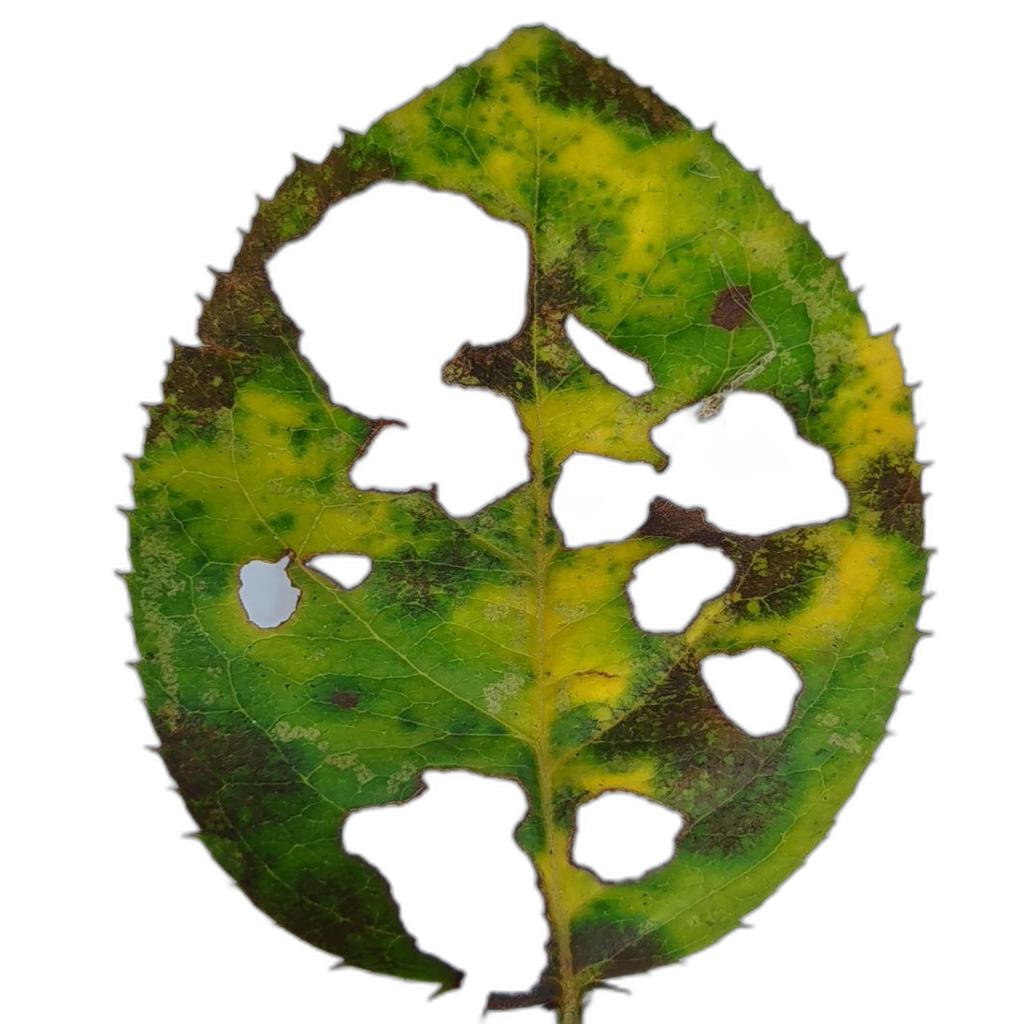
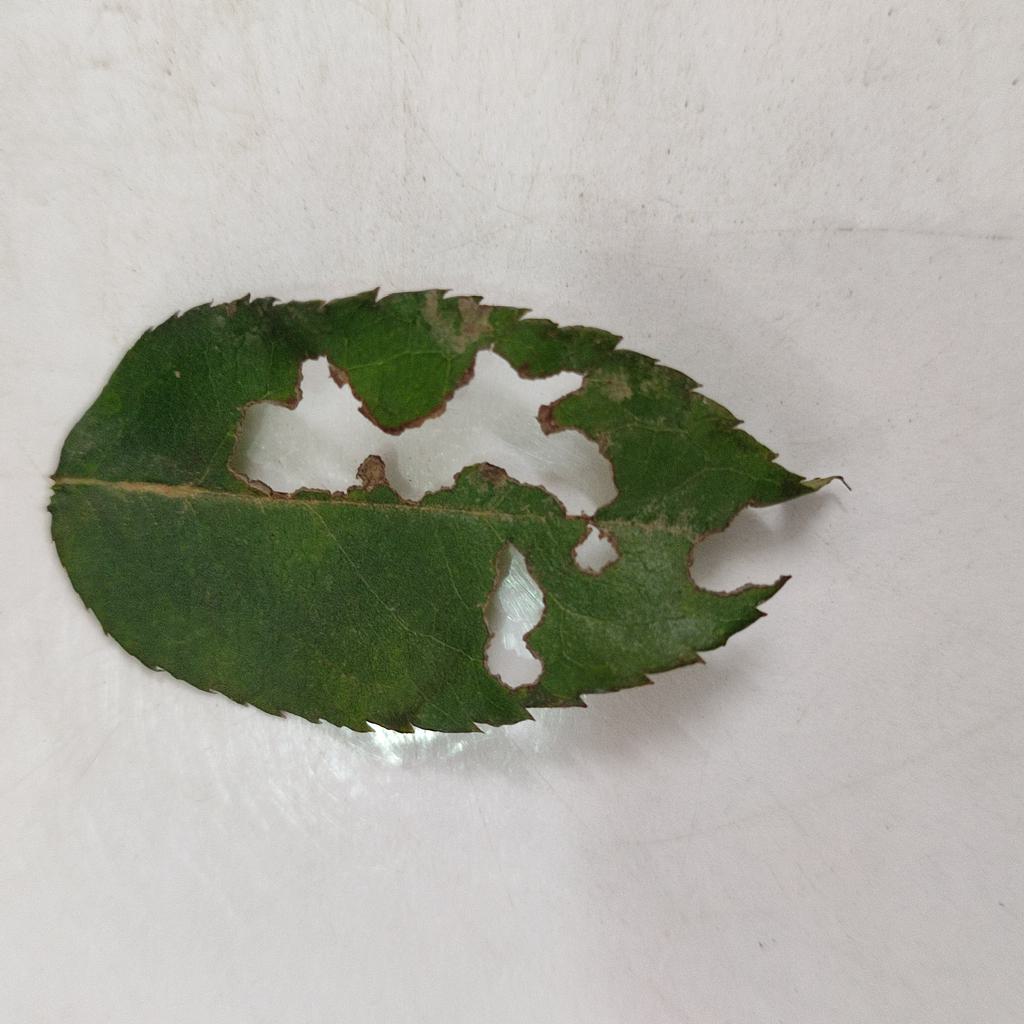
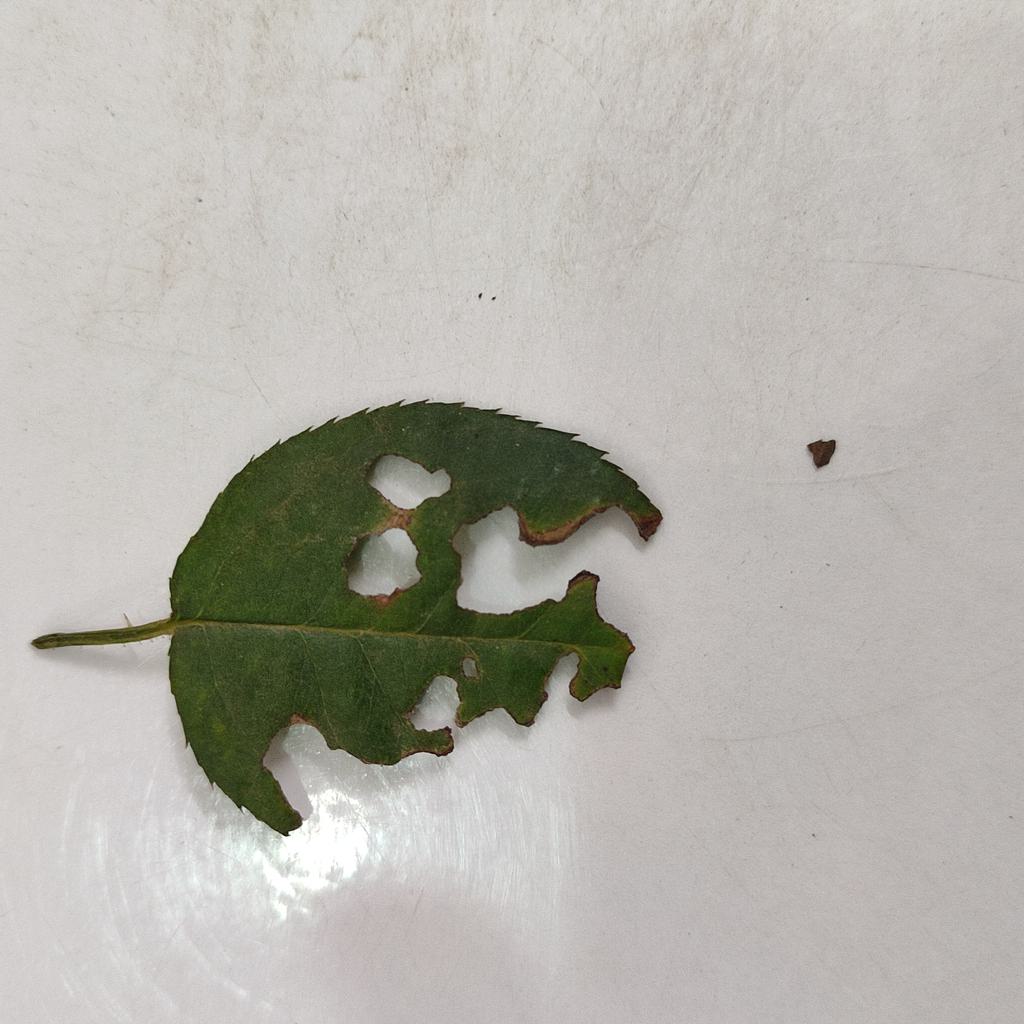
Small green, brown or black frass pellets near the feeding sites or on the leaves below.
Treatment plan
- Scout: check leaf undersides, the crown and the soil surface; inspect by torchlight in the evening to catch night feeders.
- Hand-pick caterpillars or remove them with tweezers and destroy them.
- Prune out heavily damaged leaves and leaves carrying egg masses.
- Biological control: spray Bacillus thuringiensis (Bt) for selective control of young larvae without harming bees and other beneficial insects; apply in the late afternoon while larvae are small.
- Selective insecticides: for heavy infestations, apply Spinosad or Abamectin to knock populations down quickly.
Prevention
- Scout regularly, especially leaf undersides, for egg masses and young larvae.
- Clear leaf litter and weeds around the base where larvae shelter by day.
- Use fine mesh netting in small gardens to exclude egg-laying moths.
- Conserve natural enemies (parasitoid wasps, birds, predatory bugs) by avoiding broad-spectrum sprays.