
Drought Stress
PhysiologicalDescription
Drought stress develops when the plant does not receive enough water — through insufficient irrigation, a substrate that drains too fast, or high temperatures that drive rapid evapotranspiration. Roses need a steady soil-moisture level. Symptoms are most visible in the hot afternoon hours, when transpiration demand peaks. The damage is largely abiotic and physical — recovery depends on restoring the water supply and giving the plant time to rehydrate.
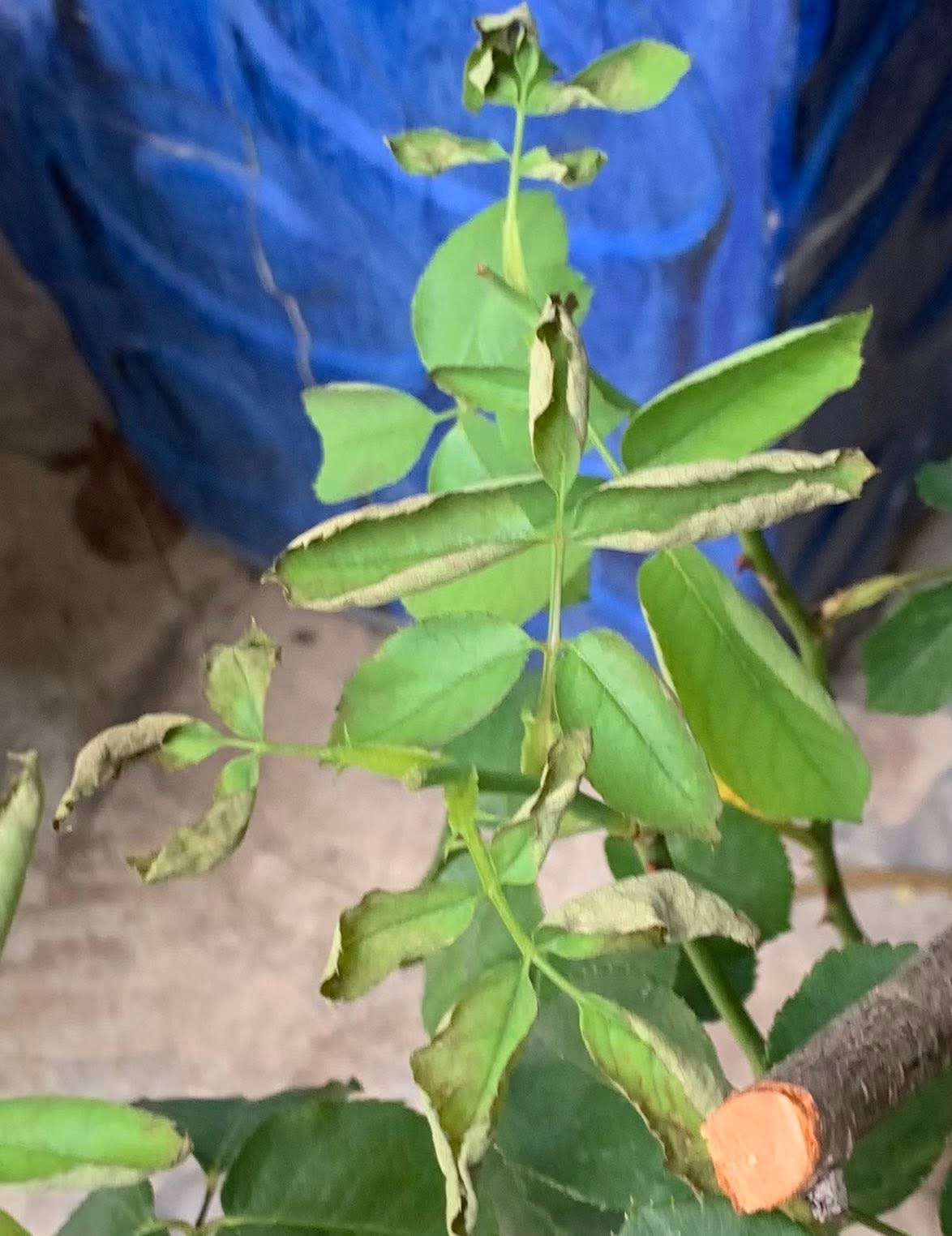
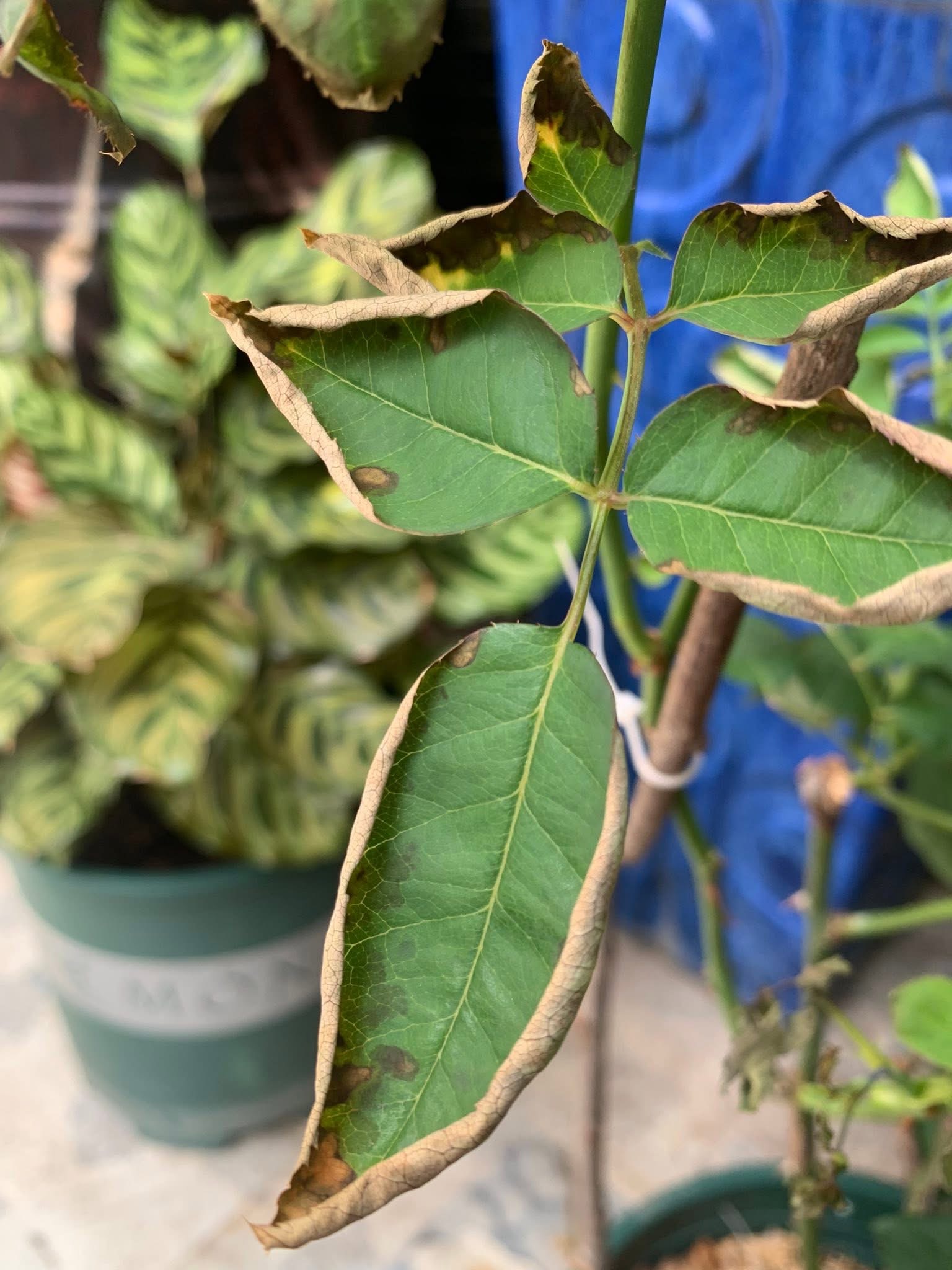
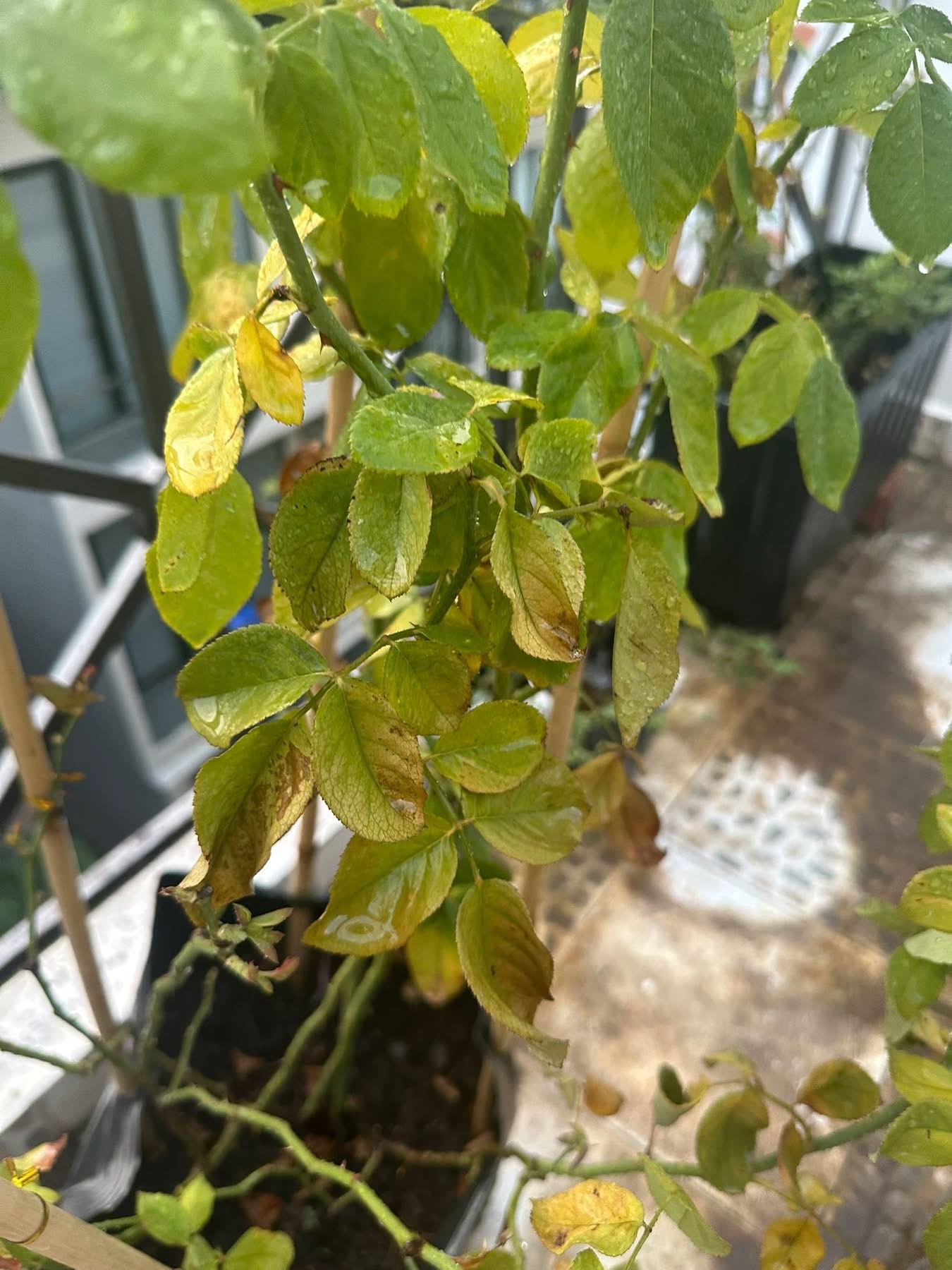
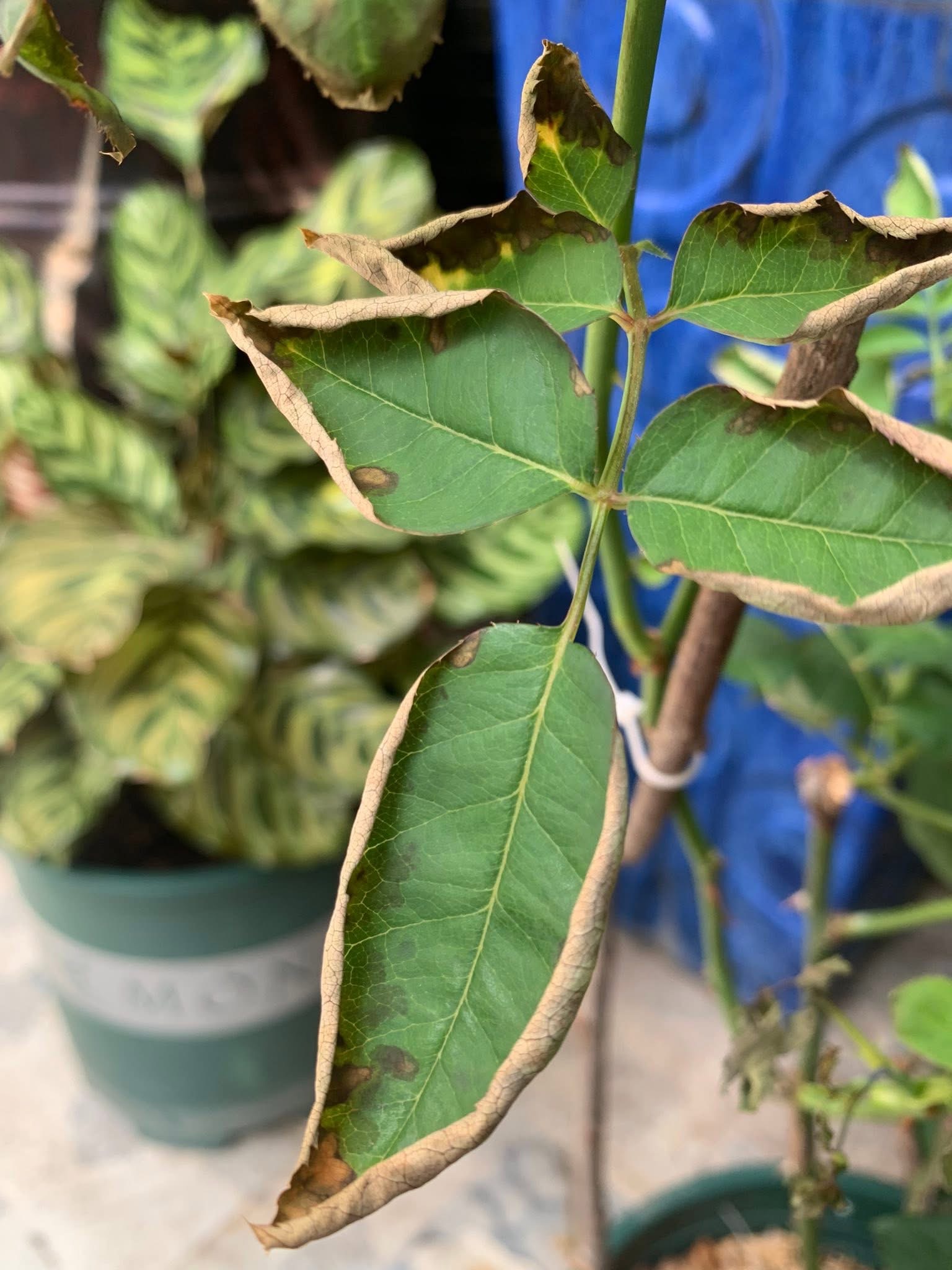
During drought, the rate of transpiration from the leaves surpasses the amount of water the roots can absorb. The leaf margins, being the most distant points from the vascular system, are the first areas to wilt, dry out, and scorch.
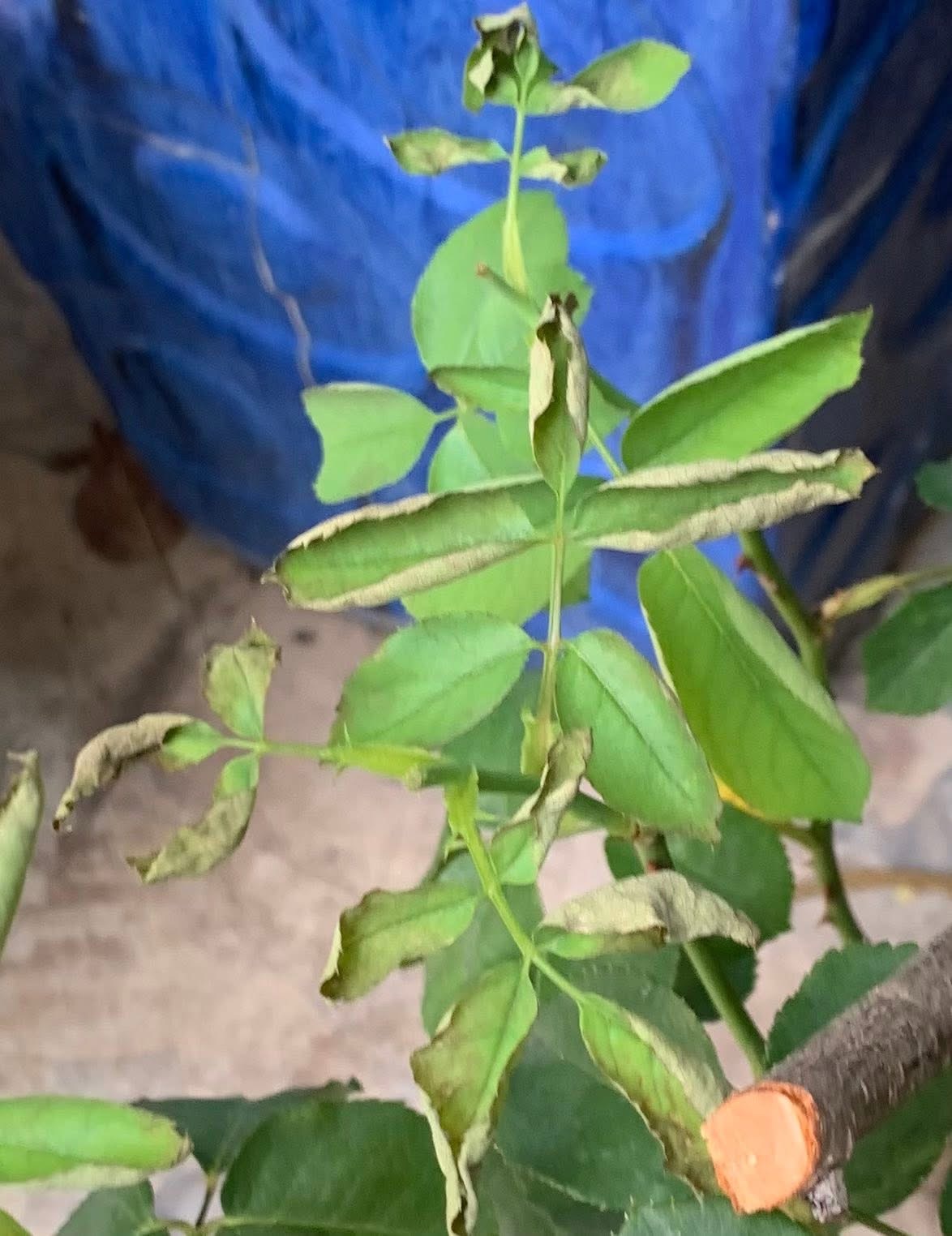
When facing high temperatures or water deficit, the rose plant protects itself by closing its stomata. Concurrently, cells on the leaf underside may contract to minimise the surface area exposed to solar radiation, causing the leaf margins to roll upward. This creates a more humid microclimate layer right at the leaf surface, slowing further water loss.
Symptoms
- Wilted, limp leaves — most obvious around midday and into the afternoon
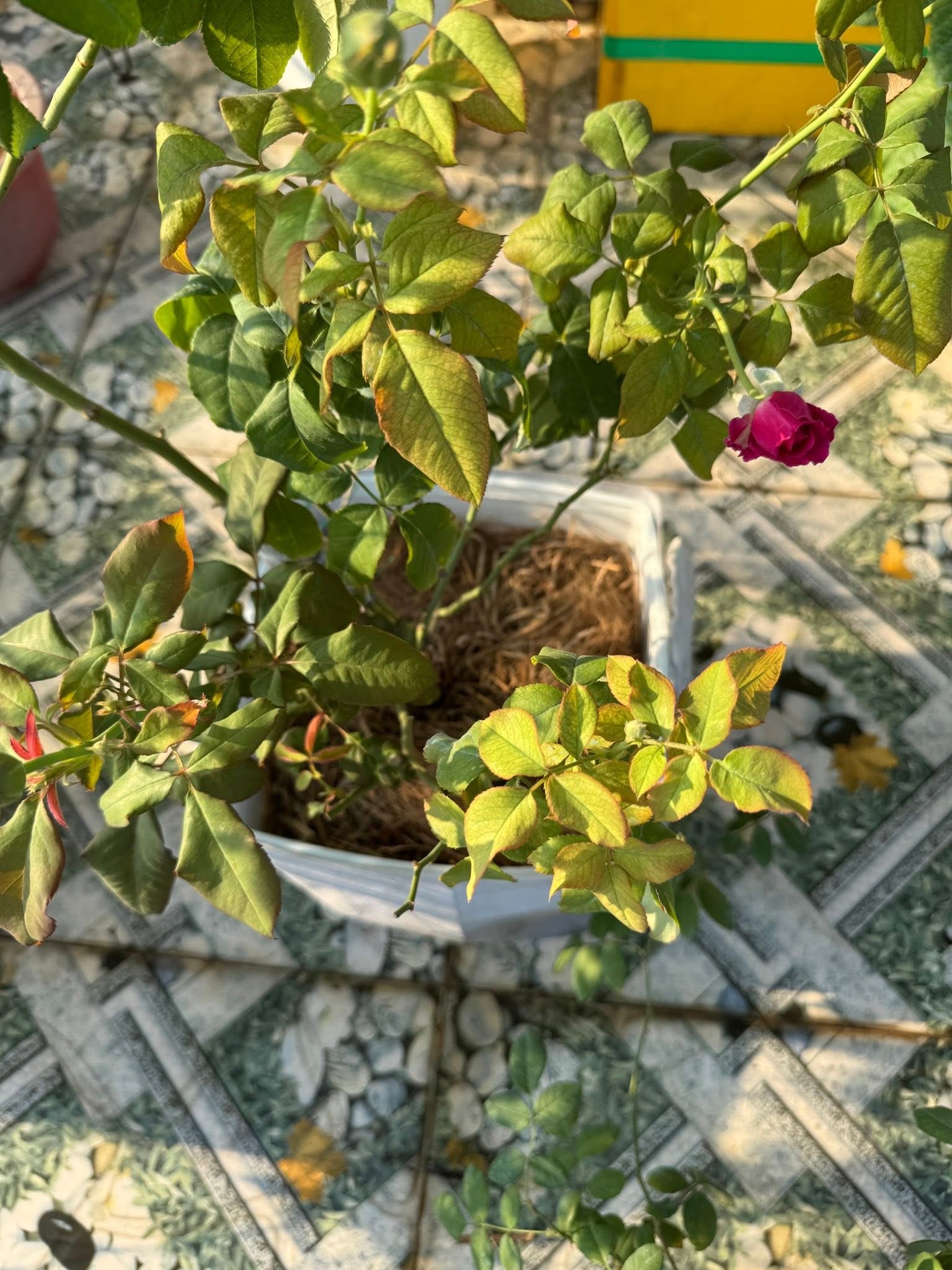
- Soil is dry and cracked around the base
- Flower buds wither, dry up, and drop prematurely before they can open
- Leaf margins roll upward into a trough shape, a self-protective response to reduce the surface area exposed to sunlight and decrease transpiration.

Treatment plan
Drought stress is abiotic — the damage already done cannot be reversed by any "treatment." Recovery depends on removing the stressor (restoring moisture and reducing heat load) and letting the plant rebuild.
- Water immediately: Deep, basal watering into the root zone; do not mist the foliage in full sun.
- Temporary shade: Provide shade netting for a few days while the plant recovers.
- Improve soil moisture retention: Incorporate organic matter and coco coir into the substrate.
- Mulch the root zone: Apply mulch to reduce surface evaporation and buffer soil temperature.
- Establish a consistent watering schedule: Water deeply 1–2 times a day during hot weather, rather than light surface watering.
Prevention
- Water consistently — do not let the substrate dry out completely.
- Mulch in summer.
- Avoid growing roses in pots that are too small to buffer soil moisture.