
Fertilizer Burn
PhysiologicalDescription
Fertiliser burn (salt injury) occurs when chemical fertiliser is applied at too high a rate or too high a concentration, raising the salt concentration in the soil so much that water moves OUT of the roots by reverse osmosis. It can happen with both root-applied and foliar fertilisers. Acute injury appears suddenly, immediately after a fertiliser application; chronic injury develops over time as salts accumulate in the substrate from repeated feeding.
The high salt concentration in the soil creates a reversed osmotic gradient, drawing water out of the root cells. This damages or 'burns' the roots, impairing their ability to absorb and transport water to the foliage. The leaf margins, being the furthest points from the main vascular tissues, are the first to show signs of desiccation.
When excess nitrogen is present, the expansion rate of the leaf blade's mesophyll cells outpaces the growth of the vein system. The veins act as a structural frame that cannot expand quickly enough, forcing the blade tissue to buckle and causing the leaf margins to curl downward.
Symptoms
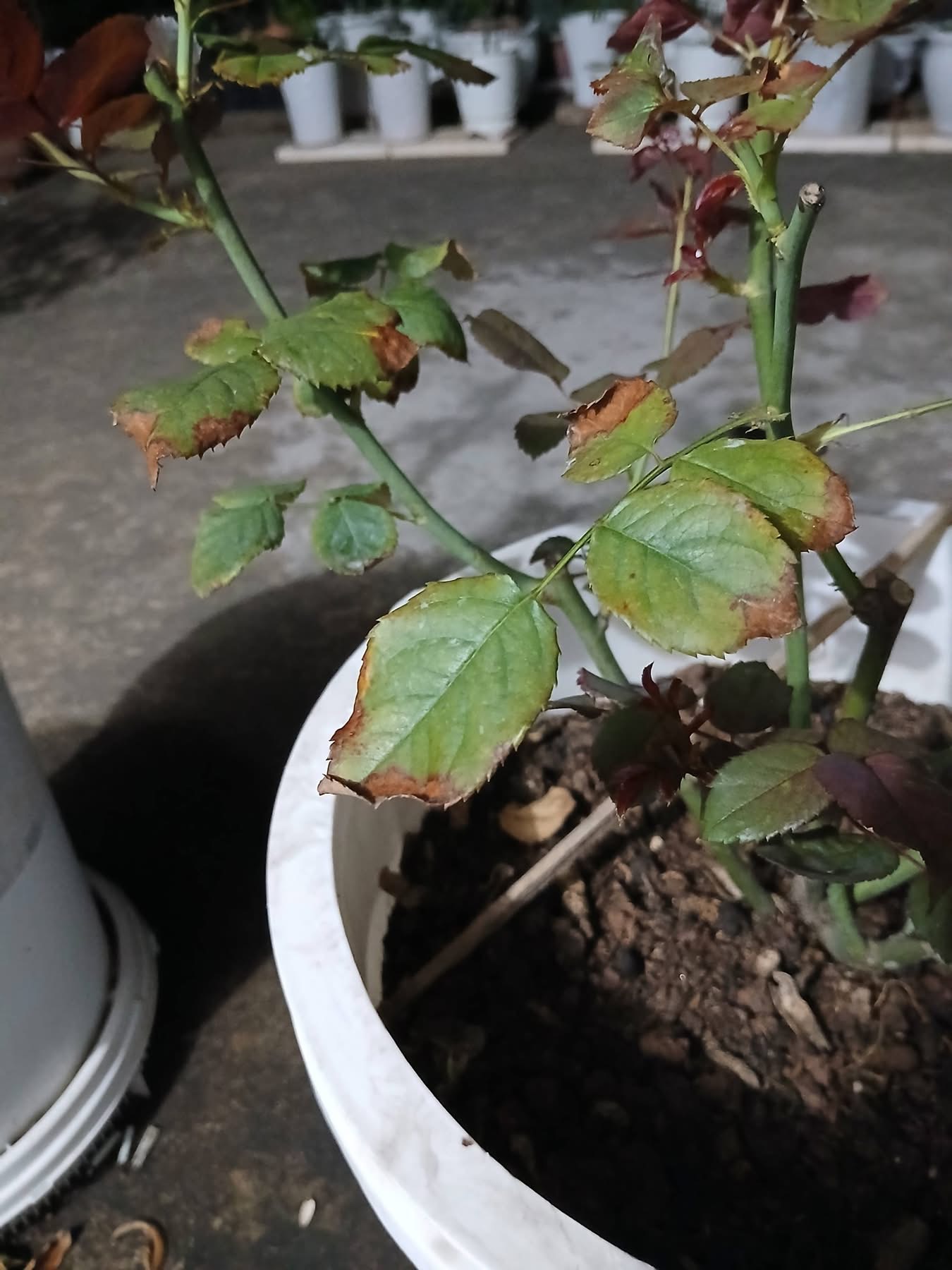
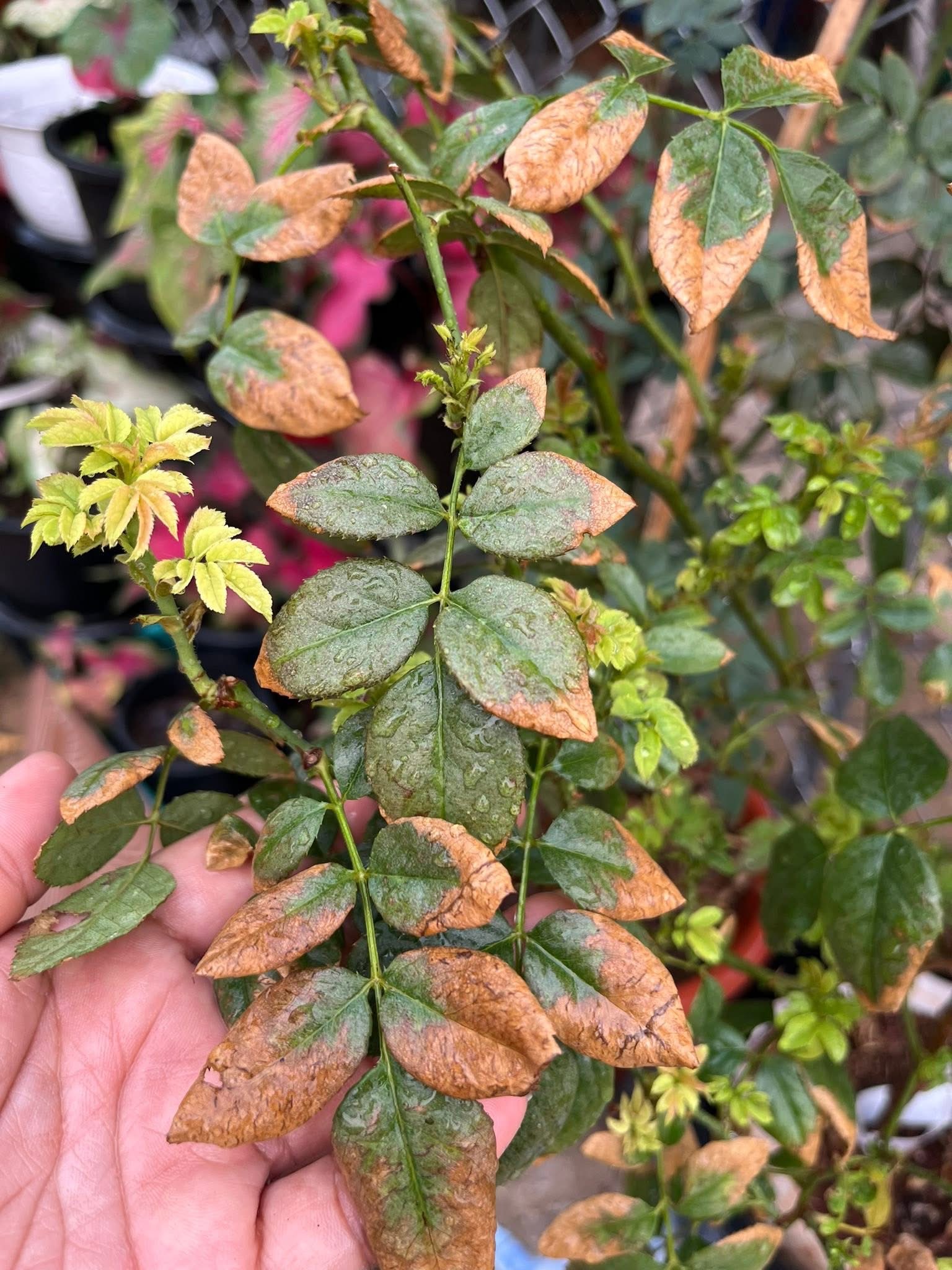
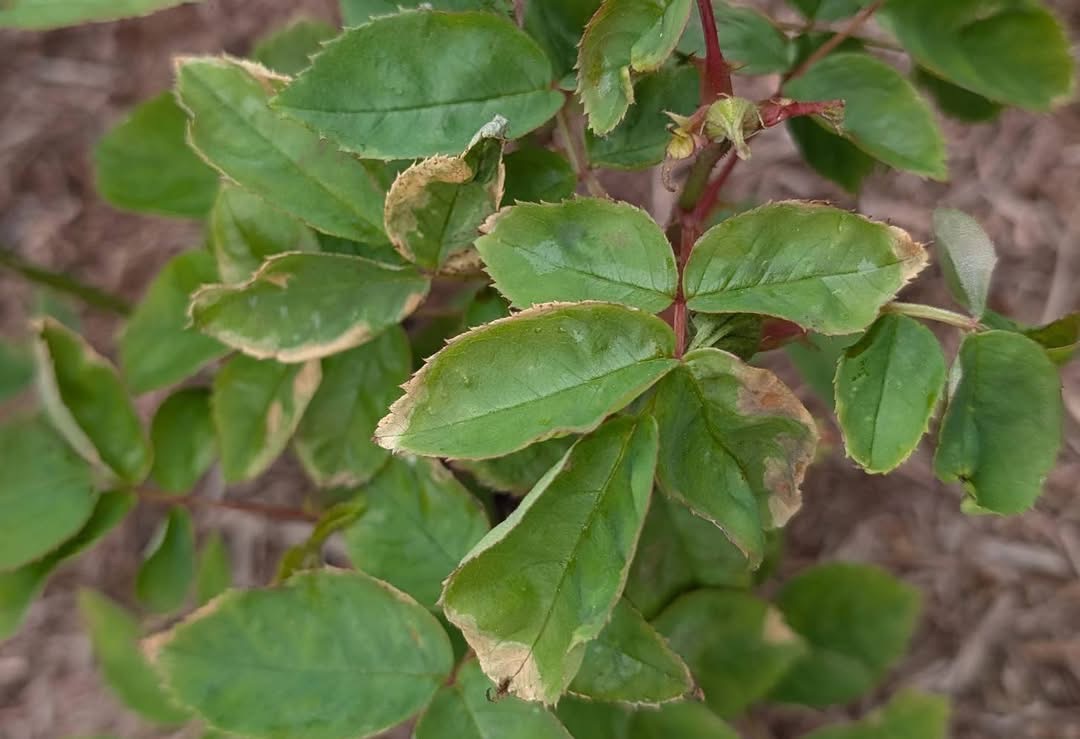
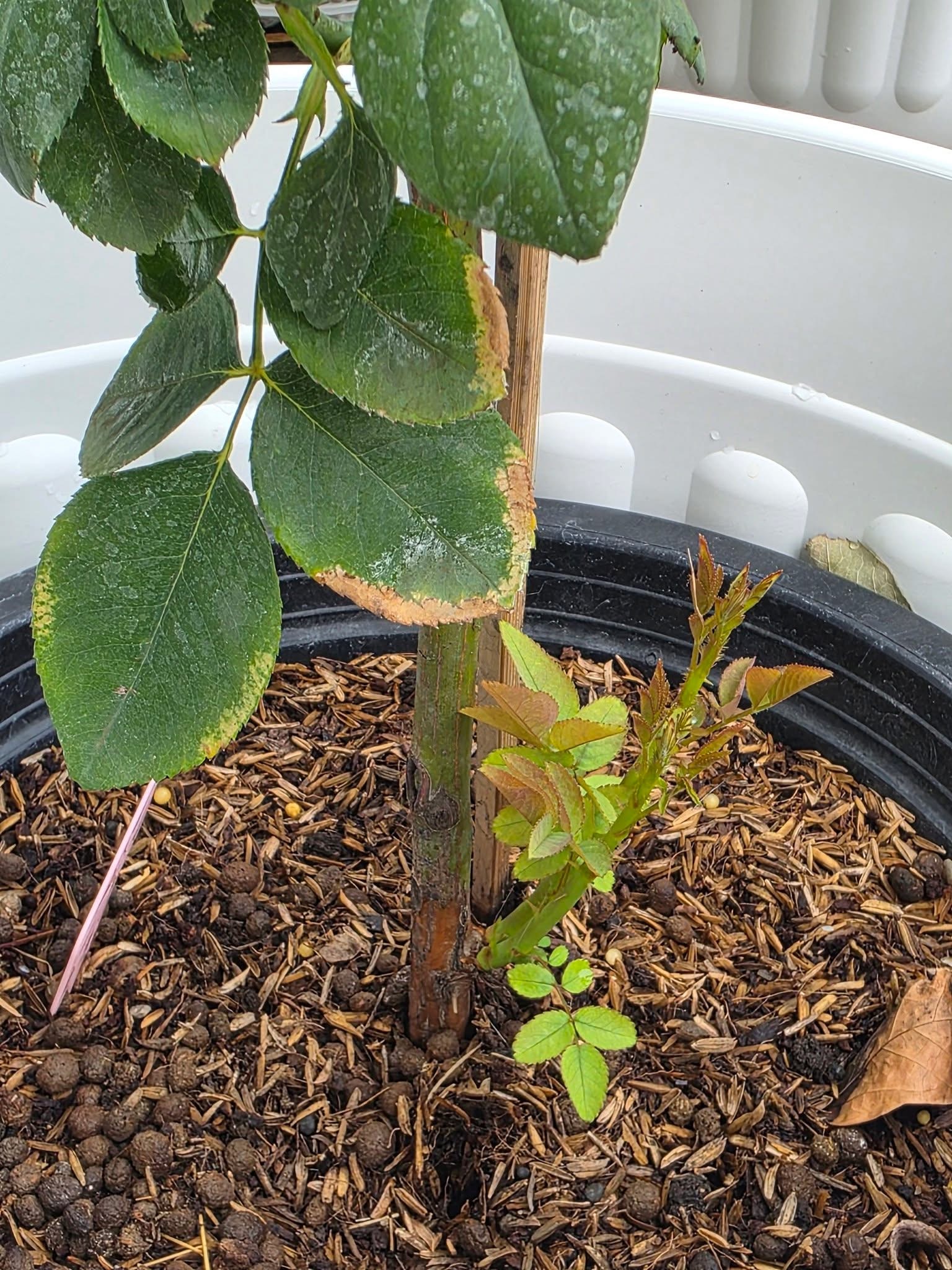
- Leaf edges and tips scorch brown and dry abruptly after fertilising
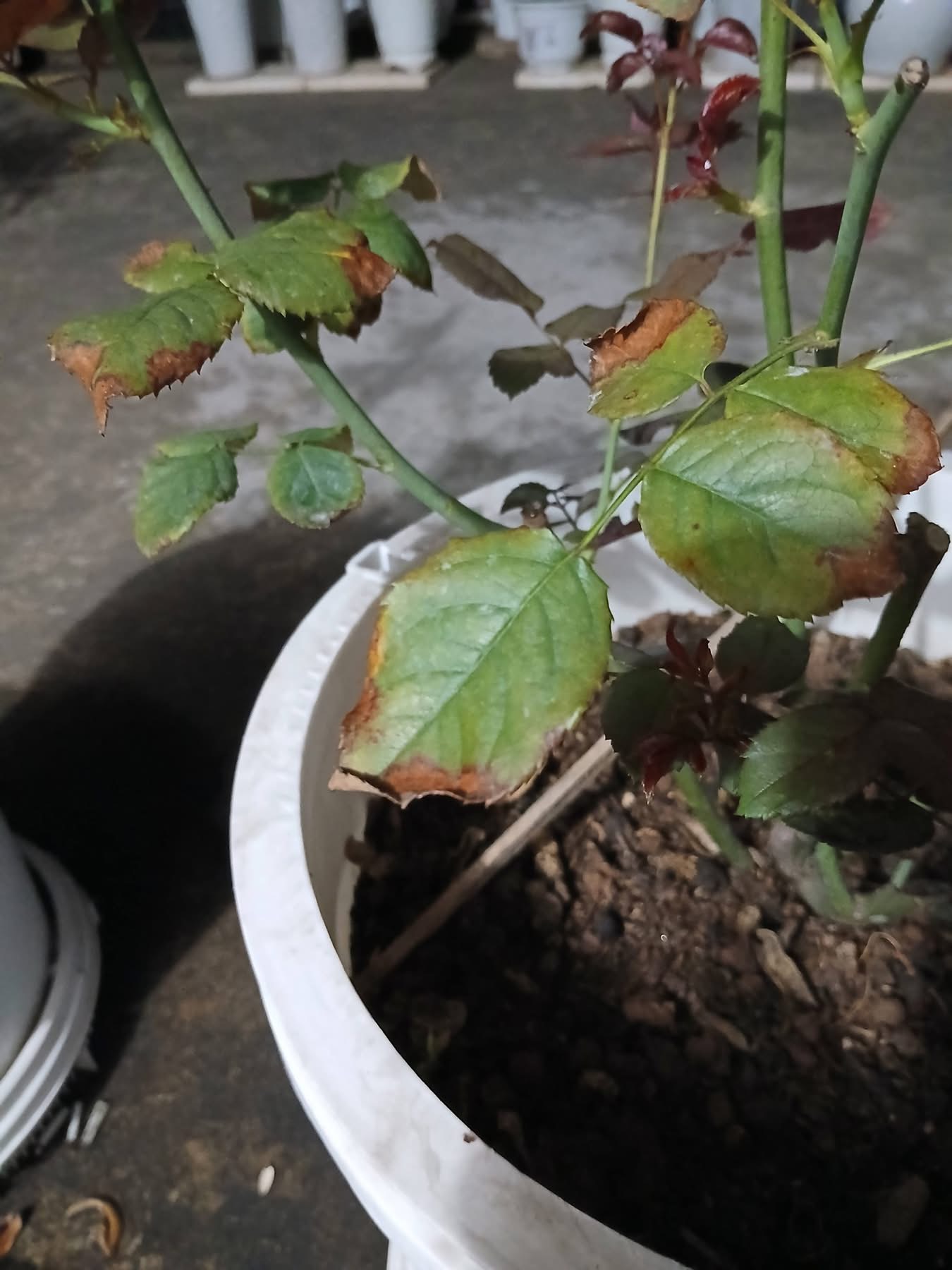
- Leaves wilt even though the soil is moist — high salt concentration injures the roots so they can no longer absorb water
- A white salt crust crystallises on the soil surface or pot rim
- Roots turn dark brown or black, become dry, or rot outright
- Leaves appear bloated with the margins curling downward, especially on new growth, due to excess nitrogen stimulating cell expansion faster than the leaf veins can grow.
Treatment plan
Once burn is visible, the priority is to reduce the salt load in the root zone and let the plant rebuild root mass before resuming feeding.
- Flush immediately: Flush the root zone with copious clean water to wash out the excess salt (leaching / flushing).
- Stop fertilising: Halt all fertiliser applications immediately.
- Move out of direct sun: Shelter the plant from strong sunlight for a few days while it recovers.
- Replace or leach the substrate: Repot into fresh medium, or perform an extended leaching flush if damage is heavy.
- Rest before resuming feeding: Wait 2–3 weeks for the plant to recover before applying any fertiliser.
- Resume at reduced rates: When feeding restarts, use weak doses split into several small applications instead of a single heavy feed.
Prevention
- Never apply a heavy single dose of chemical fertiliser.
- Always dilute foliar fertilisers to the rate stated on the label.
- Water the substrate both before and after applying root-zone fertiliser.