
Waterlogging
PhysiologicalDescription
Waterlogging occurs when the substrate stays saturated for an extended period, depriving the root zone of oxygen. The resulting root anoxia causes roots to die back and stops the plant from absorbing both water and nutrients. Roses are particularly sensitive to waterlogging. Note that secondary infection by soil-borne pathogens such as Phytophthora and Pythium often follows on saturated soils, so any treatment plan must consider infectious root rot in parallel with the abiotic damage.
In waterlogged soil, roots suffer from oxygen deprivation (hypoxia) and cannot perform respiration, leading to tissue damage and death. The non-functional root system cannot absorb water, causing a plant-wide loss of turgor pressure that results in wilting and downward leaf curl.
Symptoms
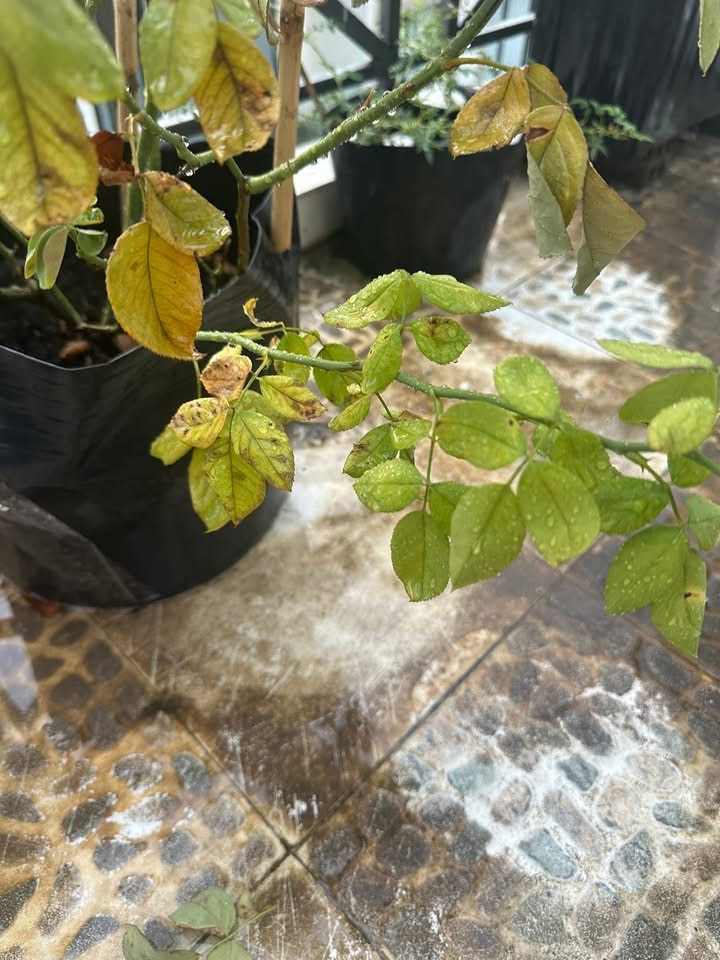
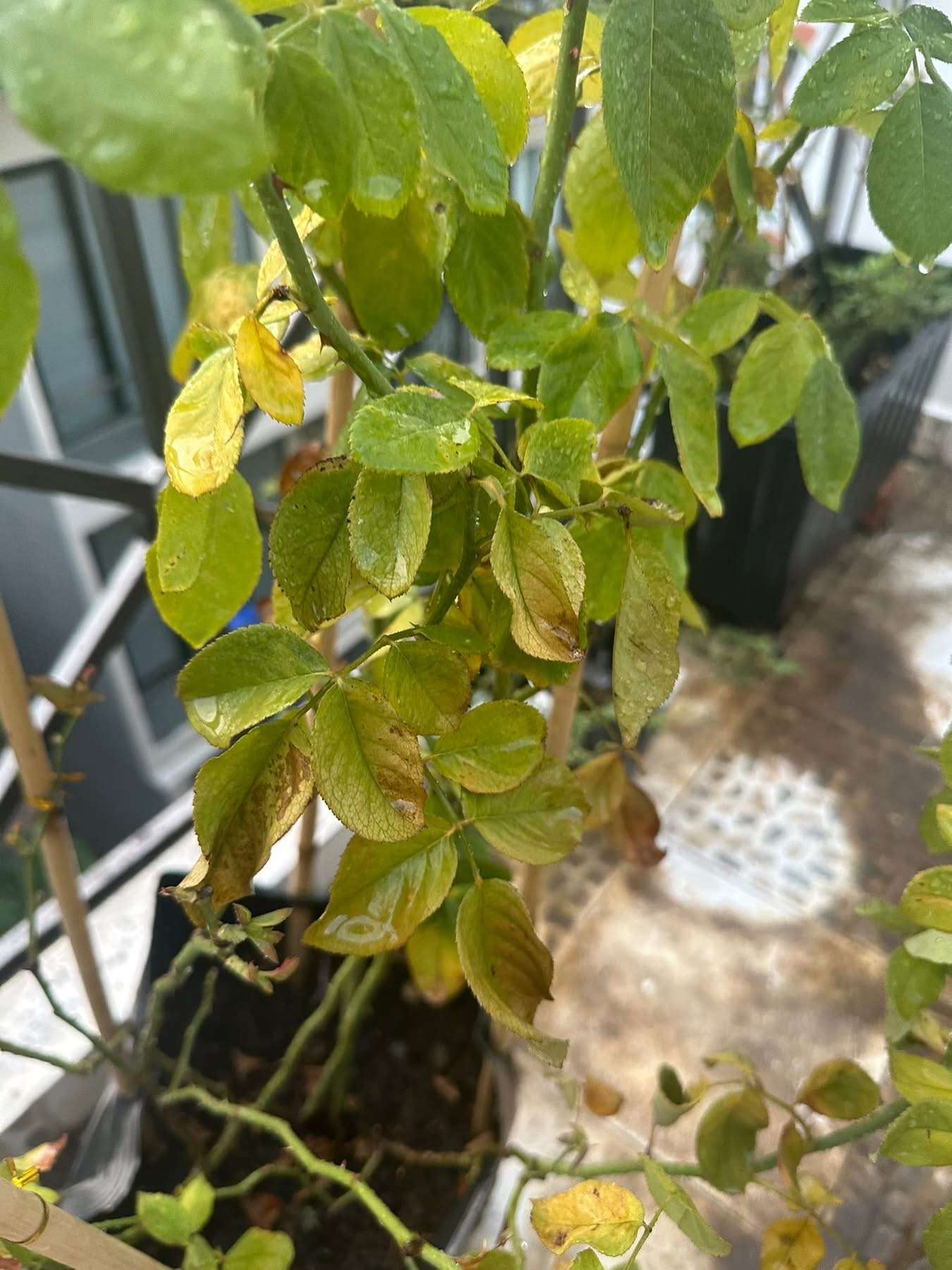
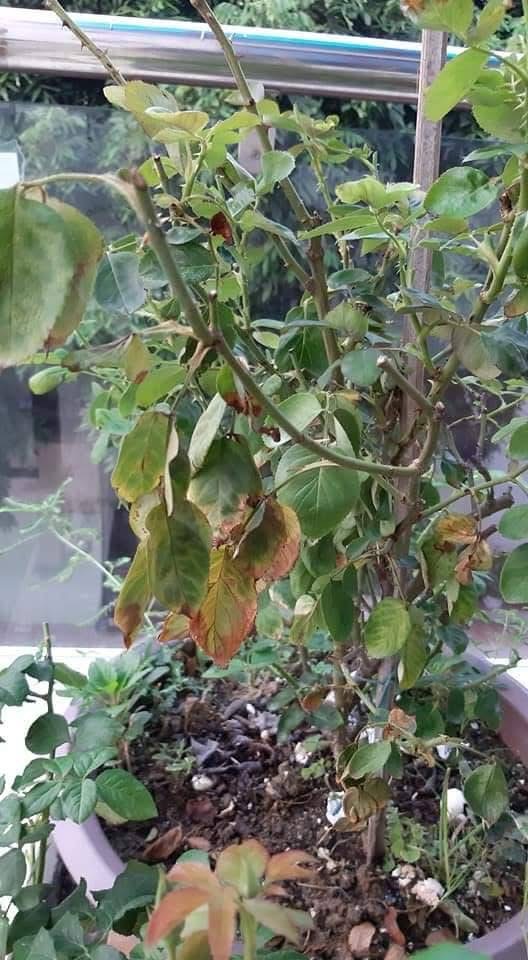
- Leaves wilt even though the substrate is moist — rotten roots can no longer take up water
- Yellowing and leaf drop progressing from the lower leaves upward, with the substrate constantly wet
- Roots are dark brown or black, soft, and foul-smelling when inspected
- Green moss or algae growing on the soil or pot surface — a sign of prolonged saturation; this does not occur with primary fungal root rot
- Leaf blades lose firmness, with margins and tips distinctly curving and cupping downward due to root hypoxia reducing turgor pressure in leaf cells.
Treatment plan
Recovery requires re-establishing oxygen at the root zone and addressing any secondary fungal infection that has set in.
- Stop watering immediately.
- Drain the pot or dig drainage channels around in-ground plants.
- Inspect the roots, cut away any rotten tissue, and treat the cut surfaces with a fungicide to control secondary Phytophthora / Pythium infection.
- Repot into a free-draining substrate: Mix perlite or coco coir into the medium to improve aeration and drainage.
- Raise the planting position: Plant on raised beds, or use pots with generous drainage holes that prevent water from pooling at the base.
Prevention
- Do not over-water — check substrate moisture before each irrigation.
- Ensure pots have adequate drainage holes.
- Never let a pot sit in a saucer full of standing water.