
RoseDoctor
P Deficiency

P Deficiency

Physiological

Description

Phosphorus (P) deficiency occurs when the rose is not supplied with enough phosphorus — one of the three macronutrients (N–P–K). Phosphorus drives energy transfer (ATP), root development and, above all, flower-bud formation and blooming. Because phosphorus is a mobile nutrient, the plant pulls it out of older leaves to feed new growth, so symptoms show up first on the older (lower) leaves.

Unlike nitrogen deficiency (pale yellow leaves), phosphorus shortage makes the foliage dull dark blue-green and then purple/red, most visibly on the leaf undersides, along the veins, on the petioles and on the stems. Common causes: phosphorus-poor soil; soil too acidic or too alkaline so phosphorus is "locked up" (the sweet spot is pH 6.0–6.5); cold, waterlogged soil that impairs uptake; or a weak root system.

Symptoms

  • Stems, canes and leaf petioles take on a purple/reddish cast (anthocyanin build-up) — the most distinctive sign of phosphorus shortage
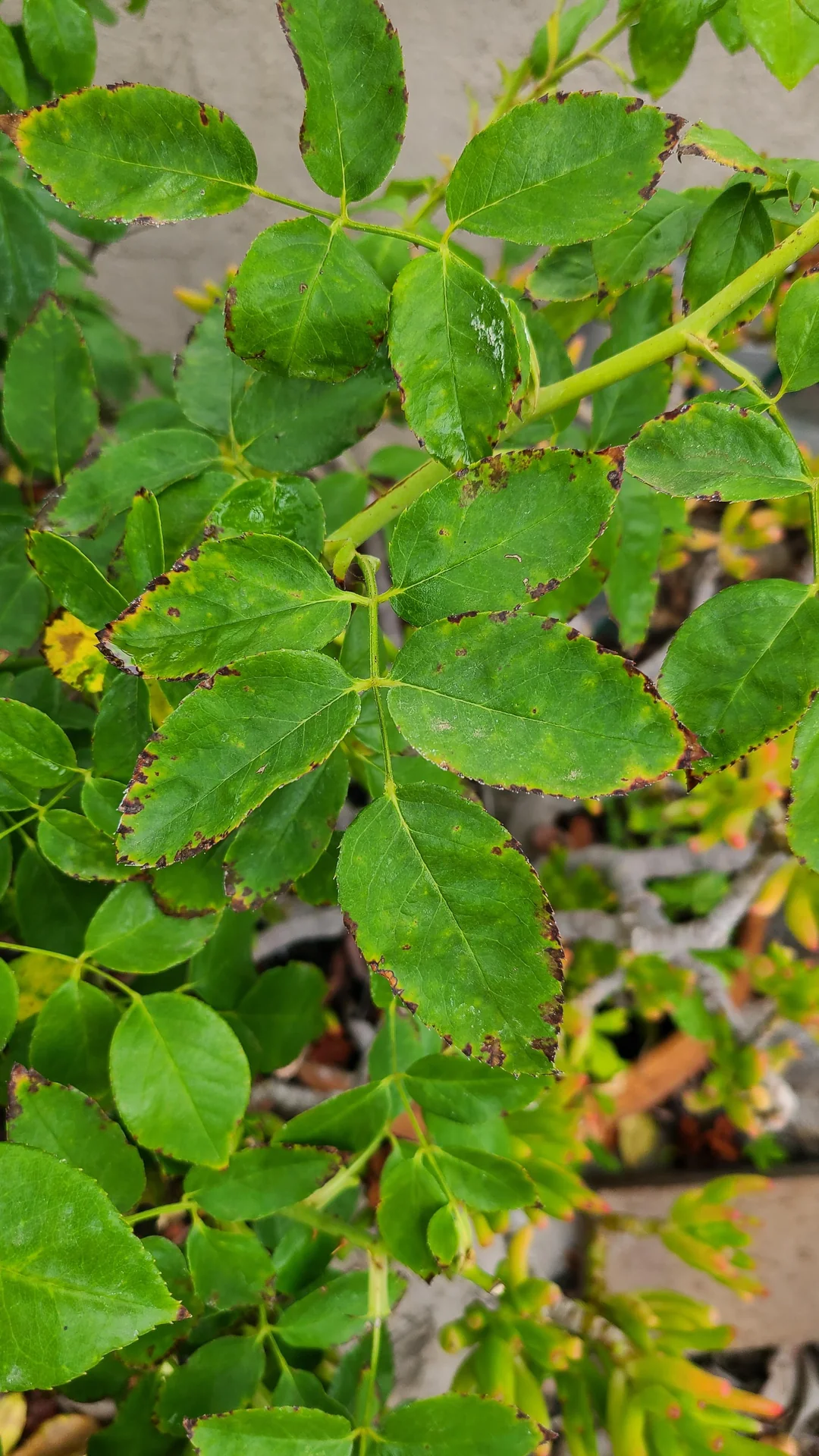
  • Older leaves turn a dull, dark blue-green; the undersides and veins develop distinct purple or reddish-purple patches due to phosphorus deficiency.
  • Symptoms appear first on the older (lower) leaves and spread upward — phosphorus is mobile, so the plant withdraws it from old leaves to feed new growth
  • Stunted, slow growth with thin, weak stems and poor root development
  • Poor flowering — fewer buds, smaller blooms that open slowly and look dull, because phosphorus is essential for flower formation
  • In severe cases the older leaves drop progressively from the bottom upward, sometimes with necrotic leaf margins or tips
  • Overall the plant grows poorly with a dull, lacklustre canopy

Treatment plan

The principle for correcting phosphorus deficiency is: rapid rescue with a high-P foliar feed + durable recovery with root-zone phosphorus, while correcting soil pH.

  • Step 1 (rescue): Apply a high-phosphorus foliar feed (MKP 0-52-34, or a "bloom-booster" NPK such as 10-52-10 / 6-30-30) directly onto the canopy in the early morning or late afternoon. Uptake is faster than waiting for the roots.
  • Step 2 (recovery): Add root-zone phosphorus, either slow-release (fused magnesium phosphate, bone meal) or quick (single superphosphate), to build a lasting phosphorus base for rooting and flower-bud formation. A readily available phosphorus fertiliser can also be dissolved and drenched around the base.
  • Step 3 (fix the root cause): Check and bring the soil pH to 6.0–6.5 so phosphorus is not locked up; improve drainage and avoid cold, waterlogged soil that blocks uptake.
  • Note: Phosphorus shows its effect on the next flush of leaves and blooms rather than "greening up" instantly like nitrogen — be patient and feed at the right pH.

Recommended products

Below are a few widely available options:

  1. Van Dien fused magnesium phosphate — slow-release root feed
  • Description: Supplies slow-release phosphorus together with calcium, magnesium and trace elements without acidifying the soil; ideal for building a lasting phosphorus base and developing roots.
  • Application: Spread around the base, work lightly into the soil and water in.
  • Frequency: Periodically, at the label rate.
  1. Single superphosphate — fast soil phosphorus
  • Description: Readily available phosphorus that dissolves quickly in water, for topping up P-poor soils fast.
  • Application: Apply to the root zone or dissolve and drench at the recommended rate.
  • Note: Pair with correcting soil pH to 6.0–6.5 so the phosphorus stays available.
  1. MKP (mono potassium phosphate 0-52-34) — foliar rescue & bloom push
  • Description: A fully soluble foliar feed high in phosphorus and potassium; for rapid rescue and to push flower-bud initiation.
  • Dosage: About 0.5–1 g per litre of water.
  • Application: Spray evenly over the canopy in the early morning or late afternoon.
  • Frequency: Every 7 days during the treatment phase.

Expert tip: If the rose foliage is dark green turning purple/red on stems, petioles and leaf undersides with poor flowering, it is far more likely phosphorus deficiency than nitrogen deficiency (which gives pale, even yellowing). Prioritise correcting soil pH to 6.0–6.5 alongside feeding phosphorus so the plant can actually take it up.

Prevention

  • Keep phosphorus balanced in the N–P–K programme, raising P in the run-up to flowering.
  • Maintain soil pH at 6.0–6.5 and test the soil before each season.
  • Add organic matter (well-rotted manure, bone meal, compost) to hold and release phosphorus gradually.
  • Ensure good drainage and avoid prolonged cold, waterlogged soil that impairs phosphorus uptake.

Recommended products

Van Dien fused magnesium phosphate (slow-release rock phosphate)

Van Dien fused magnesium phosphate supplies phosphorus (P2O5) in a slow-release form together with calcium, magnesium and trace elements, and it does not acidify the soil — ideal as a root-zone feed for roses. It builds the root system, firms up the plant and lays down a long-lasting phosphorus base. Spread around the base, lightly work it into the soil and water in; apply periodically at the label rate.

Single superphosphate (quick soil phosphorus)

Single superphosphate provides readily available phosphorus that dissolves quickly in water — used to top up phosphorus fast on P-poor soils. Apply to the root zone or dissolve and drench at the recommended rate; pair it with correcting soil pH to 6.0–6.5 so the phosphorus stays available.

MKP — mono potassium phosphate (0-52-34)

MKP (KH2PO4) is a fully soluble foliar fertiliser high in phosphorus and potassium — used for rapid rescue of phosphorus shortage and to push flower-bud initiation. Dilute as directed (about 0.5–1 g per litre) and spray evenly over the canopy in the early morning or late afternoon, repeating every 7 days during the treatment phase.

Share this page