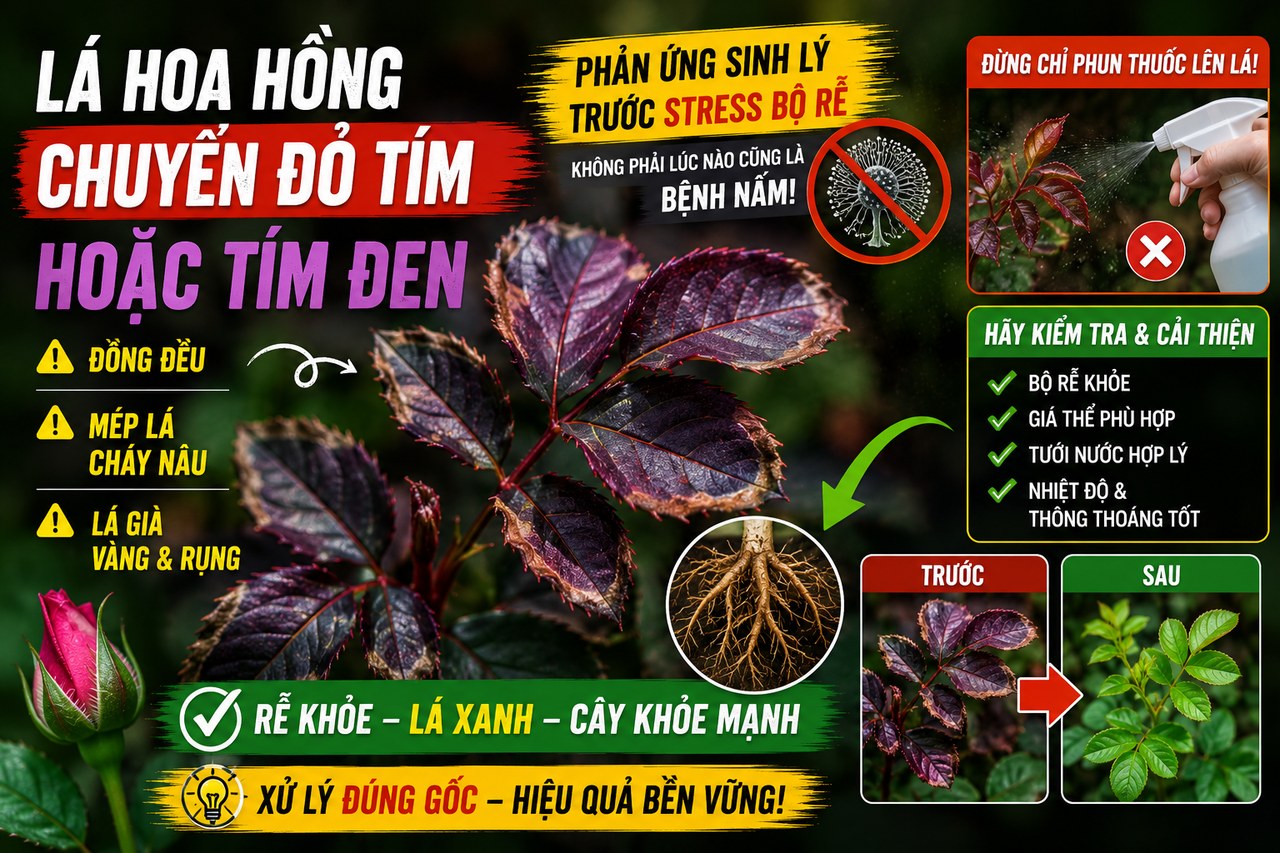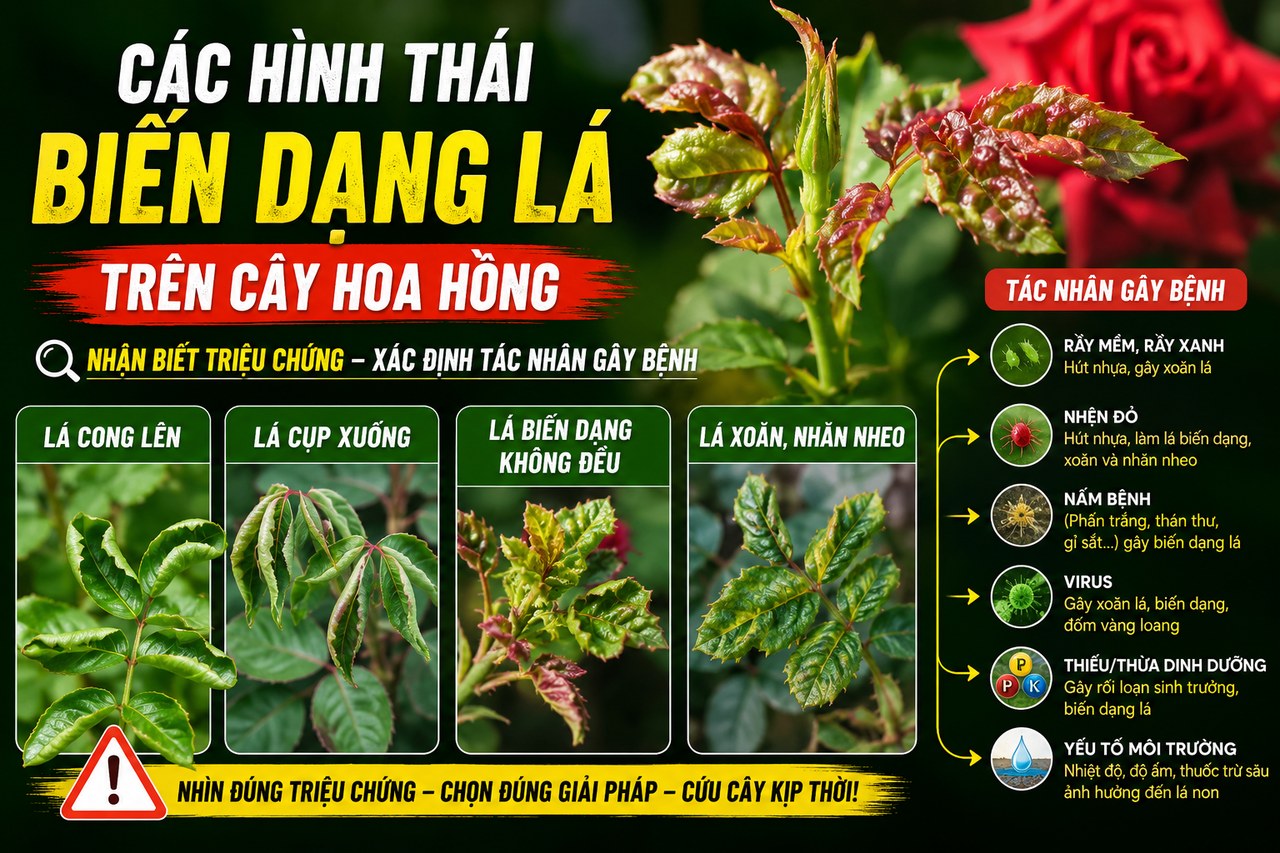
Most people assume garden plants simply stand still and suffer in silence. In reality, rose leaves are active biological communicators. Hour by hour, they broadcast honest, real-time feedback about internal physiology and external environmental pressure.
Whereas simple leaf yellowing (chlorosis) usually signals a straightforward nutritional shortfall, leaf curling and morphological distortion tell a far more urgent story. They reveal a cellular-level battle: severe turgor imbalance, vascular blockage, insect salivary toxins, missing structural minerals, or even microscopic pathogens rewriting the plant's genetic instructions.
This guide equips you to act as a true plant detective across four practical sections: upward curling, downward curling, irregular distortion, and a 30-second diagnostic matrix.
1. Upward Curling: A Biological Self-Defense Mechanism
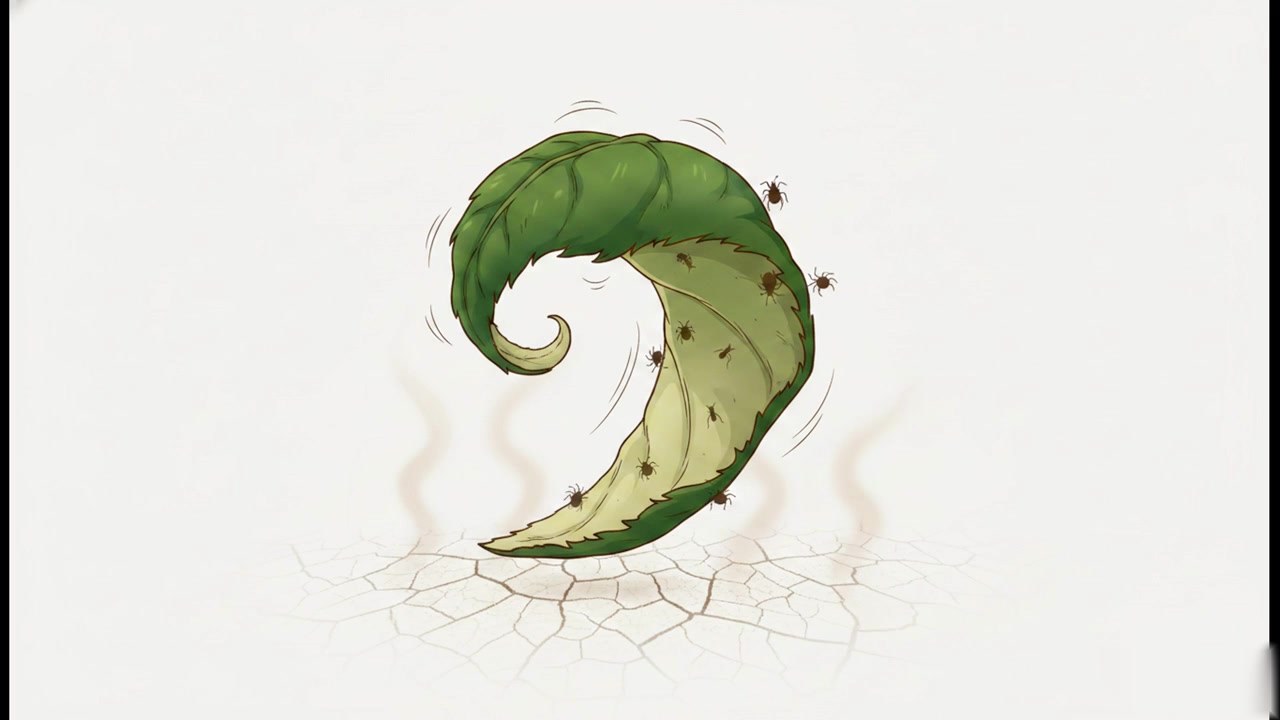
When rose leaf margins curl upward into a boat or spoon shape, do not panic immediately. Fundamentally, upward curling is an active, reflexive defense response triggered by rapid water loss or physical damage to the underside of the leaf.

1.1. The Core Cellular Mechanism
Whether the trigger is scorching drought or microscopic piercing-sucking pests, the underlying biology converges on one mechanism: cells on the lower leaf surface (abaxial epidermis) contract and shrink.
- Under intense heat, dry wind, or Drought Stress, the leaf curls upward to reduce its exposed surface area and trap a tiny, slightly more humid microclimate around its stomata to conserve scarce moisture.
- When lower-surface cells collapse from dehydration or pest feeding while upper-surface cells continue expanding normally, the mechanical tension difference forces the blade to roll upward.
1.2. Primary Culprits
- Water Deficit & Dry Heat (Drought Stress): Affects multiple canopy layers simultaneously during peak midday heat; leaves generally relax once watered deeply and shaded.
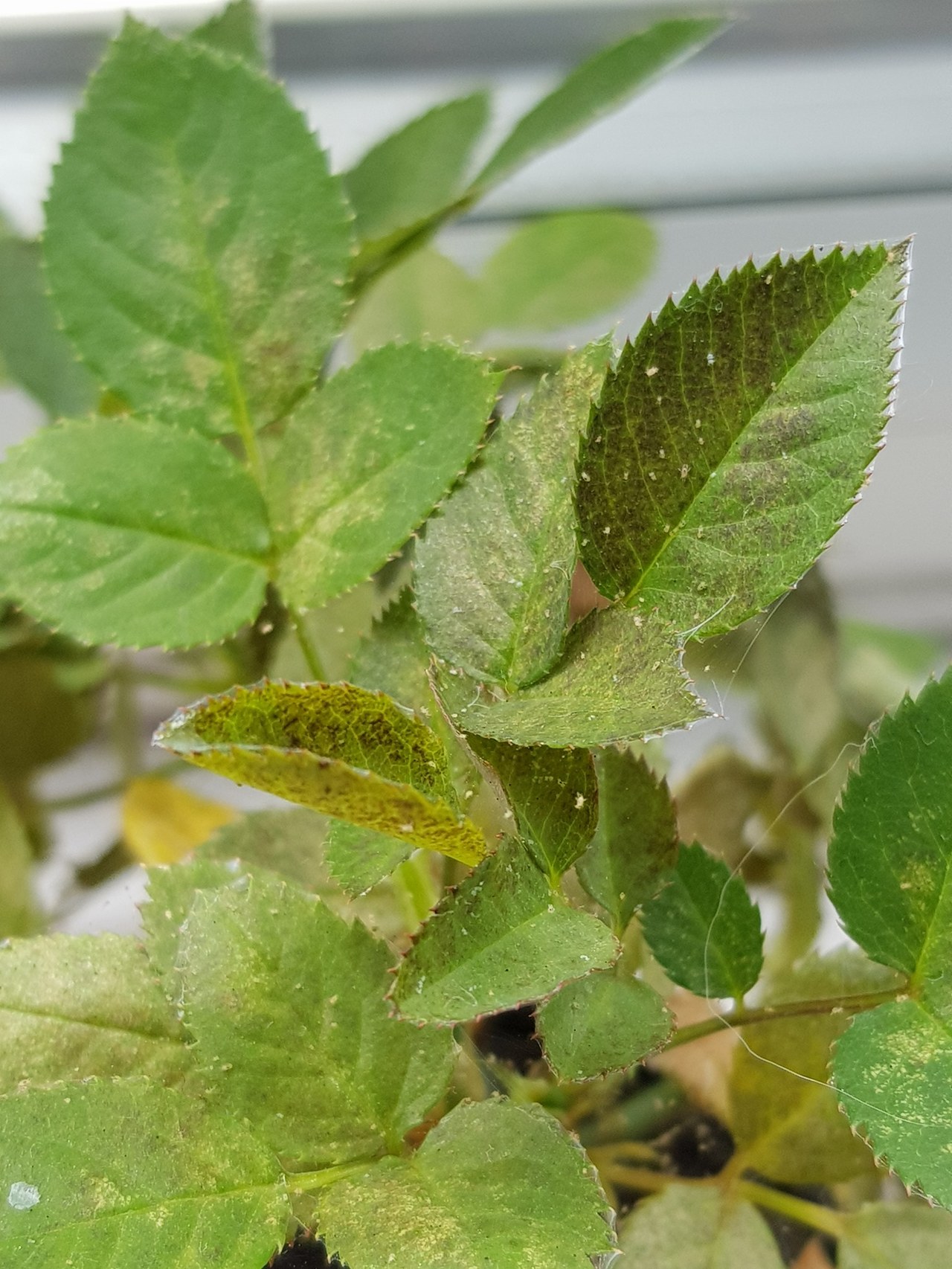
- Thrips: Feed aggressively on tender shoots and the undersides of emerging leaves, leaving silvery-bronze scarring and forcing young leaf margins to cup upward, stiffen, and crinkle.
- Red Spider Mites: Colonize the undersides of mature leaves, puncturing chlorophyll cells to produce fine stippling, faint webbing, and dry upward curling.
1.3. Rapid Action Plan
- Inspect leaf undersides with a hand lens or tap shoots over white paper to check for moving thrips or spider mites.
- For drought/heat: water thoroughly in the early morning, mulch the soil surface, and provide midday shade cloth.
- For thrips/mites: rinse undersides with a gentle morning water spray, then rotate targeted miticides/insecticides (Neem oil, Abamectin, Spinosad, or dedicated acaricides), ensuring thorough coverage of lower leaf surfaces.
2. Downward Curling: Excess Load or Vascular Blockage
In stark contrast to protective upward cupping, downward curling or clawing signals that the rose is overwhelmed—either by excessive internal nutrient load or by severe blockage in its water-transport system.
2.1. Excess Nitrogen — "Tissue Outgrowing the Frame"
Over-application of high-nitrogen fertilizers (concentrated fish emulsion, repeated 30-10-10, or urea) drives leaf mesophyll tissue to expand far faster than the supporting vein network. Because the internal blade swells faster than its "skeleton," the tissue puckers between veins and arches downward into a claw shape, typically accompanied by abnormally dark, soft blue-green foliage.
2.2. Salivary Toxins from Sap-Suckers (Aphids & Mealybugs)
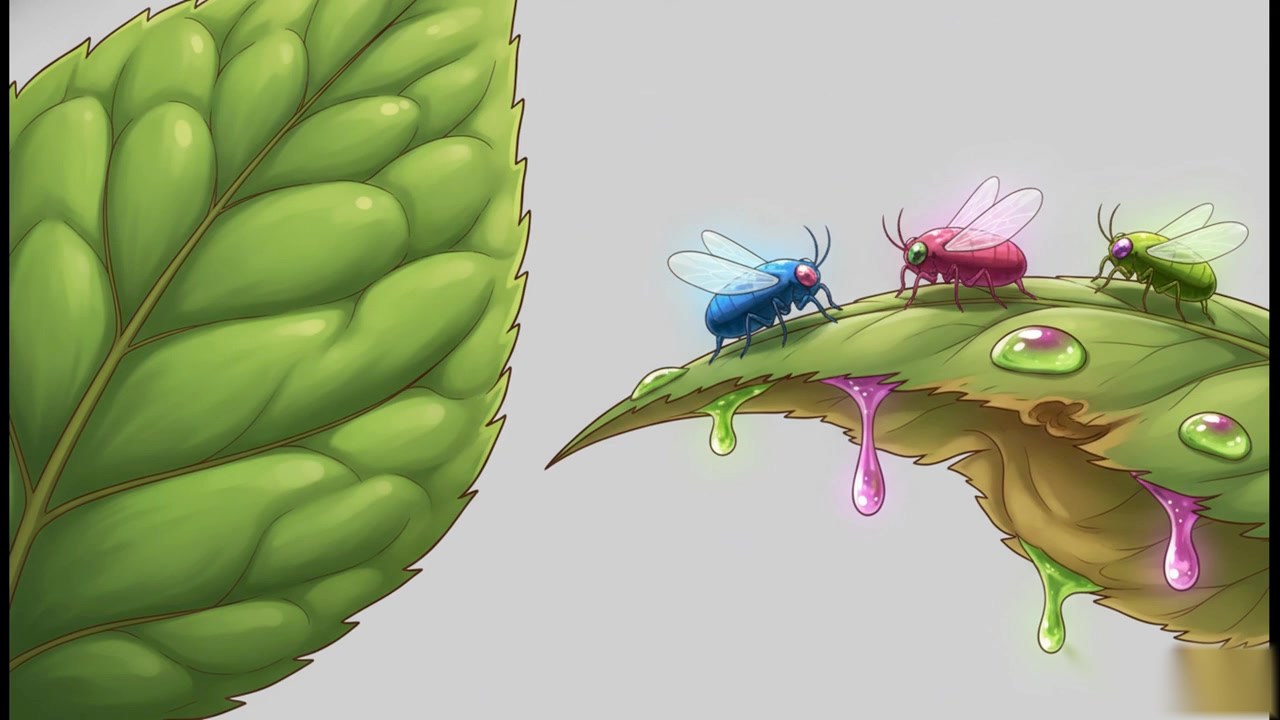
Sap-feeding insects such as aphids and mealybugs do more than drink phloem sap—they inject a toxic chemical cocktail in their saliva. These compounds hijack local plant hormones, causing erratic cell division on the upper leaf surface and bending the blade sharply downward, often alongside sticky honeydew and black sooty mold.
2.3. Root Rot — The Invisible Underground Collapse
One of the deadliest causes of downward leaf collapse is root rot, which unfolds in a four-step hydraulic failure:

- Pathogen Attack: Soilborne fungi (Pythium, Phytophthora, Fusarium) silently invade roots in waterlogged, oxygen-starved media.
- Xylem Blockage: Water-conducting vessels clog completely, severing upward water delivery.
- Turgor Collapse: Internal cellular water pressure plummets across the canopy.
- Flaccid Downward Droop: Because the upper palisade layer is structurally thicker and heavier than the spongy underside, the blade loses hydrostatic support and folds limp and downward.
2.4. Rapid Action Plan
- Dark-green, puffy downward-clawed leaves (Excess N): Stop nitrogen immediately, flush the root zone with clean water, and rebalance with Potassium and Calcium.
- Sticky clusters on buds/undersides (Aphids/Mealybugs): Blast off with water and apply horticultural oil, Neem oil, or systemic insecticides as needed.
- Wet soil yet limp, drooping leaves (Root Rot): Halt watering immediately, inspect roots, trim black mushy roots, repot into airy media, and drench with Trichoderma or targeted root fungicides.
3. Irregular Distortion & Severe Twisting: Structural or Genetic Disruption
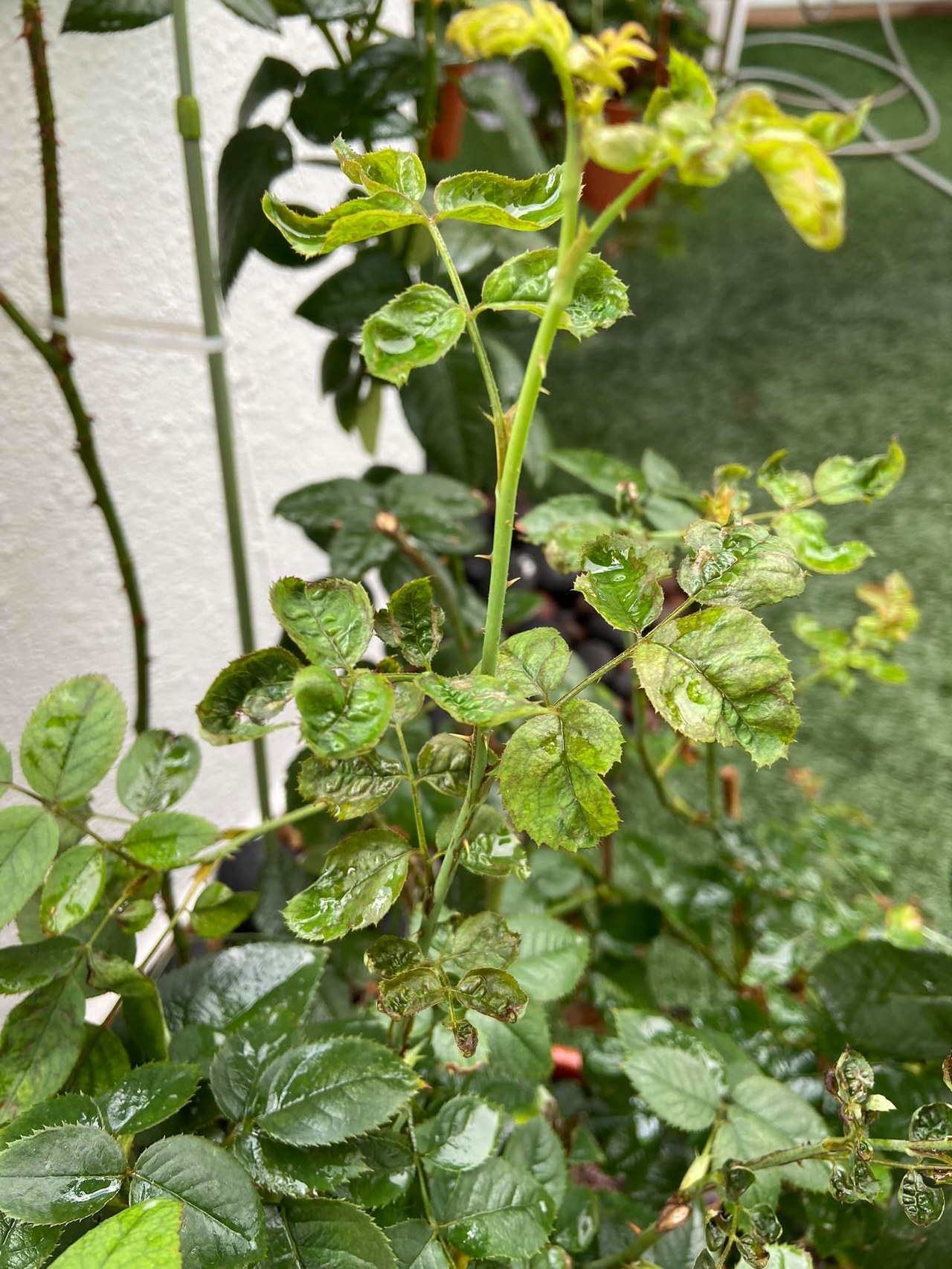
Whenever rose leaves emerge warped, twisted, and chaotic with no consistent curl direction, treat it as a high-priority warning. The plant is either missing the essential building blocks for rigid cell walls, being desiccated by surface fungi, or having its genetic code hijacked by viral pathogens.
Field Rule: Always inspect newly emerging shoots and expanding young leaves first—that is where structural and viral anomalies reveal themselves earliest.
3.1. Calcium Deficiency vs. Powdery Mildew
Both distort young foliage, yet their mechanisms are fundamentally distinct:
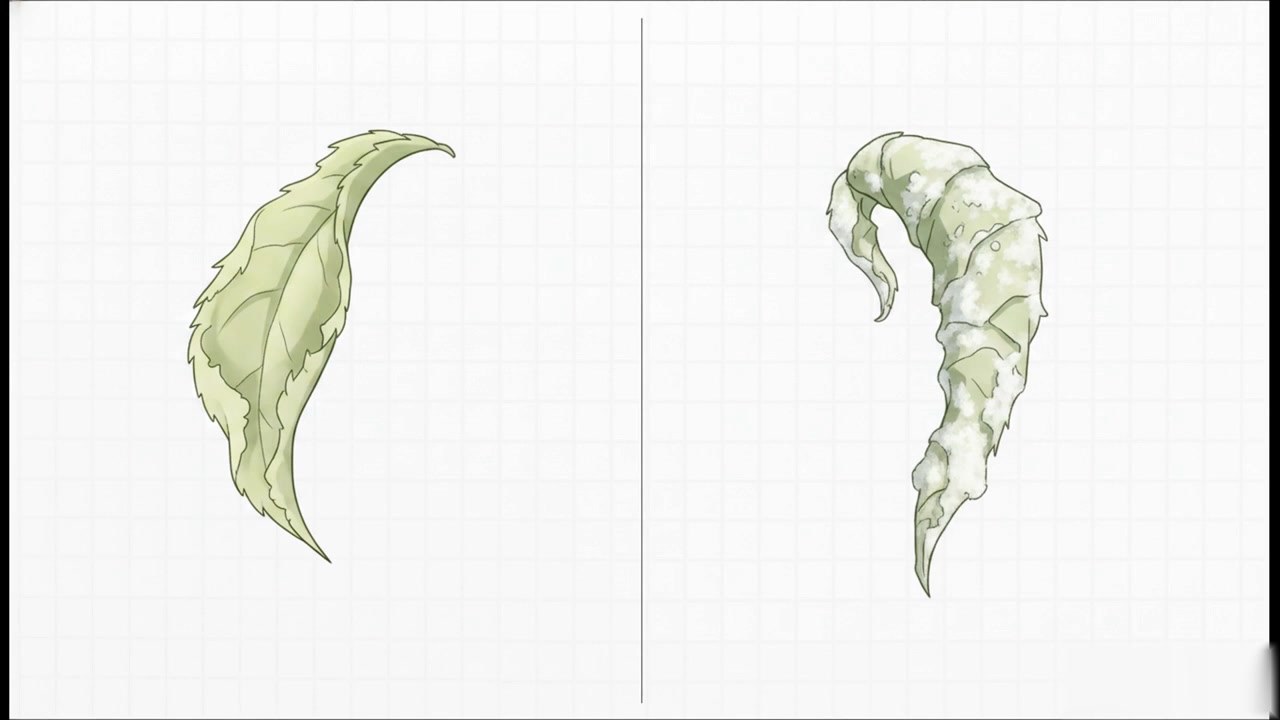
- Calcium Deficiency (Ca): Calcium is immobile within the plant (it cannot relocate from old leaves to new shoots) and is indispensable for building rigid calcium pectate cell walls. Without it, emerging leaves develop wavy, hooked tips, asymmetric margins, and stunted growing points.
- Powdery Mildew: A far more aggressive surface assault. Fungal mycelia anchor onto young epidermal tissue, coat it in a powdery white-gray layer, and literally drain cellular moisture until the young leaf turns brittle, parched, and tightly twisted.
3.2. Genetic Hijackers: Rose Mosaic Virus & Rose Rosette Disease
Viruses are the master hackers of the plant kingdom. Once inside host cells, they disrupt genetic expression and internal hormonal regulation, creating bizarre, irreversible mutations:
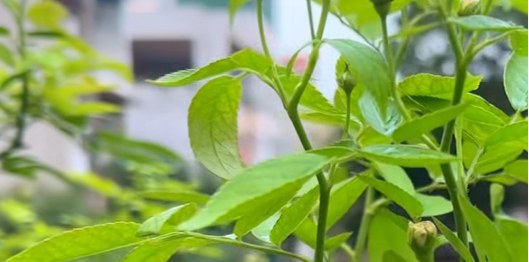
- Rose Mosaic Virus (RMV): Produces yellow zigzag line patterns, oak-leaf mottling, or ringspots with mild blade distortion, gradually sapping plant vigor.
- Rose Rosette Disease (RRD): Vectored by microscopic eriophyid mites (Phyllocoptes fructiphilus). Triggers unmistakable dense "witch's broom" shoot clusters, persistent bright-red deformed growth, strap-like narrowed leaves, swollen stems, and extreme hyper-thorniness.
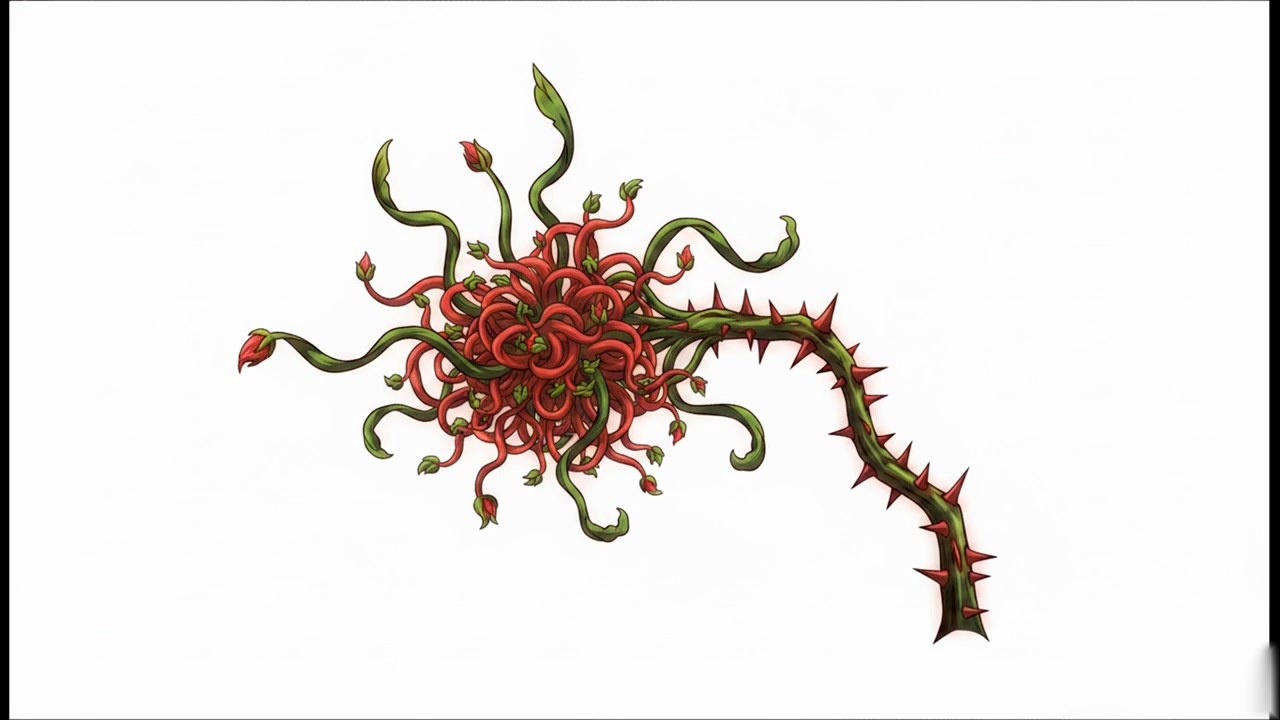
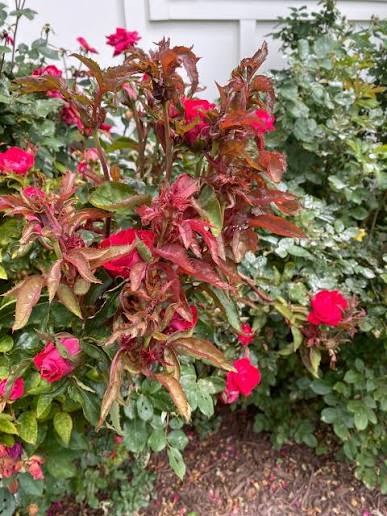
Critical Biosecurity Warning: There is no chemical cure for viral diseases in roses. If Rose Rosette Disease is confirmed, the only way to protect the rest of your garden is to dig up the entire plant including roots, bag it tightly, and dispose of it—and sterilize pruning shears with 70% alcohol or diluted bleach.
4. The 30-Second Master Diagnostic Matrix
Use this quick-reference matrix in the garden to connect external leaf geometry directly to its biological cause and remedy:
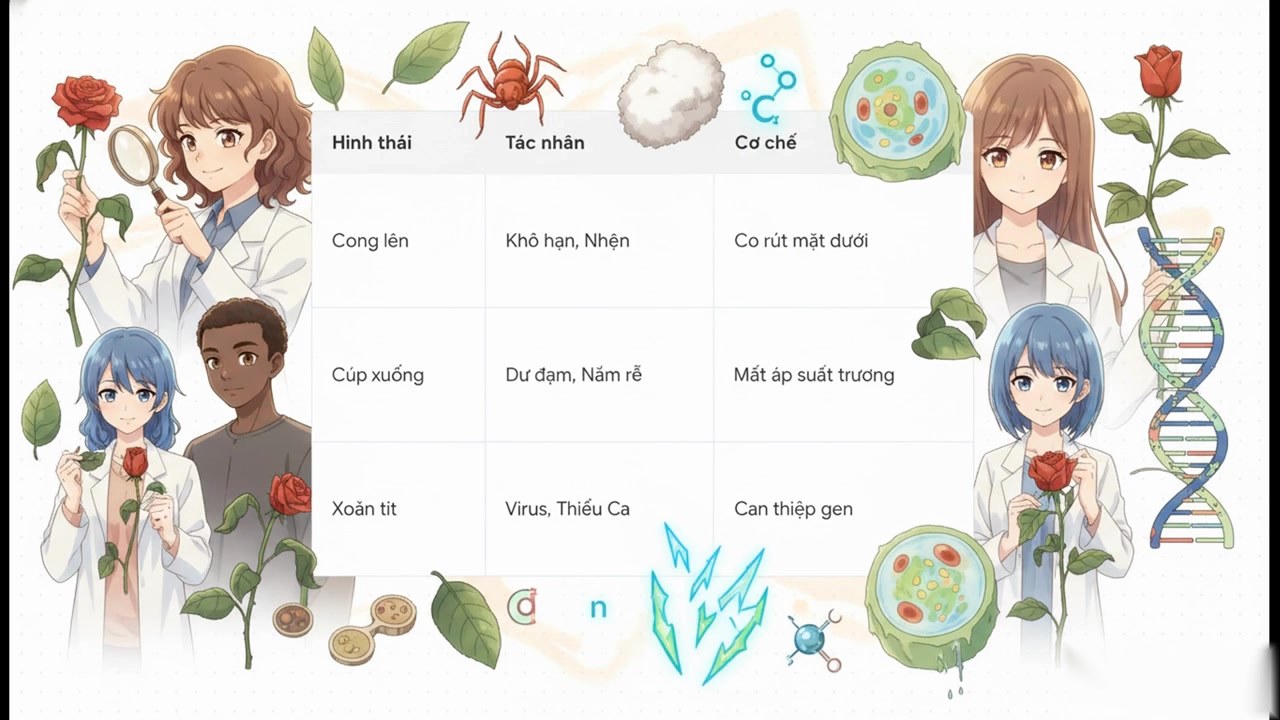
| Leaf Morphology | Primary Location | Key Culprits | Underlying Biological Mechanism | First-Line Action |
|---|---|---|---|---|
| Upward Curling (cupped/spooned) | Young shoots (Thrips) or mature leaves (Spider Mites, Drought) | Drought, heat, Thrips, Red Spider Mites | Lower-surface cell contraction from water loss or piercing-sucking damage | Inspect undersides; water deeply & shade; spray undersides for thrips/mites |
| Downward Curling (clawed/drooping) | Mid-canopy, shoots, or entire bush | Excess Nitrogen, Aphids, Mealybugs, Root Rot | Mesophyll outgrowing veins; salivary hormone toxins; xylem blockage causing turgor loss | Stop N & flush soil; treat sap-suckers; check drainage & treat root rot |
| Irregular Twisting & Distortion | Primarily new shoots and emerging leaves | Ca Deficiency, Powdery Mildew, RMV, Rose Rosette | Missing cell-wall calcium; surface fungal desiccation; viral genetic disruption | Supplement Ca-B; apply mildew fungicide; isolate & remove confirmed RRD |
Conclusion
Observing the direction of leaf curvature alongside leaf age (emerging shoots vs. mature foliage) is not casual garden-watching—it is real-time biological diagnostics. Once you read the morphological language of your rose leaves accurately, you move beyond guesswork and deliver the exact intervention your roses need to thrive.