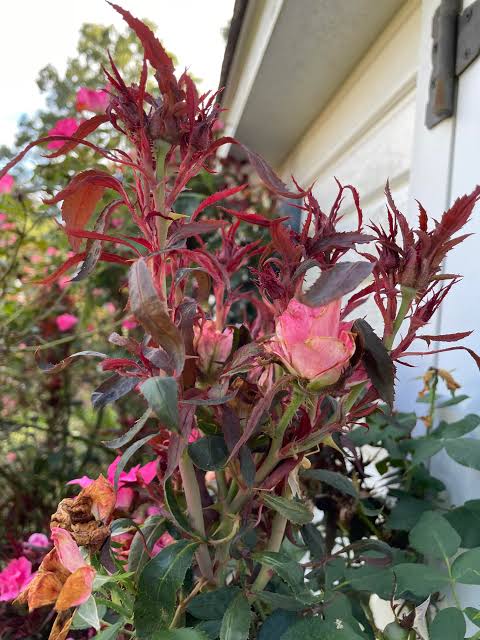
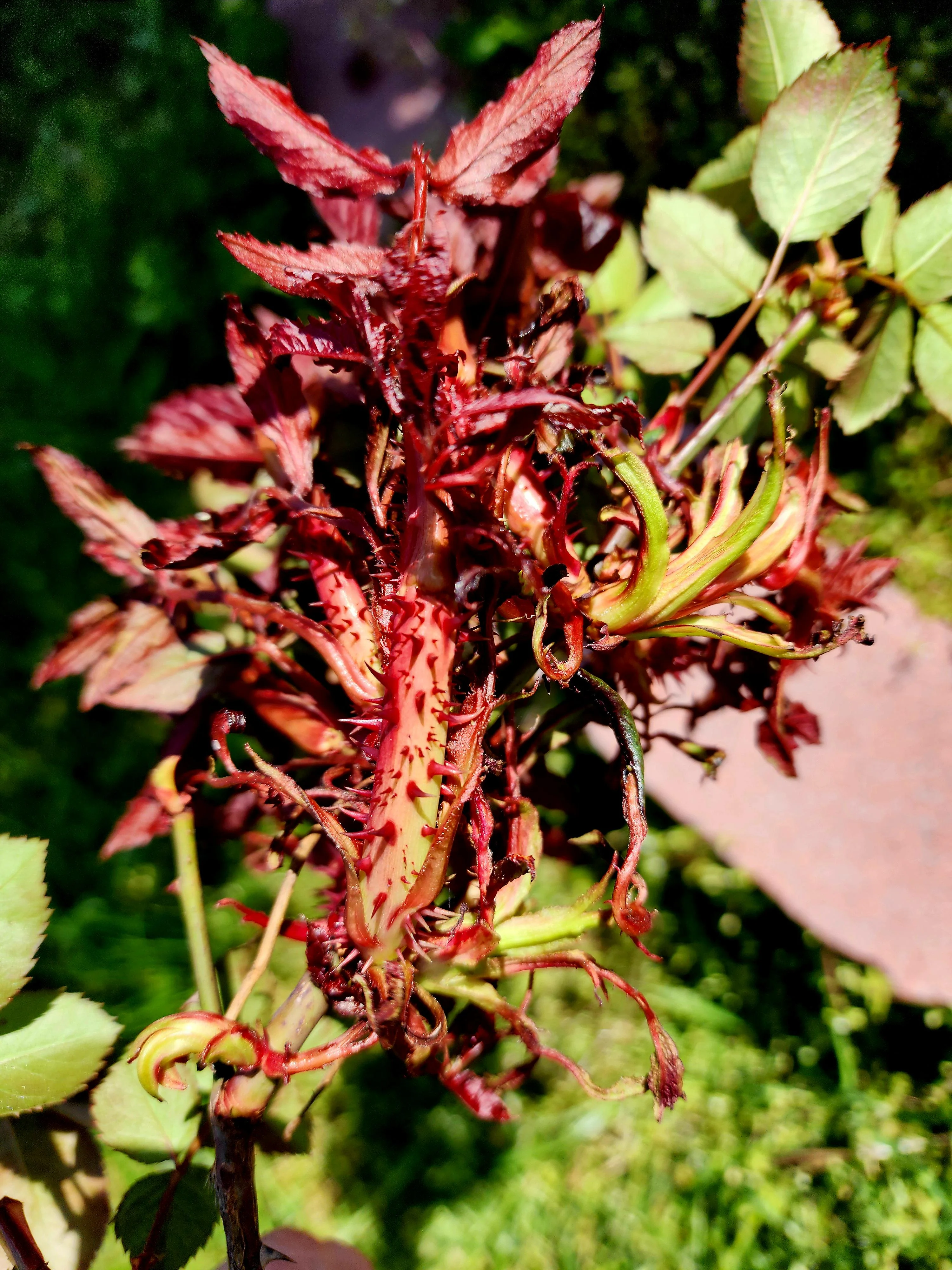
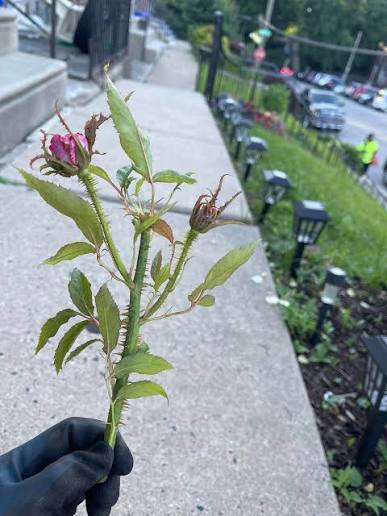
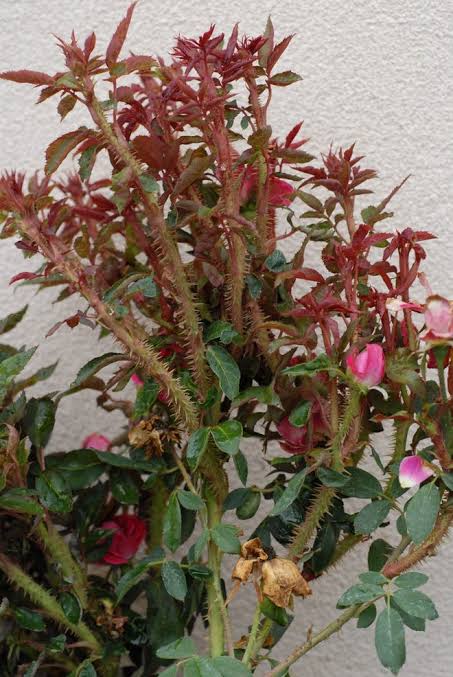
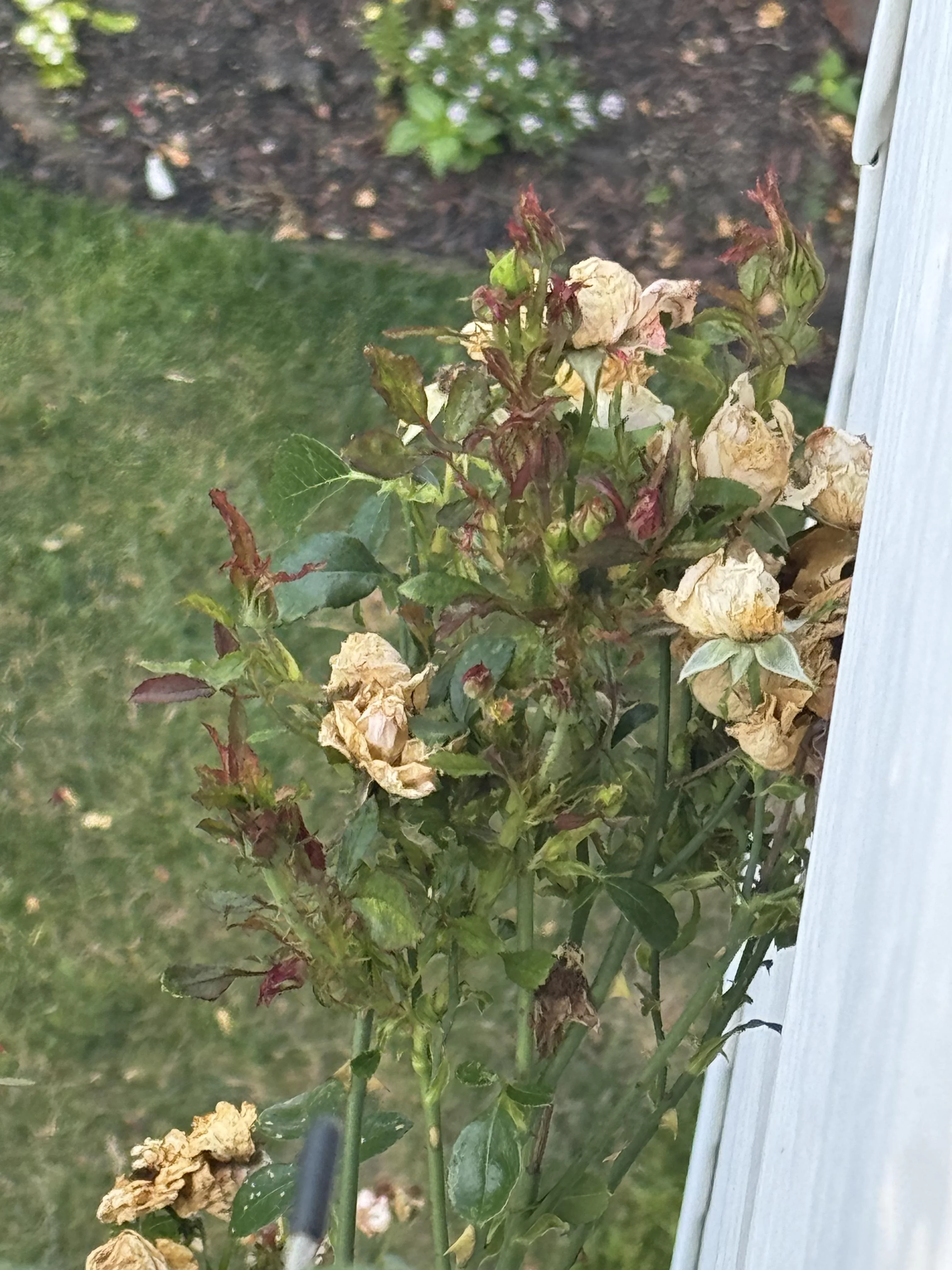
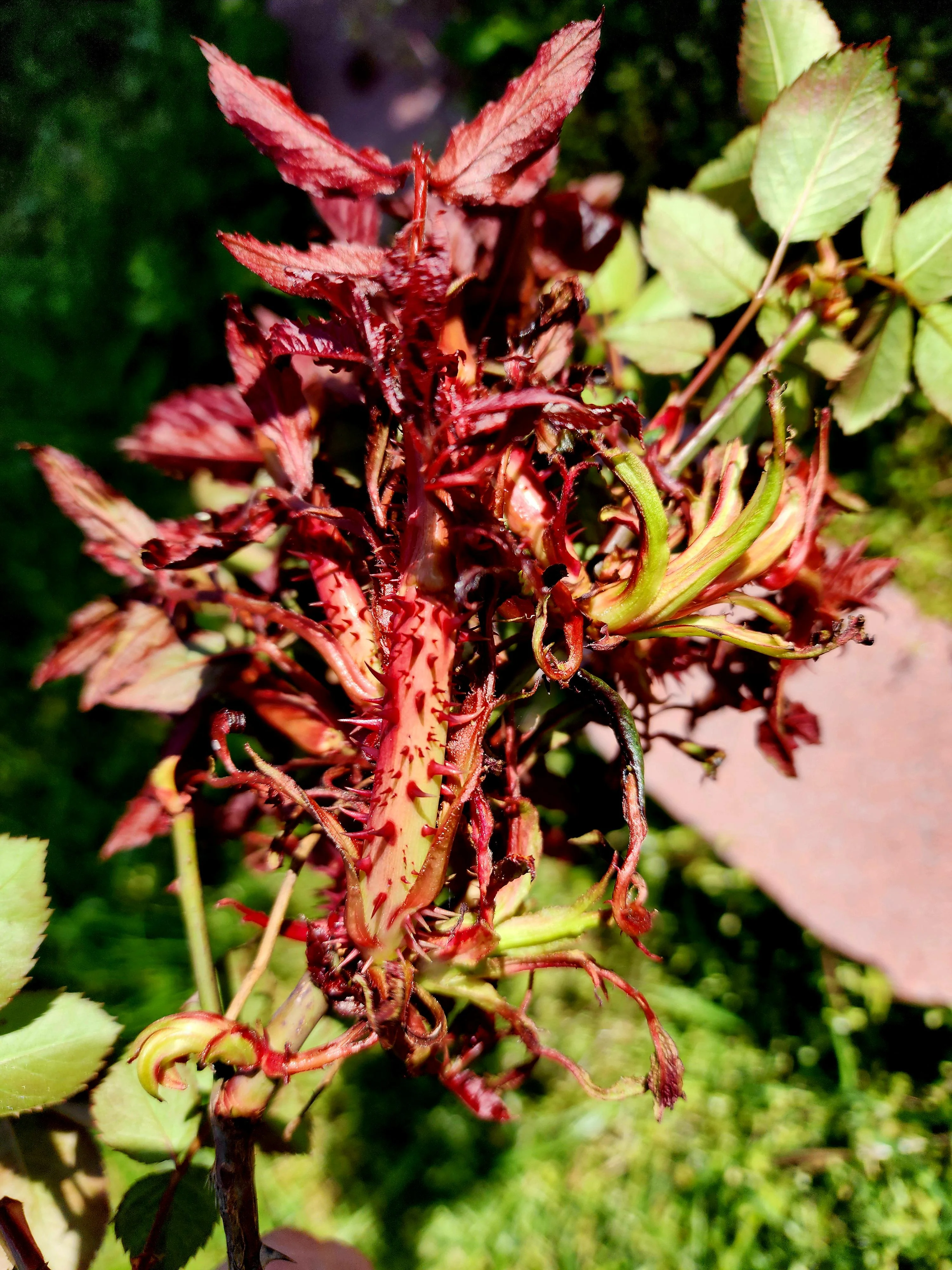
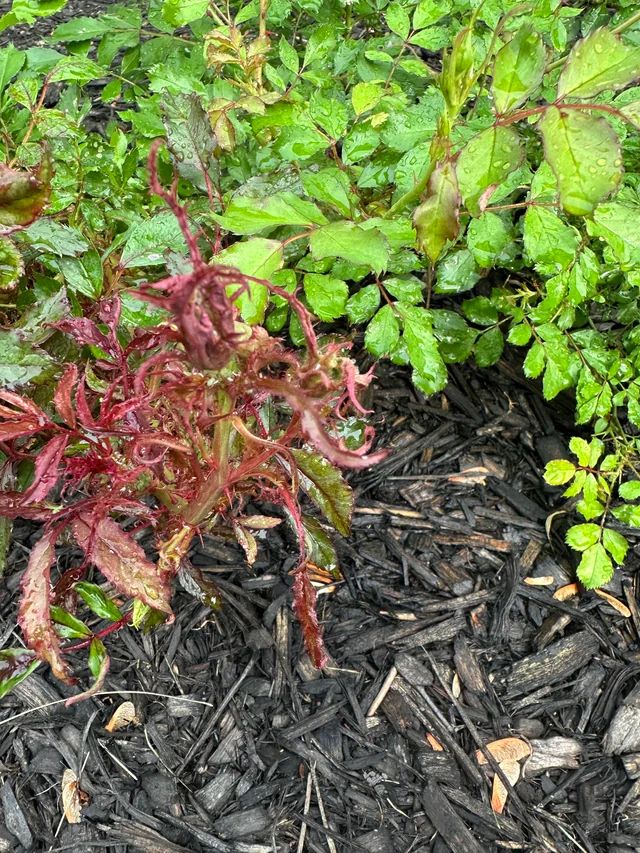
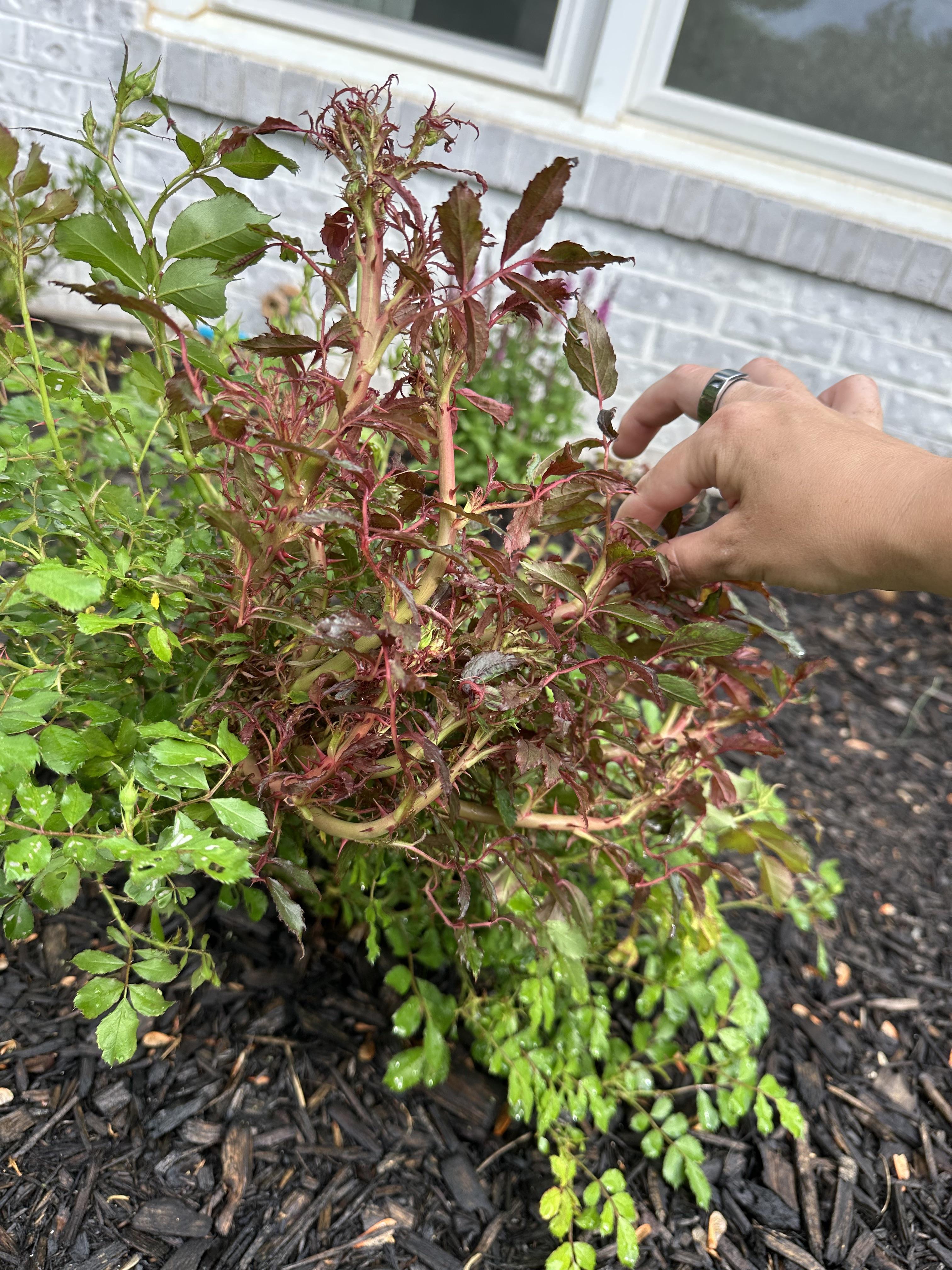
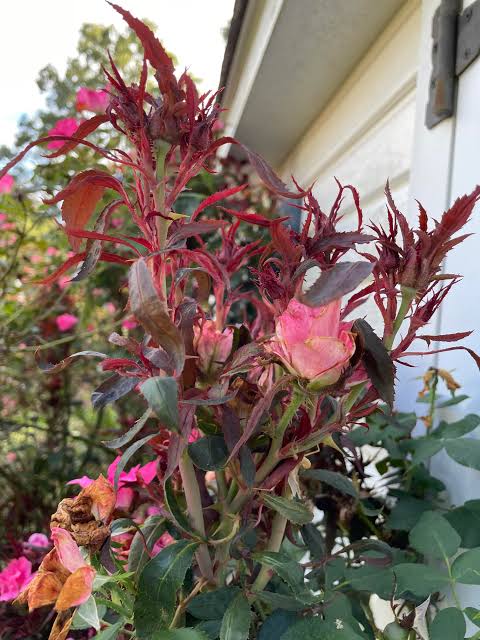
Rose Rosette Disease (RRD) is one of the most destructive diseases of roses (Rosa spp.), especially across North America. It is caused by the Rose Rosette Virus (RRV), a member of the genus Emaravirus with a genome of seven single-stranded RNA segments.
The virus is not readily spread by casual mechanical contact. Instead it is carried mainly by a microscopic eriophyid mite, invisible to the naked eye (about 140–170 micrometres long, with only two pairs of legs). The primary vector is Phyllocoptes fructiphilus; a second species, Phyllocoptes arcani, has recently been confirmed to transmit the virus as well. The mites shelter in buds, leaf axils, petioles and at the base of new shoots; they disperse on the wind, on clothing and on other insects, and need less than an hour of feeding to transmit the virus to a healthy plant. RRD is also spread by grafting from infected stock.
Note for growers in Vietnam: Rose Rosette is chiefly a North American problem and is not widely reported in Vietnam / South-East Asia. Be especially cautious with imported planting stock. If you see similar symptoms, the more likely cause is herbicide damage (see below) or another disorder — but genuine RRD must be dealt with decisively, because there is no cure.