
Rose Mosaic Virus
Virus & BacteriaDescription
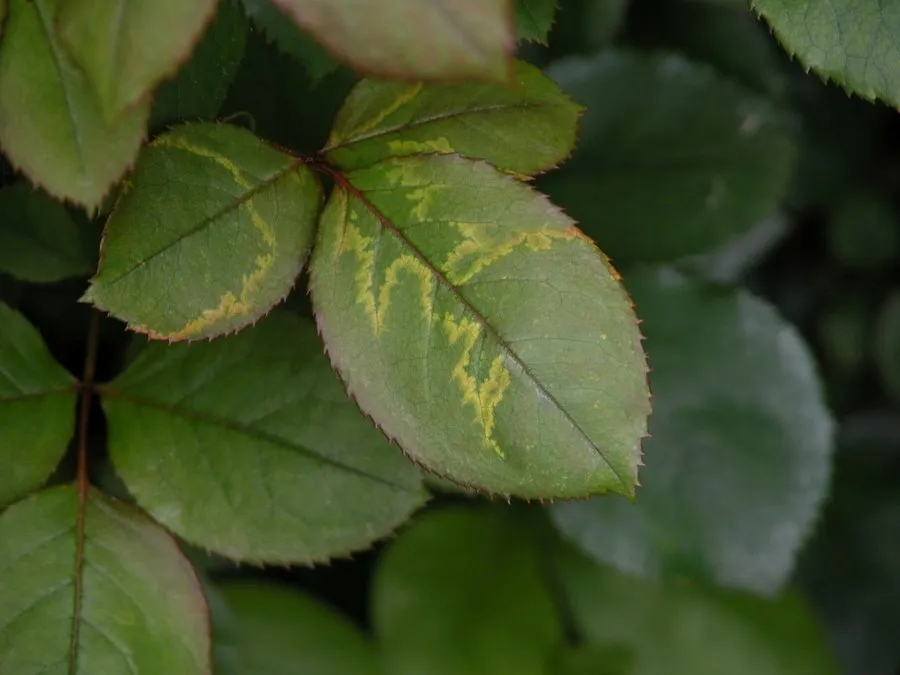
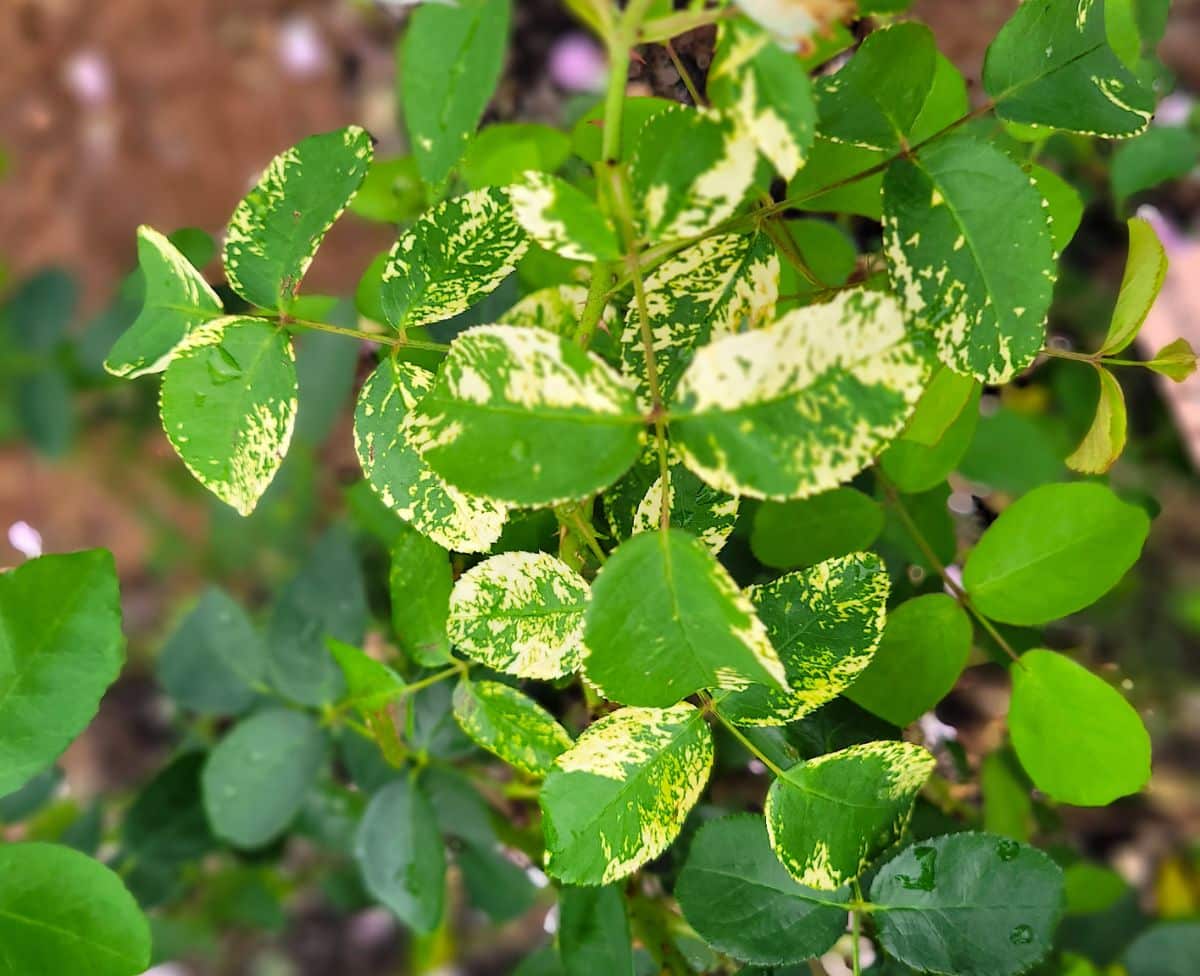
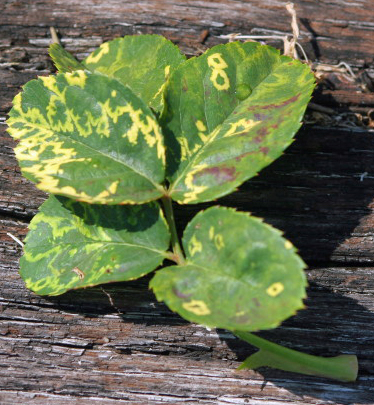
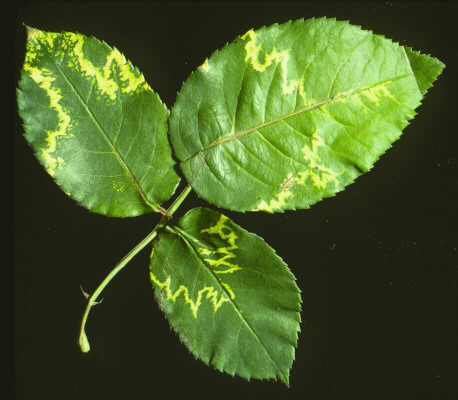
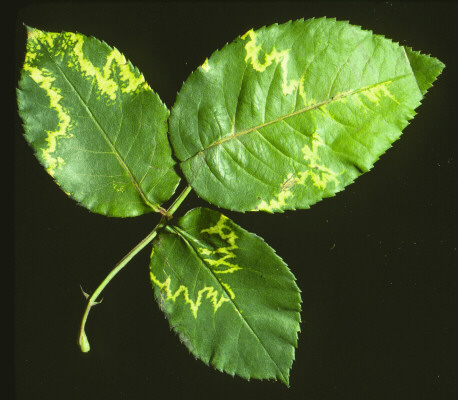
Rose mosaic is caused by a complex of plant viruses, most often Prunus necrotic ringspot virus (PNRSV) and Apple mosaic virus (ApMV). There is no curative treatment — the virus spreads primarily through infected propagation material (grafts, cuttings) and through wounds. Affected leaves develop yellow to creamy-white markings in zigzag, oak-leaf, or vein-banding patterns over the normal green background.
Once a plant is infected, the virus moves systemically through the phloem and persists for the life of the plant. Although infected roses may continue to grow, vigour and bloom quality decline steadily, and the plant becomes a long-term reservoir of inoculum that can infect other roses in the garden. The virus can be moved by piercing-sucking pests such as thrips and, most importantly, by contaminated pruning tools.
The virus directly interferes with the genetic code that controls leaf development. It disrupts the intracellular transport of nutrients and hormones, causing new leaves to emerge completely malformed, twisting randomly without a consistent upward or downward curling pattern.
Symptoms
- Yellow mosaic patterning on leaves.
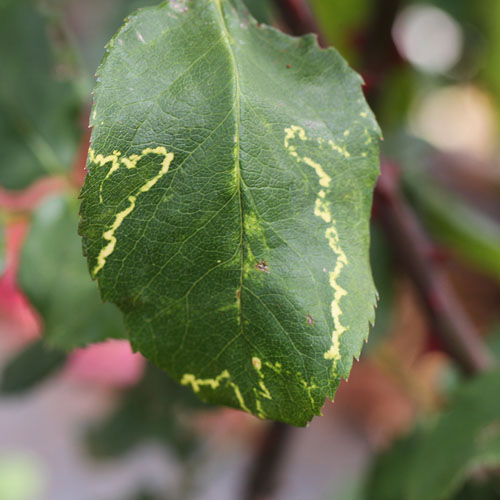
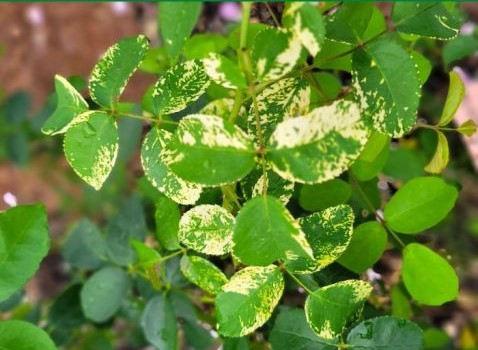
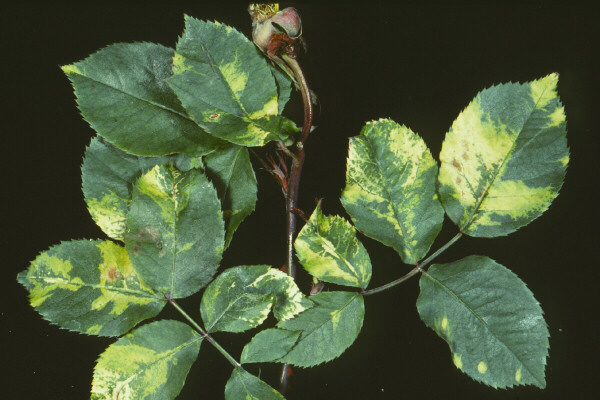
- Vein-banding — leaf veins turn yellow against the green background.
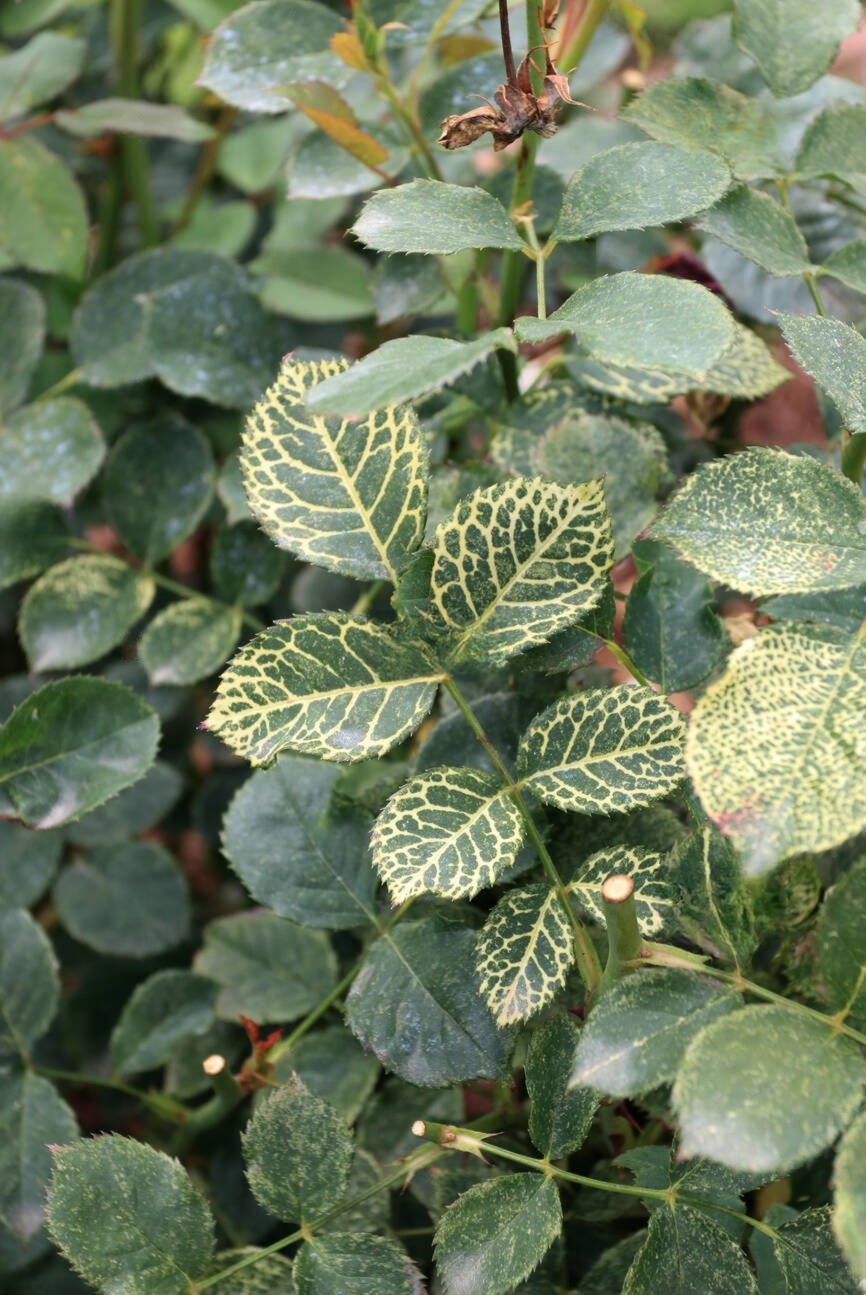
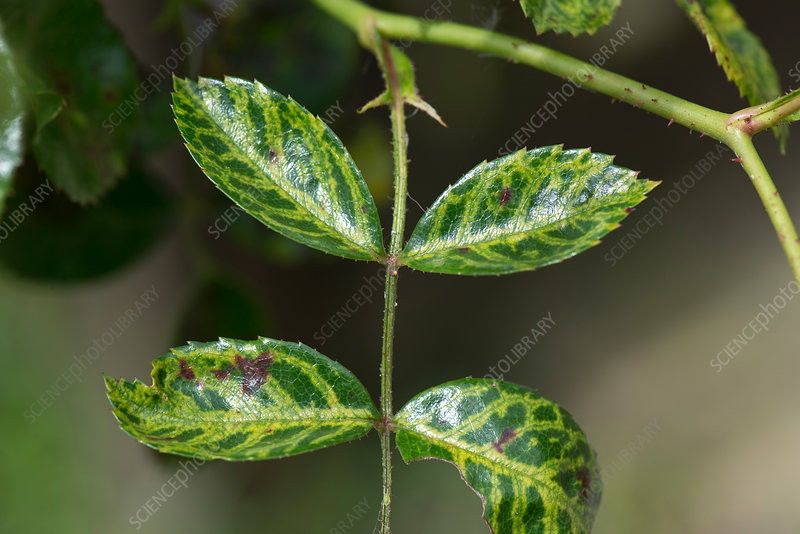
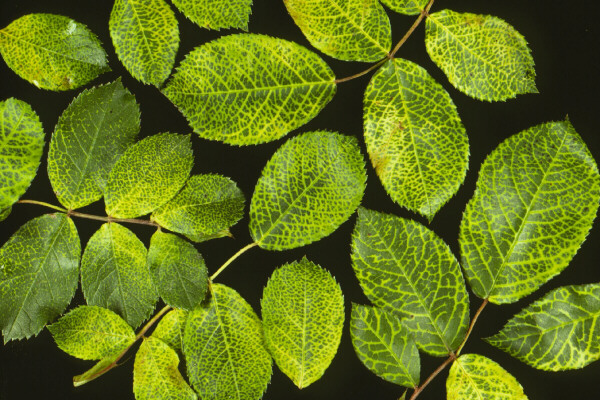
- Leaf distortion.
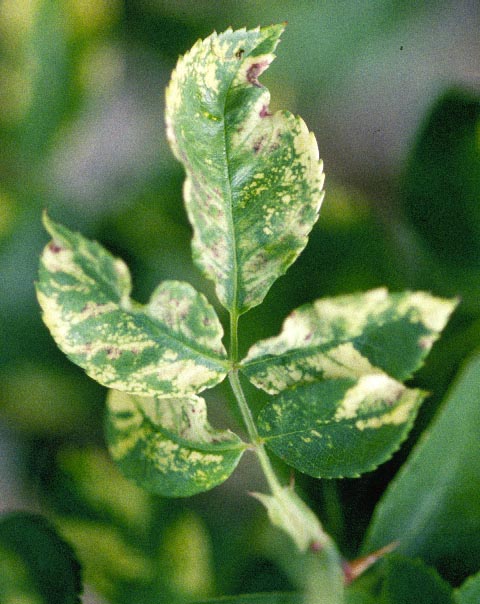
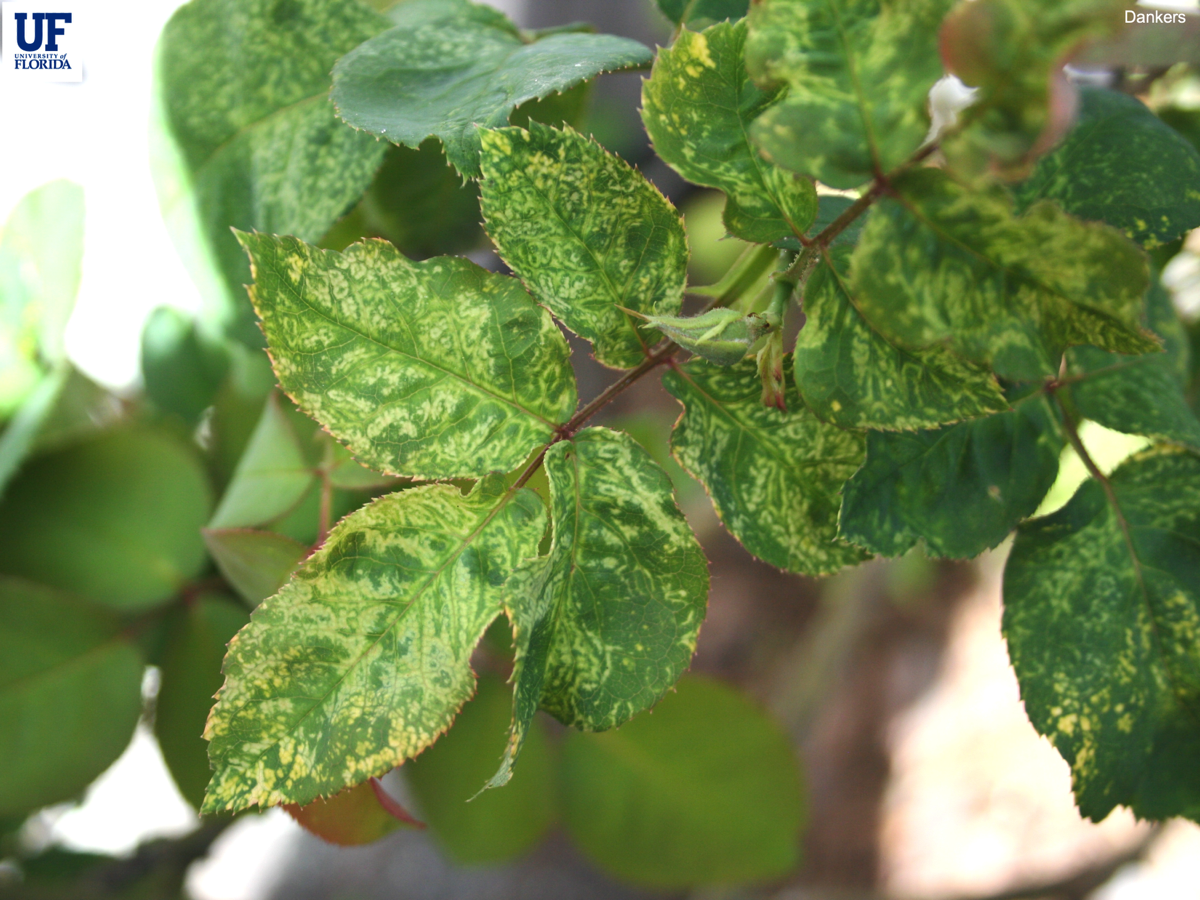
- Leaf and bloom production slow noticeably compared with healthy plants because the virus reduces photosynthetic efficiency — the plant still grows, just more slowly.
Treatment plan
No curative treatment is available — there is no chemical cure for plant viruses. Management therefore focuses on suppressing symptom expression, supporting plant vigour, and preventing further spread:
- Isolate suspect plants and never take cuttings or grafts from infected material to avoid propagating the virus.
- Hard pruning: Remove canes and leaves showing clear mosaic symptoms (yellow streaking, oak-leaf or herringbone patterns). Minimise unnecessary pruning to reduce mechanical spread. Critical: sterilise pruning shears with 70 % alcohol between every single cut to avoid transmitting the virus to healthy canes.
- Rogue and destroy: If the plant is severely affected with widespread leaf and flower distortion, the best course is to dig out the entire plant along with the surrounding soil and destroy it to protect the rest of the garden.
- Optimised nutrition: Provide balanced fertilisation with full micronutrients (magnesium, zinc, iron) to deepen leaf green and mask the visual impact of mosaic symptoms while supporting overall vigour.
No chemical treatment is available — see prevention.
Prevention
- Sterilise pruning tools (70 % alcohol or 10 % bleach) between every cut and between every plant.
- Source only certified disease-free planting stock and verify the propagation origin before purchase.