RoseDoctor
Thrips

Thrips

Insect

Description

Thrips are tiny (1–2 mm) piercing-sucking insects in the order Thysanoptera, most commonly Frankliniella occidentalis (the western flower thrips) and Thrips tabaci (the onion thrips) on roses. They rasp and suck cell contents from leaves, buds, and petals, leaving silvery streaks or coppery sheen on the leaf surface, deformed flowers, and tell-tale black faecal specks. Thrips flourish in hot, dry conditions (25–35 °C with low humidity), reproduce extremely rapidly, and develop insecticide resistance quickly if products are not rotated. Beyond direct feeding damage, several species act as vectors of plant viruses such as Tomato Spotted Wilt Virus (TSWV). Adult thrips are also wind-dispersed over long distances, allowing outbreaks to spread quickly — and a heavily damaged plant may take months to recover and push fresh, undamaged growth.

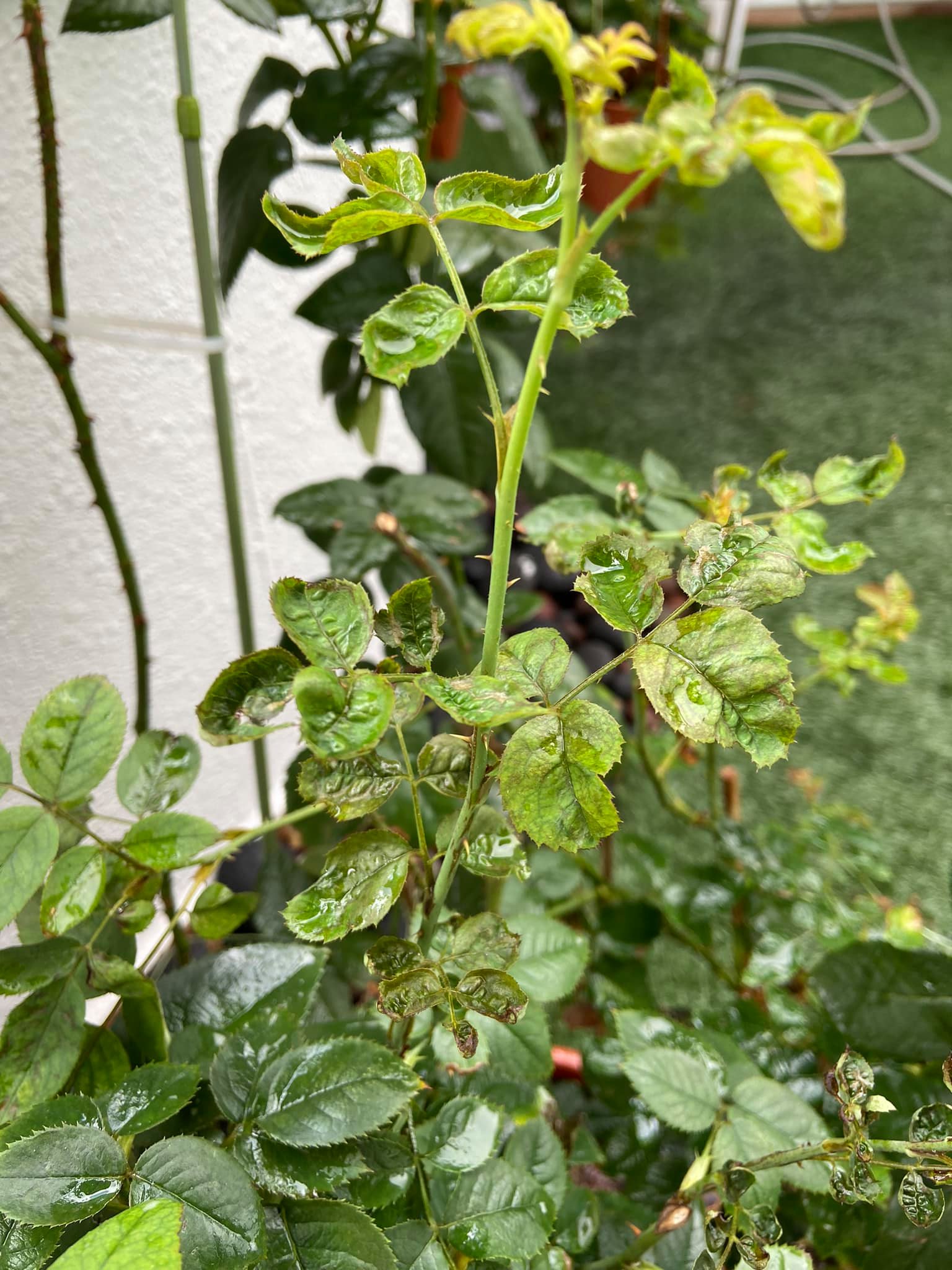
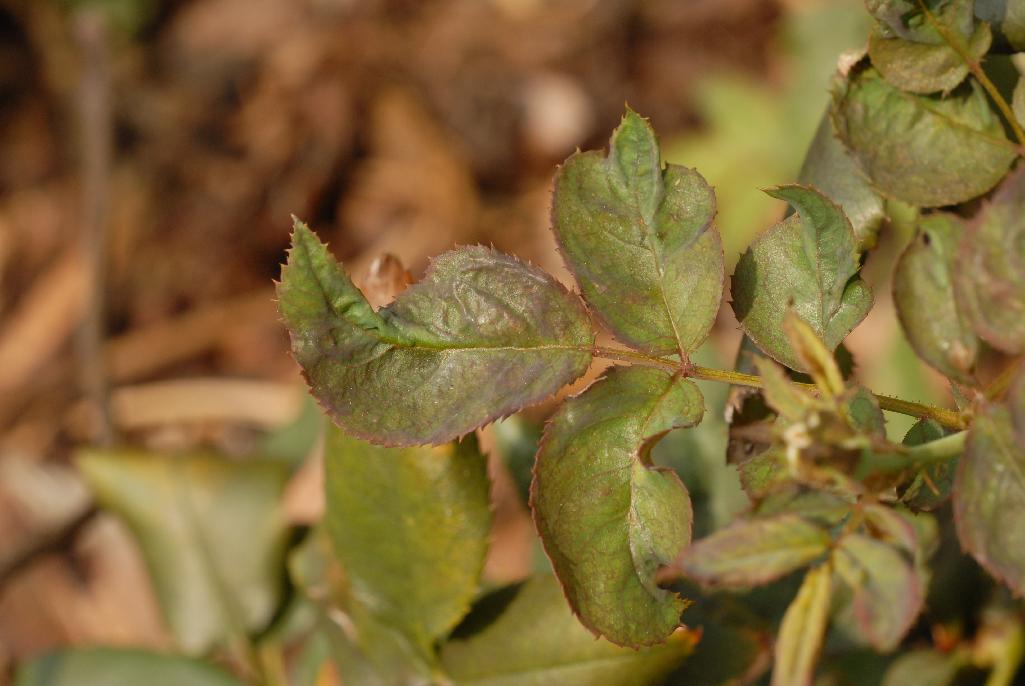
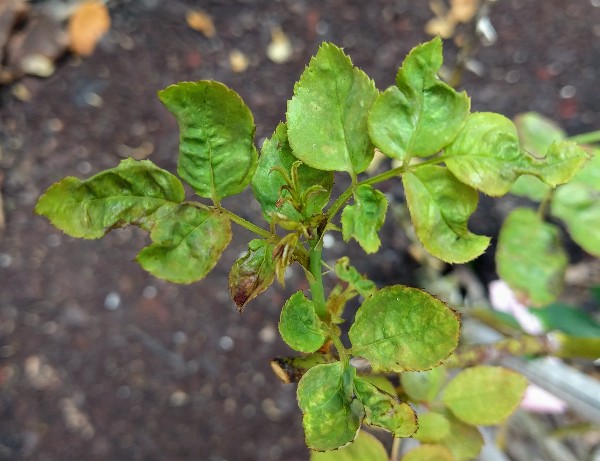
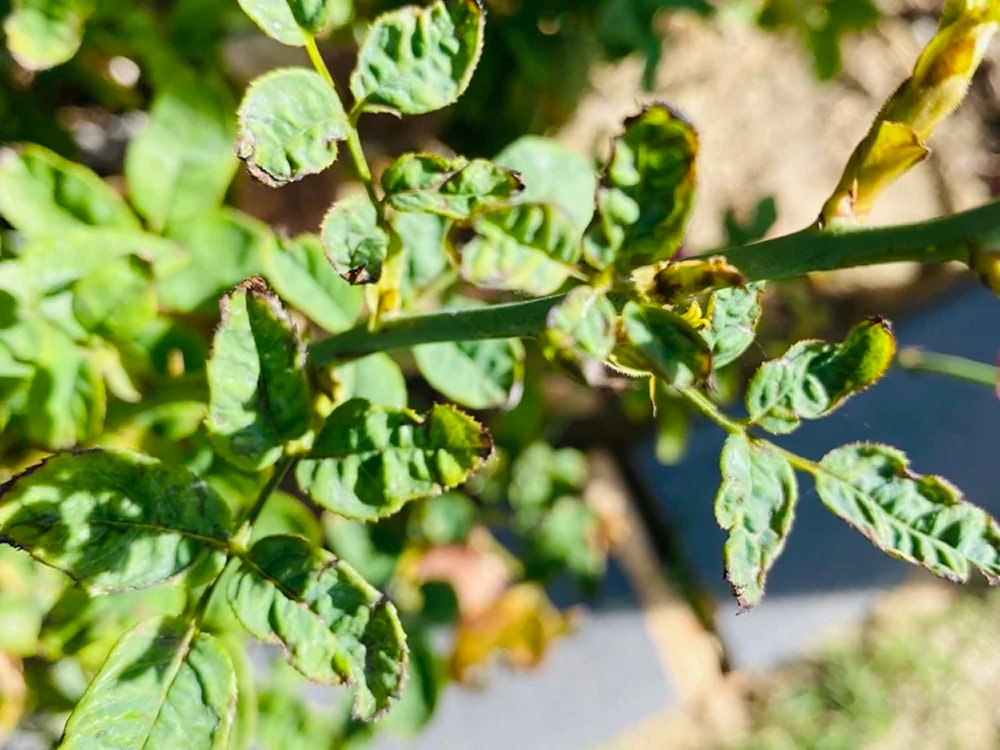
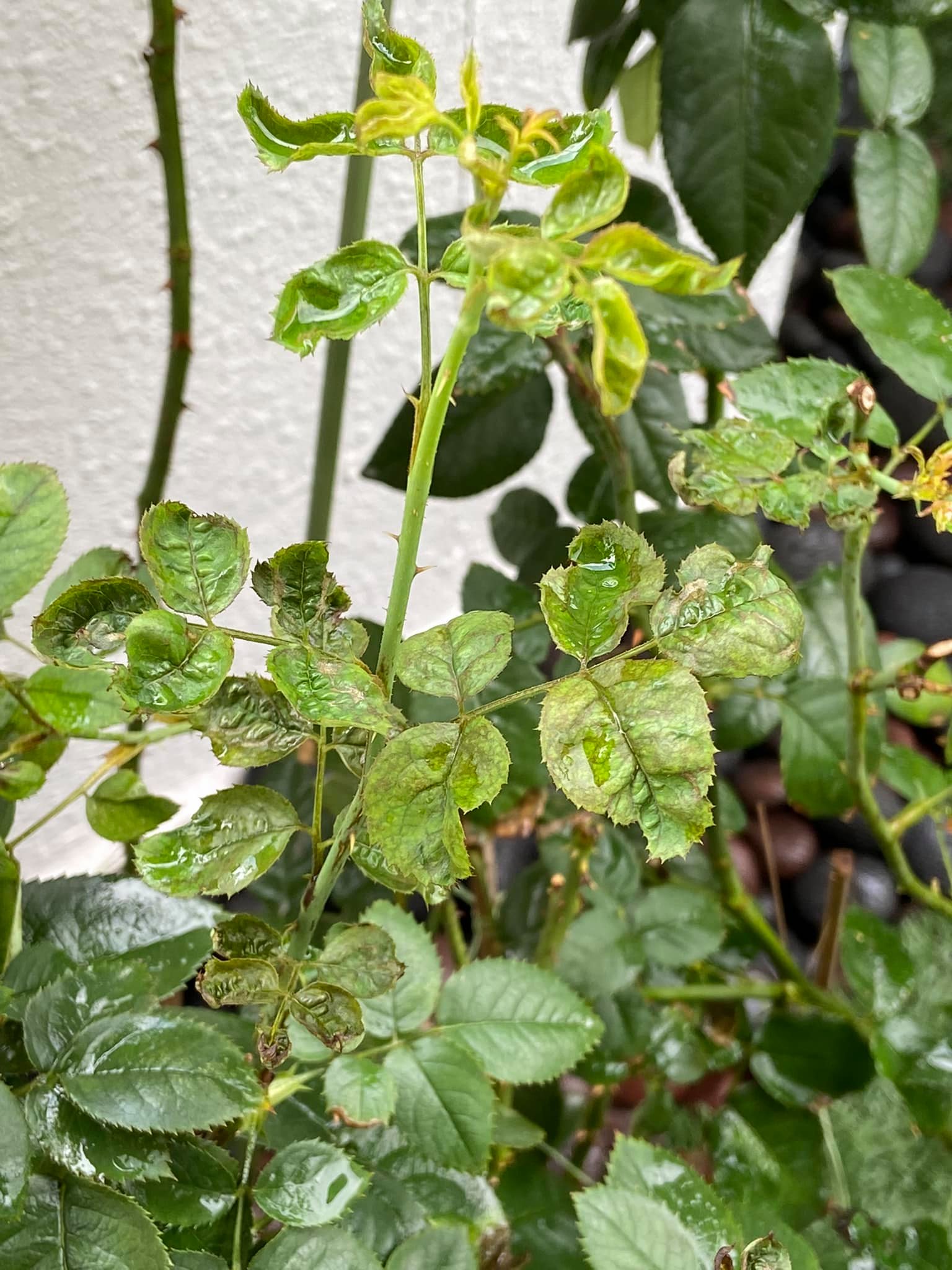
When thrips feed on the underside of the leaf, they destroy epidermal cells. These cells die and contract, creating mechanical tension. Meanwhile, the upper leaf surface continues to expand, forcing the leaf to curl upward to relieve the surface pressure.

Symptoms

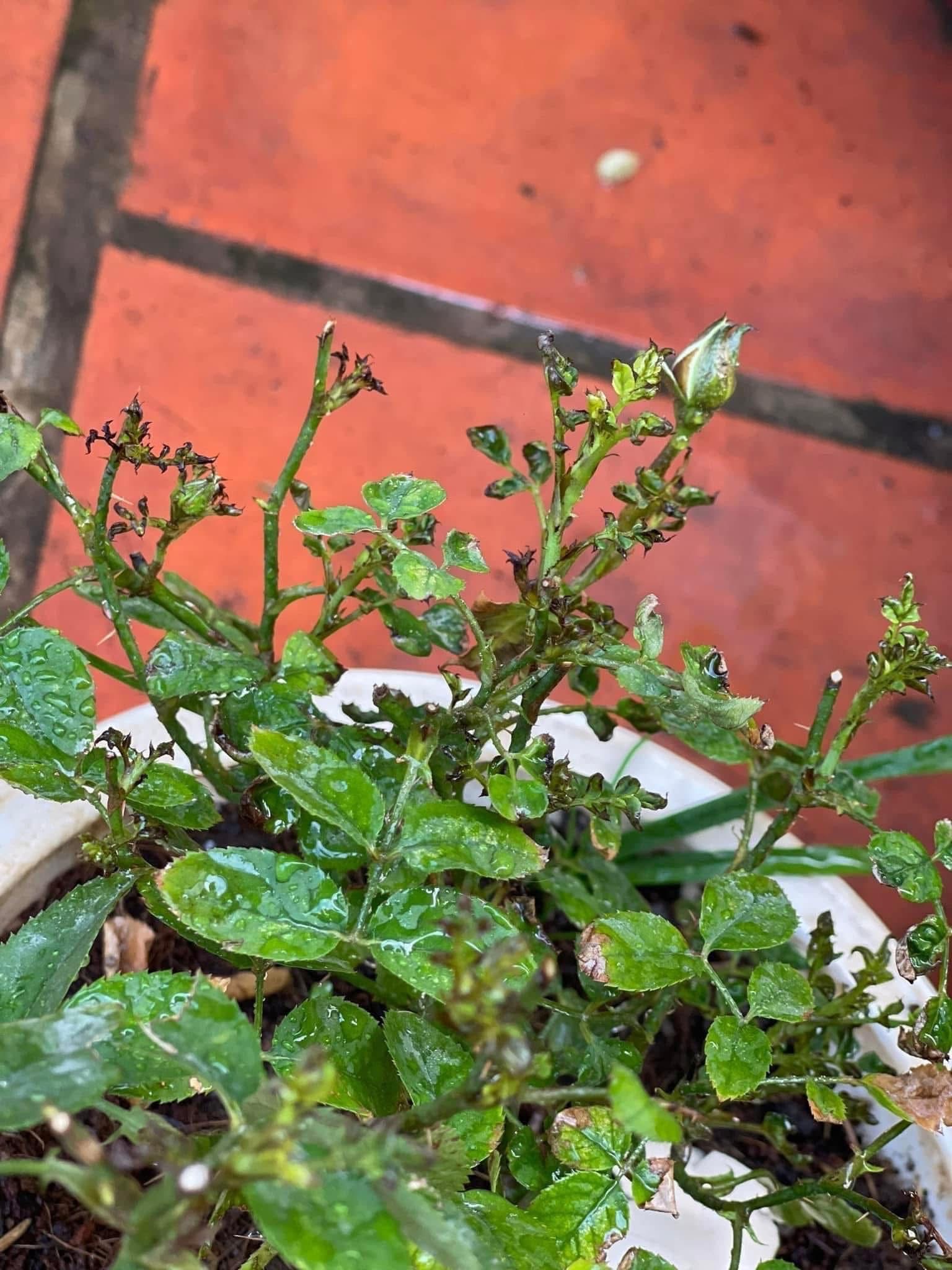
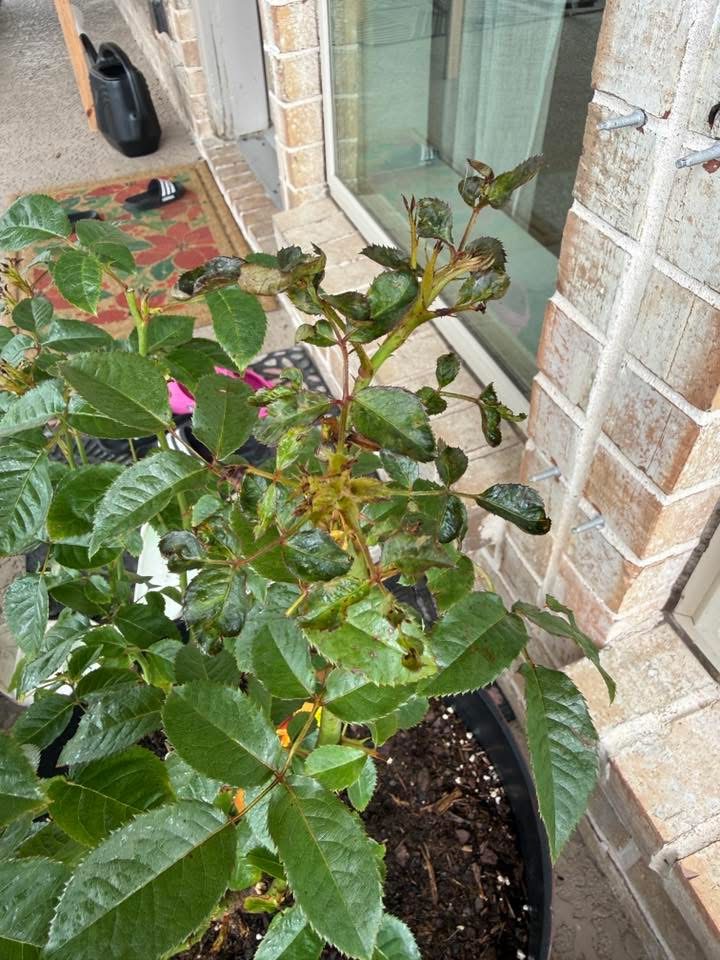
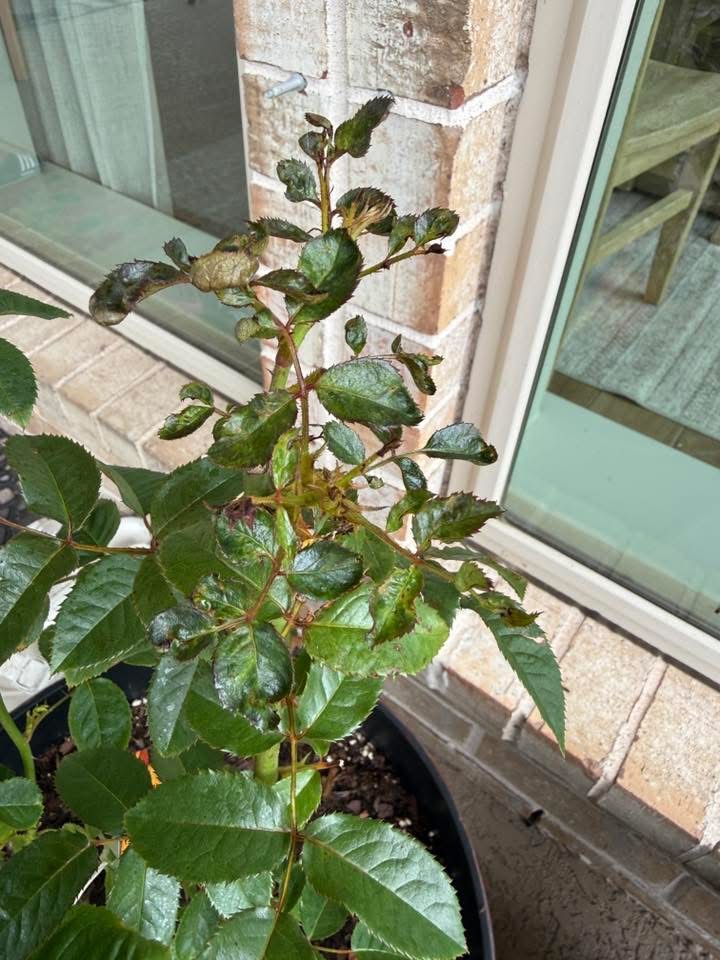
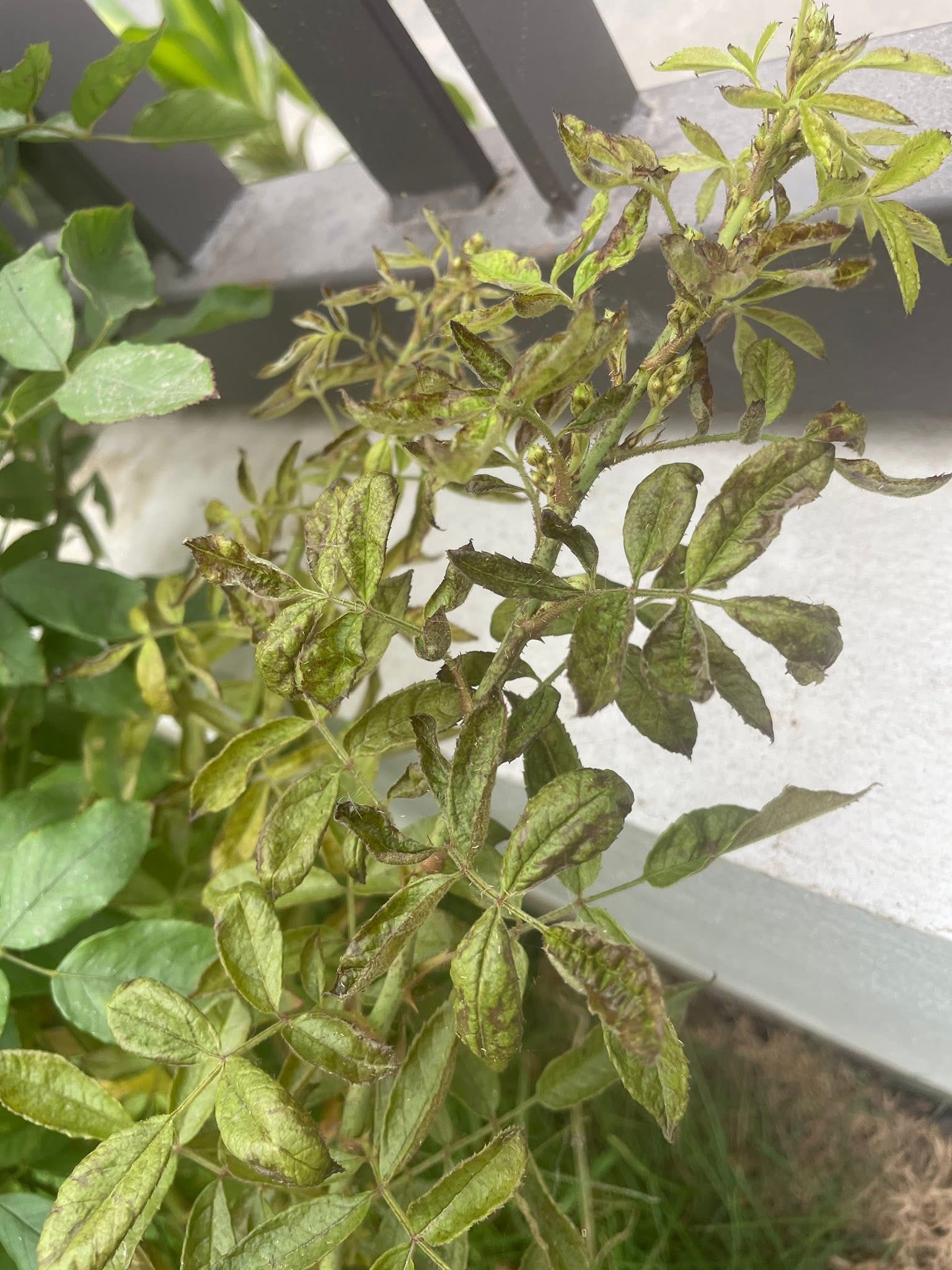
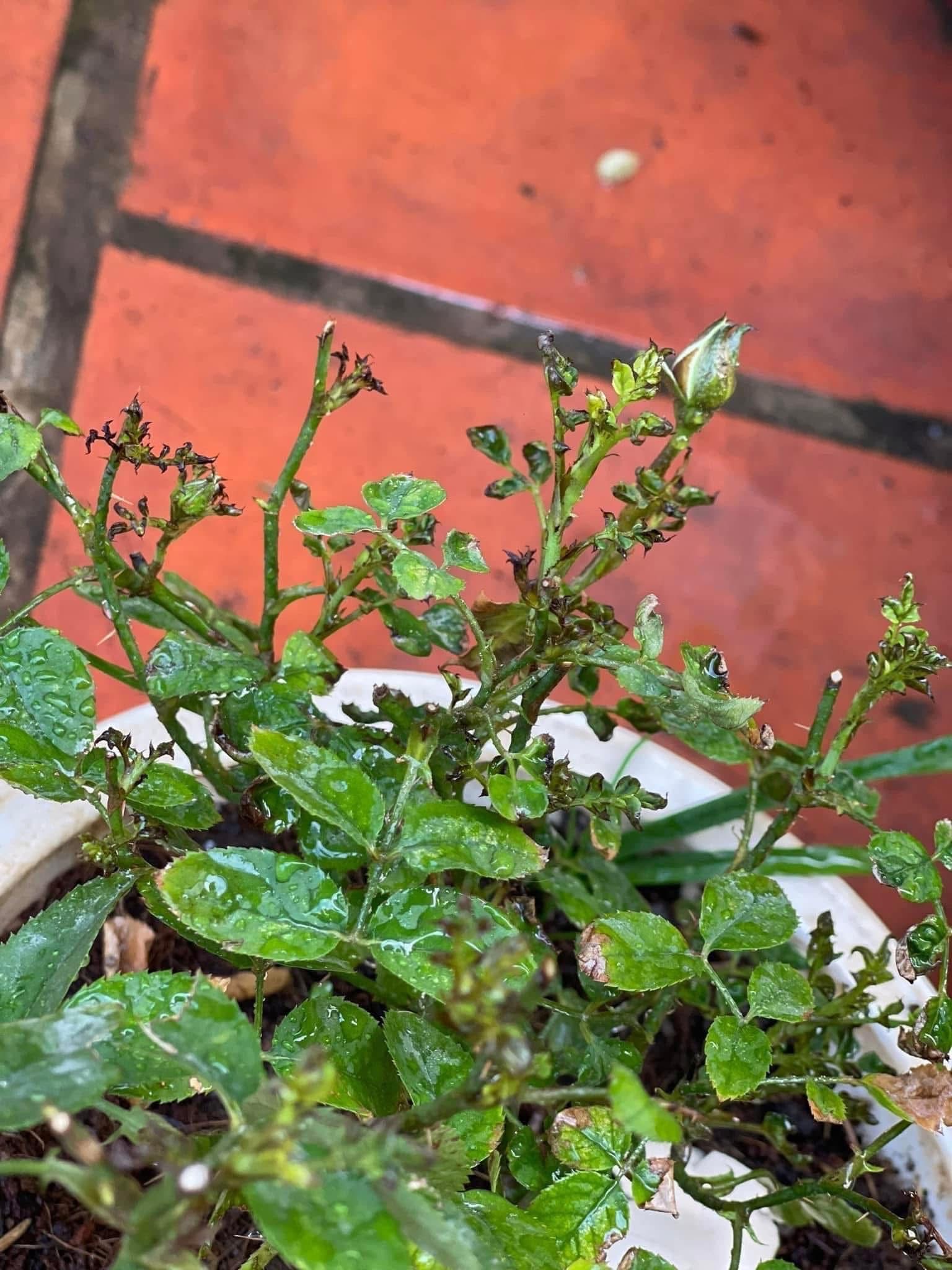
  • Young shoots and tips turn blackened and curled.
    Young shoots and tips turn blackened and curled.Young shoots and tips turn blackened and curled.Young shoots and tips turn blackened and curled.
  • Tiny black specks of thrips frass (excrement) scattered on petals and leaves; they sit on the surface and rub off, unlike a fungal lesion in the leaf tissue.
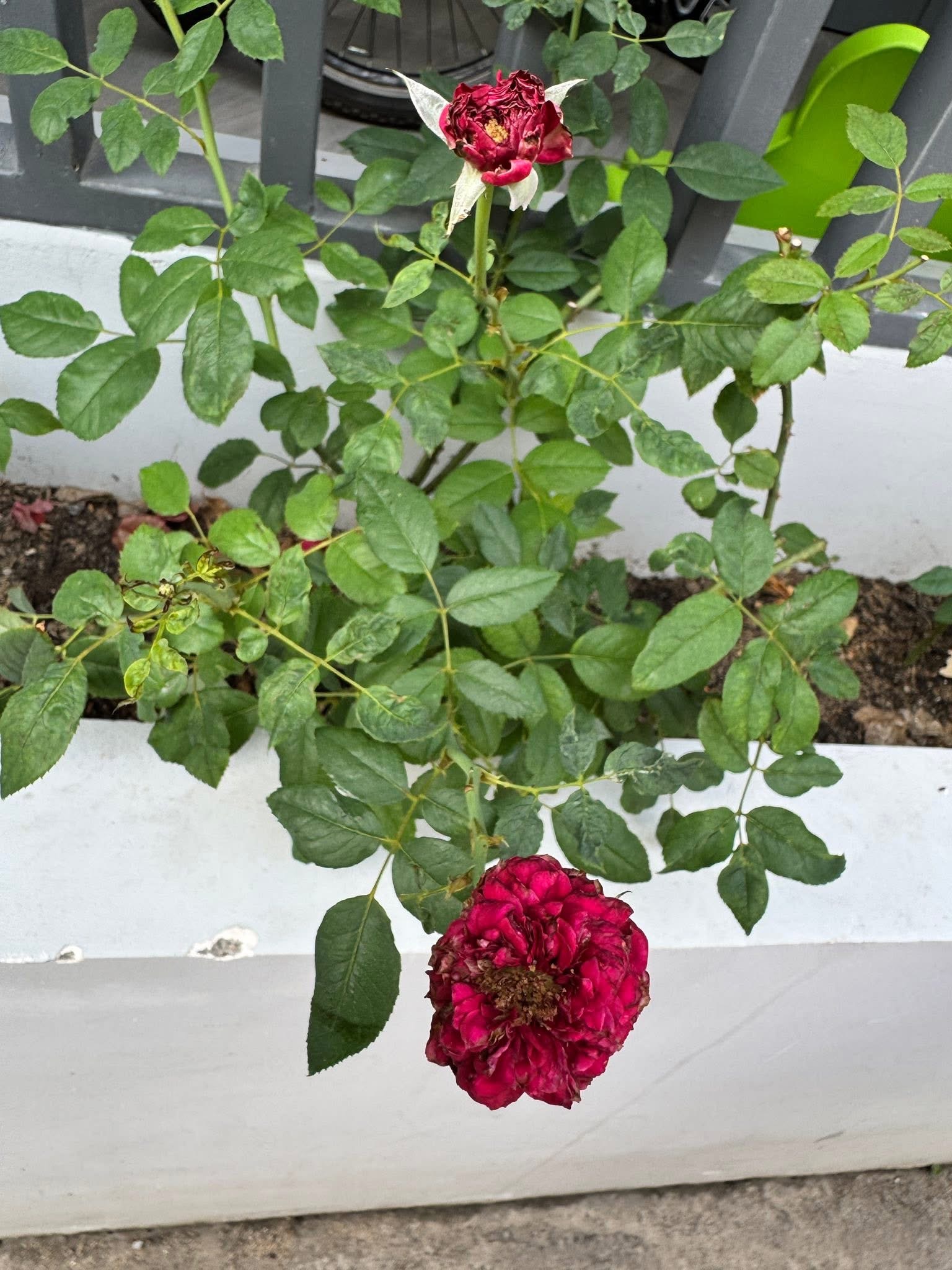
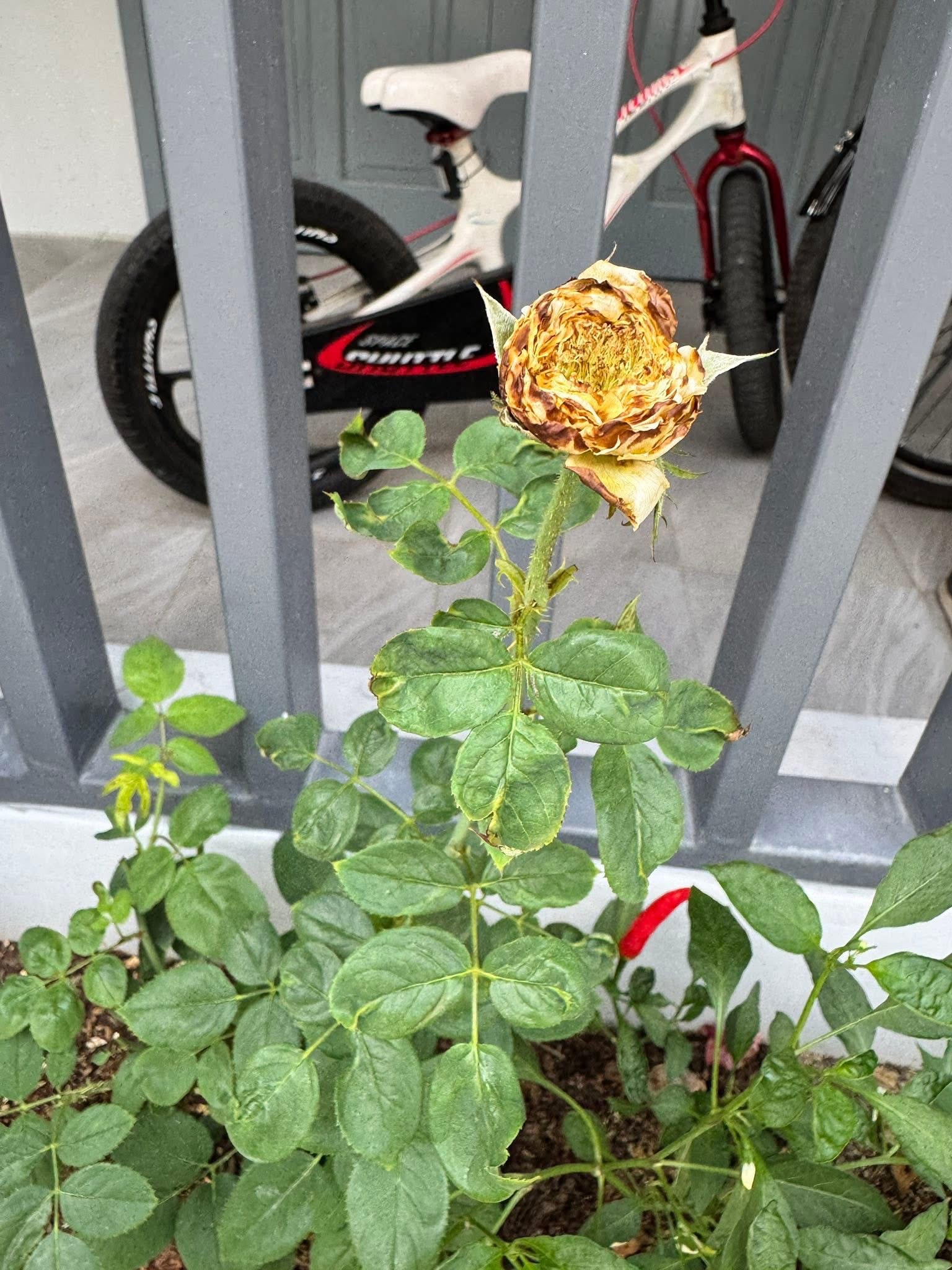
  • Petals scorched and blackened; flowers wither and rot prematurely.
    Petals scorched and blackened; flowers wither and rot prematurely.Petals scorched and blackened; flowers wither and rot prematurely.Petals scorched and blackened; flowers wither and rot prematurely.
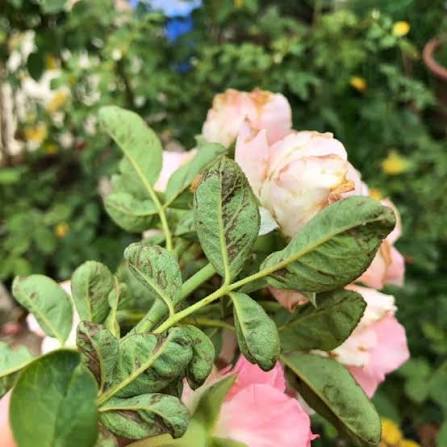
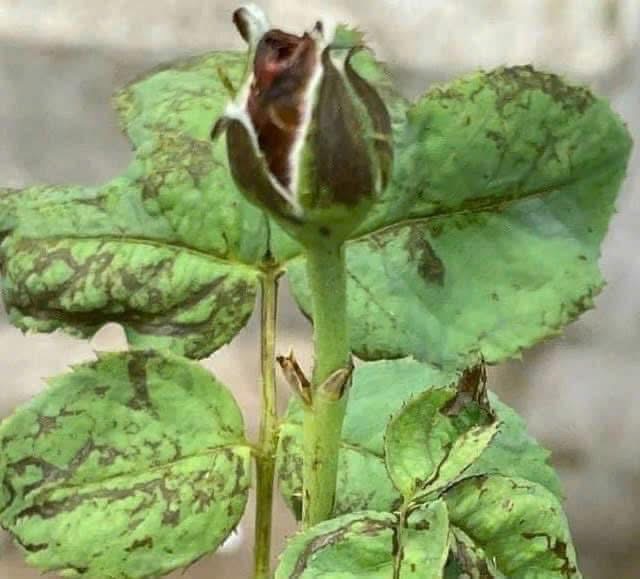
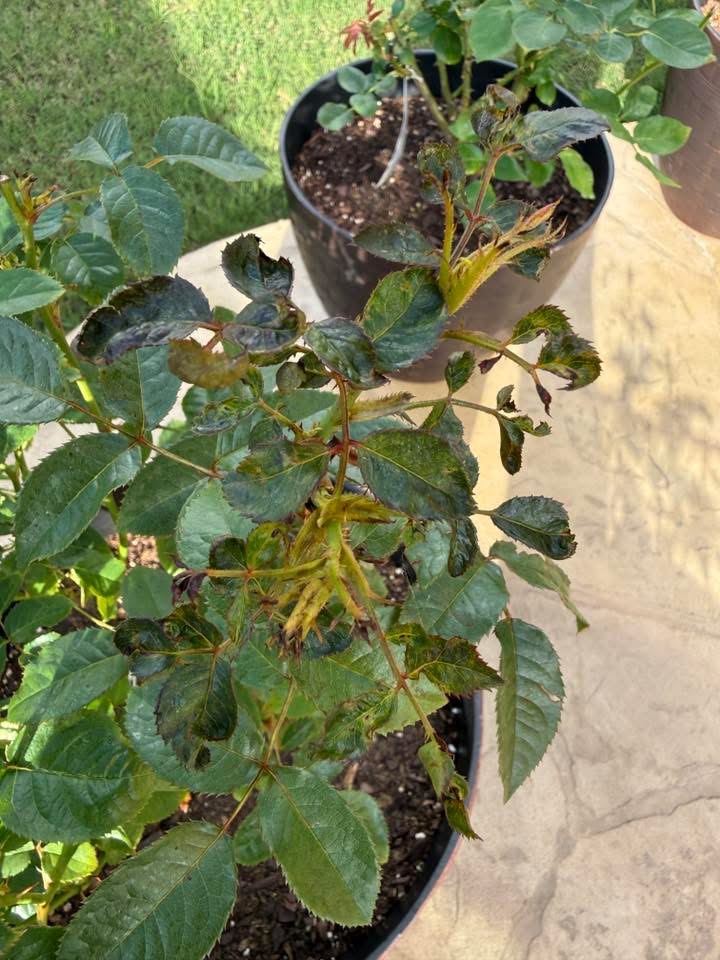
  • Diffuse dark brown blotches on the upper surface of mature leaves.
    Diffuse dark brown blotches on the upper surface of mature leaves.Diffuse dark brown blotches on the upper surface of mature leaves.Diffuse dark brown blotches on the upper surface of mature leaves.
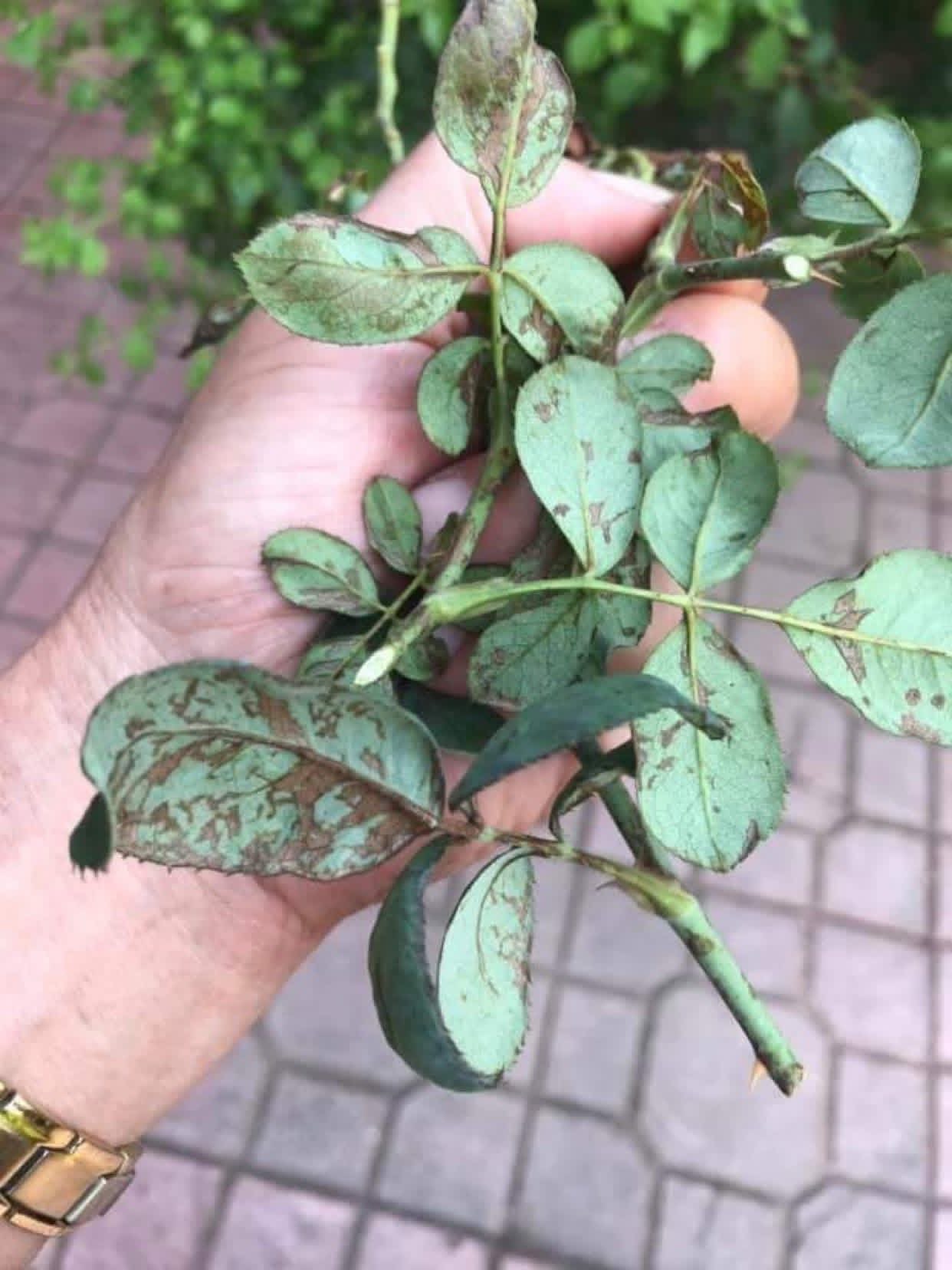
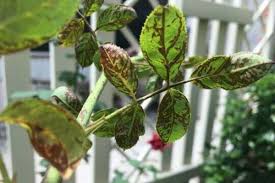
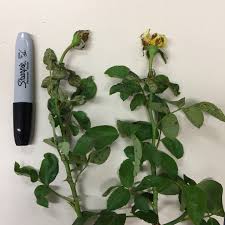
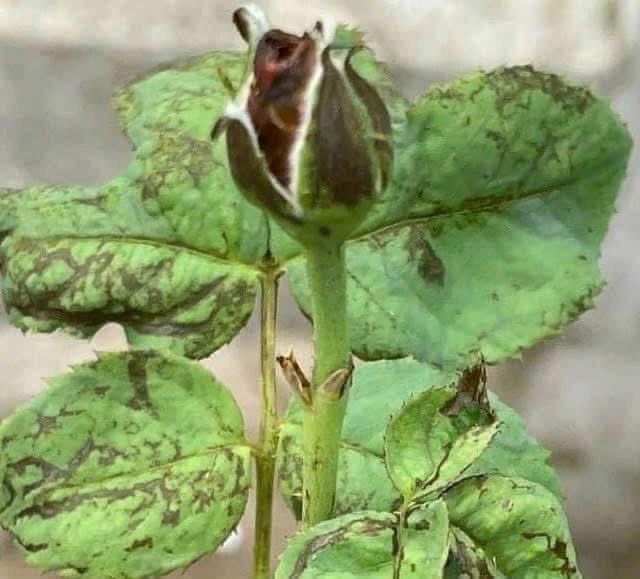
  • Discoloured leaves with persistent scarring after thrips feeding.
    Discoloured leaves with persistent scarring after thrips feeding.Discoloured leaves with persistent scarring after thrips feeding.Discoloured leaves with persistent scarring after thrips feeding.Discoloured leaves with persistent scarring after thrips feeding.
  • Stunted plants producing fewer blooms than normal.
  • Flowers open small, pale, and short-lived.
  • Tip dieback where thrips feeding pressure is heaviest.
    Tip dieback where thrips feeding pressure is heaviest.Tip dieback where thrips feeding pressure is heaviest.Tip dieback where thrips feeding pressure is heaviest.
  • Visible adult thrips — slender, elongated bodies 1–2 mm long, yellow to black, scurrying in flowers or along leaves.
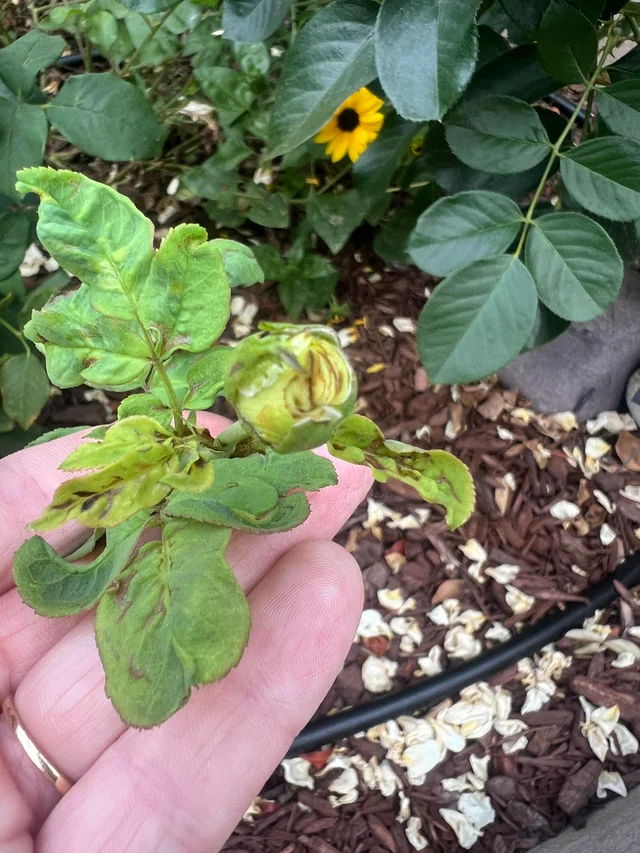
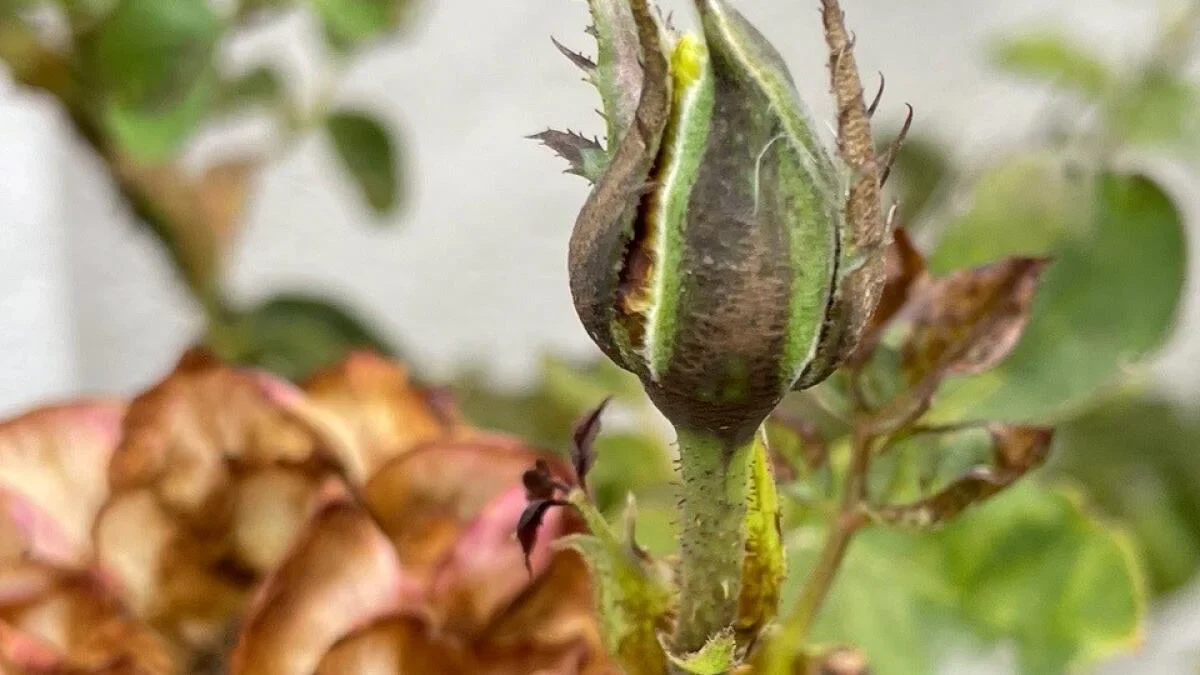
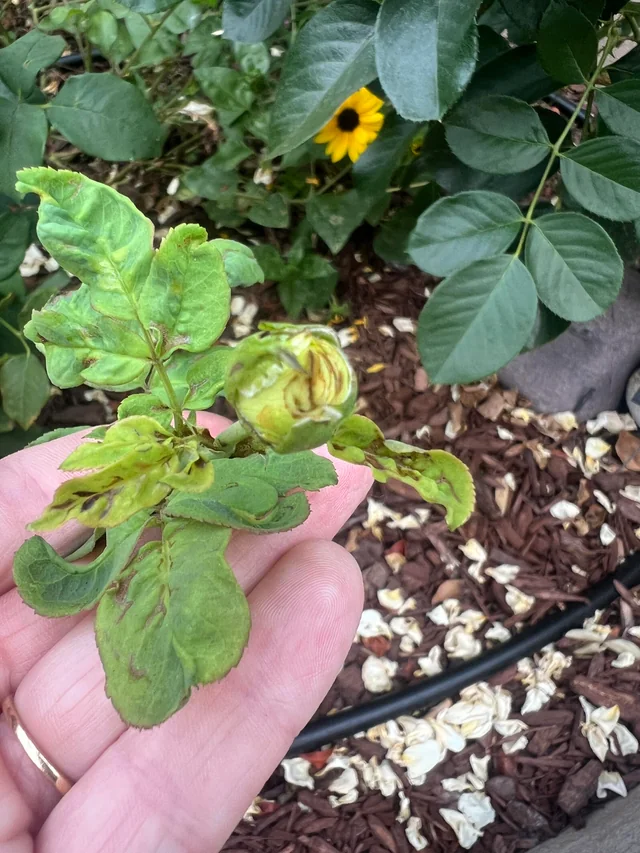
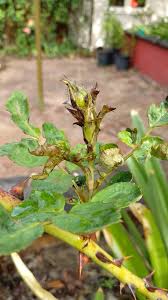
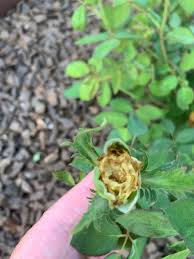
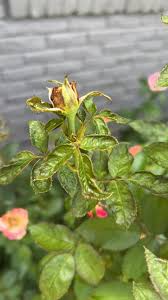
  • Buds distorted and asymmetrical, failing to open properly because young tissue was fed on while still developing.
    Buds distorted and asymmetrical, failing to open properly because young tissue was fed on while still developing.Buds distorted and asymmetrical, failing to open properly because young tissue was fed on while still developing.Buds distorted and asymmetrical, failing to open properly because young tissue was fed on while still developing.Buds distorted and asymmetrical, failing to open properly because young tissue was fed on while still developing.
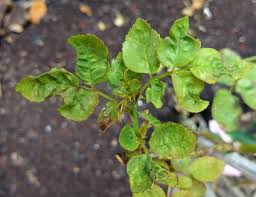
  • Young leaves curl upward, often with silvery streaks or tiny specks on the underside from thrips feeding damage.
    Young leaves curl upward, often with silvery streaks or tiny specks on the underside from thrips feeding damage.Young leaves curl upward, often with silvery streaks or tiny specks on the underside from thrips feeding damage.Young leaves curl upward, often with silvery streaks or tiny specks on the underside from thrips feeding damage.

Treatment plan

When you spot curled young foliage, blackened buds, or silvery streaks on petals, act immediately:

  • Remove severely damaged buds, blooms, and curled young leaves (roughly 80% of the thrips population is sheltering there); bag the prunings and dispose of them off-site, never at the base of the plant. Isolate infested plants from healthy roses.
  • Hang blue or yellow sticky traps near the plant to capture adults and monitor populations.
  • Hose the underside of leaves and leaf axils with a strong water jet to mechanically dislodge adult thrips.
  • Spray neem oil or a thrips-targeted insecticide (Radiant 60SC / Confidor 200SL / Movento) in the late evening or early morning (when thrips are most active); drench both leaf surfaces and wet the soil surface where thrips pupate.
  • [After 5 days] Reapply to catch newly hatched thrips; you must rotate between at least two products to prevent resistance.
  • [After 10 days] Tap a bloom over white paper to count remaining thrips; if any remain, continue spraying.

Recommended products

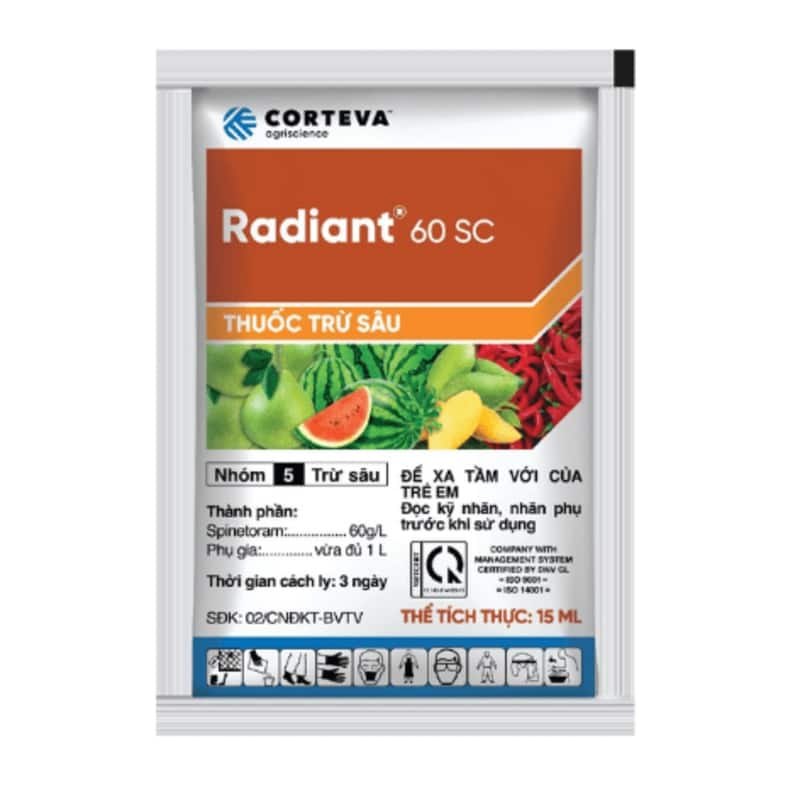
  1. Radiant 60SC (US-made — highly effective and gentle) — Biologically derived spinosyn insecticide with potent contact and stomach activity. Very safe on roses and does not scorch tender growth.

    • Dosage: One 15 ml sachet per 16–20 L of water (or 1 ml per litre).
    • Frequency: Two applications 3–5 days apart to mop up newly hatched larvae.
    • Where to buy: Shopee — Radiant 60SC
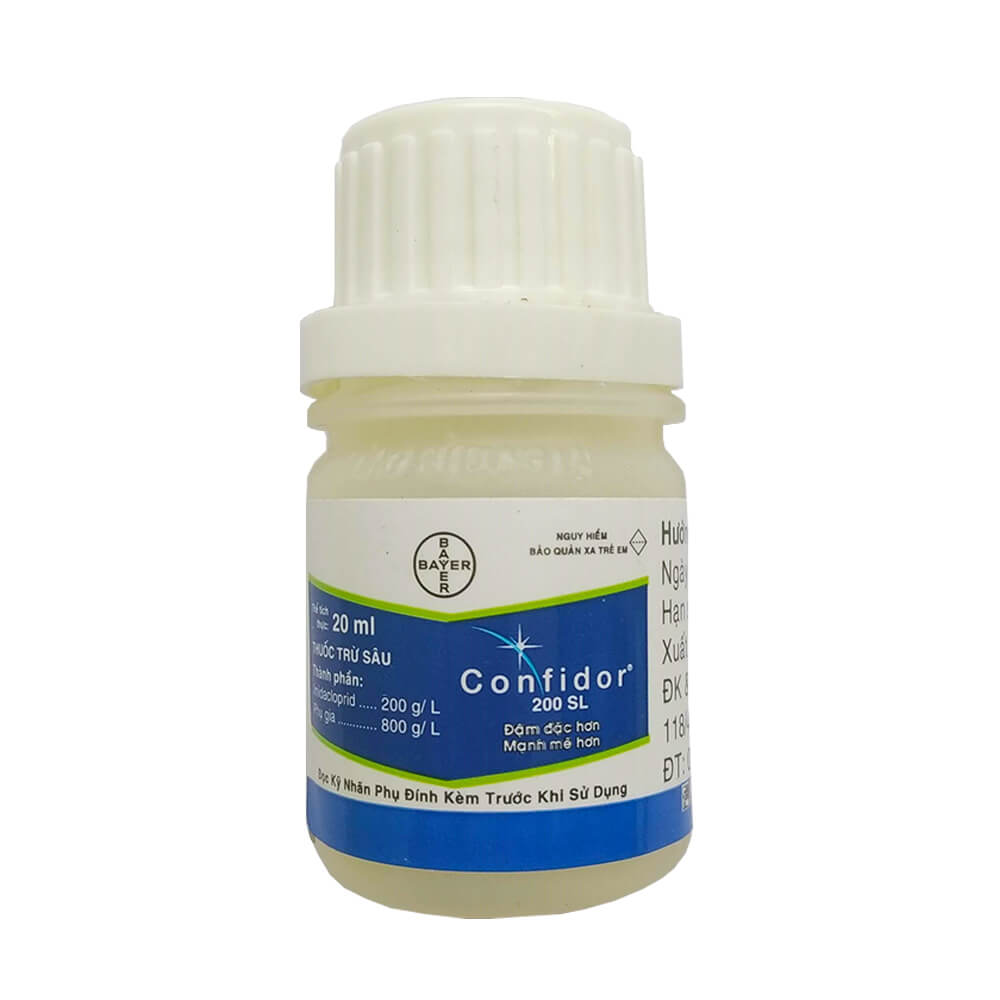
  2. Confidor 200SL (Bayer — long residual) — Highly systemic neonicotinoid that permeates plant tissue. Thrips ingest the active ingredient through sap feeding and rapidly become paralysed.

    • Dosage: 1 ml per 1.5–2 L of water.
    • Frequency: Every 7–10 days under heavy pest pressure.
    • Where to buy: Lazada — Confidor Bayer
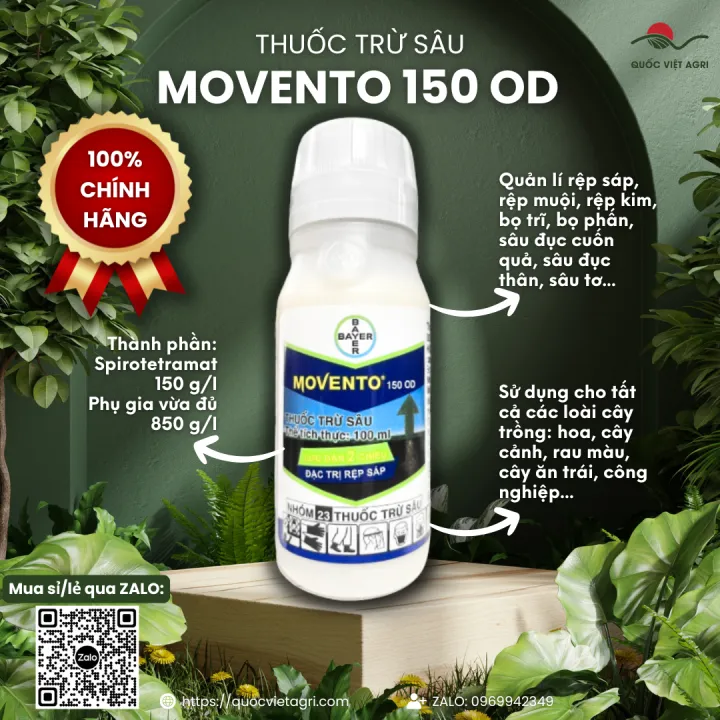
  3. Movento 150OD (Two-way systemic — kills eggs and juveniles) — Two-way systemic activity (both upward to shoots and downward to roots), reaching even the thrips sheltering deepest inside buds.

    • Dosage: 1–2 ml per 1 L of water.
    • Frequency: Apply at the first sign of a thrips resurgence.
    • Where to buy: Shopee — Movento.
  4. Cold-pressed pure neem oil (safe organic option) — Plant-derived product containing azadirachtin. Rather than killing on contact, neem disrupts thrips reproduction, suppresses feeding, causes gradual mortality, and inhibits egg hatch — extremely safe for people and the environment.

    • Dosage: Curative: 5 ml neem oil + 5 ml dish soap (as emulsifier) per 1 L of water. Preventive: 1–2 ml neem oil + 2 ml dish soap per 1 L of water.
    • Frequency: Curative: every 2–3 days in the late afternoon, continuously for two weeks. Preventive: once weekly.

Critical reminder: thrips have a very short life cycle and develop resistance quickly. You must reapply after 3–5 days to kill the next hatch — a single spray will be followed by rapid resurgence.

Prevention

  • Maintain an open, well-ventilated canopy and avoid overcrowded plantings.
  • Maintain adequate humidity — thrips prefer hot, dry conditions.
  • Inspect leaf undersides and flowers regularly (use a hand lens if needed).
  • Plant repellent companions such as basil and marigold near the rose bed.
  • Apply preventive sprays of neem oil or insecticidal soap on a regular schedule.

Recommended products

Radiant 60SC Thrips and Red Spider Mite Insecticide

Radiant 60SC Thrips and Red Spider Mite Insecticide

Radiant 60SC is a biologically derived insecticide for thrips and red spider mites, containing the active ingredient spinetoram and produced using the most advanced US technology. Radiant 60SC effectively and safely prevents and controls thrips, spider mites, aphids and other pests damaging roses and orchids, with potent contact and stomach activity that is gentle on the plant.

MOVENTO 150OD

MOVENTO 150OD

Movento 150OD insecticide for pests and mealybugs is manufactured by the Bayer group of Germany. Movento 150OD is a plant protection product containing the active ingredient Spirotetramat, with two-way systemic activity (both upward to shoots and downward to roots) that decisively kills sap-feeding insects such as mealybugs, aphids, thrips and fruit borers — reaching even the thrips sheltering deepest inside buds.

Confidor 200 SL Thrips and Mealybug Insecticide

Confidor 200 SL Thrips and Mealybug Insecticide

Confidor 200 SL is a Bayer (Germany) neonicotinoid chemical insecticide containing 10% Imidacloprid. The active ingredient is highly effective, making contact with and rapidly killing insects and pests on crops. Confidor 200 SL is specifically used to prevent and control thrips and mealybugs on crops, with particularly strong systemic efficacy on roses and orchids.

Organic Neem Oil

Organic Neem Oil

Genuine Dr. NEEM organic neem oil (50 ml / 100 ml) kills thrips, red spider mites and aphids on roses, orchids and leaf/fruit crops. Containing azadirachtin, it disrupts thrips reproduction, suppresses feeding, causes gradual mortality and inhibits egg hatch — extremely safe for people and the environment.

Share this page