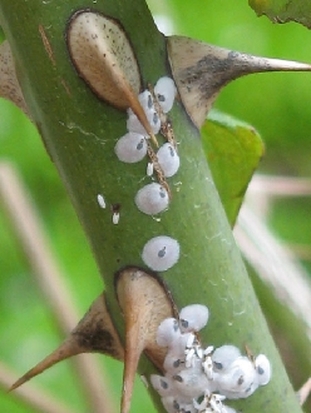
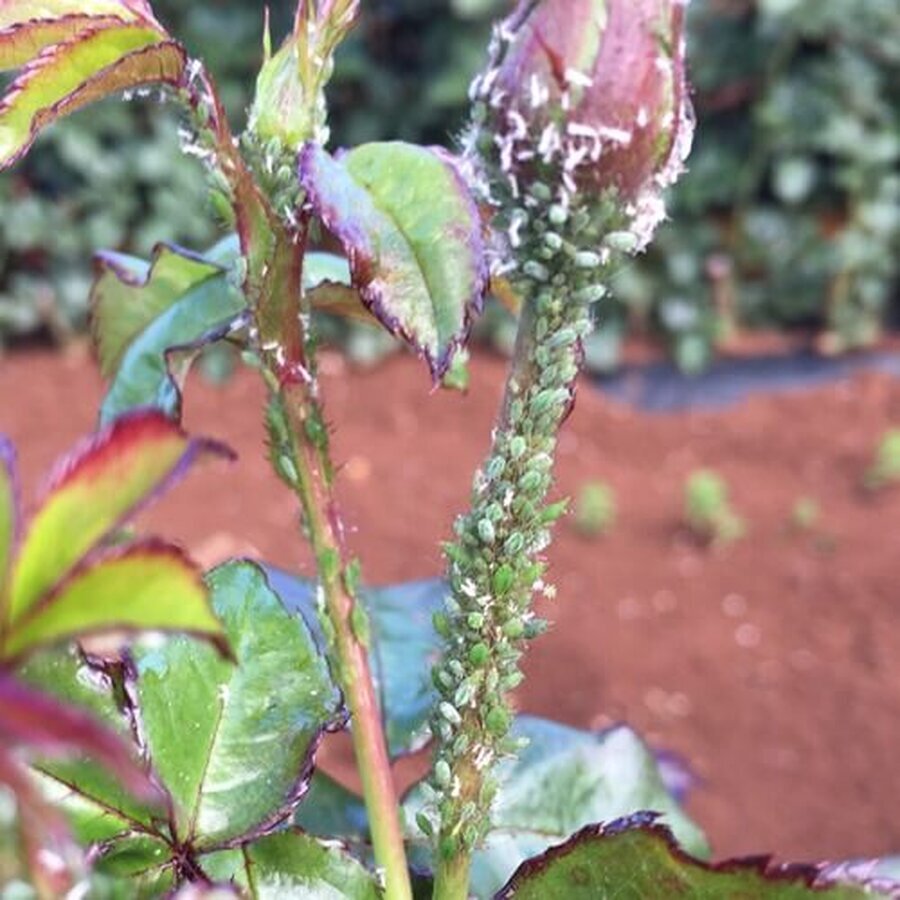
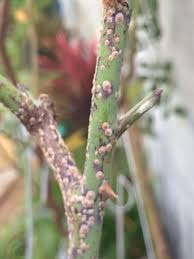
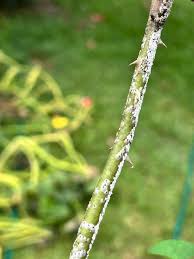
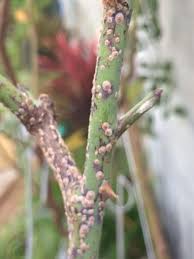
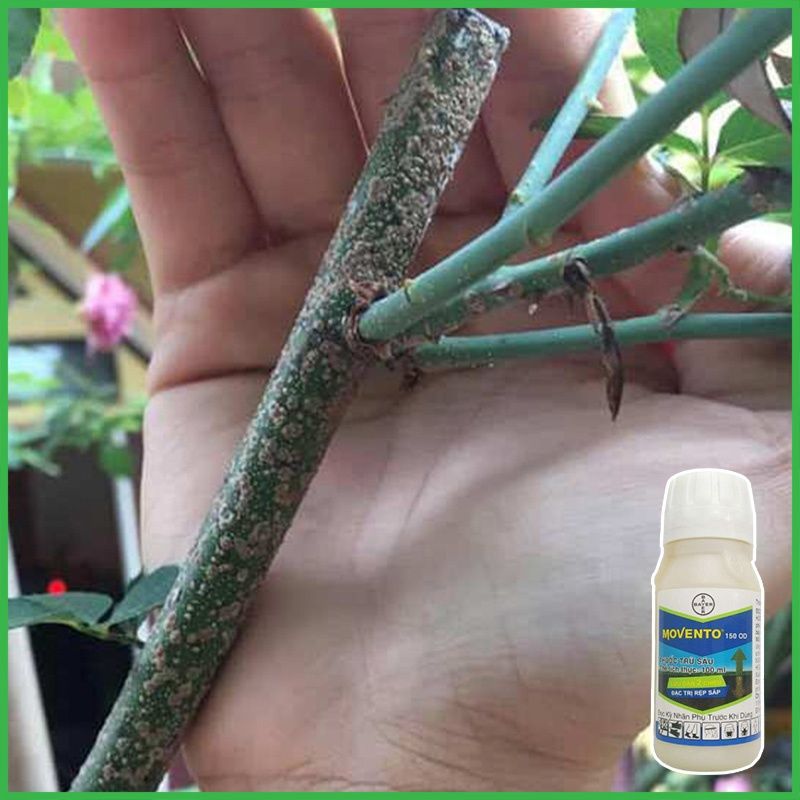
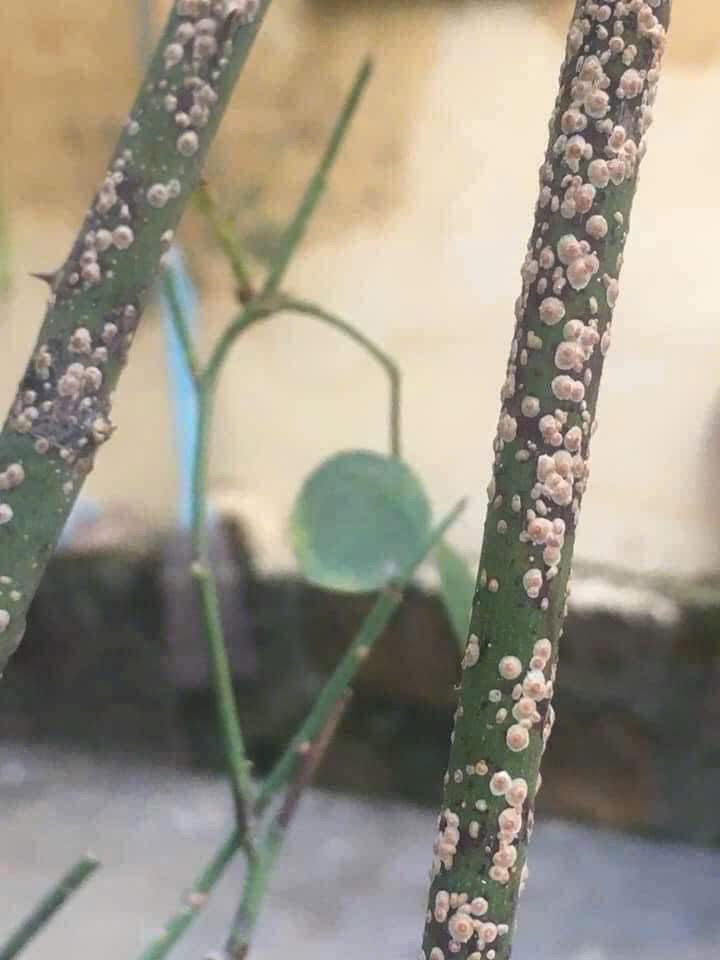
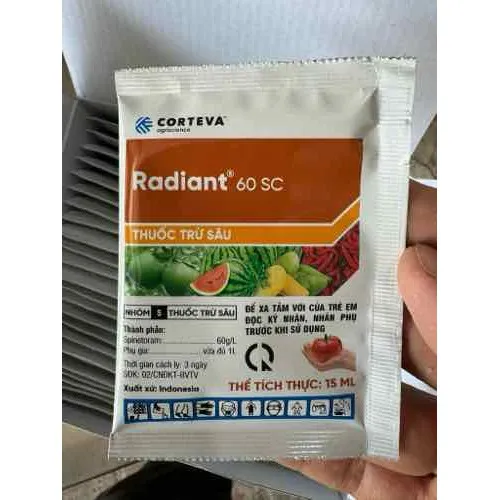
Two closely related piercing-sucking pests commonly attack roses:
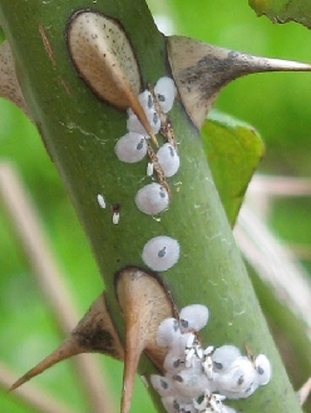
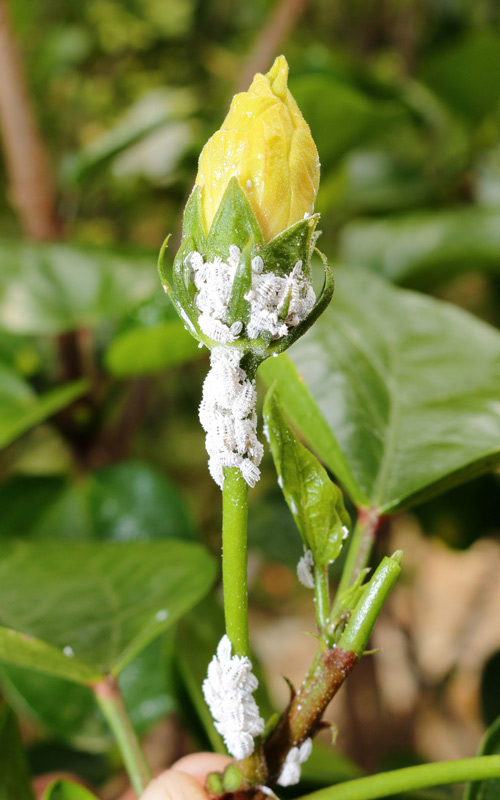
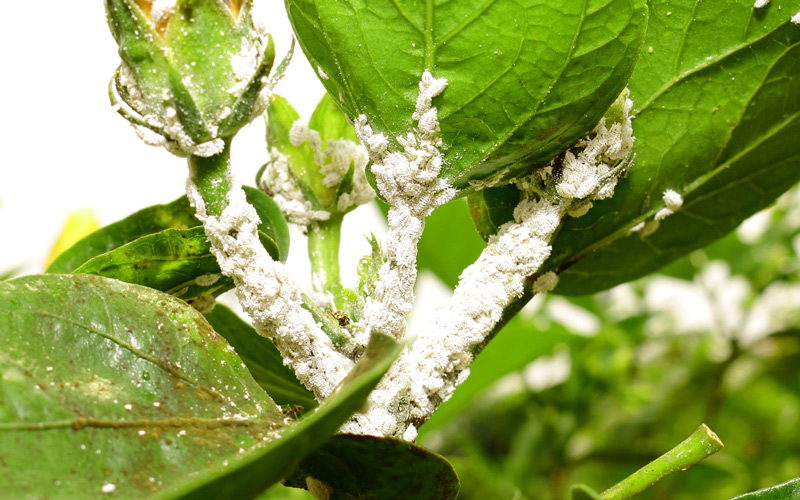
- Mealybugs (Pseudococcidae): soft-bodied insects covered with a powdery white waxy coat resembling cotton wool, typically clustering in leaf axils, bud eyes, the underside of leaves, and around the crown.
- Scale insects (Coccidae / Diaspididae): armoured or soft scales with a hard or waxy shield that clings tightly to stems, canes, and leaves, often camouflaged against the bark.
Both groups feed on phloem sap, progressively weakening the plant, and excrete copious honeydew that supports the growth of sooty mould. Outbreaks intensify under hot, humid, still-air conditions, particularly on plants stressed by poor nutrition. They are spread by ants (which tend the colonies for honeydew), wind, irrigation splash, contaminated tools, and infested planting stock.
While feeding, mealybugs and aphids often inject saliva containing enzymes or toxins that disrupt the plant's hormonal balance (e.g., auxins and cytokinins). This causes cells on the upper leaf surface to divide and expand excessively while growth on the underside is inhibited, forcing the leaf to curl downward or cup.
Note: armored scale (family Diaspididae) does not excrete honeydew, so sooty mould and ants may be absent — unlike mealybugs and soft scale.