Few frustrations in rose gardening rival watching a lush, leafy rose bush grow vigorously yet refuse to produce a single flower bud. Upon closer inspection of the shoot tips, you will often notice that new stems have stopped elongating and terminate in a pinched, blackened speck rather than a plump floral bud. This condition is known as blind shoots (or blind wood).
Understanding the biological nature of blind shoots, spotting them early, and correcting the underlying environmental or cultural stressors allows you to redirect the plant's energy into productive flowering canes and quickly restore full, high-quality bloom cycles.
1. Distinguishing Blind Shoots from Normal Flowering Shoots
Early identification is essential: rather than letting your rose waste water, photosynthates, and mineral nutrients on stems that will never flower, timely pruning triggers healthy dormant buds lower on the cane to break and produce viable blooms.
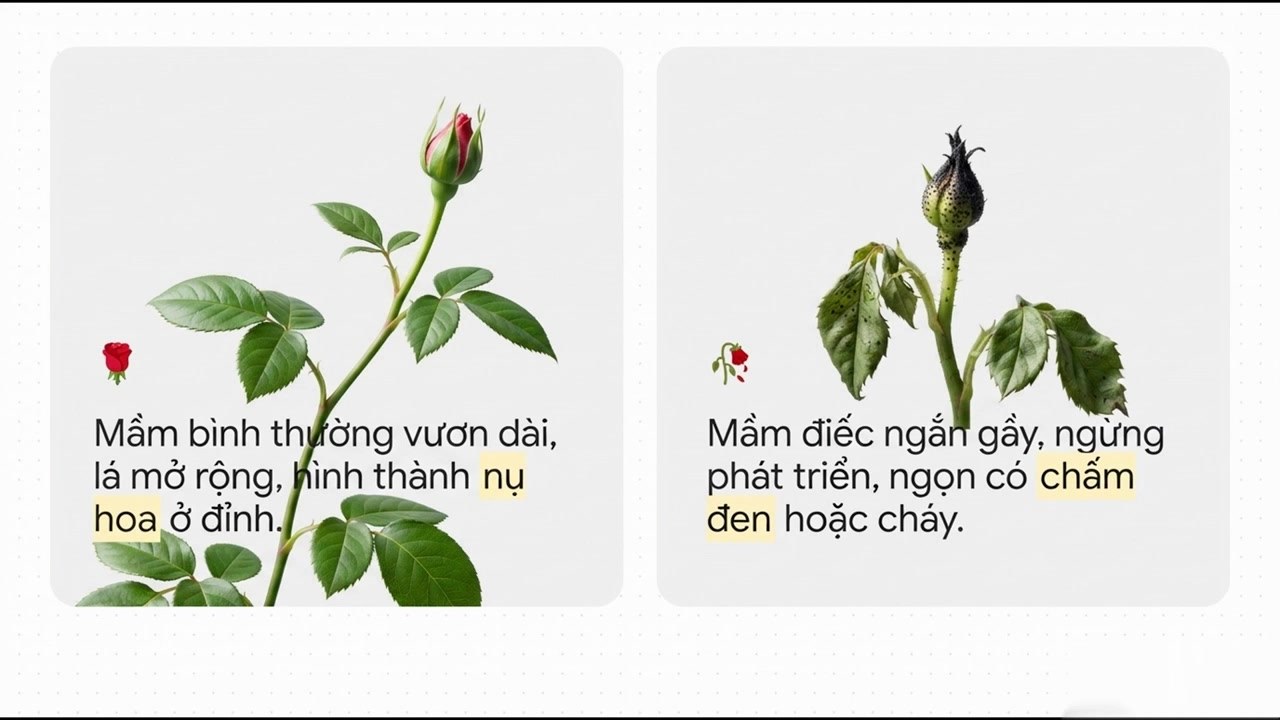
Normal Flowering Shoot (Productive Shoot)
- Continuous elongation: After breaking from a dormant eye, the cane steadily lengthens with well-spaced, sturdy internodes.
- Full foliage expansion: Young leaves unfurl smoothly into full 5- to 7-leaflet compound leaves with healthy color and turgor.
- Clear floral bud initiation: The shoot apical meristem transitions cleanly into a plump, distinct flower bud wrapped in green sepals that eventually reveals petal color.
Blind Shoot (Blind Wood)
- Apical tip appearance: The shoot tip forms no viable flower bud. Instead, it typically terminates in a tiny black dot, a pinched tip, or scorched, aborted tissue.
- Internal anatomical structure: Biologically, a blind shoot is not completely devoid of floral primordia. At the microscopic level, it still forms rudimentary sepals and petals, but the internal reproductive organs (stamens and carpels) are missing or aborted during differentiation. This acts as an energy-conservation response when the rose lacks the physiological capacity to complete reproduction.
- Shape and growth habit: Blind shoots are typically shorter and thinner than healthy flowering canes of the same flush, often stalling completely and remaining stagnant for weeks without producing new leaves or buds.
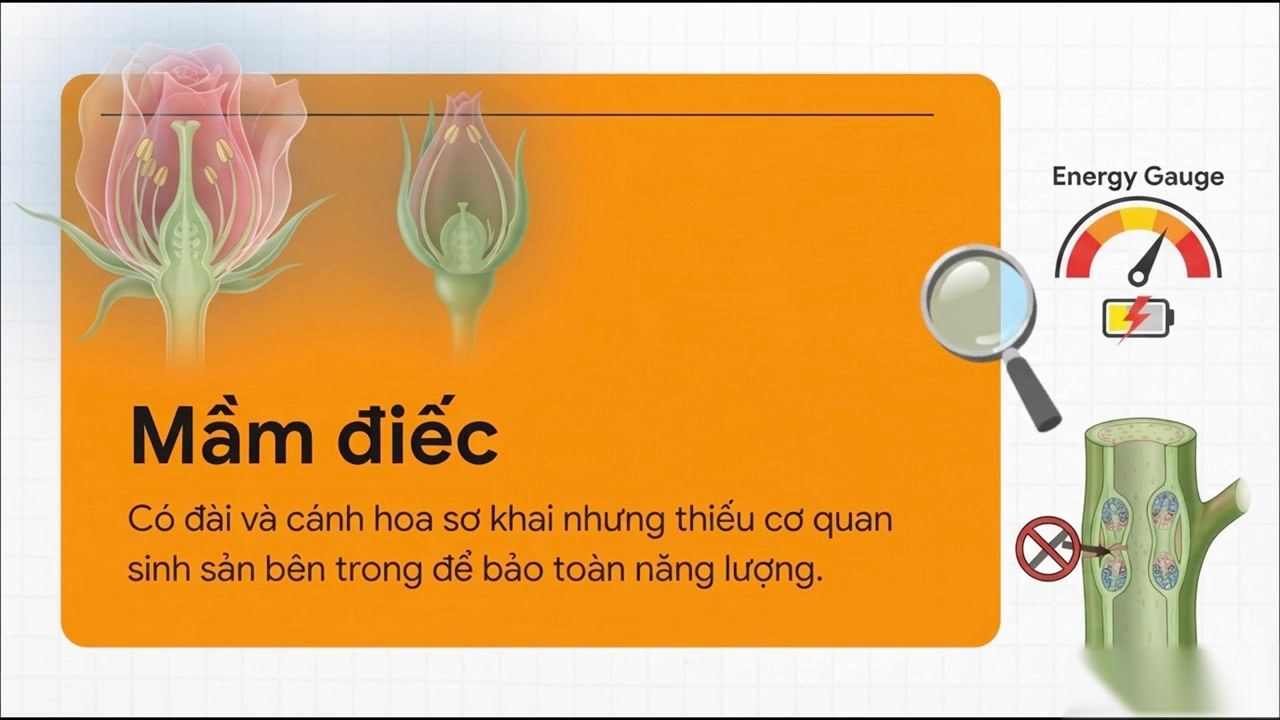
Quick Garden Diagnostic Table
| Observation | Normal Shoot | Blind Shoot (Blind Wood) |
|---|---|---|
| Stem length & thickness | Steadily elongating, sturdy cane, clear internodes | Short, thin, spindly; stalls and remains stagnant |
| Foliage | Leaves expand evenly along a balanced stem | Smaller leaves or cessation of new apical leaves |
| Shoot apex | Forms a complete, plump floral bud | No bud; tiny black speck, pinched tip, or scorched apex |
| Microscopic anatomy | Complete sepals, petals, stamens, and carpels | Rudimentary sepals/petals only; internal reproductive organs missing or aborted |
| Flowering potential | Blooms normally in the current flush | Cannot bloom on its own; must be pruned to generate a new shoot |
2. Six Main Causes of Blind Shoots on Roses
Blind wood rarely stems from a single isolated error. Instead, it arises from environmental stress, nutritional imbalance, pest or fungal damage, and pruning mistakes.
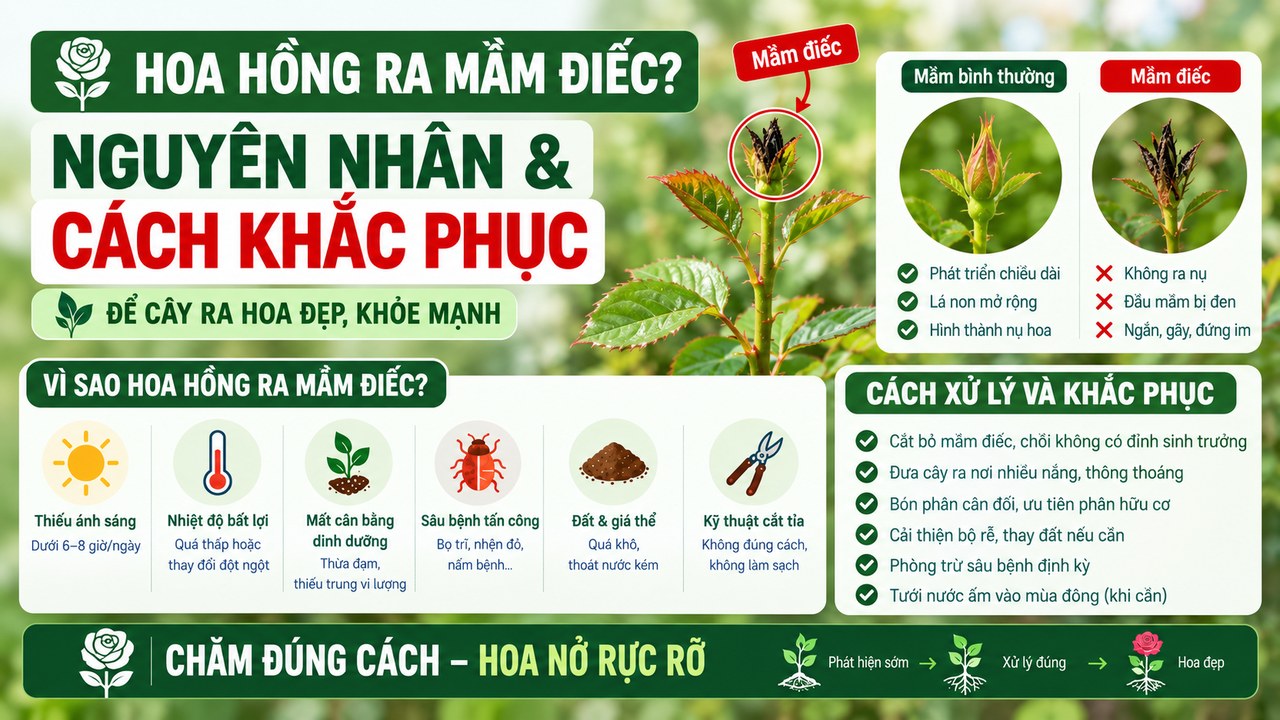
2.1. Insufficient Direct Sunlight — The Primary Cause
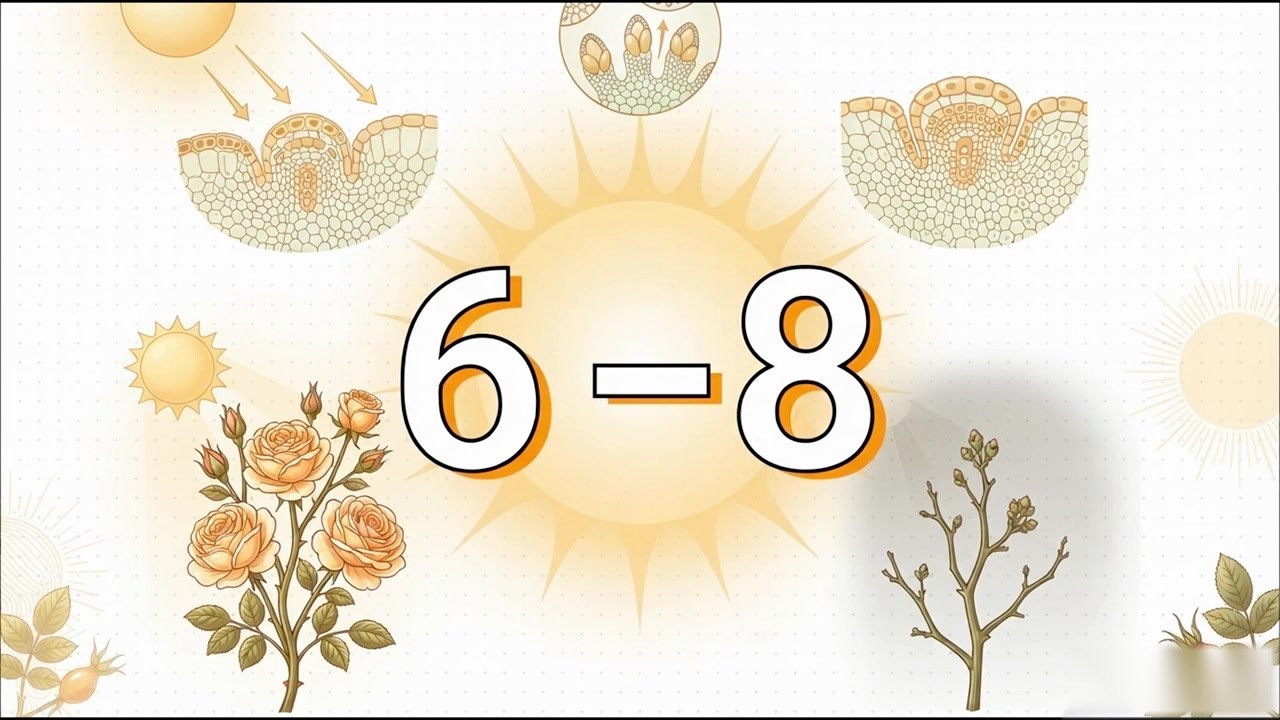
Roses are high-light plants. To generate enough photosynthetic energy for floral differentiation at the shoot apex, a rose requires at least 6–8 hours of direct sunlight daily.
When grown on shaded balconies, beneath dense tree canopies, or during extended overcast periods, light deficiency drastically lowers carbohydrate production. The bush can sustain leafy vegetative growth, but lacks the energy needed to complete reproductive organ formation, resulting in widespread blind shoots.
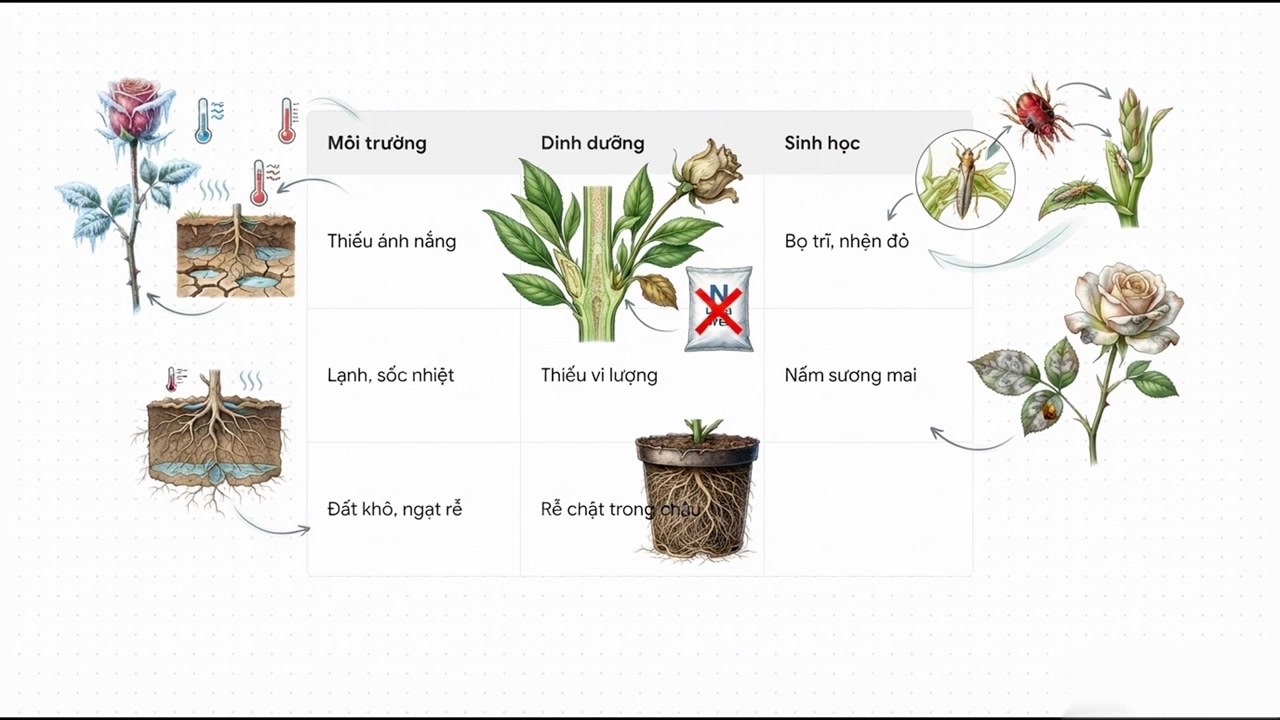
2.2. Unfavorable Temperatures and Sudden Thermal Shock
Ambient temperature directly governs meristematic cell division in emerging shoots:
- Excessively cold temperatures (especially in winter): During cold snaps, root metabolism and nutrient uptake slow down, stalling floral differentiation at the shoot tip.
- Sudden temperature swings: Abrupt hot-to-cold shifts or sudden cold fronts right after new shoots emerge can injure delicate meristem tissue, causing the embryonic bud to abort.
2.3. Nutritional Imbalance and Root-Bound Containers
Imbalanced feeding is a frequent culprit in home gardens:
- Excess nitrogen (N): Overapplying high-nitrogen fertilizers (such as straight urea) pushes the plant into lush vegetative foliage and soft canes while suppressing floral induction.
- Overall nutrient depletion: Aged, exhausted potting mix lacking phosphorus, potassium, and essential micronutrients starves the apex of the building blocks needed for bud development.
- Root-bound pots: Roses kept too long in cramped containers develop root restriction, where circling roots run out of room to generate fresh feeder roots for water and mineral uptake.
2.4. Pests and Fungal Diseases Attacking Shoot Tips
Even under ideal light and nutrition, biological attackers can physically destroy the apical meristem:
- Thrips and red spider mites: Piercing-sucking pests target the softest meristematic tissues at the growing tip. Their feeding causes shoots to curl, distort, blacken at the apex, and turn blind.
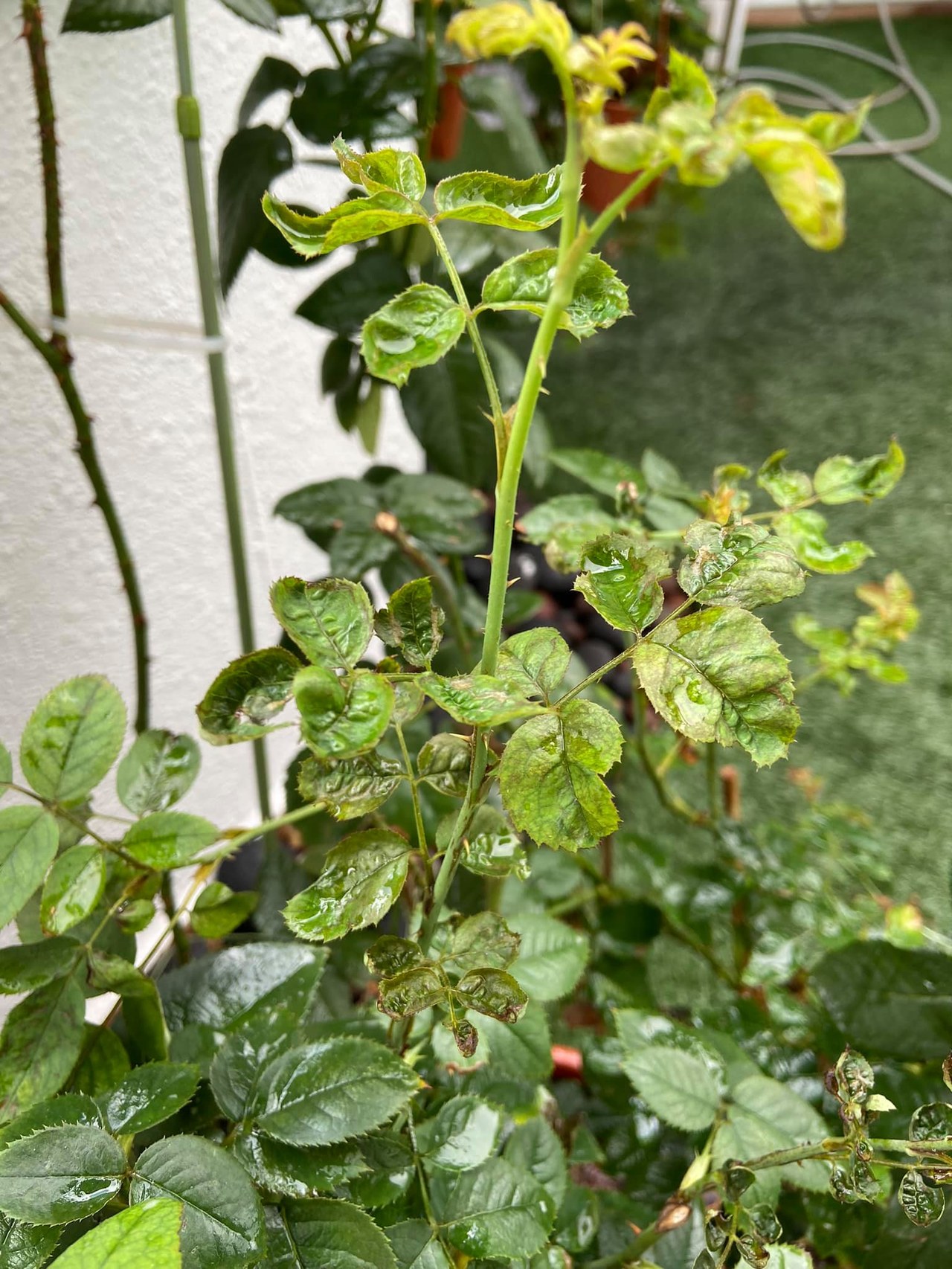
- Cool-season shoot blights: Fungal pathogens such as downy mildew thrive when moisture condenses on tender growing tips during cool, humid winter and spring weather, rotting the shoot apex.
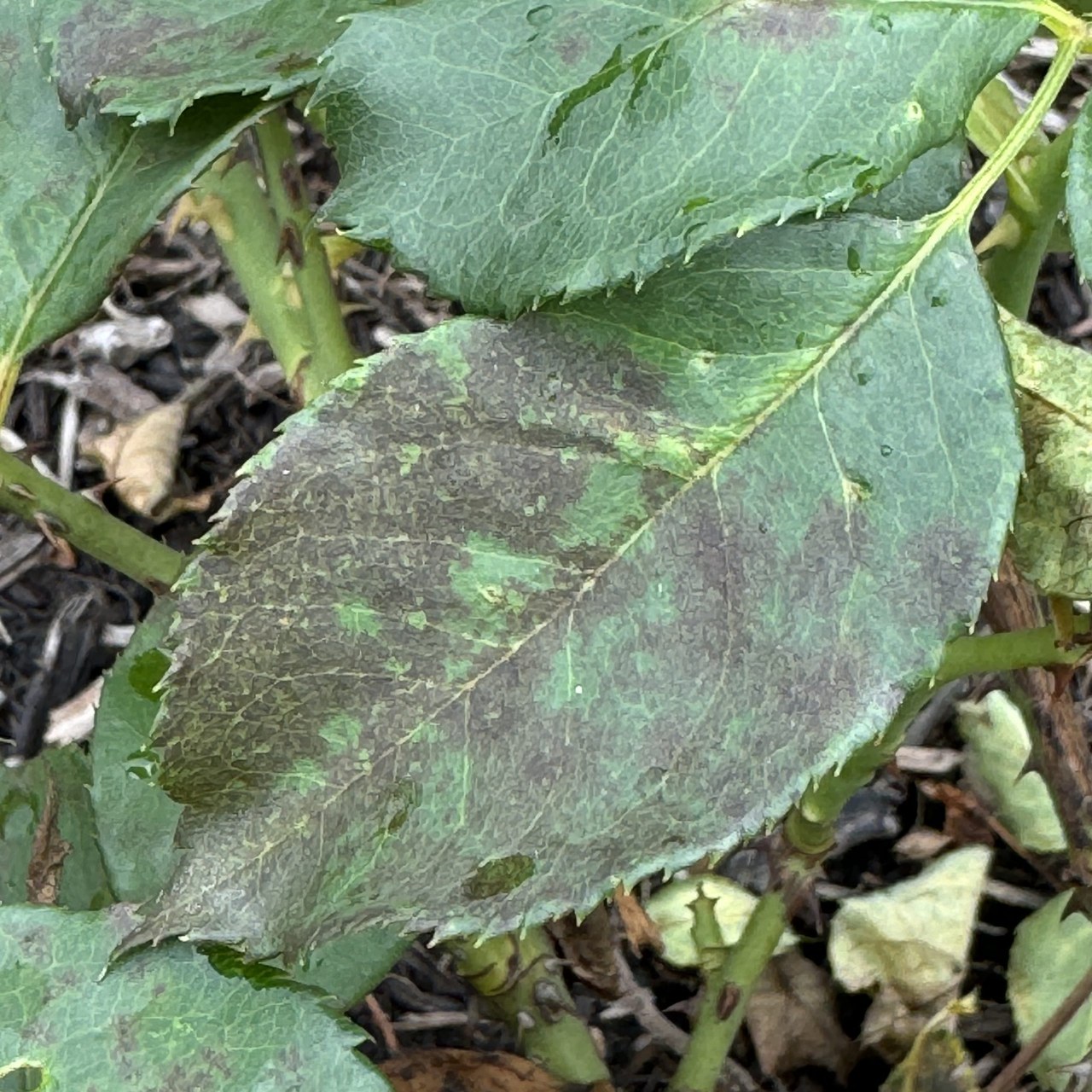
2.5. Soil and Substrate Stress on the Root Zone
Both moisture extremes stress the root system and trigger blind wood:
- Overly dry soil (drought stress): Chronic moisture deficit interrupts nutrient transport to emerging tips.
- Poorly draining substrate (waterlogging): Compacted, waterlogged media starve roots of oxygen, impairing root respiration and nutrient uptake.
2.6. Improper Pruning Technique
Skipping post-bloom pruning, or trimming too lightly on weak, twiggy wood while leaving crowded interior growth unpruned, slows new shoot vigor and encourages thin, unproductive blind shoots.
3. Five-Step Recovery Protocol to Eliminate Blind Shoots
Once a shoot has gone blind, it will never spontaneously form a flower bud at that aborted tip. Do not hesitate to prune it back—follow these five coordinated steps to reset the bush's flowering cycle:
Step 1: Prune Decisively at the Correct Node and Angle
Removing blind wood breaks apical stagnation and redirects sap to healthy axillary buds lower on the cane.
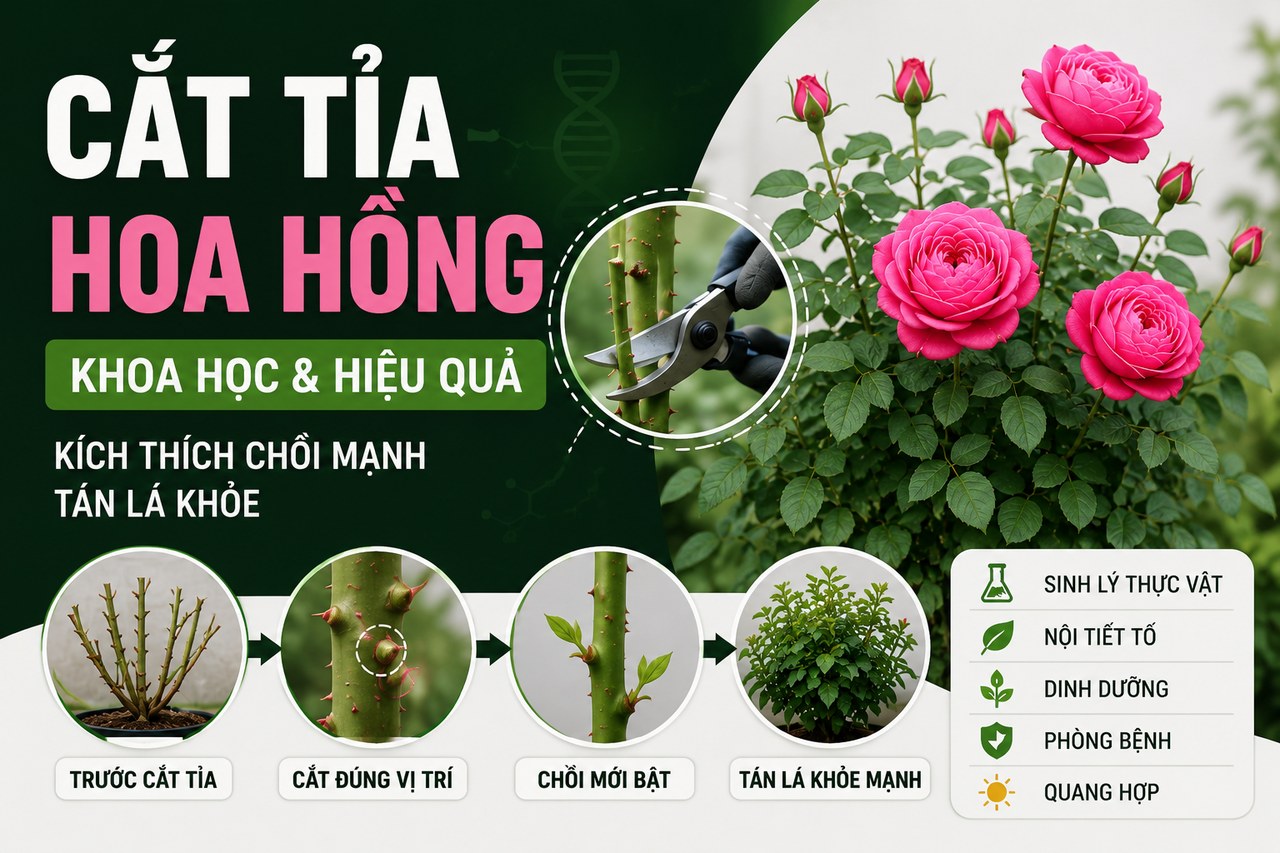
- On main canes: Using clean, disinfected shears, cut back 3–4 leaves down from the shoot tip, making your cut just above a strong, outward-facing 5-leaflet node.
- On thin side shoots: Boldly remove the entire weak side branch back to its point of origin so the canopy stays open and resources concentrate in primary canes.
- Cut angle: Always make a 45-degree slanted cut sloping away from the bud so rainwater and irrigation shed cleanly rather than pooling on the wound and inviting fungal infection.
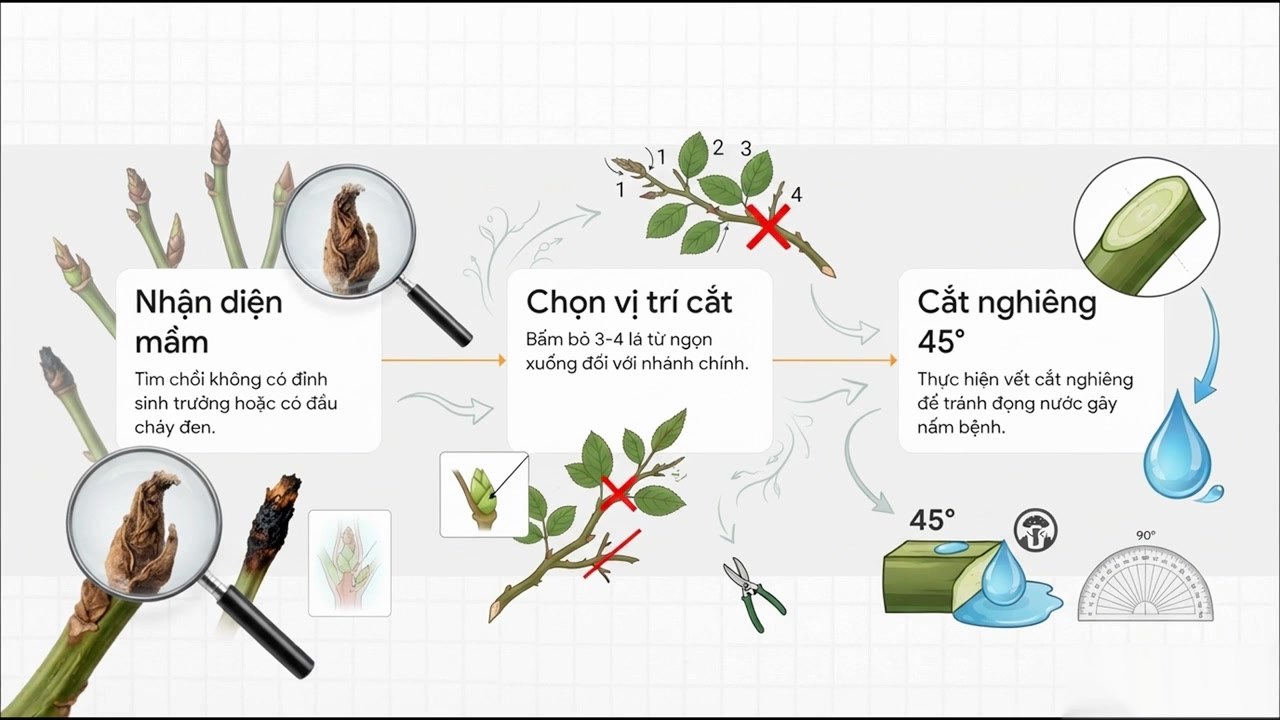
Step 2: Upgrade Sunlight and Airflow Immediately
- Relocate potted roses to the brightest, most open spot available to maximize direct sunlight (targeting 6–8 hours daily).
- Space containers apart and thin crossing interior twigs to improve air circulation and minimize cool-season fungal pressure.
Step 3: Rebalance Fertilization
Right after pruning, the rose enters an active root-regeneration and bud-break phase:
- Apply phosphorus-rich organic fertilizer (such as superphosphate) paired with Trichoderma: Phosphorus drives root growth and floral initiation, while beneficial Trichoderma fungi suppress soil-borne pathogens and support healthy new shoot formation.
- Feed a balanced, complete program: Avoid heavy single-element nitrogen applications. Favor well-composted organic inputs like vermicompost (earthworm castings) or a balanced rose-specific fertilizer containing macro-, secondary, and trace elements.

Step 4: Rehabilitate the Root System
If the plant appears chronically weak, slow to break buds, or sits in degraded, compacted, or root-bound soil:
- Repot into fresh, airy, disease-free potting mix and step up the container size if roots have filled the pot.
- Apply a gentle root-stimulating drench according to label directions to accelerate new white feeder-root growth.
Step 5: Protect Emerging Buds with Preventive Sprays
The window immediately after pruning—just as dormant eyes swell and break—is when shoots are most vulnerable:
- Apply preventive treatments against thrips, red spider mites, and fungal diseases like downy mildew on a regular garden schedule, coating both leaf undersides and emerging buds thoroughly.
- Keep the pot surface and surrounding area free of fallen leaves and pruned debris.
4. Winter Cold-Snap Tip: Warm-Water Irrigation
In cool winter climates (such as northern Vietnam's winter cold fronts), cold soil temperatures sharply slow root activity. Even when nutrients are present in the pot, chilled roots absorb water and minerals poorly—causing a spike in cold-induced blind shoots.
- Warm-water technique: Water the root zone with lukewarm water (gently warm to the touch, never hot) in the early morning and late afternoon during severe cold spells.
- Physiological benefit: Mildly warm water moderates root-zone temperature, lowers protoplasmic viscosity, and helps roots resume active nutrient absorption—significantly reducing cold-induced blind wood and promoting uniform flower bud formation.

Key Takeaways for Rose Growers
- Spot them early: Blind shoots stay short and thin, stall in growth, and end in a tiny black dot or scorched tip instead of a flower bud.
- Diagnose all 6 factors: Check sunlight (6–8 hours direct sun), cold snaps/thermal shock, excess nitrogen or root-bound soil, thrips/mites/downy mildew, substrate moisture balance, and prior pruning habits.
- Act decisively: Cut back blind main canes by 3–4 leaves at a 45° angle (remove weak side shoots completely), maximize sun and airflow, feed phosphorus-rich organics + Trichoderma + vermicompost, protect emerging buds from thrips and fungi, and use lukewarm water during winter cold fronts.