
Light Deficiency
PhysiologicalDescription
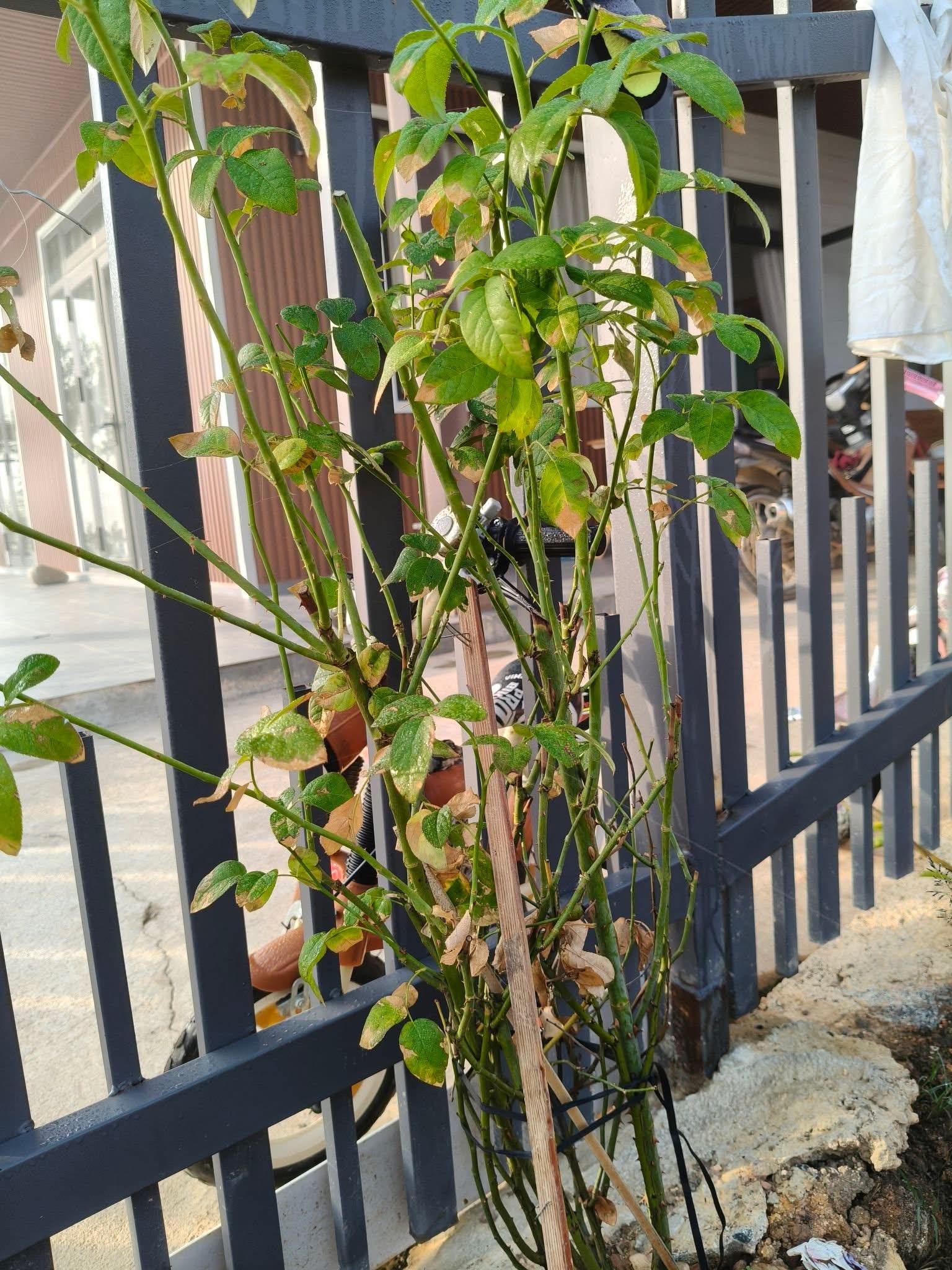
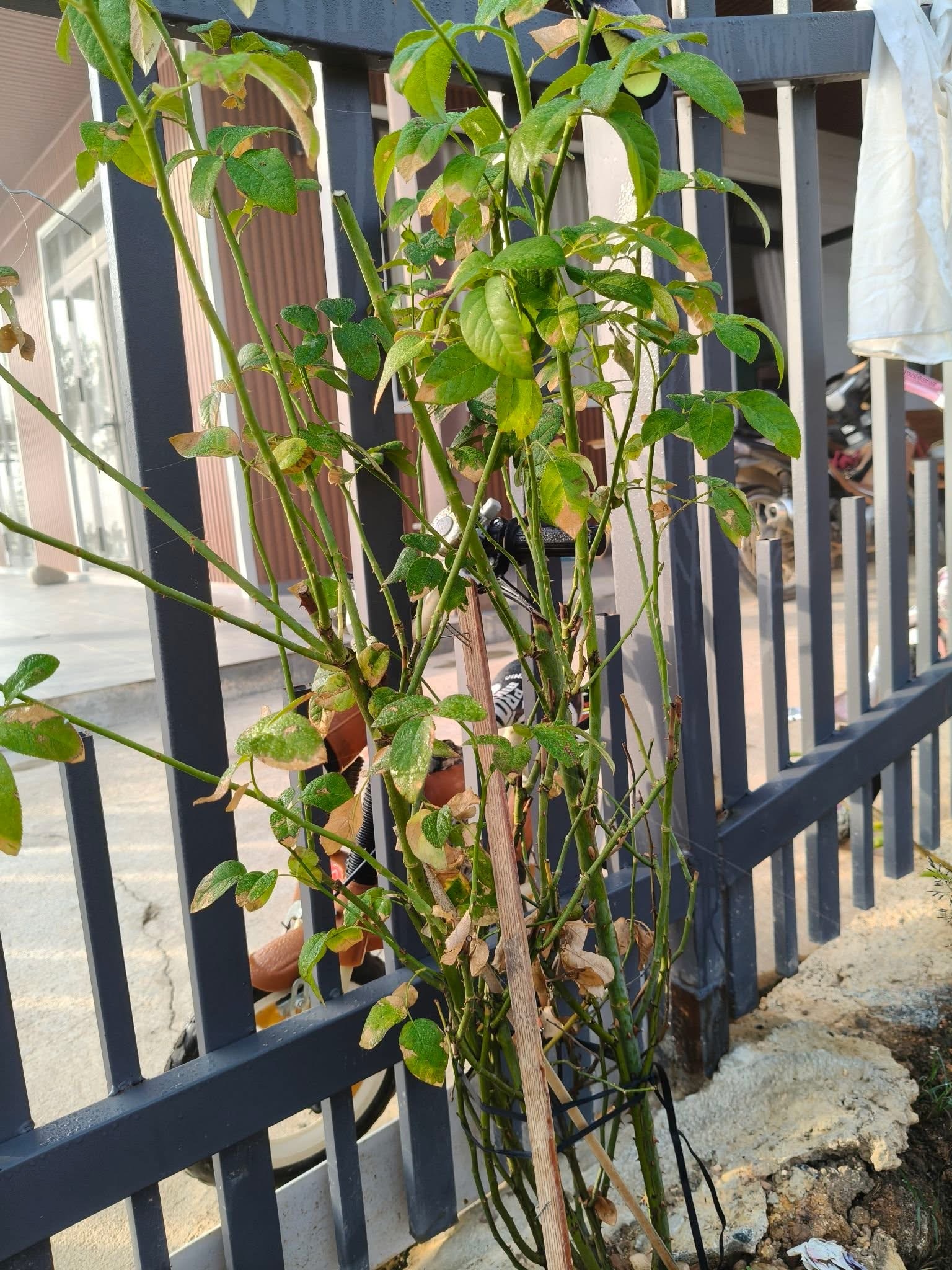
Light deficiency occurs when the rose does not receive enough light to photosynthesise efficiently. Roses need at least 4–6 hours of direct sunlight per day. Under low light, the plant etiolates — stretching toward the light — and produces weak growth and few flowers.
Symptoms
- Stretched shoots and abnormally long internodes — the plant is "searching for light" (etiolation)
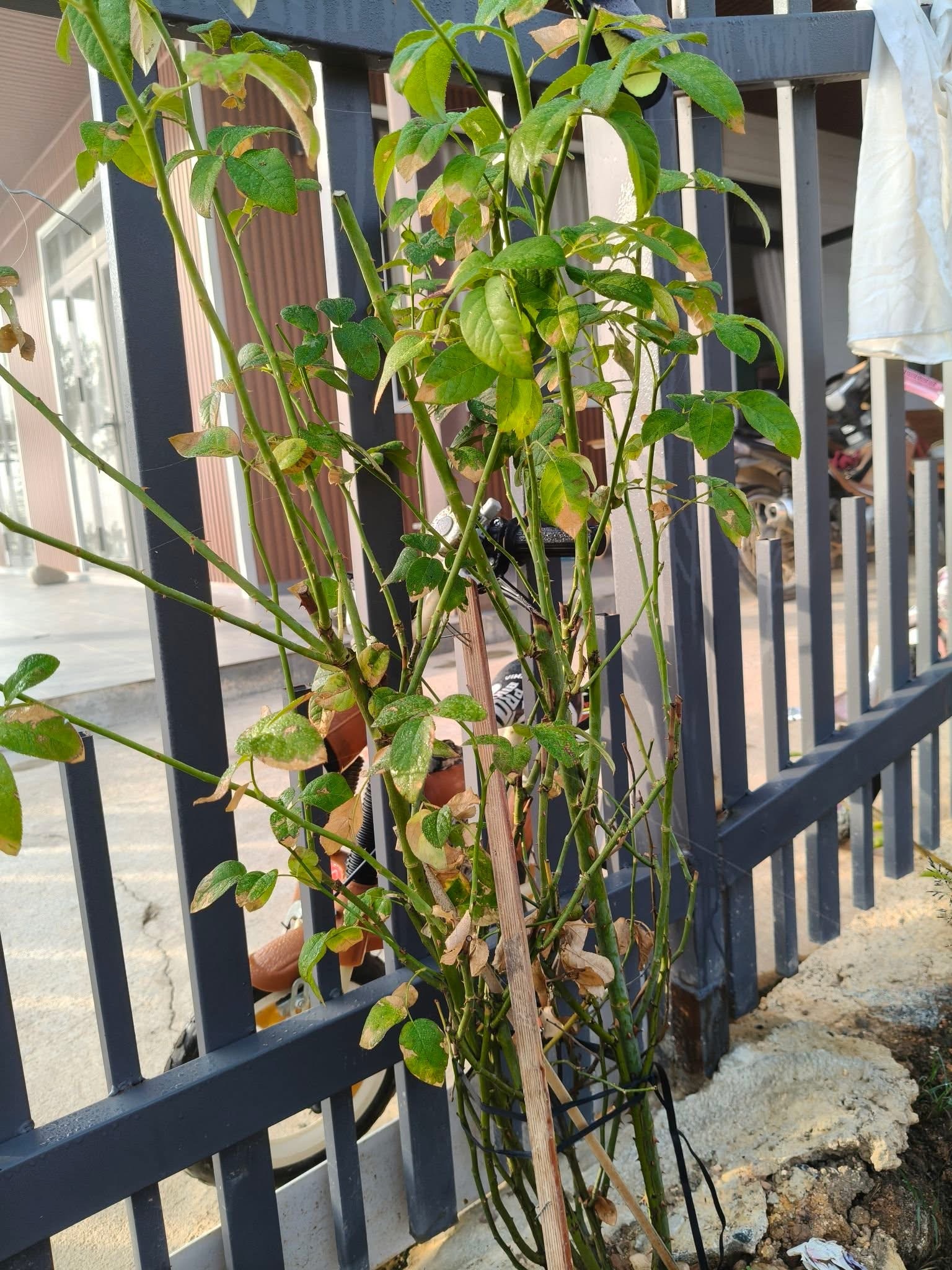
- Pale, undersized leaves — chlorophyll content is reduced under low light
- Flower buds are small, pale, with elongated and weak pedicels that abort and drop prematurely due to insufficient photosynthetic energy accumulation.
- Leaves deep inside the canopy (shaded out) yellow and drop
- Small, washed-out blooms — and few of them — because photosynthesis cannot support flower development
Treatment plan
Light deficiency cannot be "treated" chemically — recovery depends on getting the plant into a brighter position and giving it time to rebuild healthy growth.
- Move immediately: Relocate the plant to a brighter position.
- Open up the canopy: Prune the canopy to let more light into the centre of the bush.
- Relocate to a brighter site: Choose a permanent position that delivers at least 4–6 sun-hours of direct sunlight per day.
- Use grow lights indoors: If the plant must be grown indoors, supplement with LED grow lights.
Prevention
- Choose a site with adequate sun exposure before planting.
- Prune the bush regularly to keep the canopy open and well lit internally.