Description
Root restriction is an abiotic root-zone disorder in which rose roots lack either the physical space or the soil conditions to grow. Two situations lead to it: soil compaction, where high bulk density and penetration resistance stop root elongation, and the pot-bound condition, where roots fill the container and circle its wall and base. It is a frequent hidden cause of decline in container roses. The symptoms show in the canopy (chlorosis, leaf drop, stunting) and resemble nutrient deficiencies, so growers tend to treat them with more fertiliser.
Mechanical impedance confines roots to a shallow surface layer with few fine roots, and the plant becomes highly sensitive to drought, heat and wind. In a restricted root system, sink limitation triggers feedback inhibition of photosynthesis. Stressed roots also raise abscisic acid (ABA) signalling, which closes stomata, and they supply less cytokinin, which gives thin, weak new shoots. Reduced root surface and activity limit the uptake of nitrogen and potassium in particular, and of iron and phosphorus, so secondary deficiency symptoms are common even when the substrate contains enough of these nutrients.
Common causes:
- Containers filled with straight garden soil or loam, which settles and cakes after repeated watering and drying.
- Potting media reused for years, or peat/coir that has broken down into fines. Both reduce air-filled porosity: around 20–30 % is the target, and roots start to die back below about 15–20 %.
- Plants left too long in the same pot (more than about two years) or in an undersized container.
- Media allowed to dry out completely. Peat and coir then shrink from the pot wall and turn hydrophobic, so water channels down the gap and out of the base while the root ball stays dry.
- In-ground plants: clay soils compacted by foot traffic, and surface crusting after rain.
Root restriction must be distinguished from waterlogging. Waterlogging involves a saturated, hypoxic substrate with soft, foul-smelling rotten roots, and calls for less water. Root restriction usually involves a dry, hard, water-repellent substrate in which the roots are firm but circling, or sparse and shallow. Withholding water makes it worse. The fix is to restore infiltration and give the roots space.
Symptoms
The plant is pot-bound — clumps of roots grow out of the drainage holes, roots mat the soil surface, a plastic pot bulges or cracks, and the soil dries within half a day of watering; slid out, the root ball shows roots wrapped around the wall and base
Soil or potting mix is packed hard and caked — even when just moist, a finger or bamboo stick will not go in more than 2–3 cm
The soil surface is dry, crusted or cracked and shrinks away from the pot wall — water pools on top then runs down the gap and out of the base while the root ball stays dry inside
The plant wilts very quickly, within a day of watering or at midday, then recovers once watered — a sparse, shallow root system cannot hold enough water
The plant stays stunted with thin, weak new shoots and slow repeat flowering despite regular feeding — restricted roots cannot take the fertiliser up
Growth stalls, with slow and sparse new shoots
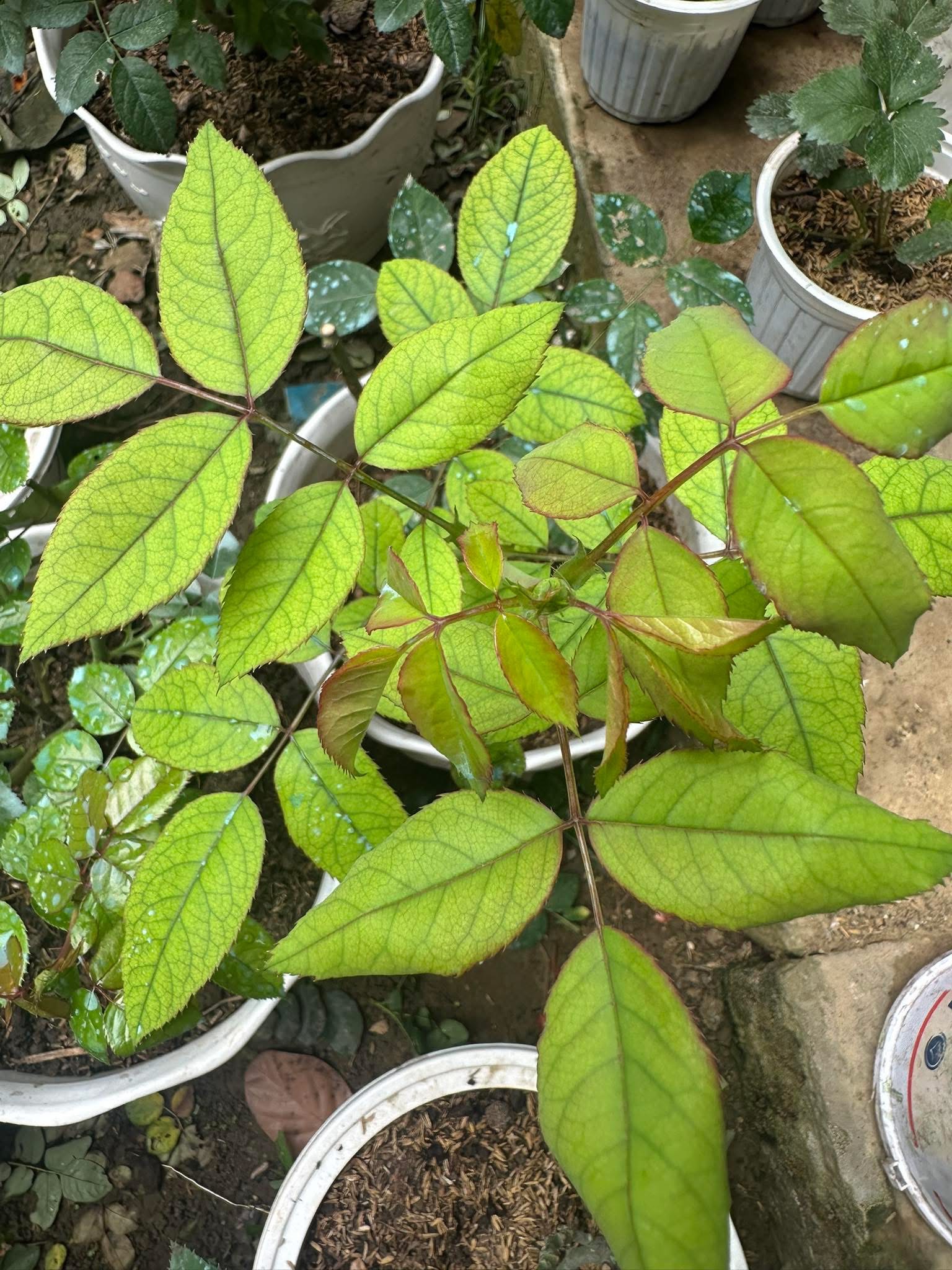
New leaves come out smaller and paler than older ones, on thin new canes
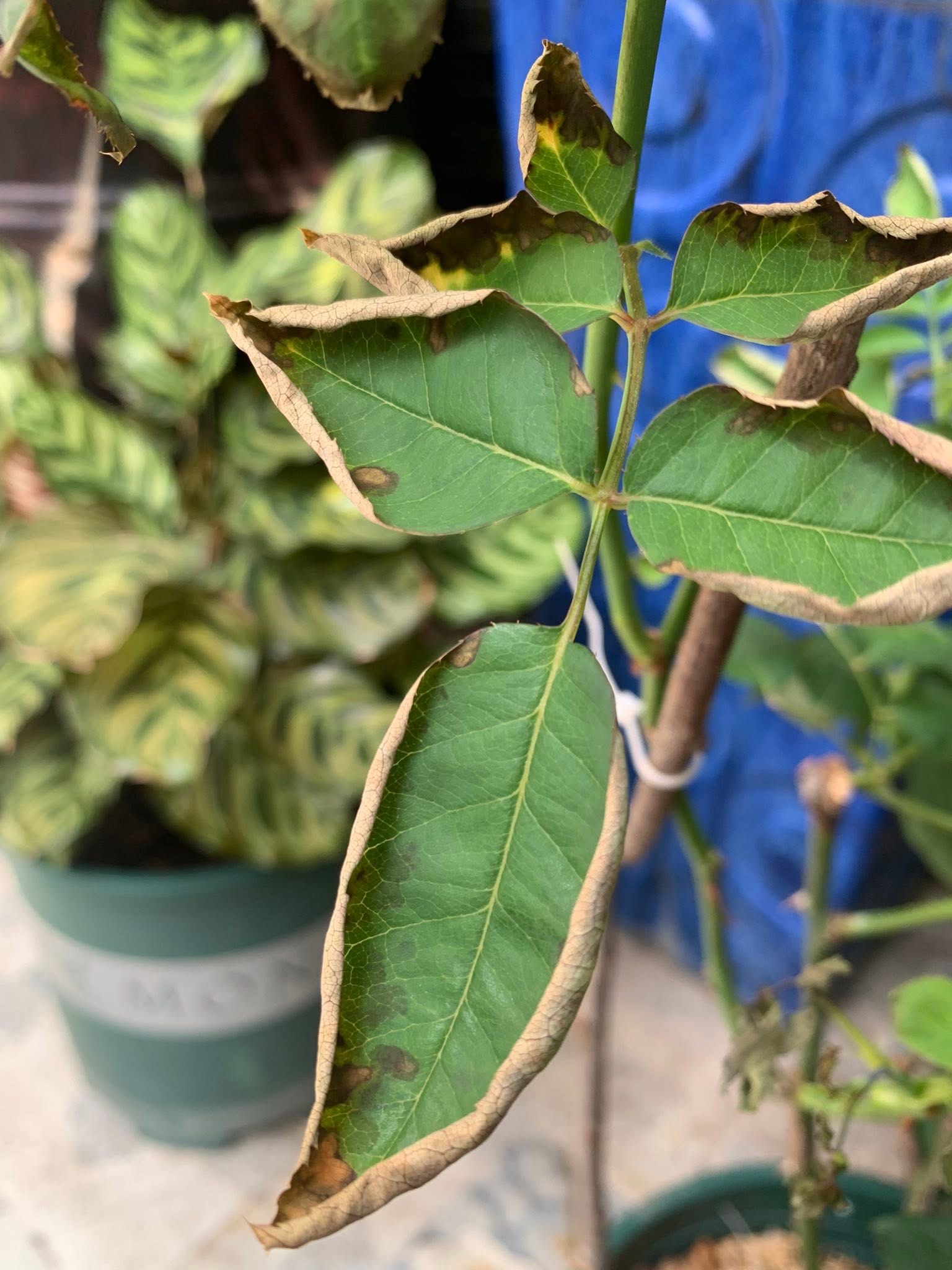
Lower, older leaves gradually yellow and drop, looking like nitrogen or potassium deficiency despite regular feeding
Treatment plan
Recovery depends on restoring water infiltration, aeration and rooting volume. Extra fertiliser does not help while the root system cannot take it up.
- Inspect the root ball first. Circling roots indicate a pot-bound plant. Hard soil with sparse, shallow roots indicates compaction. Soft, black, foul-smelling roots point to waterlogging or root rot, which should be treated as such.
- Rewet the root ball. Submerge the pot to two-thirds of its height for 20–30 minutes, until bubbling stops, then let it drain. For in-ground plants, apply water slowly in several passes 10–15 minutes apart.
- Suspend granular and synthetic root feeding until new roots appear. Weak roots cannot use it, and the extra salts can burn them.
- Container plants: repot. Move to a container 5–10 cm wider with ample drainage holes. Use a well-aerated mix such as 2 parts rinsed coir, 2 parts carbonised rice hull and 1 part perlite or pumice, amended with vermicompost. Tease out circling roots, cut away dense circling mats, and score the root ball vertically 3–4 times to promote outward root growth.
- In-ground plants. Avoid cultivating close to the crown. Vertical-mulch instead: bore holes 15–20 cm deep around the drip line, 20–30 cm from the crown, backfill them with compost and rice hull, and apply 5–7 cm of organic mulch.
- Balance shoot to root. After root pruning, cut back about one third of the canopy, remove buds and flowers, and keep the plant in light shade for a few days.
- Stimulate rooting. Three days later, drench with humic acid plus vitamin B1 (or an IBA/N3M rooting product), and repeat after 7 days.
- Resume feeding gradually. After about three weeks, once new shoots appear, feed at half strength, favouring organic or fish-based fertilisers.
- Foliar micronutrient sprays can green up deficient foliage while the root system recovers.
Prevention
- Do not fill containers with straight garden soil. Use an aerated mix (rinsed coir, carbonised rice hull, perlite or pumice) and top-dress with organic matter or beneficial microbes every 2–3 months to maintain structure.
- Repot and renew the medium about every two years, or as soon as roots emerge from the drainage holes or water runs straight through.
- Choose an adequately sized container (about 30–40 cm for a shrub rose) with ample drainage. Fabric or terracotta pots improve aeration and promote air-pruning of roots.
- Never let the medium dry out completely. Water when the top 2–3 cm is just dry, and mulch to retain moisture and prevent crusting.
- For in-ground roses, avoid foot traffic and heavy loads over the root zone, and keep a thick organic mulch so soil structure recovers over time.