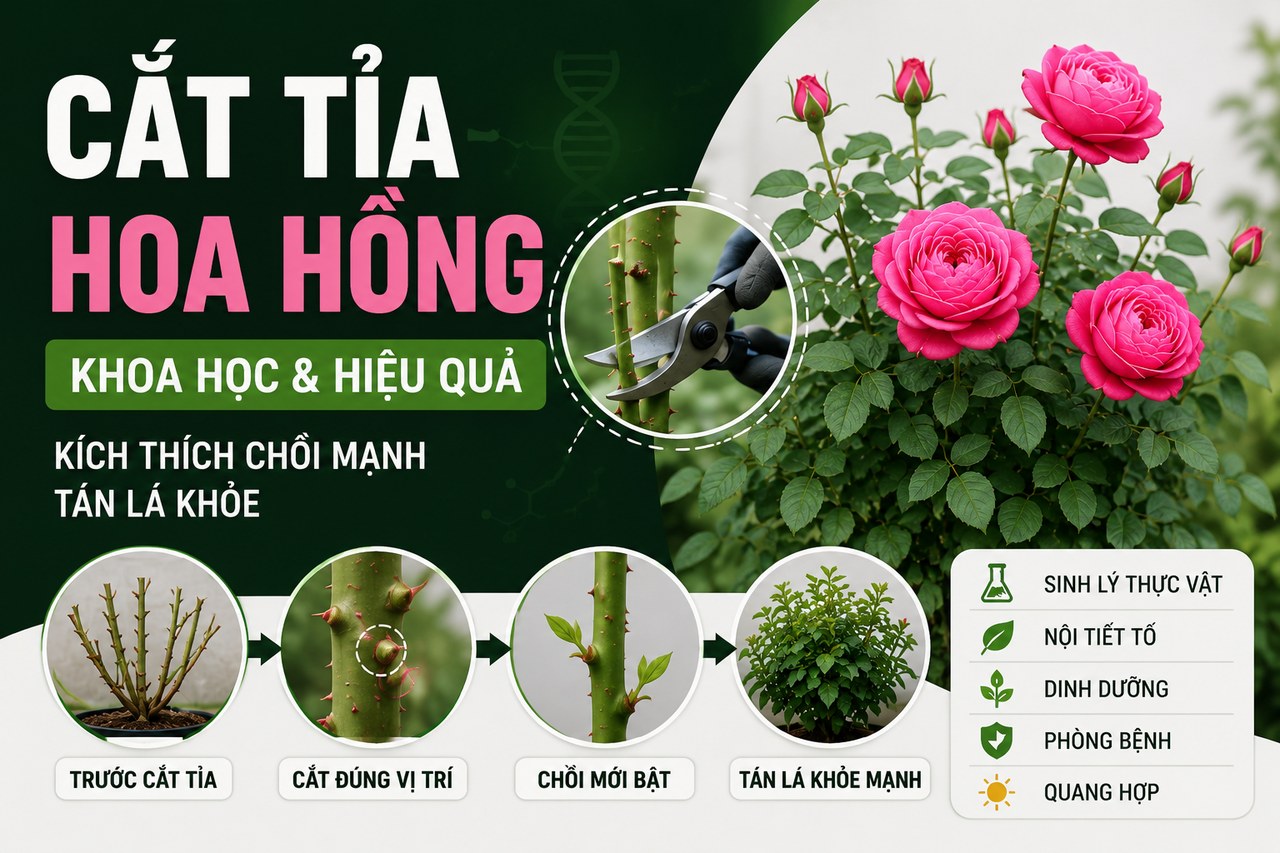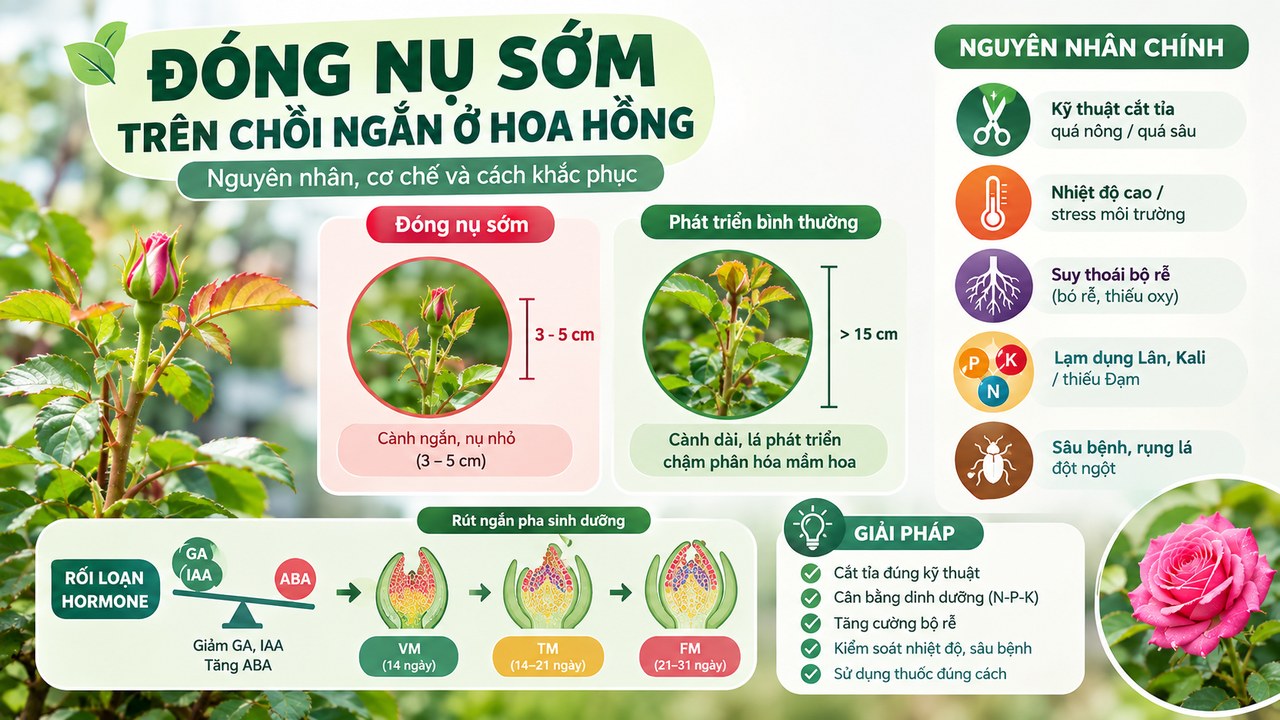
After every pruning cycle, rose growers expect vigorous new shoots to elongate into sturdy, leafy canes before setting large, well-formed flower buds. Yet many bushes do the exact opposite: new shoots reach only 3–5 cm before abruptly halting vegetative growth and setting a tiny flower bud.
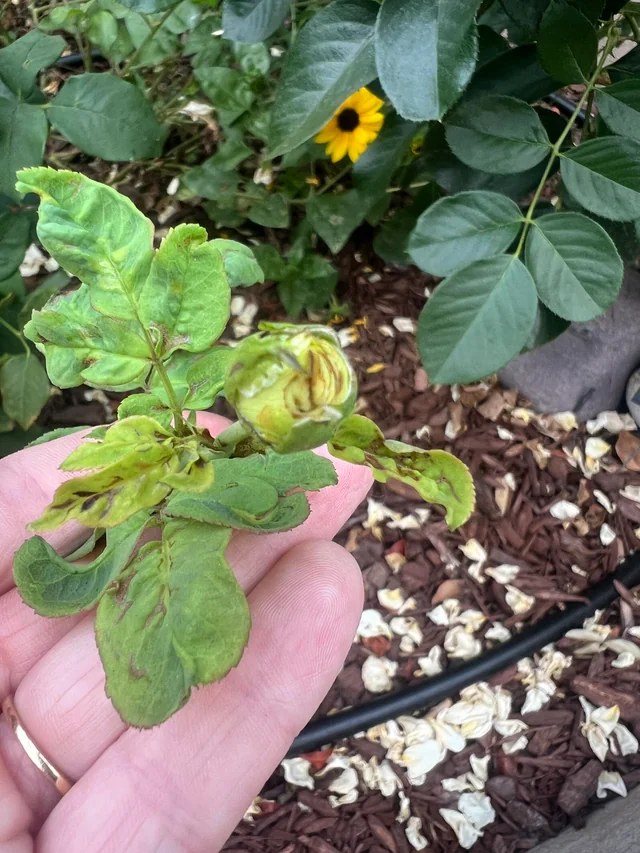
In rose physiology (Rosa hybrida), this is known as the short shoot phenomenon (premature budding). Far from being a sign of a "heavy bloomer," it is a complex physiological disorder. Left uncorrected, it produces short, spindly stems, undersized low-quality blooms, and rapid nutrient exhaustion across the entire plant.
1. Compression of the Vegetative Phase in the Shoot Apical Meristem (SAM)
To understand why a rose shoot locks up at 3–5 cm, we need to examine the normal developmental progression (ontogeny) of the Shoot Apical Meristem (SAM) following pruning.
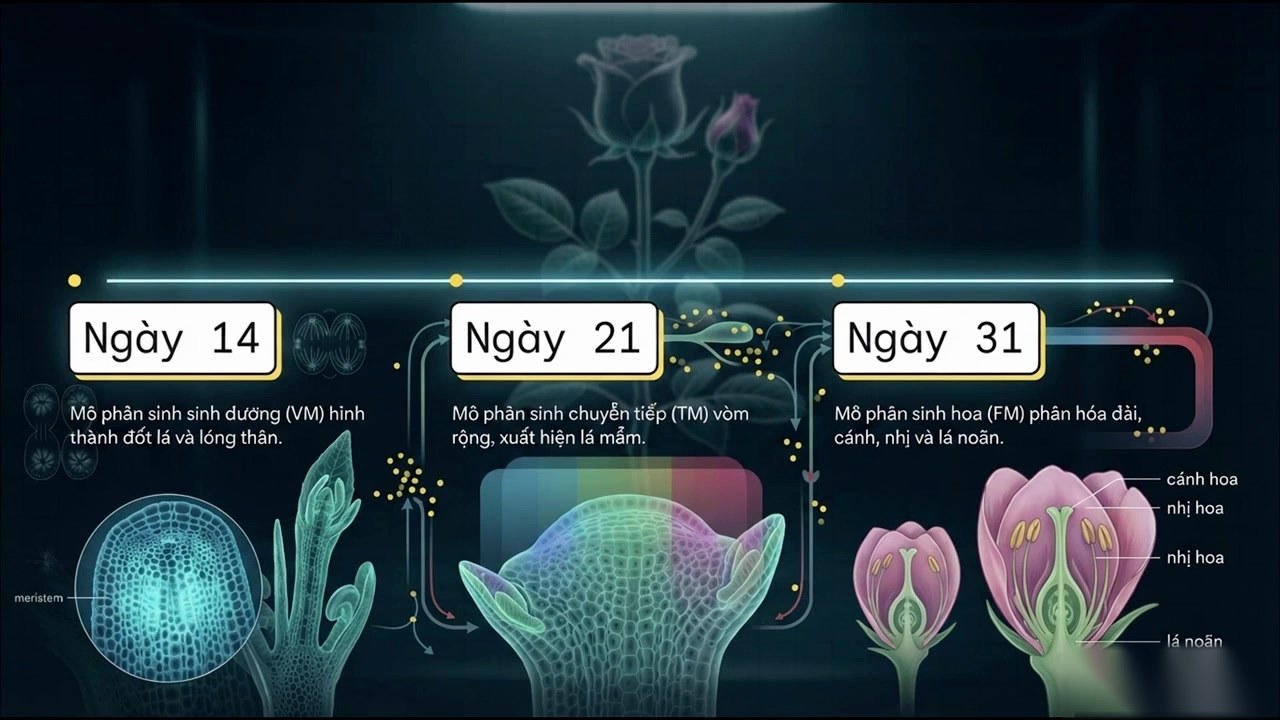
Under standard physiological conditions, the SAM passes through three distinct, sequential phases:
- Vegetative Meristem Phase (VM, Days 1–14): During the first ~14 days after bud break, the SAM remains flat and narrow, focusing cell division on forming leaf nodes and elongating stem internodes to build cane length and caliper.
- Transitional Meristem Phase (TM, Days 14–21): The SAM domes upward and broadens, initiating transitional primordia as the apex prepares to shift from vegetative growth to reproduction.
- Floral Meristem Phase (FM, Days 21–31): The apex transitions completely into the reproductive phase, differentiating sepals, petals, stamens, and carpels to form a complete floral bud.
What Happens During Premature Budding?
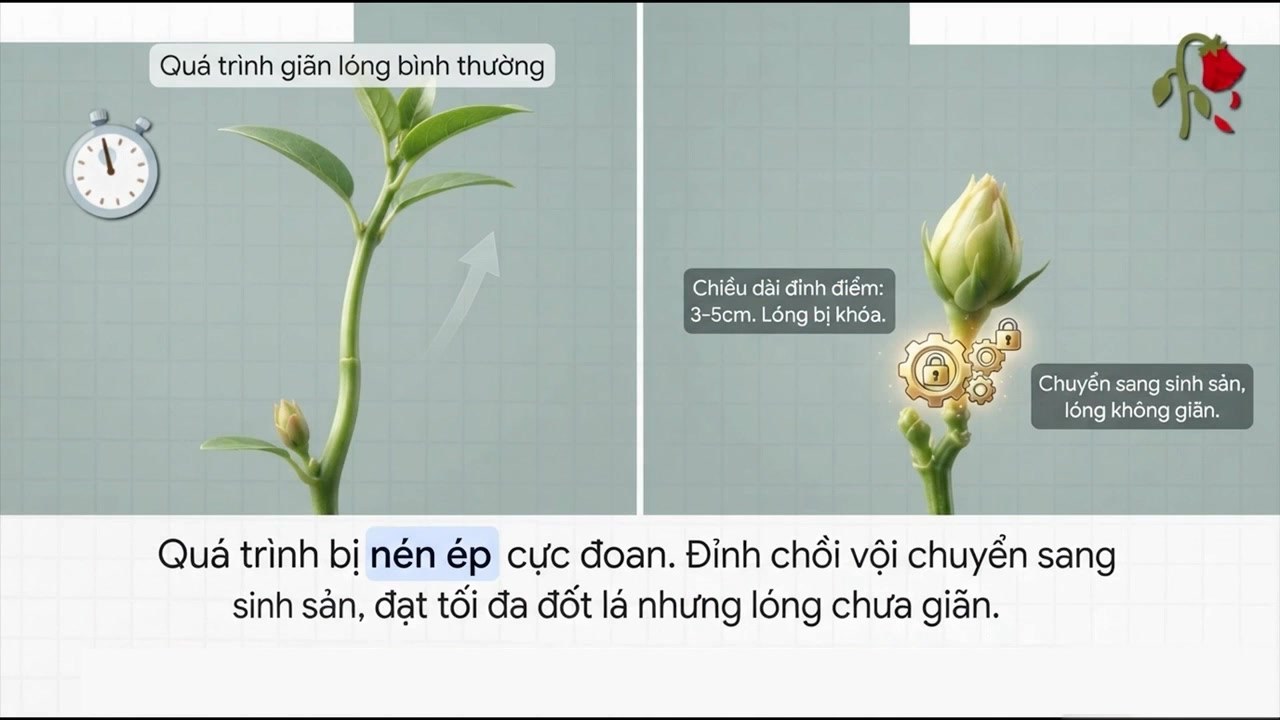
In the short shoot phenomenon, this entire 31-day progression is severely compressed. Transition to the floral meristem (FM) occurs right in the middle of vegetative biomass accumulation. As a result, the shoot reaches its maximum leaf-node count far too early while the internodes have barely elongated—locking the stem at a stunted length of just 3–5 cm.
2. Five Physiological Causes and Triggers
Premature budding on short shoots is driven by five core physiological mechanisms and management errors:
2.1. Positional Bud Effect (Topophysis) and Pruning Mistakes
The position of a dormant eye along the parent cane directly influences the vigor and length of the resulting shoot—a phenomenon termed topophysis:
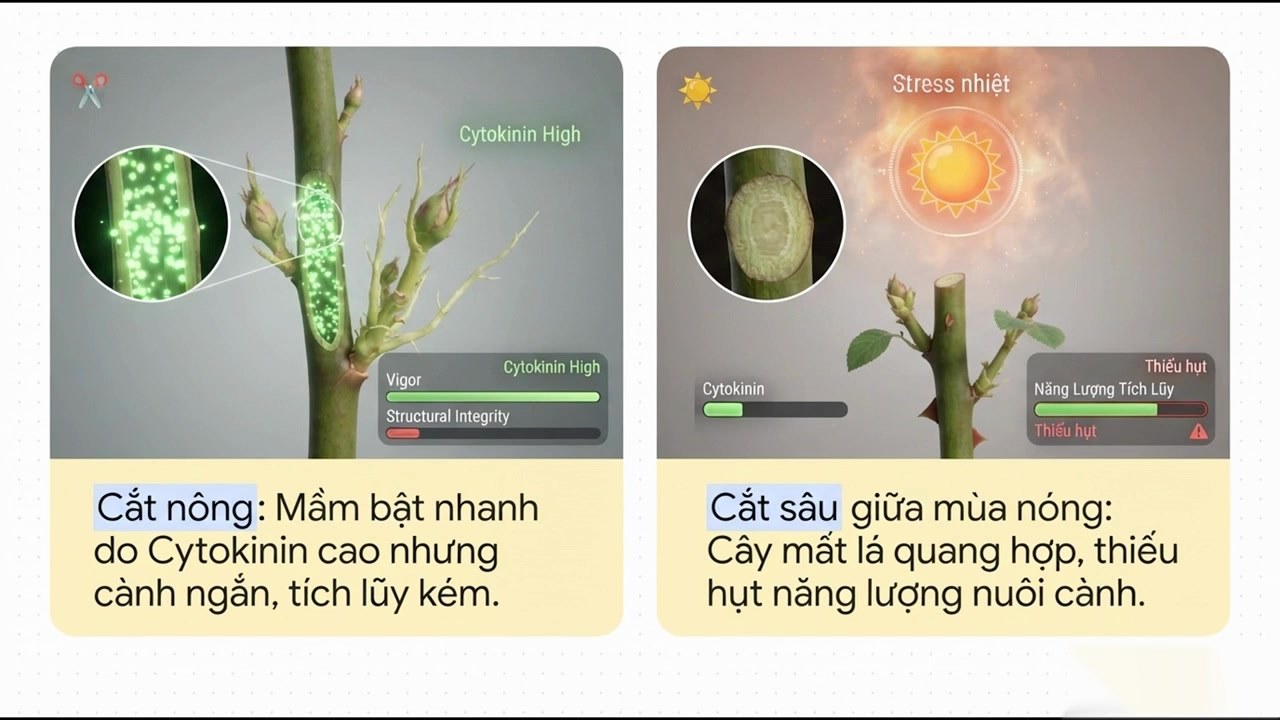
- Pruning too high (shallow pruning): Apical dormant eyes located close to the spent flower naturally contain high endogenous cytokinin levels, causing rapid bud break. However, shoots emerging from these upper eyes exhibit poor elongation, low biomass accumulation, and premature transition to flowering on short, thin stems.
- Pruning too hard during hot weather: Conversely, cutting away too much green foliage during high heat severely diminishes photosynthesis and carbohydrate synthesis (which also supports transpirational cooling). The bush suffers an acute source–sink imbalance, lacking the energy to elongate new canes and forcing shoots to bud prematurely.
2.2. Endogenous Hormone Shifts and Internode Elongation Dynamics
Internode elongation in roses is governed by the ratio of growth-promoting hormones (Gibberellin — and Auxin — ) to the growth-inhibiting stress hormone (Abscisic Acid — ):
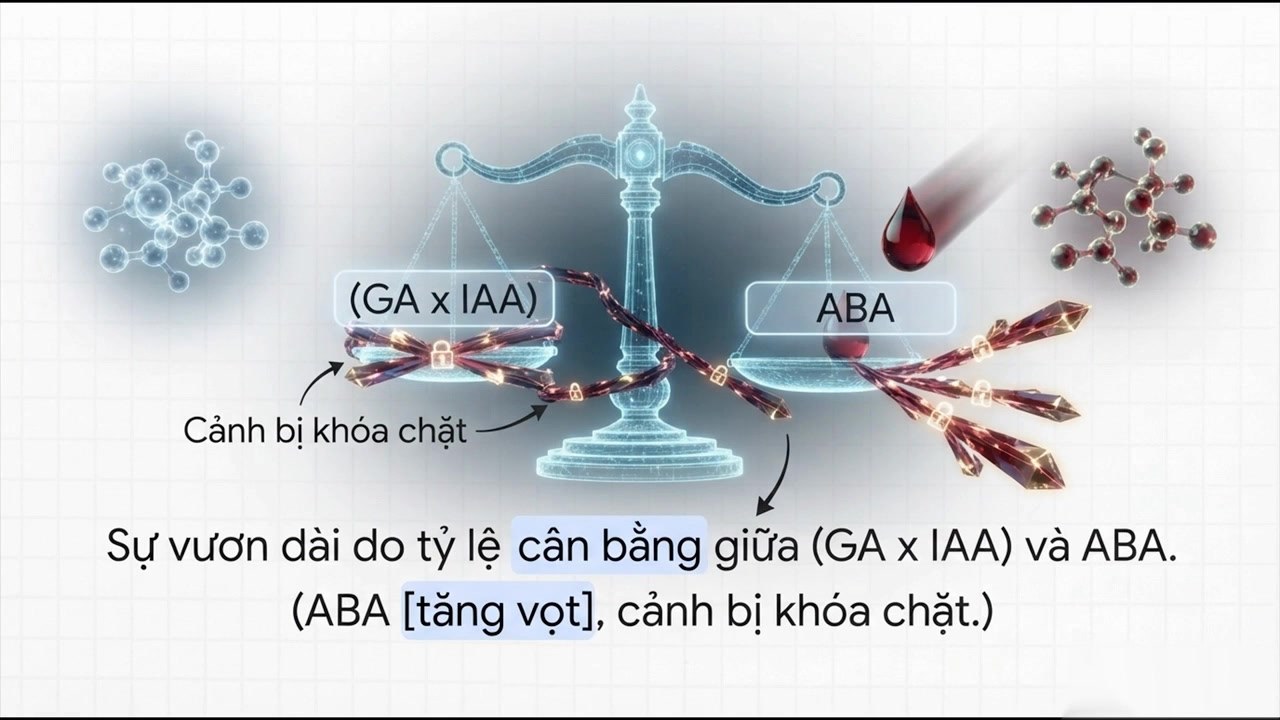
When the plant experiences stress, the following cascade unfolds:
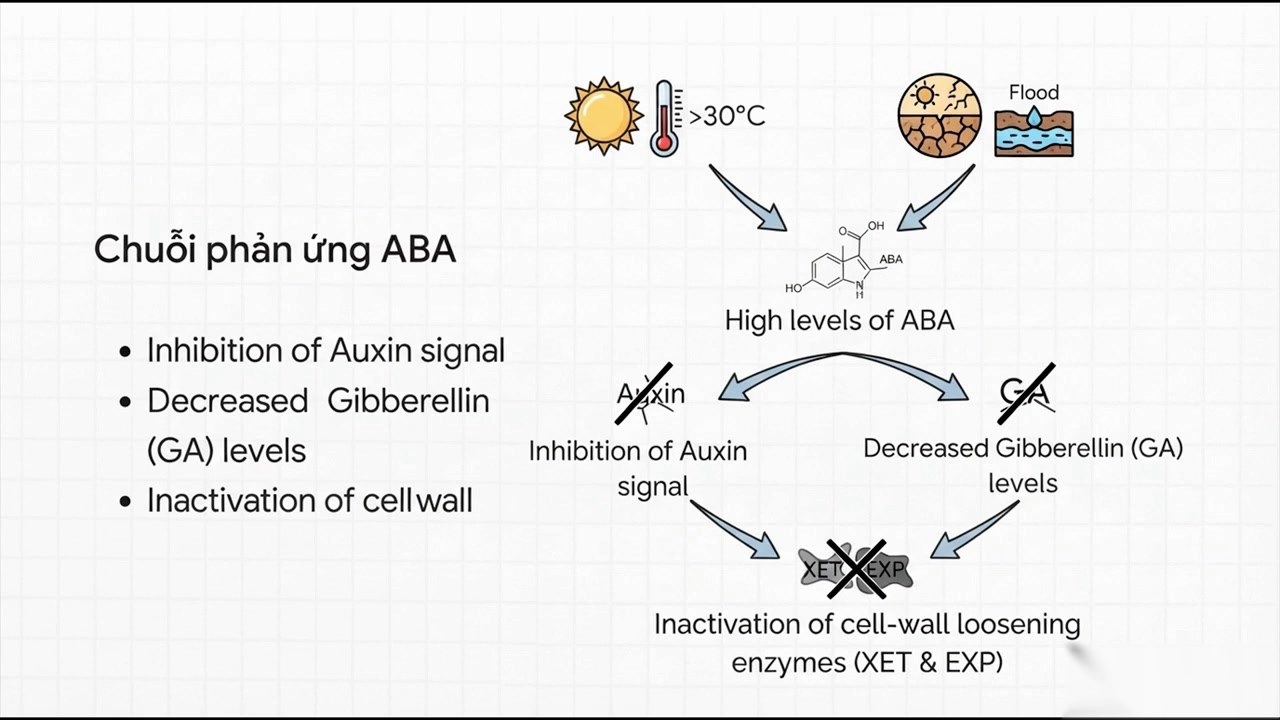
- Under high heat stress (temperatures above 30°C can compress time-to-budding down to just 5–10 days), water stress (drought stress or waterlogging), or root decline, surges rapidly at the shoot apical meristem.
- Elevated directly inhibits Auxin () signaling and suppresses endogenous Gibberellin () biosynthesis.
- deficiency reduces the activity of key cell-wall-loosening enzymes—specifically Xyloglucan Endotransglycosylase (XET) and Expansin (EXP). Without cell-wall loosening, internode cells cannot stretch, freezing stem length at its minimum as the flower bud forms.
2.3. Root System Decline and Container Restriction
In container culture, root restriction (root-bound pots) or aged, decomposed, compacted potting media starve the root zone of oxygen. When delicate feeder roots suffer from poor drainage or root rot, water and mineral transport breaks down.
Stress signals travel from the roots through the vascular system directly to the SAM, triggering early reproduction as an evolutionary survival reflex to complete flowering and seed set before the plant declines further.
2.4. Out-of-Phase Fertilization (Premature High Phosphorus and Potassium)
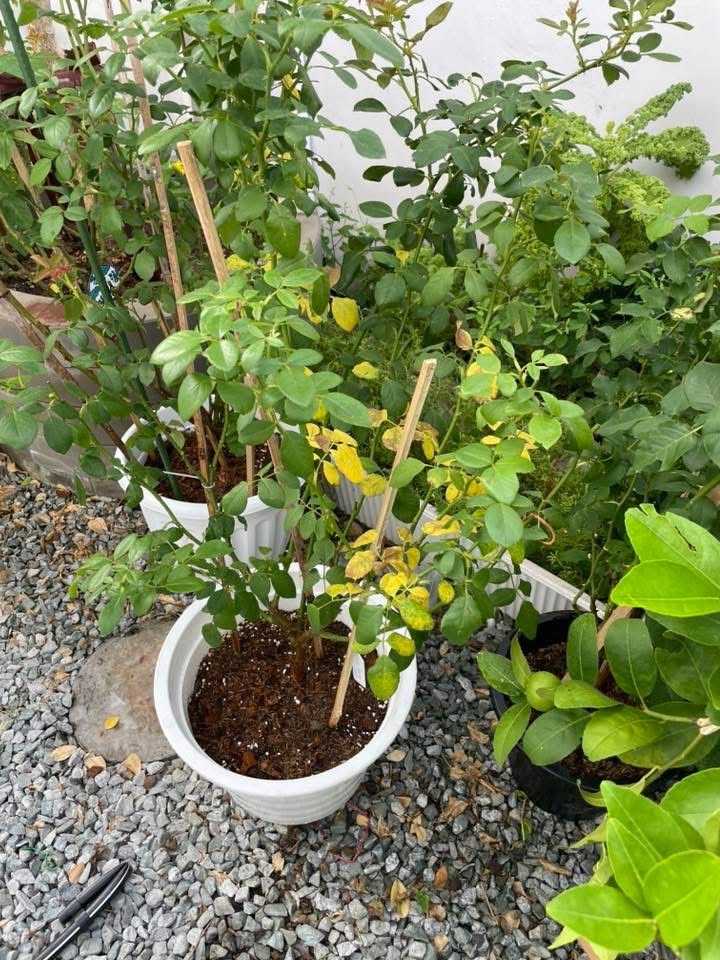
A frequent mistake among growers eager for quick blooms is applying fertilizers heavy in Phosphorus () and Potassium ()—such as bat guano, poultry manure, or high-P/K bloom boosters—right as new shoots emerge (0–3 cm).
- High and accelerate the conversion of the SAM into a floral meristem (FM).
- Meanwhile, Nitrogen () deficiency—the essential building block for structural proteins, leaf area, and internode expansion—prevents the cane from lengthening before the bud sets.
2.5. Pest Pressure and Sudden Defoliation
When roses endure heavy attacks from thrips or red spider mites, or when a grower strips off large amounts of diseased foliage all at once without balanced cane pruning, the plant perceives an imminent collapse in vital resources.
In response, dormant eyes break simultaneously in emergency mode and form buds at just 3–5 cm in a desperate attempt to complete reproduction before exhaustion.
3. Clinical Comparison: Premature Budding vs. Blind Shoots
Both disorders ruin a post-pruning bloom flush, yet their underlying physiology and diagnostic markers are completely distinct. Misdiagnosing one for the other leads to counterproductive feeding and environmental adjustments.

| Comparison Criterion | Premature Budding (Short Shoot Phenomenon) | Blind Shoots (Blind Wood) |
|---|---|---|
| Physiological nature | Shoot apex successfully transitions to the floral phase (FM), but the vegetative phase (VM) is severely compressed | Shoot apex degenerates or is inhibited and cannot differentiate a flower bud |
| Apical morphology | A small, complete flower bud forms right at the cane tip | No bud; apex shows a tiny black speck or pinched tip and stops growing |
| Cane length | Very short (3–5 cm) with small leaves, yet carrying a floral bud | Can be short or long, with healthy foliage but zero flowering |
| Primary triggers | Upper-cane topophysis, root stress, high heat (>30°C), premature excess P/K fertilization | Excessively low temperatures, weak light, overly dry soil, or excess straight nitrogen (urea) |
4. Practical Corrective Strategy to Restore Long, Vigorous Canes
Addressing the five physiological drivers together will break the short-shoot cycle:
- Pinch off premature buds to conserve energy: On weakened bushes producing 3–5 cm budded shoots, pinch off the tiny buds and prune back to a stronger lower eye so the plant does not drain reserves into poor-quality blooms.
- Prune by bud position and season:
- Avoid shallow cuts into thin upper eyes right below old blooms (where high cytokinin favors short shoots). Cut down to plump mid-cane eyes backed by mature 5-leaflet leaves.
- During hot spells above 30°C, never strip the bush down with hard pruning—retain enough green canopy to preserve the source–sink carbohydrate balance and shade the stems.
- Match NPK feeding to shoot stage:
- During early bud break and shoot elongation (0–5 cm), avoid high-P/K bloom boosters (bat guano, concentrated poultry manure, MKP). Supply balanced nitrogen-forward nutrition and organics to drive leaf expansion and internode elongation.
- Introduce higher P and K only after canes have achieved proper length and entered the floral transition stage.
- Relieve root and heat stress:
- Check for root-bound pots, compacted media, or poor drainage; refresh into airy, well-draining substrate if needed.
- Maintain consistent watering and use temporary shade cloth during >30°C midday peaks to keep endogenous low and allow /-driven cell-wall expansion.
- Prevent pest outbreaks and avoid sudden defoliation:
- Control thrips and red spider mites proactively to protect photosynthetic leaf area.
- When treating foliar disease, combine targeted sprays with structured pruning rather than stripping all leaves off at once.