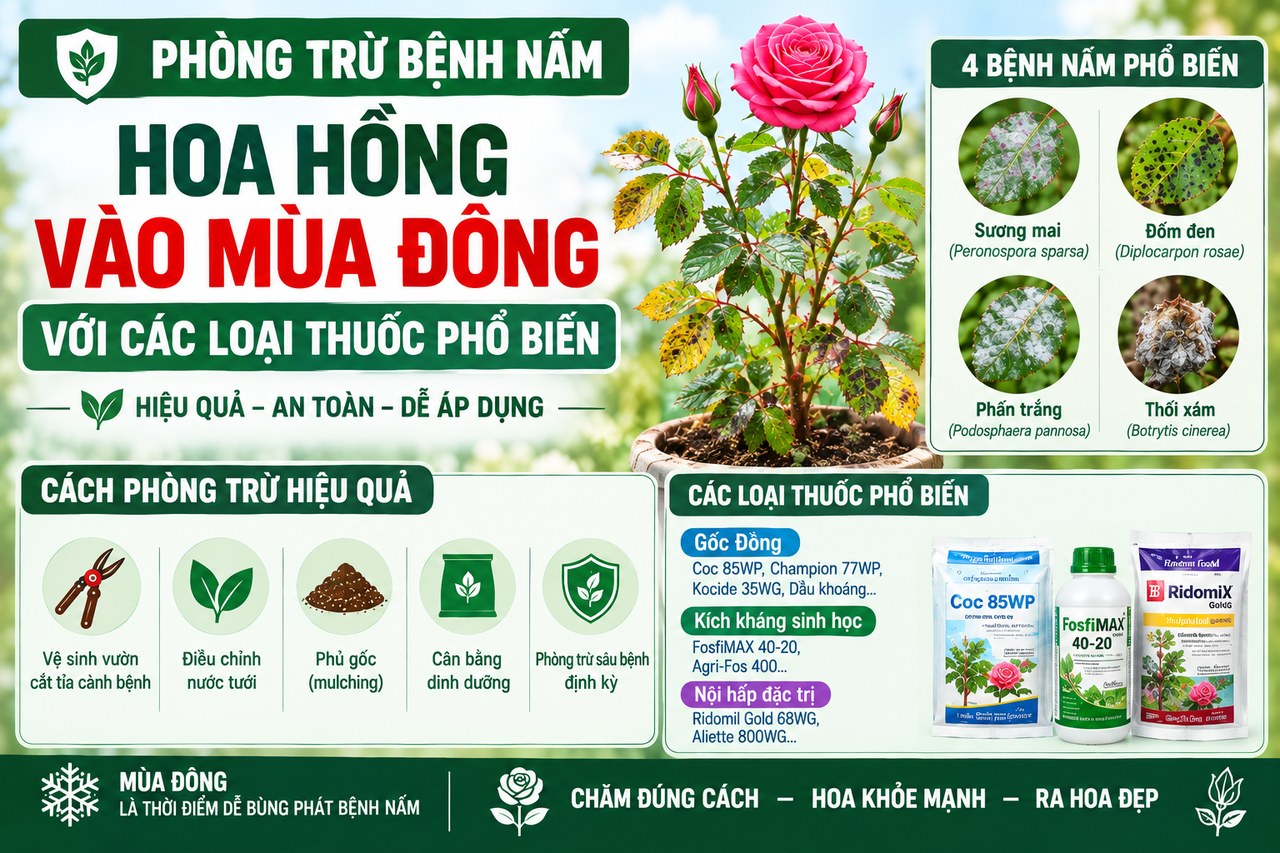
During winter and prolonged cool, damp spells, elevated air humidity combined with persistent overnight dew creates an ideal microclimate for both true fungi and fungus-like organisms (Oomycetes) to surge on roses.
The four most destructive winter pathogens—downy mildew (Peronospora sparsa), black spot (Diplocarpon rosae), powdery mildew (Podosphaera pannosa), and botrytis blight (Botrytis cinerea)—survive harsh cold as dormant mycelium or thick-walled oospores hidden inside cane bark, around root crowns, and in fallen leaf litter.
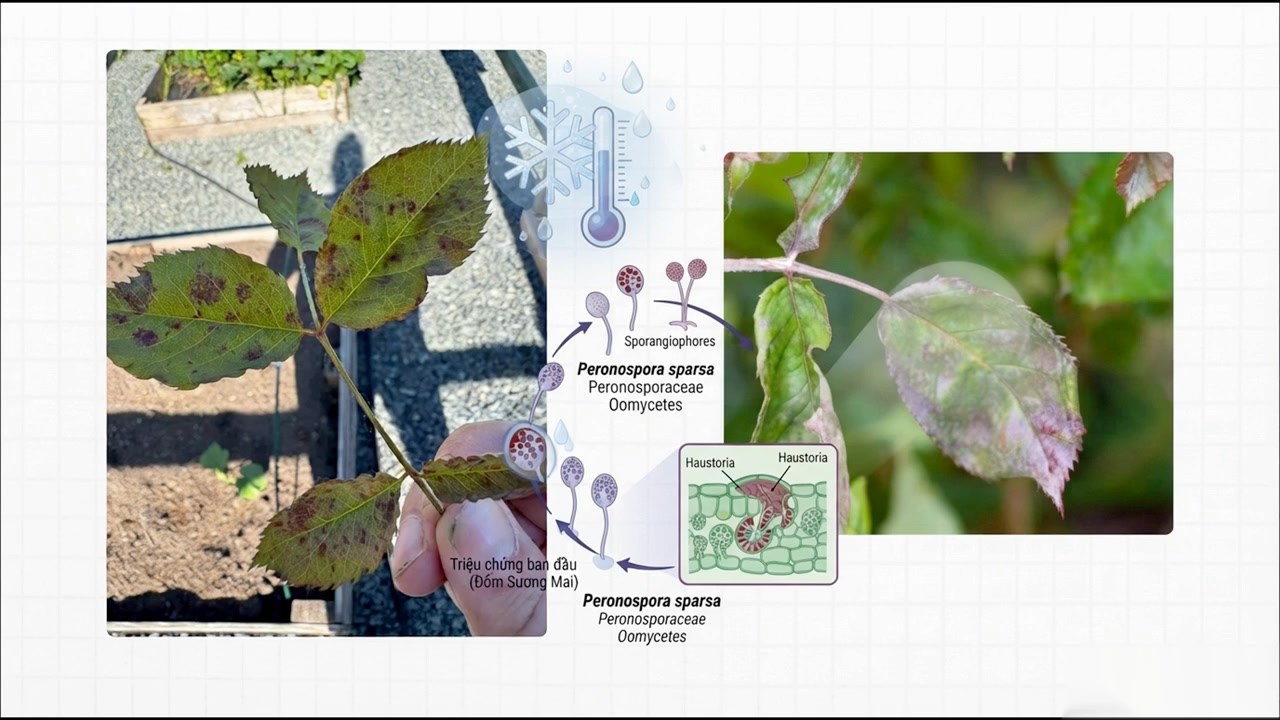
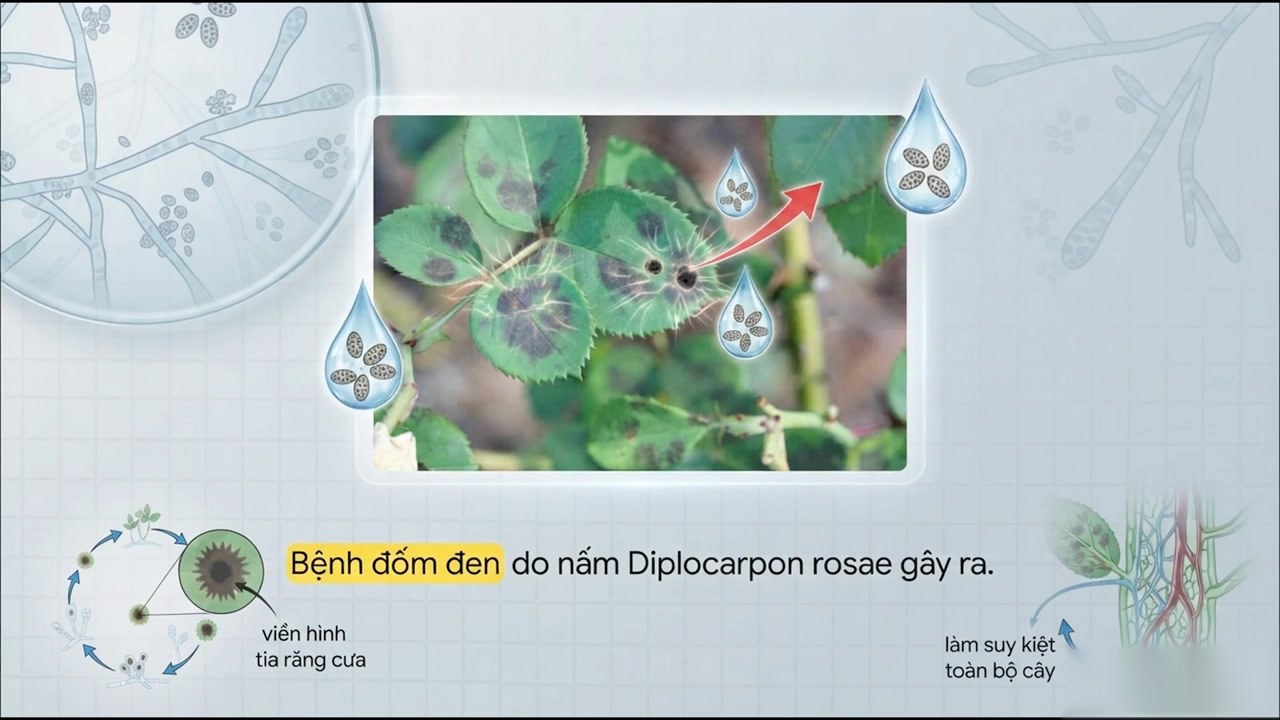
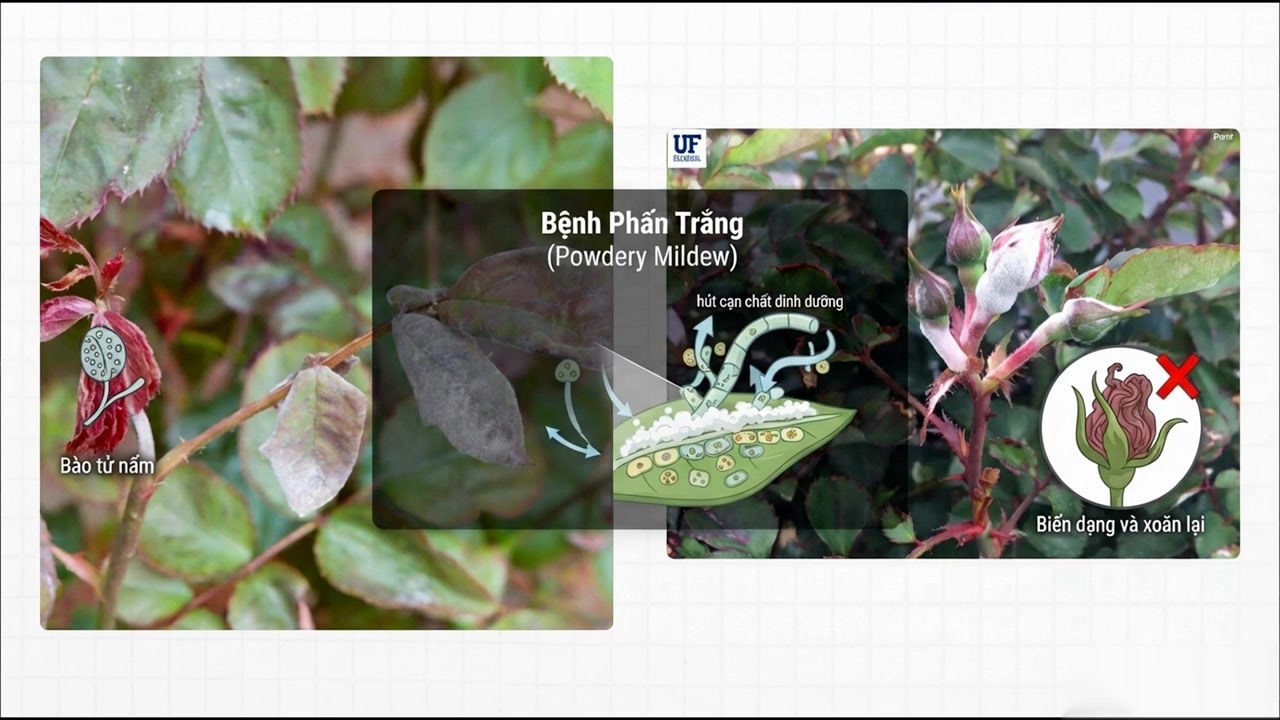

Reliable winter disease control requires combining cultural sanitation, biological resistance elicitors, and disciplined FRAC-code fungicide rotation.
1. Winter Cultural Practices and Garden Sanitation
Before reaching for a sprayer, sanitizing the plant's immediate environment eliminates overwintering inoculum at the source:
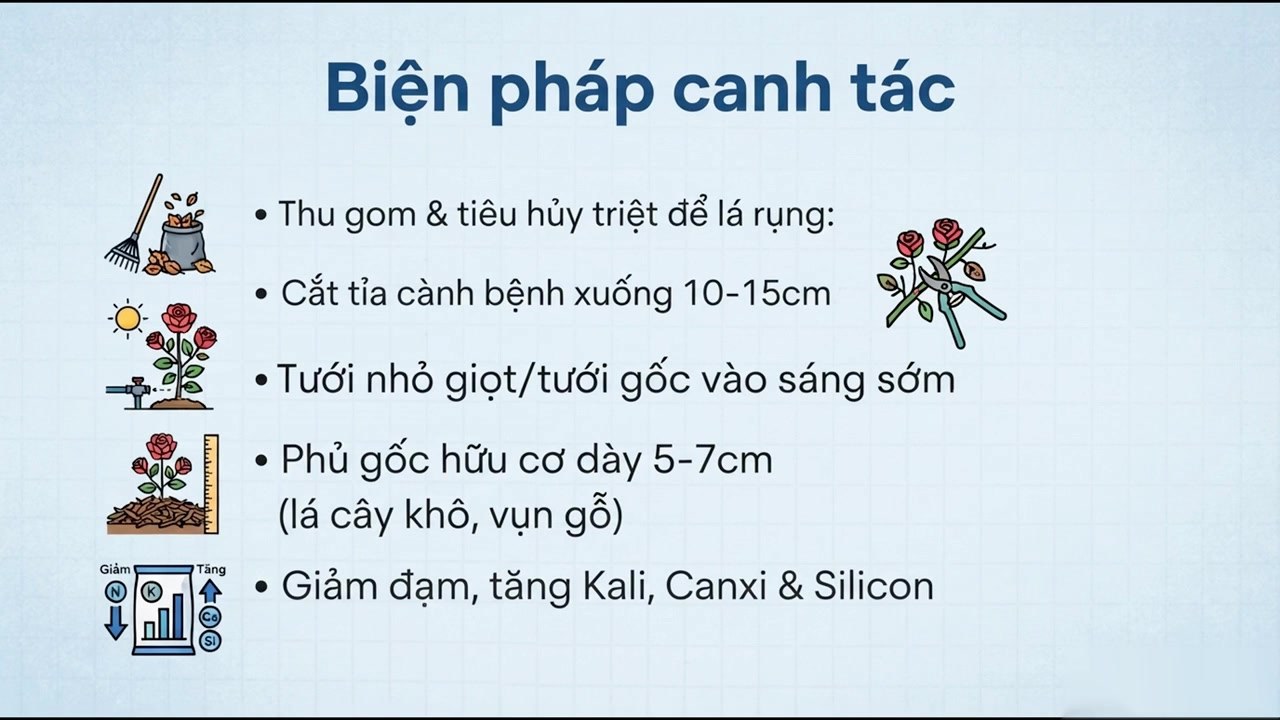
- Pruning and debris cleanup: Collect and destroy 100% of fallen leaves beneath rose bushes—never toss diseased foliage into home compost piles, which rarely reach spore-killing temperatures. Prune old or infected canes 10–15 cm below visible lesions.
- Irrigation management: Never overhead-water in the late afternoon or evening, as overnight leaf wetness triggers explosive spore germination. Switch to drip irrigation or morning root-zone watering.
- Mulching: Spread a 5–7 cm organic mulch layer (treated wood chips, bark, or clean dry leaves) around the root zone—keeping mulch slightly away from the stem collar—to prevent rain splash from propelling soil-borne spores onto lower leaves.
- Balanced winter nutrition: Cut back on high-nitrogen fertilizers during winter, since lush, soft growth is easily pierced by fungal hyphae. Supplement Potassium (K), Calcium (Ca), and Silicon (Si) to thicken and reinforce epidermal cell walls.
2. Six Commercial Fungicide Groups for Winter Rose Care
All per-plant volumes below are calibrated for one mature bush rose requiring roughly 25–50 mL of spray solution to thoroughly coat both leaf surfaces and canes:
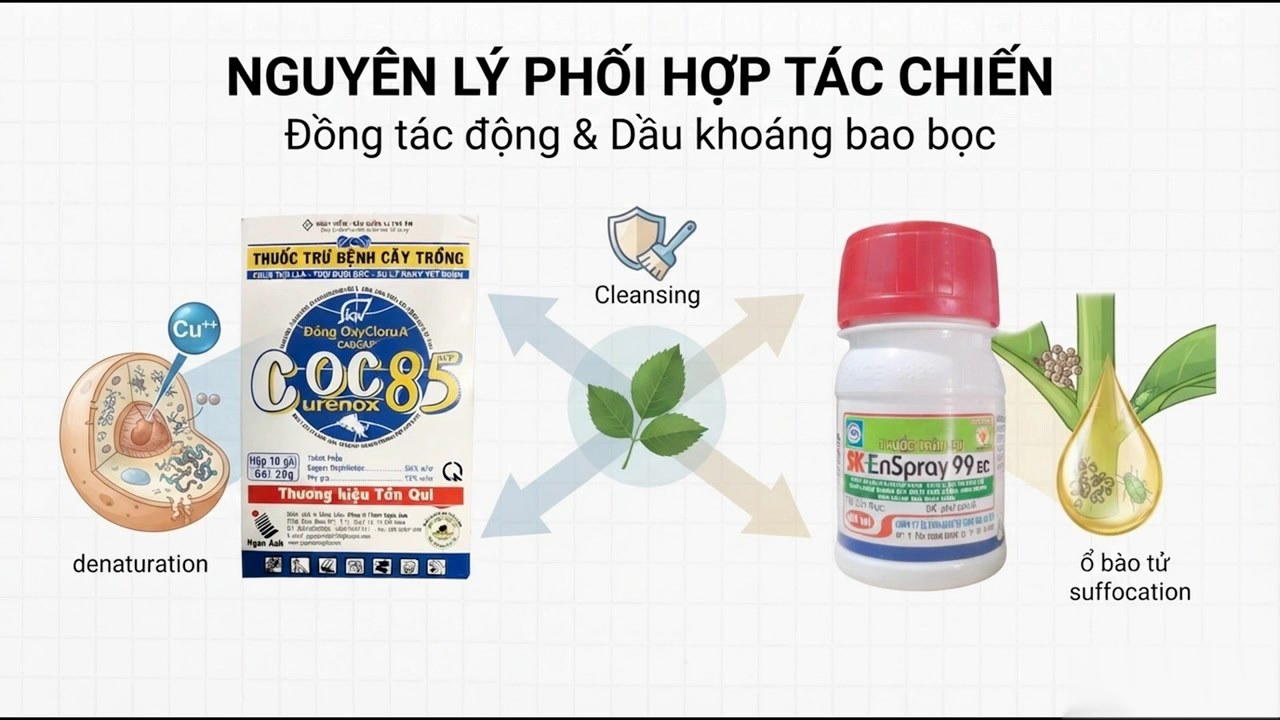
A. Early-Winter Dormant Wash (Copper + Mineral Oil)
- Common products: Coc 85WP (Copper Oxychloride 85%), Champion 77WP / Kocide 35WG (Copper Hydroxide), tank-mixed with SK Enspray 99EC Mineral Oil.
- Mode of action: Multi-site Copper denatures fungal proteins to scrub away overwintering stem rot, black cane lesions, and anthracnose. Mineral oil improves surface coverage while suffocating dormant spore clusters, pest eggs, and scale/aphids tucked into leaf axils and bark crevices.
- Dilution & per-plant rate: Mix 10–20 g Coc 85WP (or Champion/Kocide) + 15–20 mL SK Enspray per 8–10 L water (1.25–2.5 g Copper + 2 mL oil per liter). Spray 25–50 mL per bush, coating canes and base thoroughly.
- Schedule: Apply 1–2 times at the start of winter immediately after sanitation pruning.
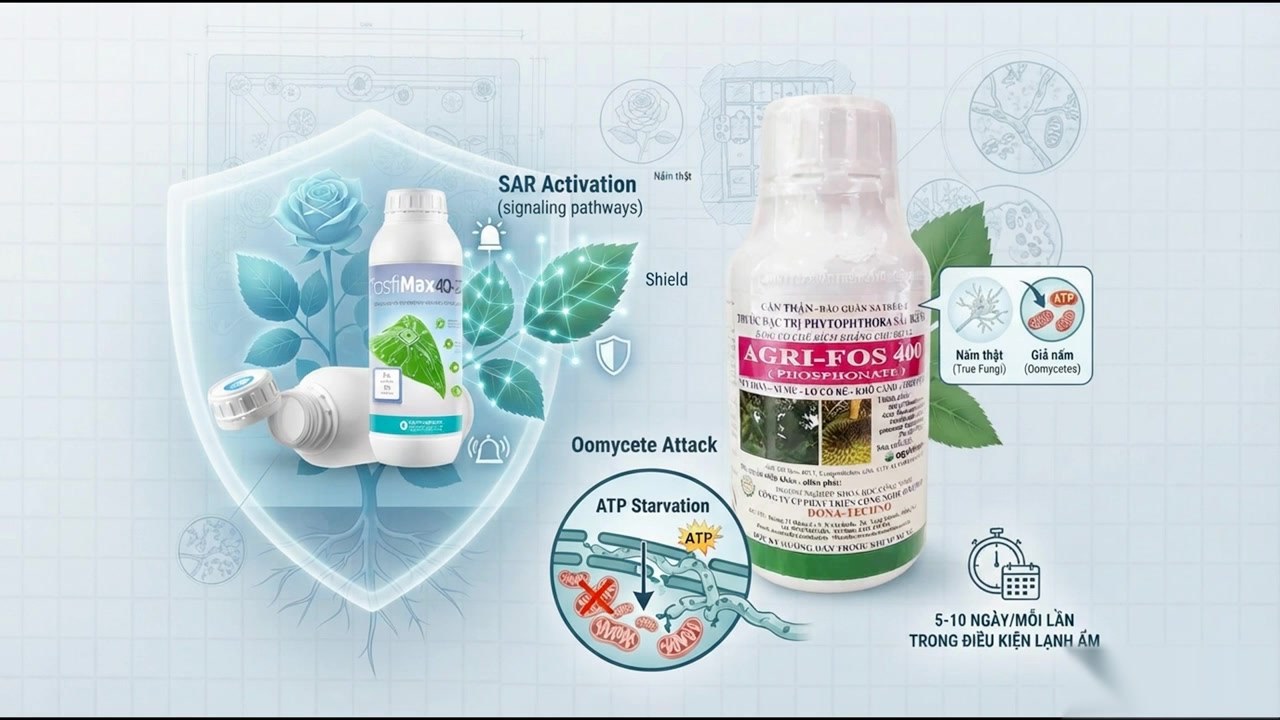
B. Systemic Resistance Activators & Dual-Action Phosphonates (Downy Mildew & Root Rot)
- Common products: FosfiMAX 40-20 or Agri-Fos 400 (Potassium Phosphite / Phosphonate).
- Mode of action:
- Direct strike: Disrupts oxidative phosphorylation in Oomycete water molds (Peronospora sparsa), cutting off ATP energy so downy mildew halts rapidly.
- Indirect SAR activation: Triggers the Salicylic Acid (SA) pathway and Systemic Acquired Resistance (SAR), prompting roses to synthesize defense enzymes (POD, PPO, Chitinase, β-1,3-glucanase) that hydrolyze fungal cell walls.
- Dilution & per-plant rate: 1.0–2.5 mL / L water (16–40 mL / 16 L tank). Foliar spray 25–50 mL/plant or root drench 100–200 mL/plant.
- Schedule: Every 5–10 days throughout cold, damp weather.
C. Systemic Oomycete Specialists (Downy Mildew & Stem Rot)
- Common products: Ridomil Gold 68WG (Metalaxyl-M 40 g/kg + Mancozeb 640 g/kg) and Aliette 800WG (Fosetyl Aluminium 800 g/kg).
- Mode of action:
- Ridomil Gold 68WG: Metalaxyl-M blocks fungal RNA Polymerase I while Mancozeb shields the leaf exterior, rapidly halting downy mildew, stem rot, and leaf blight.
- Aliette 800WG: True bidirectional systemic (moves both leaf-to-root and root-to-leaf), converting into phosphonic acid to stop downy mildew, root rot, and boost host immunity.
- Dilution & per-plant rate: 40 g / 16 L water (2.5 g/L) for either product; apply 25–50 mL/plant.
- Schedule: Every 7–10 days under heavy pressure. Strict limit: Never spray Ridomil Gold more than 2 times in a row to prevent resistance.

D. Systemic Fungicides for Black Spot, Powdery Mildew, and Rust
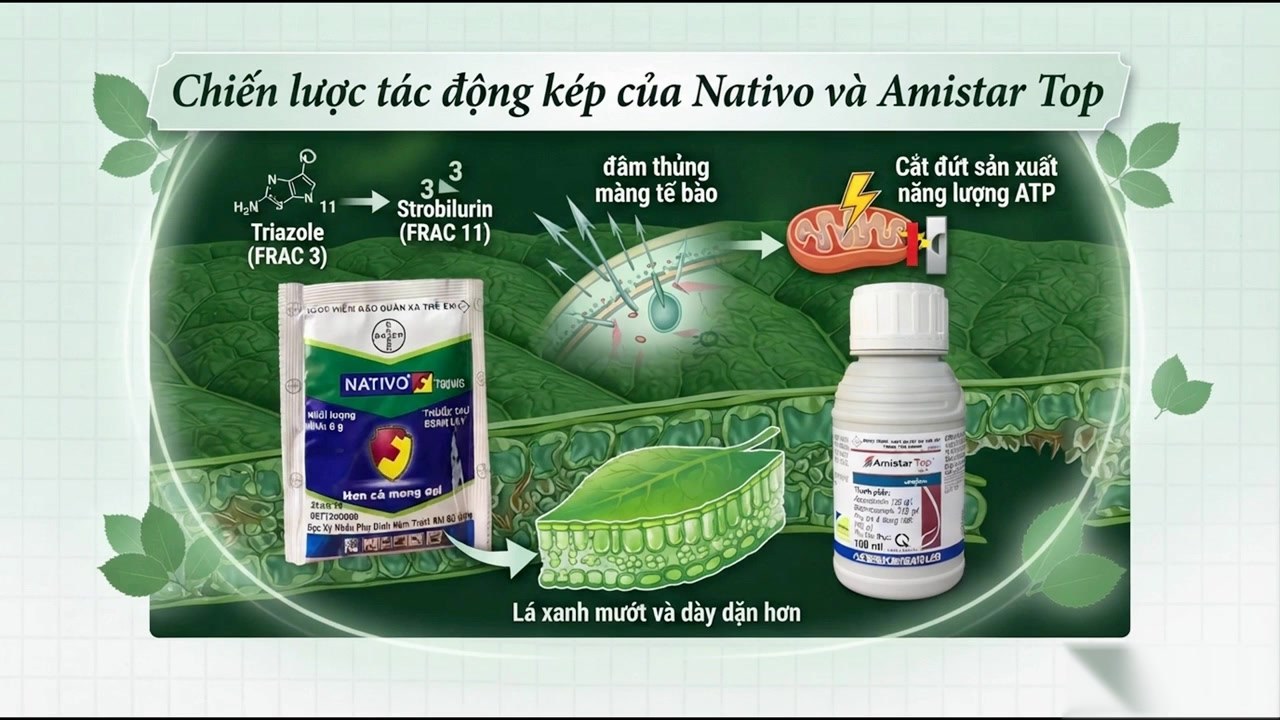
- Common products: Anvil 5SC (Hexaconazole), Score 250EC (Difenoconazole), Nativo 750WG (Tebuconazole + Trifloxystrobin), Amistar Top 325SC (Azoxystrobin + Difenoconazole), and Tilt Super 300EC (Propiconazole + Difenoconazole).
- Mode of action:
- Anvil 5SC & Score 250EC (Triazoles – FRAC 3): Block ergosterol biosynthesis to cure and protect against black spot, rust, pink disease, and leaf spots.
- Nativo 750WG & Amistar Top 325SC (FRAC 3 + FRAC 11): Combine membrane disruption with mitochondrial ATP blockade while keeping foliage deep green and thick.
- Dilution & per-plant rate:
- Anvil 5SC: 20 mL / 16 L (1.25 mL/L).
- Score 250EC / Amistar Top 325SC: 10–15 mL / 16 L (0.5–1.0 mL/L).
- Nativo 750WG: 6–10 g / 16 L (0.4–0.6 g/L).
- Apply 25–50 mL/plant.
- Schedule: Every 7–10 days; rotate FRAC groups strictly and never spray Anvil or Score more than 2 times consecutively.
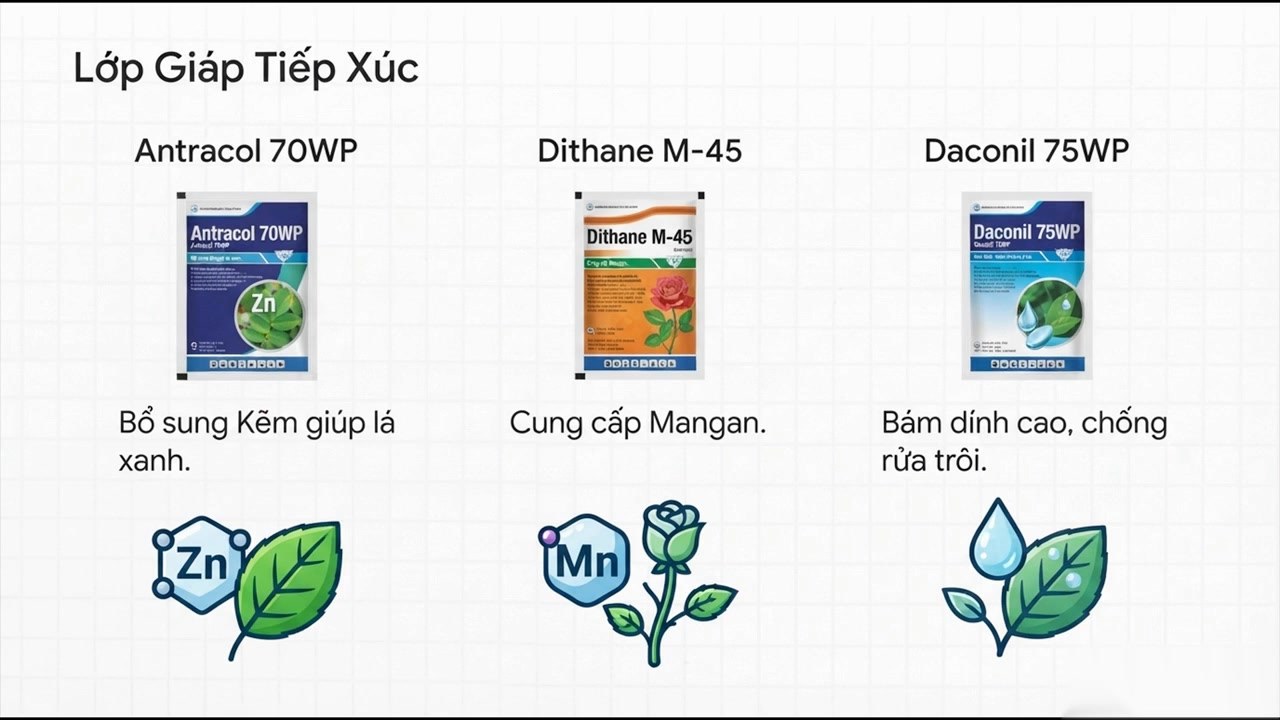
E. Rainfast Multi-Site Contact Shields
- Common products: Antracol 70WP (Propineb), Dithane M-45 80WP (Mancozeb), and Daconil 75WP (Chlorothalonil).
- Mode of action: Forms a protective external film that disrupts multiple enzymes and depletes fungal Glutathione on spore contact. Antracol and Dithane M-45 also supply Zinc (Zn) and Manganese (Mn), while Daconil 75WP provides outstanding rainfastness during cold winter storms.
- Dilution & per-plant rate: 25–30 g / 16 L water (1.5–2.0 g/L); apply 25–50 mL/plant.
- Schedule: Every 7–10 days or ahead of cold rain fronts.
F. Biological Fungicides & Structural Minerals
- Common products: Bio-B / Serenade Garden (Bacillus subtilis), Chitosan, and Silicon foliar supplements.
- Mode of action: Bacillus subtilis secretes lipopeptides that lyse black-spot and powdery-mildew spore membranes, while Chitosan and Silicon build a reinforced Silicon–Cutin double barrier that blocks fungal appressoria from penetrating the leaf.
- Rate & schedule: Mix per product label, spray 25–50 mL/plant every 5–7 days.
3. Master Winter Dosage & Schedule Table (Per Rose Bush)
| Product | Active Ingredient | Primary Action | Dilution / 1 L | Volume / Plant | Application Interval |
|---|---|---|---|---|---|
| Coc 85WP (+ SK Enspray) | Copper Oxychloride 85% | Dormant cleanup; stem rot, black cane, overwintering spores | 1.25–2.5 g Coc 85 + 2 mL oil | 30–50 mL | 1–2 early-winter sprays after pruning |
| FosfiMAX 40-20 / Agri-Fos 400 | Potassium Phosphite | SAR immunity activation + Oomycete downy mildew control | 1.0–2.5 mL | 25–50 mL spray / 100–200 mL drench | Every 5–10 days |
| Ridomil Gold 68WG | Metalaxyl-M + Mancozeb | Acute downy mildew, stem rot, leaf blight knockdown | 2.5 g (40 g/16 L) | 25–50 mL | Every 7–10 days (max 2 consecutive) |
| Aliette 800WG | Fosetyl Aluminium 800 g/kg | Bidirectional systemic for downy mildew, root rot, SAR | 2.5 g (40 g/16 L) | 25–50 mL | Every 7–10 days |
| Anvil 5SC / Score 250EC | Hexaconazole / Difenoconazole | Black spot, rust, pink disease, leaf spot | 1.25 mL Anvil / 0.5–1.0 mL Score | 25–50 mL | Every 7–10 days (rotate FRAC 3) |
| Nativo 750WG / Amistar Top | Tebuconazole + Trifloxystrobin / Azoxystrobin + Difenoconazole | Broad-spectrum black spot, powdery mildew, anthracnose + green foliage | 0.4–0.6 g Nativo / 0.5–1.0 mL Amistar Top | 25–50 mL | Every 7–10 days |
| Antracol 70WP / Dithane M-45 | Propineb / Mancozeb | Multi-site contact shield + Zn/Mn micronutrients | 1.5–2.0 g | 25–50 mL | Every 7–10 days (before cold rain) |
| Daconil 75WP | Chlorothalonil 750 g/kg | High-adhesion rainfast shield for black spot & powdery mildew | 1.5–2.0 g | 25–50 mL | Every 7–10 days |
| Bio-B / Serenade Garden | Bacillus subtilis | Biological lipopeptide spore control for black spot & powdery mildew | Per label | 25–50 mL | Every 5–7 days |
4. Five-Round Winter FRAC Rotation Protocol
To prevent fungicide resistance throughout winter, never spray the same FRAC code more than twice consecutively and rotate systematically through these five rounds:
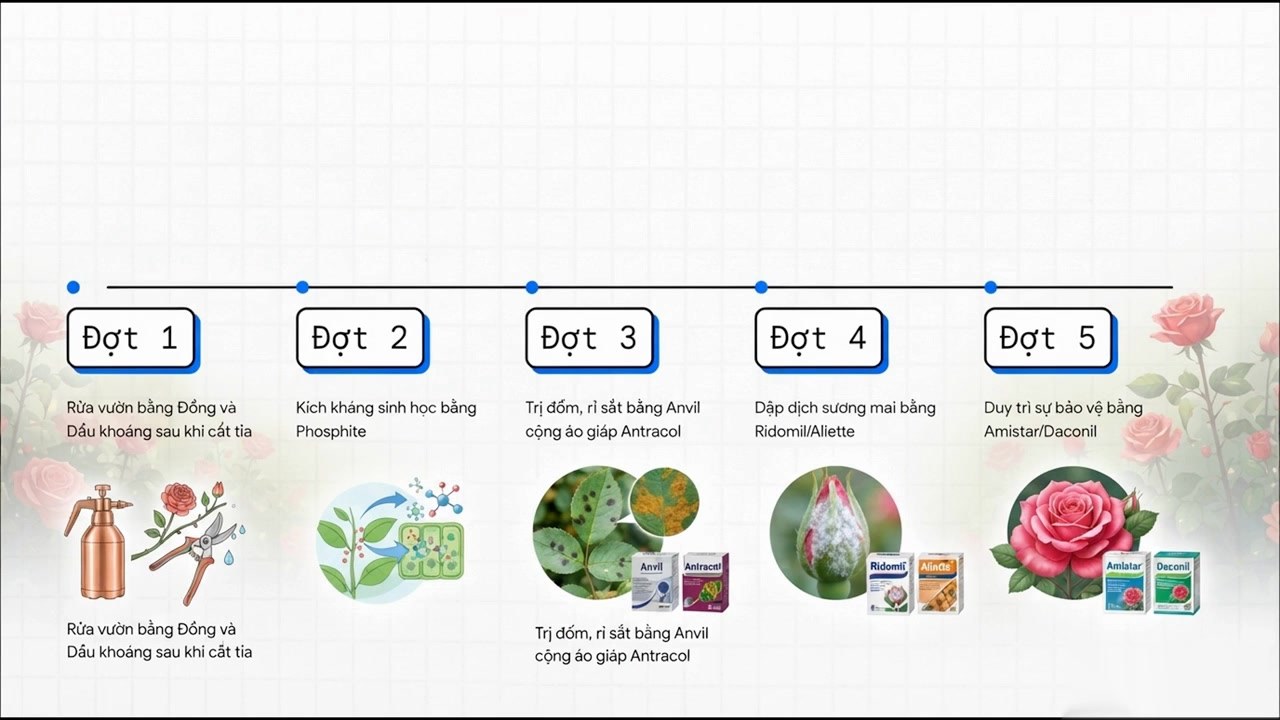
- Round 1 (Early Winter – Post-Pruning): Spray Coc 85WP (FRAC M01) or Champion 77WP plus SK Enspray 99EC thoroughly across canes and root crowns to eliminate dormant spores and pests.
- Round 2 (SAR Priming & Routine Defense): Foliar spray or root drench FosfiMAX 40-20 (FRAC 33) paired with Chitosan / Silicon to activate systemic immunity and reinforce cell walls.
- Round 3 (First Signs of Black Spot, Rust, or Pink Disease): Tank-mix Anvil 5SC (FRAC 3) or Score 250EC with contact shield Antracol 70WP (FRAC M03) for simultaneous internal cure and external protection.
- Round 4 (Cold, Wet Downy Mildew Surge): Switch to Ridomil Gold 68WG (FRAC 4 + M03) or Aliette 800WG (FRAC 33) specifically targeting Peronospora sparsa.
- Round 5 (Maintenance & Biological Rotation): Rotate to Amistar Top 325SC (FRAC 11 + FRAC 3), Daconil 75WP (FRAC M05), or biological Bio-B (FRAC BM 02) to keep the winter canopy clean and vigorous.