In horticulture and rose growing, moving a plant from open garden ground into a container does not merely change its "address"—it transforms its entire survival ecosystem. Understanding the physical, chemical, and biological dynamics separating these two worlds is what elevates container rose care from guesswork to precision science.
1. The Open World (Natural Soil) vs. The Closed World (Container)
Natural garden soil behaves like a vast "ocean": it provides immense thermal buffering, stable subsoil moisture, and unrestricted space for rose roots to explore meters outward in search of water and minerals.
A container, by contrast, is a closed, unforgiving "survival box." Inside a pot, roots are mechanically isolated, exposed to rapid day-night temperature swings, and confined to a tiny, finite substrate volume.
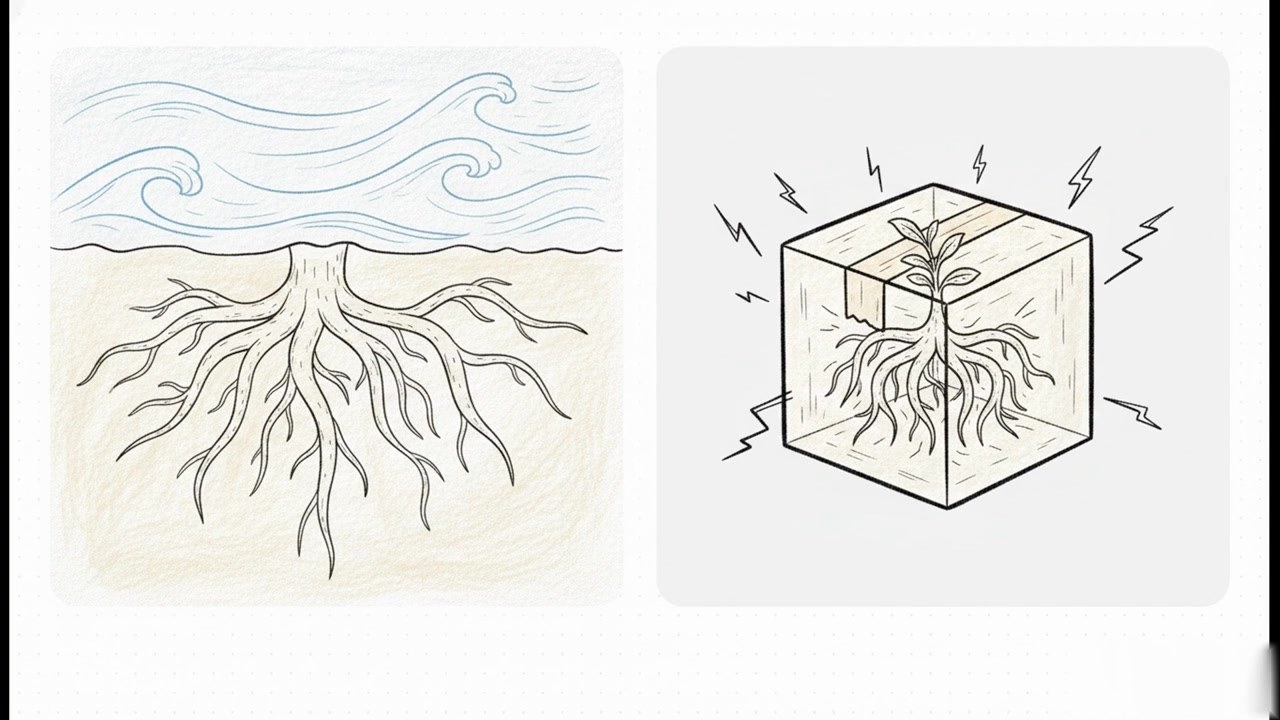
Core Principle: "Growing in containers is the art of managing constraints." To help roses thrive rather than merely survive inside this box, growers must master the five hidden dynamics operating beneath the potting surface.
2. Physical and Mechanical Dynamics: The Battle for Air and Water
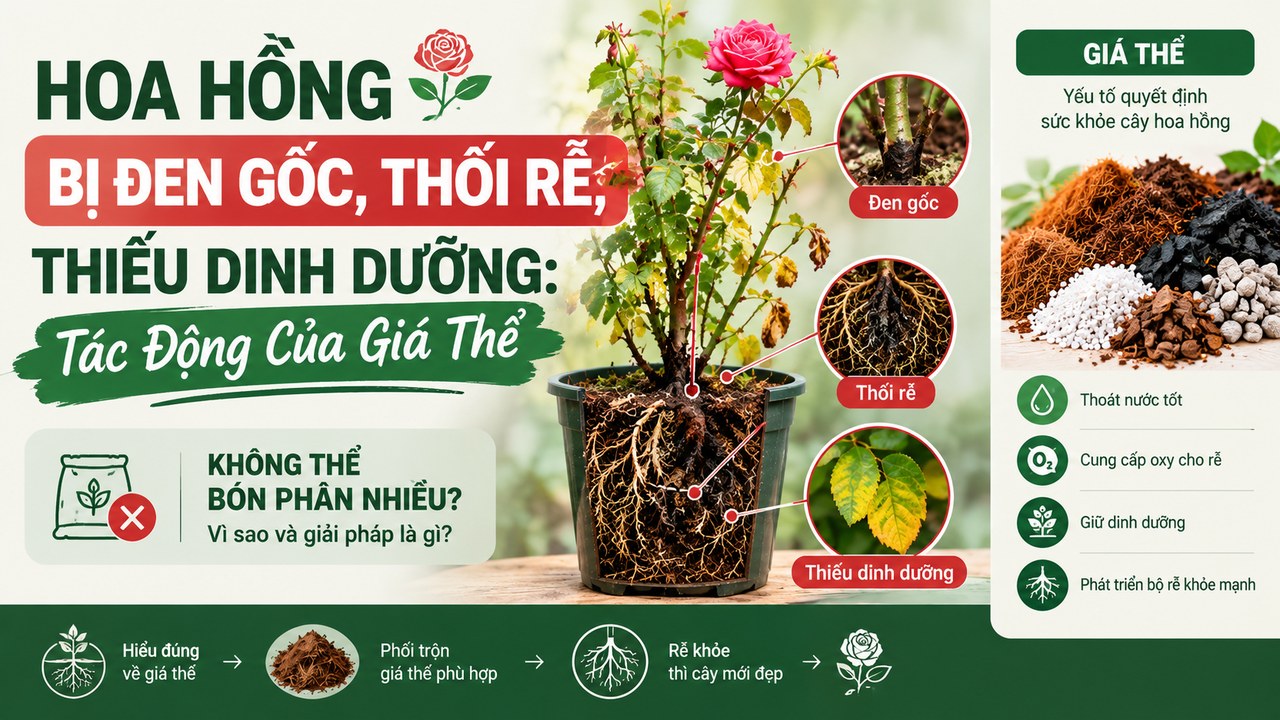
The most common beginner mistake is filling pots with native garden dirt. Once confined inside rigid container walls, garden soil structure rapidly collapses and compacts, suffocating the root system.
2.1. Bulk Density and Porosity
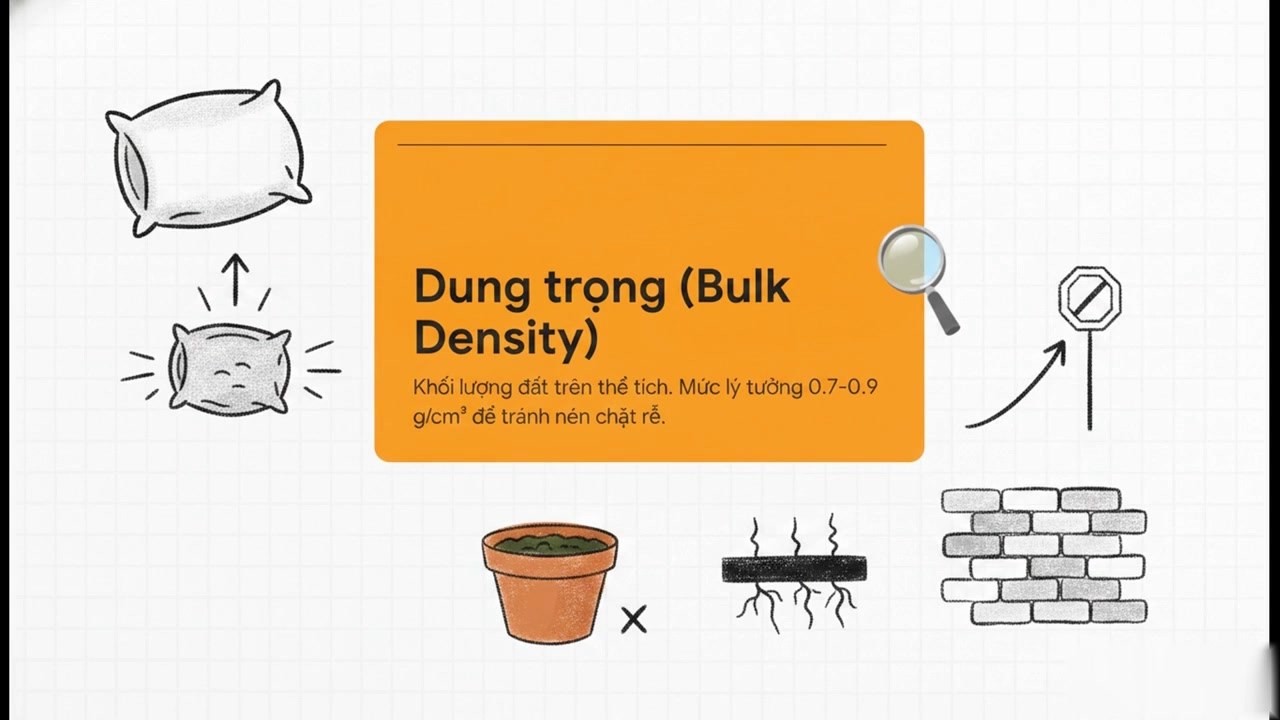
- Bulk Density: Picture a fluffy pillow. Compress it tightly and it becomes heavy and dense—that is high bulk density. For container substrates, ideal bulk density sits between 0.7 and 0.9 g/cm³. Above this threshold, media compacts (compacted soil / root restriction) and young roots cannot physically penetrate forward.
- Porosity: The microscopic network of tunnels inside the mix. A high-performing potting blend balances large macropores holding oxygen for root respiration with fine micropores storing plant-available water.
2.2. The Perched Water Table (PWT) Phenomenon
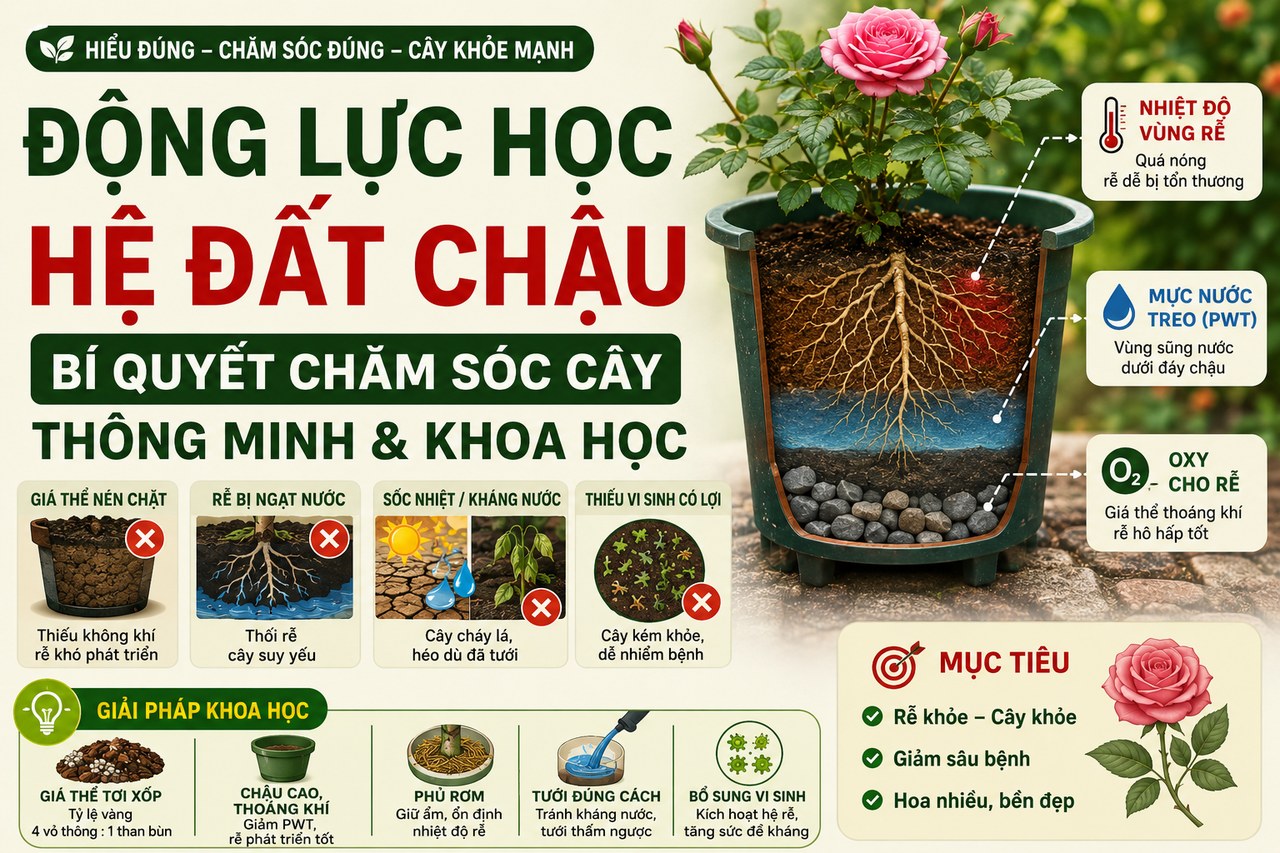
The Perched Water Table is the single greatest physical challenge of container gardening. Imagine soaking a kitchen sponge and holding it upright: water never drains completely out—a fully saturated band always remains trapped at the bottom.
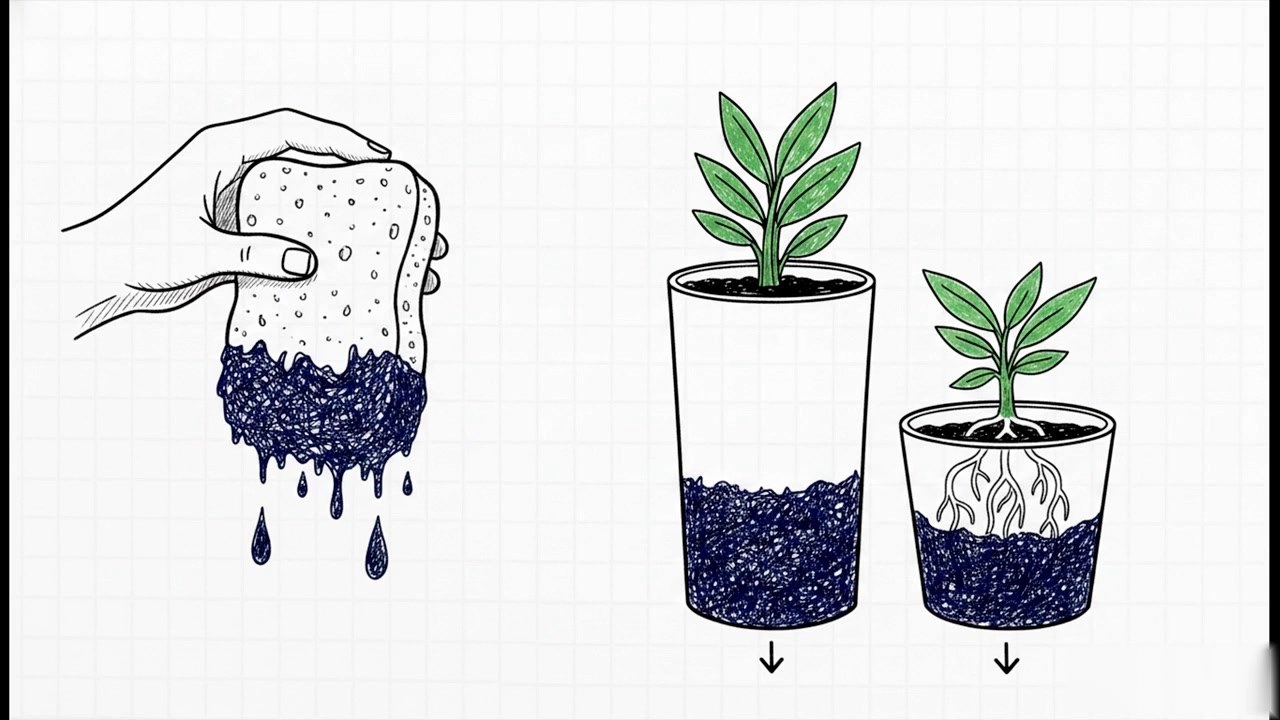
- A PWT always forms at the bottom of a pot regardless of how large the drainage holes are.
- Pot height matters decisively: Because PWT height is determined by substrate fineness rather than pot height, shorter pots have a much higher percentage of their total volume permanently waterlogged, sharply raising the risk of waterlogging and root rot. Taller pots push the saturated zone farther away from primary roots.
2.3. Decoding the Drainage Layer (PLOS One 2025) and the 4:1 Golden Ratio
For years, adding gravel to the bottom of pots was dismissed as a myth that creates a "capillary barrier" raising the PWT. However, landmark research published in PLOS One 2025 (Rowe) provides a far more nuanced scientific reality:
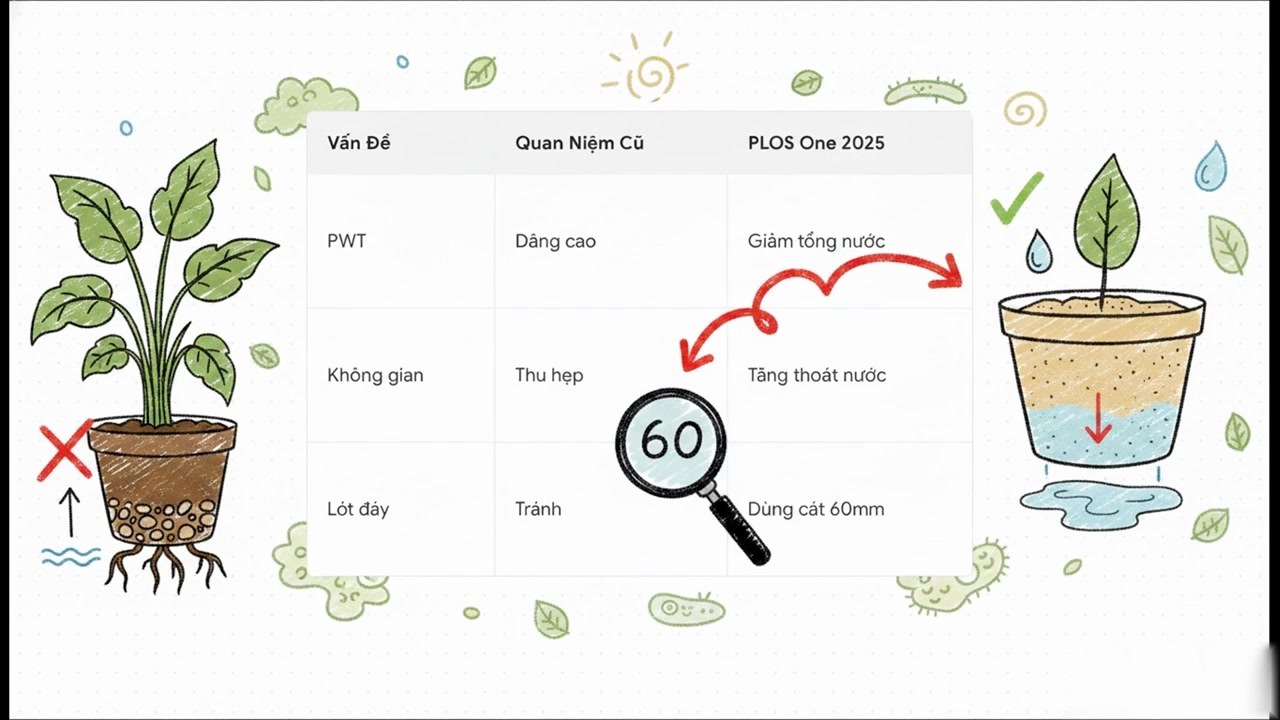
| Criterion | Old Convention on Pot Drainage Layers | New Research Findings (PLOS One 2025 — Rowe) |
|---|---|---|
| Impact on PWT | Always raises the saturated PWT dangerously | In soilless organic mixes (coir, peat): Actually reduces total excess water retained in the pot |
| In Loam-Based Soil | Wastes useful rooting volume | Barely alters total water retention; in soilless systems it measurably accelerates drainage |
| Expert Recommendation | Avoid bottom drainage layers completely | A 60 mm layer of coarse sand is the most effective drainage base across all substrate types |
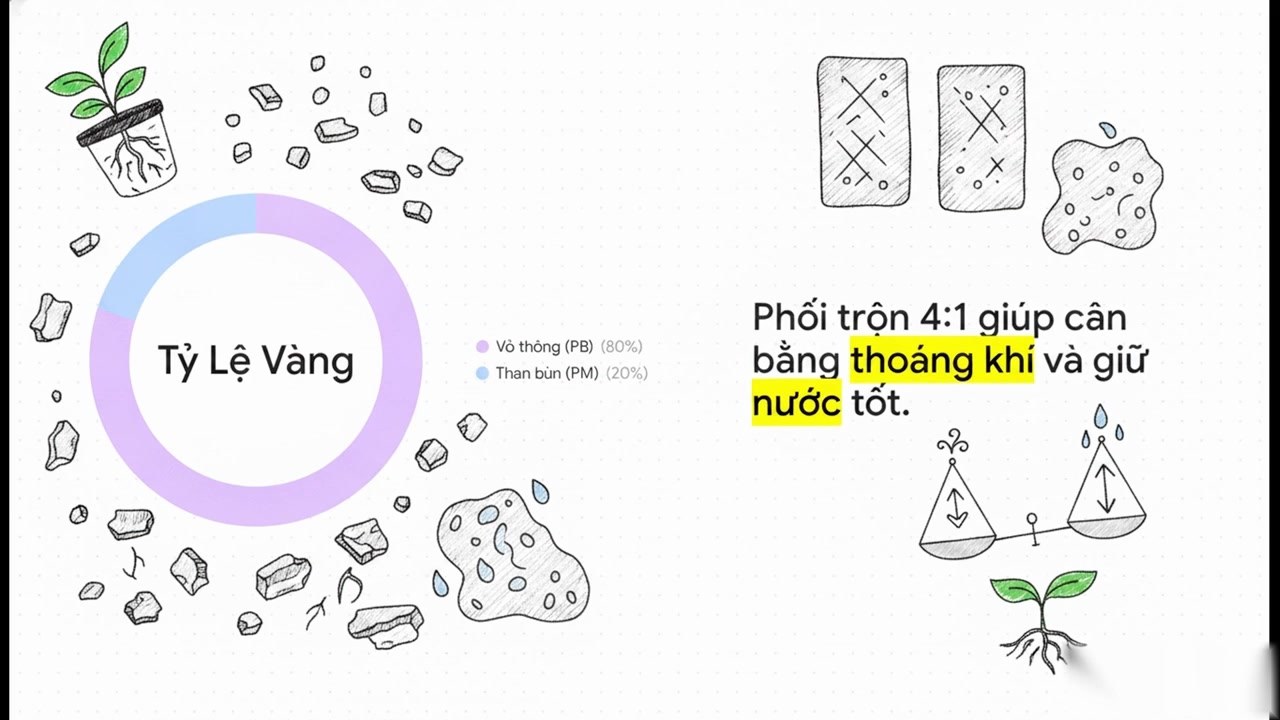
Alongside drainage design, Witcher et al. (2020) identified the "Golden Ratio" for container substrates: 4 parts Pine Bark (80%) : 1 part Peat Moss (20%). Pine bark provides durable, crush-resistant aeration, while peat moss supplies Easily Available Water (EAW)—producing dramatically greater plant biomass than pine bark alone.
3. Root Zone Temperature (RZT) Dynamics
Roots are acutely sensitive to thermal extremes yet lack any active self-cooling mechanism—unlike leaves, which transpire through stomata to shed heat, roots sit completely exposed inside thin container walls.
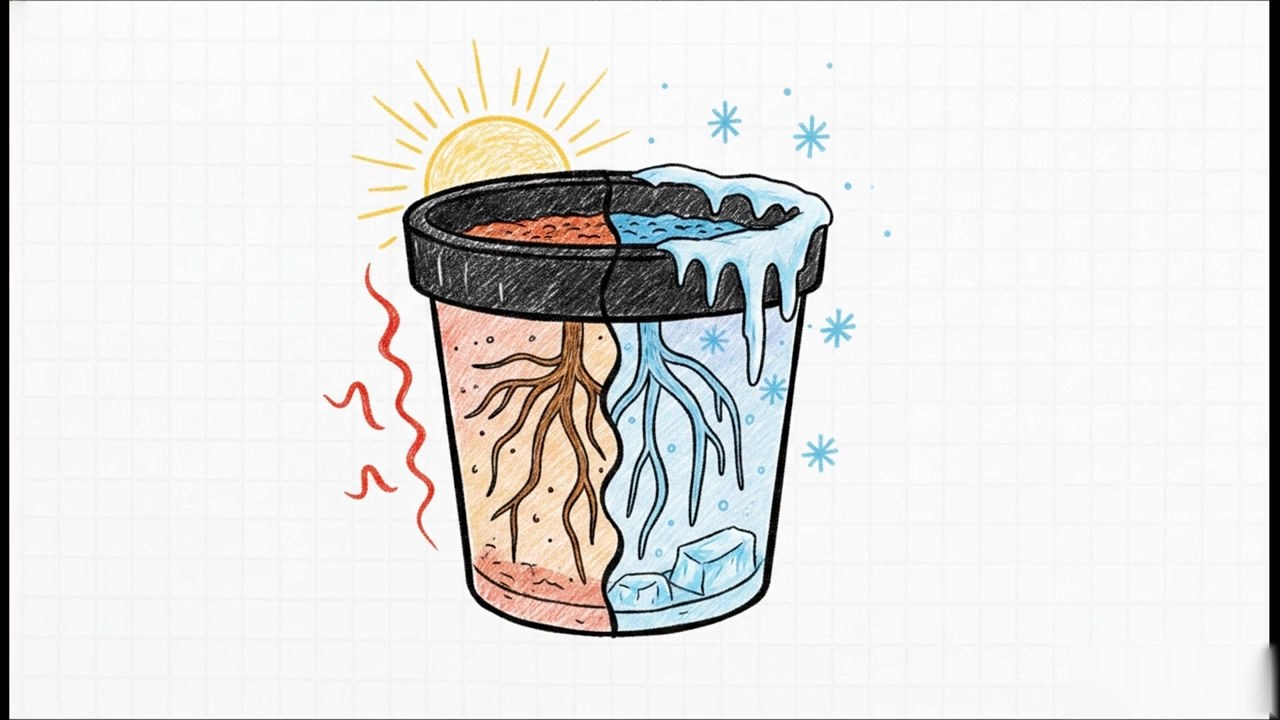
- Black Plastic Pot Warning: Like wearing a black shirt in midday sun, black plastic containers absorb solar radiation and drive Root Zone Temperature (RZT) 5–10°C hotter than ambient air.
- Critical Thermal Thresholds:
- Above 38°C: Silently suppresses physiological metabolism and reduces photosynthesis.
- 46°C – 57°C: Root cell proteins denature, causing cell death after just 30 minutes of exposure.
- Below 15°C: "Paralyzes" root membrane fluidity, slashing water and nutrient transport efficiency by more than 50%.
Proven RZT Solutions:
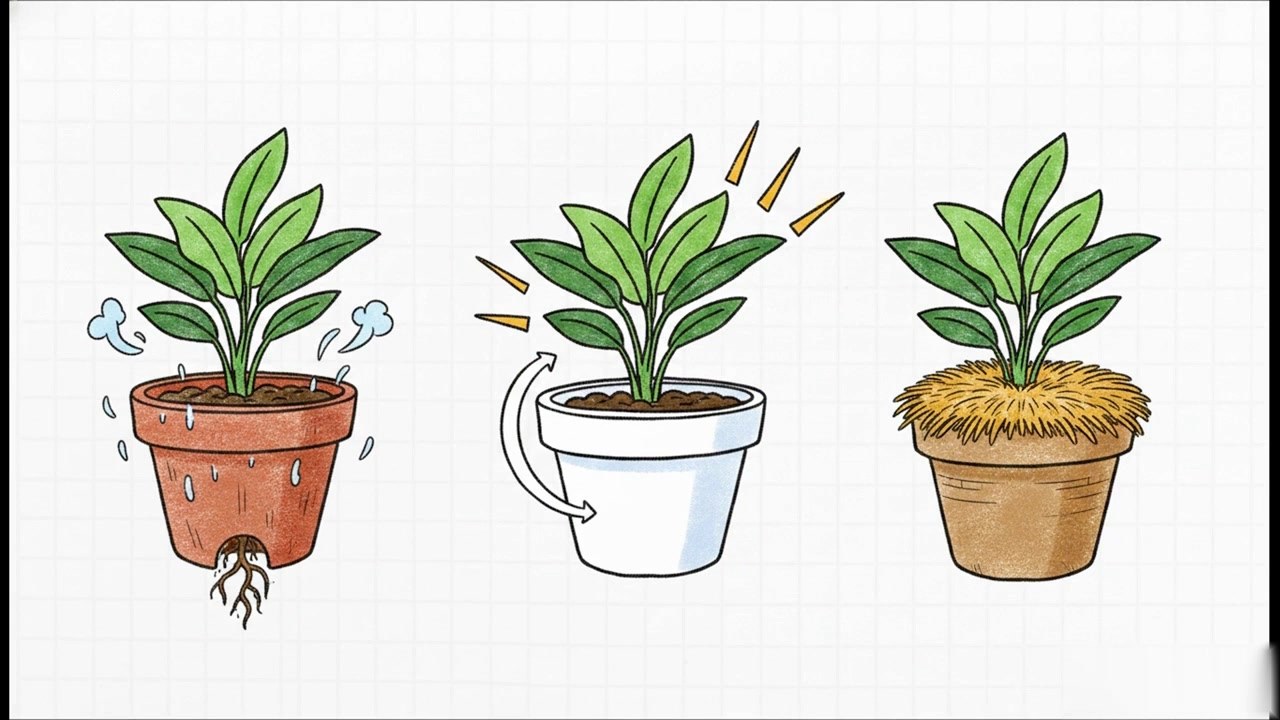
- Use fabric grow bags or terracotta clay pots: evaporative cooling ("sweating") through porous walls lowers RZT by 5–8°C.
- Choose white or tan containers to reflect solar heat, and elevate pots off scorching stone or concrete patios.
- Apply organic mulch (straw or fine bark) across the soil surface as a thermal helmet buffering radiant heat.
4. Container Hydrology, Hydrophobic Channeling, and Leaching
Small soil volumes combined with frequent watering leach Nitrate () rapidly. Worse, when organic mixes (coco coir or peat moss) dry out completely, they turn Hydrophobic (water-repellent).
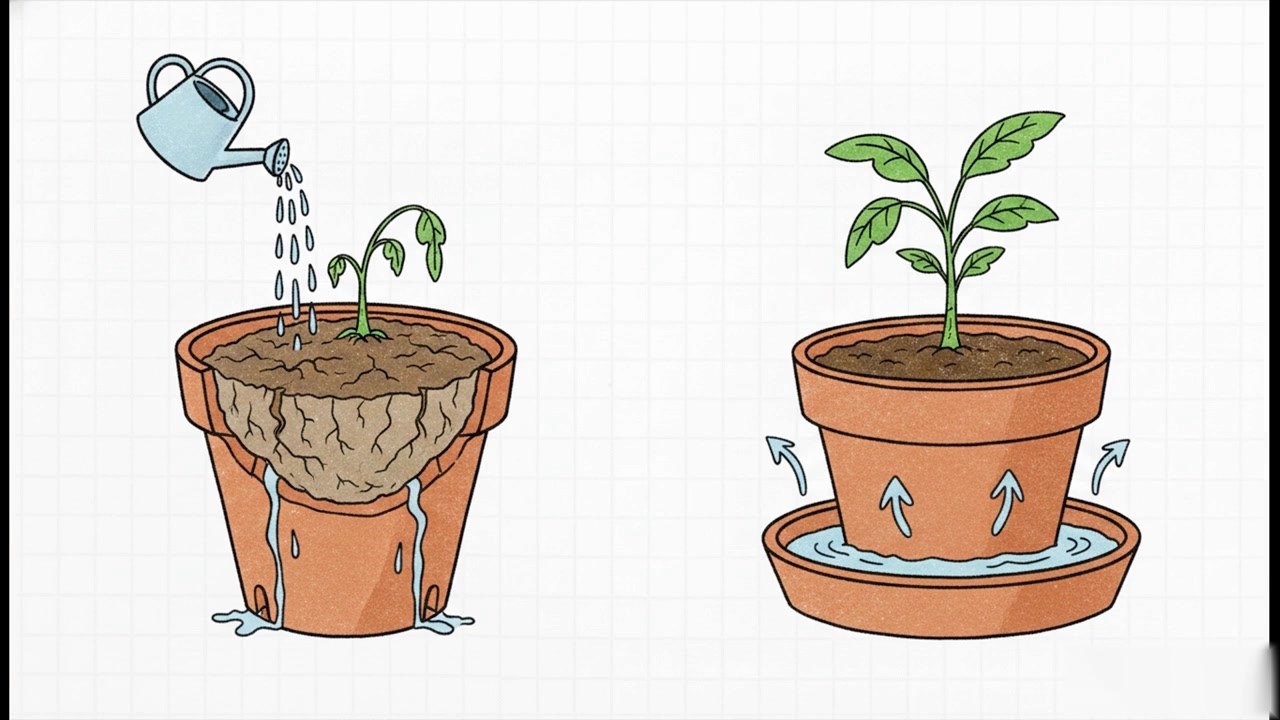
The Hidden Trap — "Channeling": As dry substrate shrinks away from the container wall, it opens a perimeter gap. Top-applied water follows the path of least resistance—pouring straight down the edge and out the drainage holes without wetting the root core. Roses suffer drought stress and wilt even immediately after watering.
Practical Fixes:
- Bottom Watering (Reverse Capillary Soak): Submerge the container in a tray of clean water for 15–30 minutes so moisture wicks upward, breaking the waxy hydrophobic film completely.
- Leach-Proof Feeding: Use polymer-coated Controlled-Release Fertilizers (CRF) to deliver steady nutrition despite frequent watering.
5. Biological Isolation and Excess Phosphorus Locking Strigolactone
In open nature, plants interconnect through the Common Mycorrhizal Network (CMN)—an underground "internet" sharing nutrients and pest-defense signals. Containerized roses are "unplugged" from this network, leaving them biologically isolated.
A widespread mistake among beginners is over-applying high-Phosphorus () fertilizers. When soluble spikes inside a pot, the rose deliberately shuts down Strigolactone—the root-exuded signaling hormone that invites symbiotic mycorrhizal fungi.
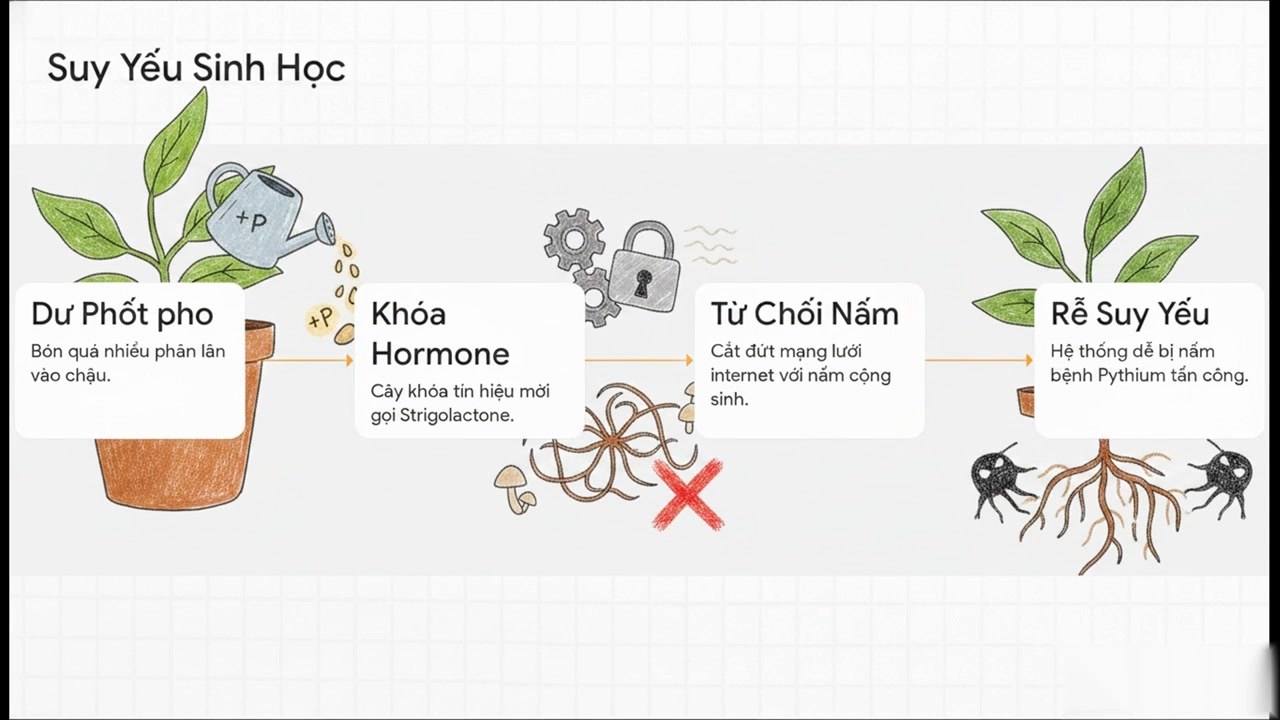
The Biological Weakening Cascade: Excess Phosphorus () Strigolactone Locked Mycorrhizal Fungi Rejected Loss of Biological Shield Root Vulnerability to Pythium Infection.
6. Root-Bound Syndrome and "Photosynthetic Feedback Inhibition"
When rose roots circle tightly inside rigid plastic pots (root-bound), a destructive physiological chain reaction begins. Picture the root system as a "warehouse" and the foliage as a "production factory":
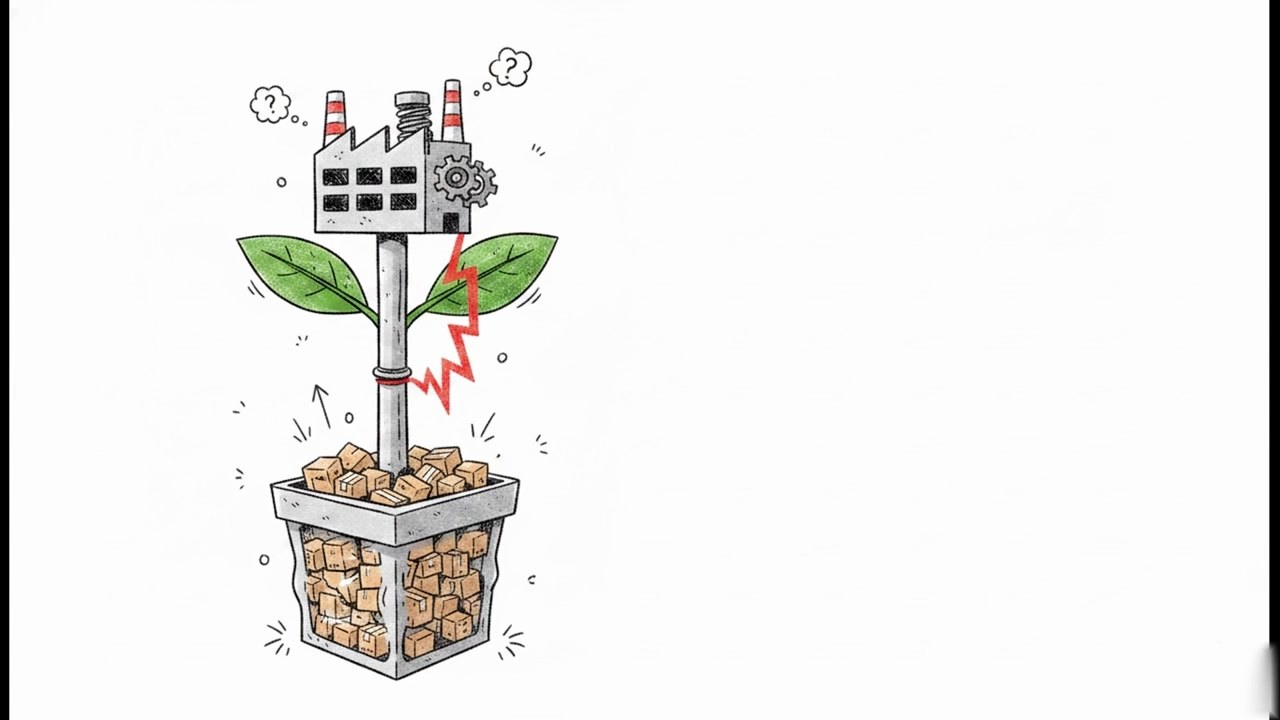
- Photosynthetic Strike (Feedback Inhibition): Once the confined root warehouse fills up with no capacity to absorb additional sugars and starch, chemical feedback signals travel upward. The leaf factory immediately goes on "strike"—slashing photosynthetic efficiency by 30–50% because output has nowhere to go.
- Root–Shoot Endocrine Disruption: Mechanically stressed roots cut off rejuvenating Cytokinin exports to shoots while flooding the xylem with stress hormone ABA (Abscisic Acid), commanding leaf stomata to slam shut. The rose stalls completely despite abundant sunlight and water.
| Root Condition | Foliar Physiological Response | Definitive Corrective Action |
|---|---|---|
| Root-Bound / Circling Roots | Photosynthetic strike (-30–50%), stalled growth | Repot into a larger container and prune circling outer roots |
| Rigid-Wall Mechanical Stress | Low Cytokinin, high ABA, closed stomata | Switch to fabric air-pruning pots so root tips self-prune and branch densely |
7. Quick Diagnostic and Action Table for Container Roses
| Observed Symptom | Core Scientific Cause | Immediate Action |
|---|---|---|
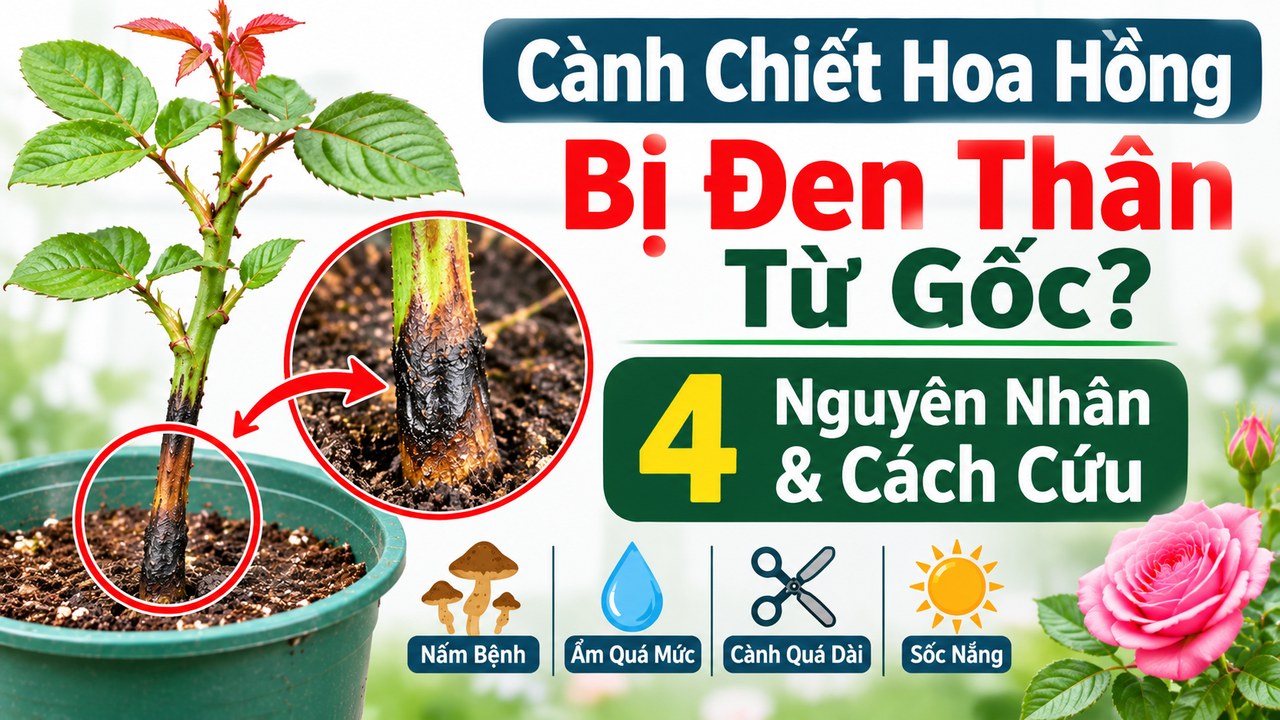
| Root rot / Soggy bottom | Perched Water Table (PWT) too high for pot depth | Switch to a taller pot; add a 60 mm coarse-sand drainage base |
| Slow growth / Yellowing leaves | Pure pine bark lacks EAW, or excess Phosphorus suppresses mycorrhizae | Blend 4 Pine Bark : 1 Peat Moss; cut excess P and inoculate beneficial fungi |
| Wilting despite wet soil | Root-zone thermal shock (RZT > 46°C or < 15°C) | Insulate pot off hot paving; switch to light-colored, fabric, or terracotta pots + mulch |
| Water pours straight out bottom | Dry hydrophobic substrate (Channeling) | Bottom-soak the pot for 15–30 minutes to break the hydrophobic film |
| Stalled growth despite sun/water | Root-bound photosynthetic feedback inhibition & ABA spike | Upgrade to air-pruning fabric pots or repot and root-prune periodically |
By mastering these five physical, chemical, and biological dynamics, you transform a restrictive "survival box" into a precision-engineered habitat where container roses reach their full vigor and blooming potential.