Scale Insects

Physiological
Check your plant

Description

Scale insects are sap-feeding hemipterans that live fixed in place on stems, canes and occasionally leaves. Two groups occur on roses:

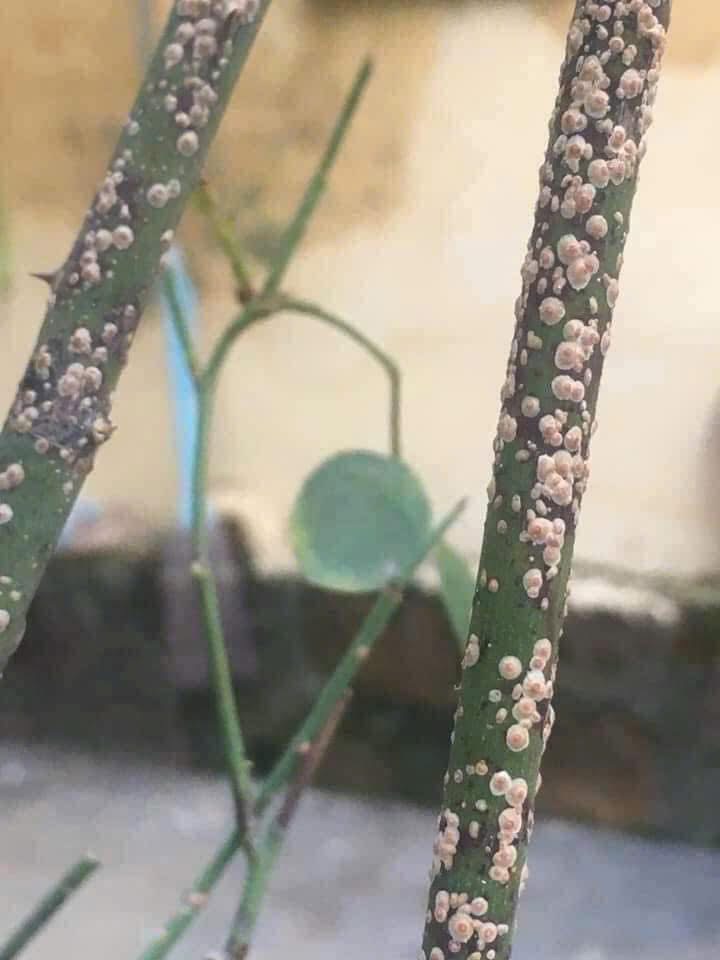
  • Armoured scales (Diaspididae), notably rose scale (Aulacaspis rosae): small greyish-white, round to oval scales that encrust older canes. Armoured scales do not excrete honeydew, so sooty mould and ants are usually absent.
  • Soft scales (Coccidae): brown to tan, slightly domed scales that excrete honeydew, so sooty mould and ants commonly accompany them.

Adults are immobile, firmly attached and camouflaged against the bark, so infestations are easily overlooked. Newly hatched nymphs ("crawlers") move briefly to find a feeding site — the most vulnerable stage for control. Feeding weakens the canes; heavy infestations make the plant look drought-stressed, with yellowing leaf drop and dieback from the cane tips. Scales spread on infested planting stock, cuttings and tools.

Scale insects are easily confused with mealybugs (cottony white wax, mobile insects).

Symptoms

1

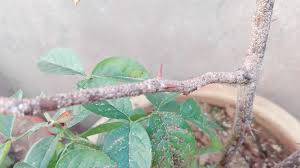
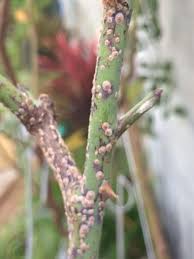
Small brown, grey or white scales fixed firmly to stems and canes that do not dislodge with a light touch; scraping one off reveals the insect beneath.

Small brown, grey or white scales fixed firmly to stems and canes that do not dislodge with a light touch; scraping one off reveals the insect beneath.
2

Black, sticky sooty mould on leaves and canes (soft scales only — armoured scales do not excrete honeydew).

3

Ants tending soft-scale colonies on the canes for honeydew.

4

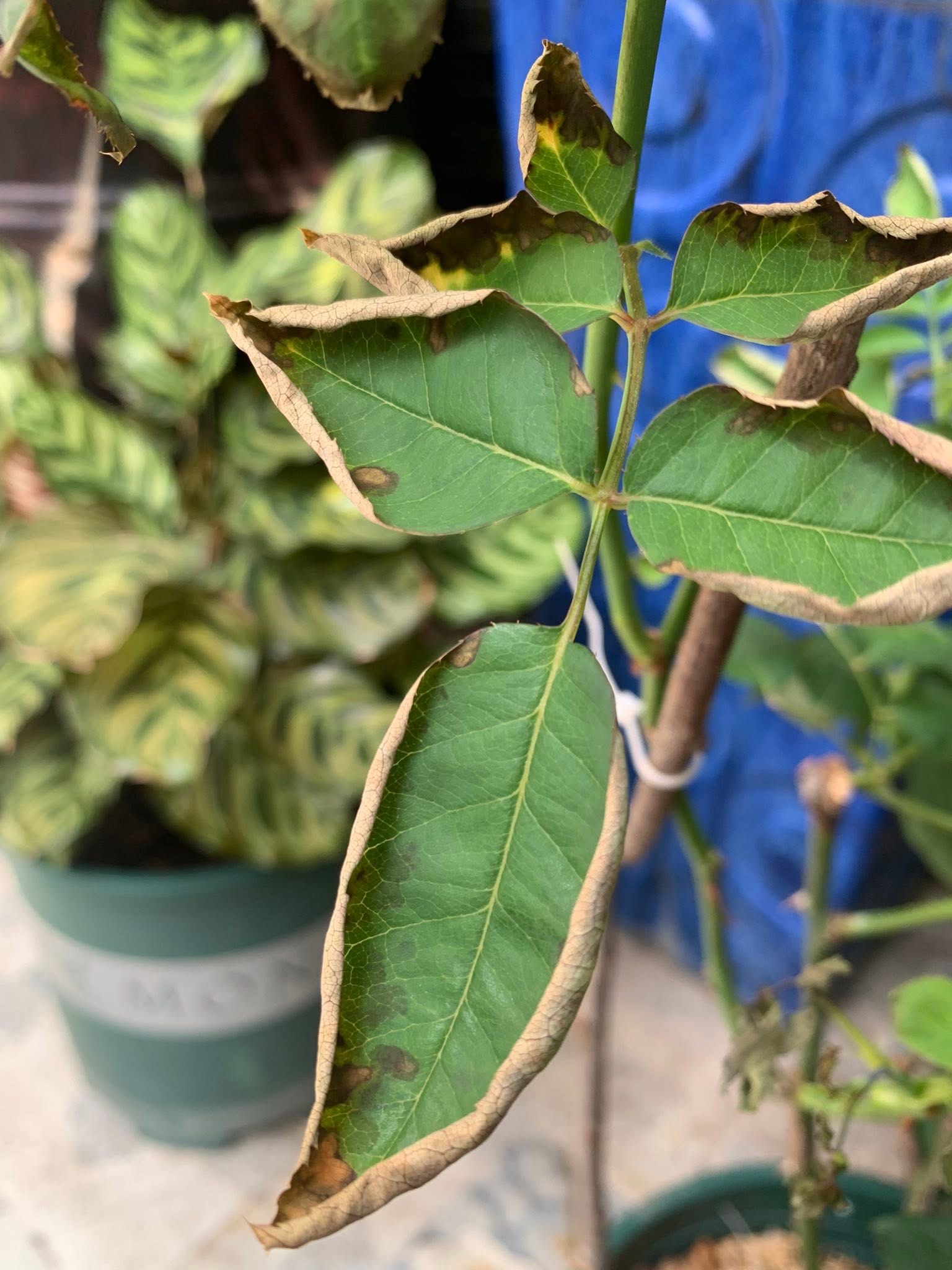
Leaves yellow and drop early under heavy infestation; the plant looks drought-stressed.

5

Canes heavily encrusted with scale (e.g. rose scale, Aulacaspis rosae) decline and die back from the tip; dead brown leaves may stay attached.

Treatment plan

  • Manual removal: Scrub scales off the canes with a soft brush or cloth; dab small colonies with 70 % alcohol.
  • Pruning: Remove and destroy heavily encrusted or dead canes.
  • Horticultural or neem oil: Spray stems and canes thoroughly to smother the insects. Most effective when timed to crawler emergence; mature armoured scales are poorly penetrated, so repeat applications are needed.
  • Insecticidal soap: Effective against crawlers before the protective cover hardens.
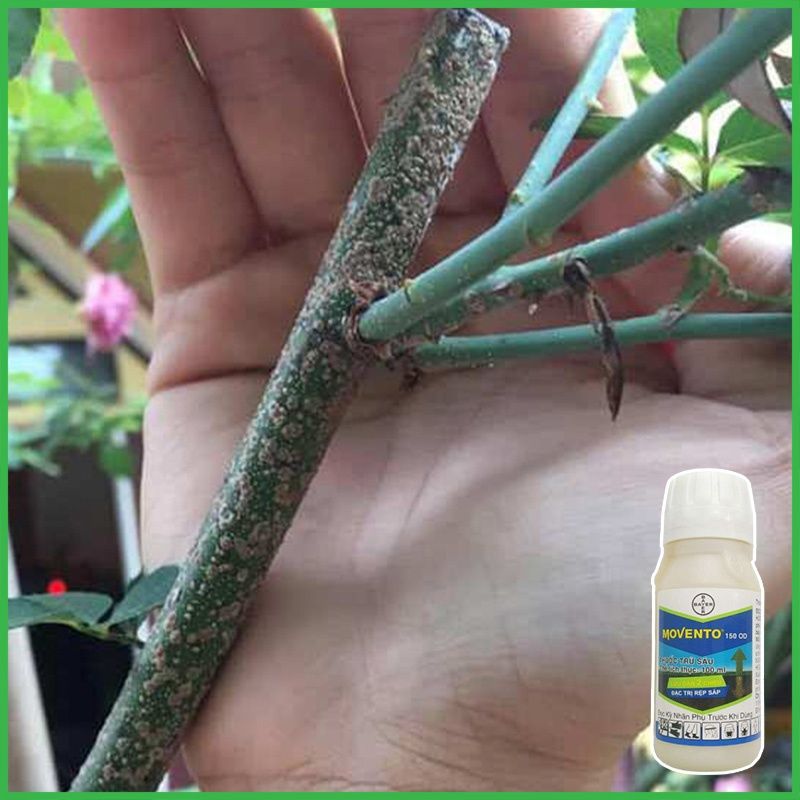
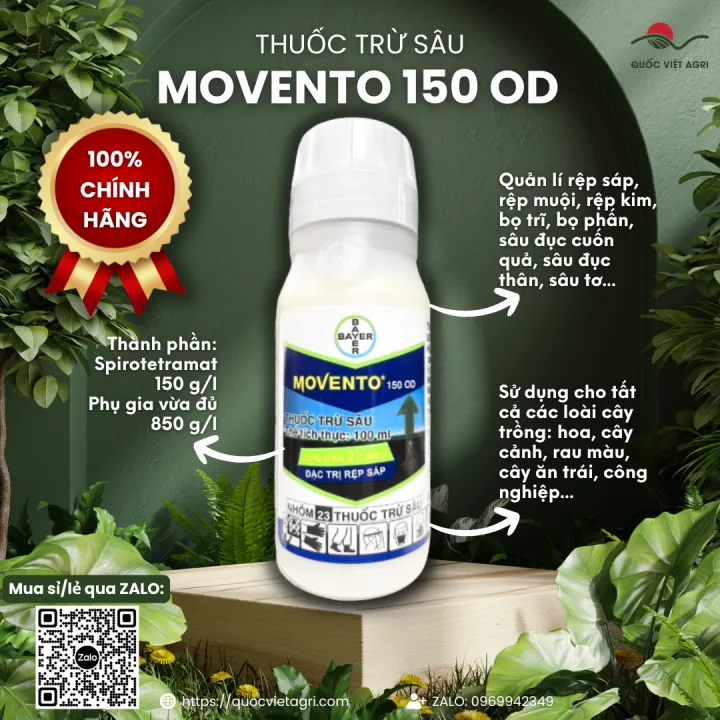
  • Chemical control: A systemic product such as Movento 150OD moves in the sap to the feeding insects and suits heavy infestations.
  • Natural enemies: Parasitoid wasps and lady beetles prey on scales; avoid broad-spectrum sprays that kill them.
  • Ant control where soft scales are tended by ants, since ants protect the colonies from natural enemies.

Recommended products

Movento 150OD

  • Description: Two-way systemic activity (xylem and phloem) that targets the digestive system of sap-feeding pests.
  • Application: Dilute with water and spray stems, canes and foliage thoroughly.
  • Frequency: Apply on a programme to catch successive crawler generations; follow label rates.

Prevention

  • Inspect the stems and canes of new planting stock for abnormal scaly bumps before purchase.
  • Regularly check older canes and cane bases, where scales settle and are hard to see.
  • Prune to keep the canopy open and remove old, weak canes.
  • Apply a preventive horticultural or neem oil spray early in the growing season.
  • Avoid excess nitrogen fertiliser.

Recommended products

MOVENTO 150 OD

MOVENTO 150 OD

A highly systemic insecticide with two-way translocation (xylem and phloem) that targets the digestive system of sap-feeding pests such as mealybugs, scales, aphids, thrips, whiteflies and borers. Dilute with water and spray for thorough coverage; long residual activity and very low odour.

Share this page

Related diseases

Next steps for your plant