Mg Deficiency (1)
Mg Deficiency (2)
Mg Deficiency (3)
Mg Deficiency (4)
Mg Deficiency (5)

Mg Deficiency

Physiological
Check your plant

Description

Magnesium (Mg) is an essential element sitting at the centre of the chlorophyll molecule. It is critical for photosynthesis and helps roses maintain healthy, deep-green foliage while preventing discolouration and premature leaf fall. Because Mg is a mobile nutrient in the plant, a rose under deficiency strips Mg from older foliage to keep new growth supplied — so the oldest (lower) leaves are always affected first and worst.

Magnesium deficiency in roses typically arises from two main causes:

  • Soil depletion or nutrient antagonism: Acidic soils (pH < 5.5), sandy or heavily leached potting substrates, exhausted well-used garden soils, or excessive potassium (K) / calcium (Ca) applications that antagonise Mg uptake at the root surface.
  • Weakened or damaged roots unable to absorb nutrients: Just like other secondary and micronutrient deficiencies, Mg deficiency frequently develops when feeder roots are compromised (by waterlogging, root rot, compacted oxygen-poor media, or fertiliser burn), preventing the root system from taking up Mg even when it is present in the soil.

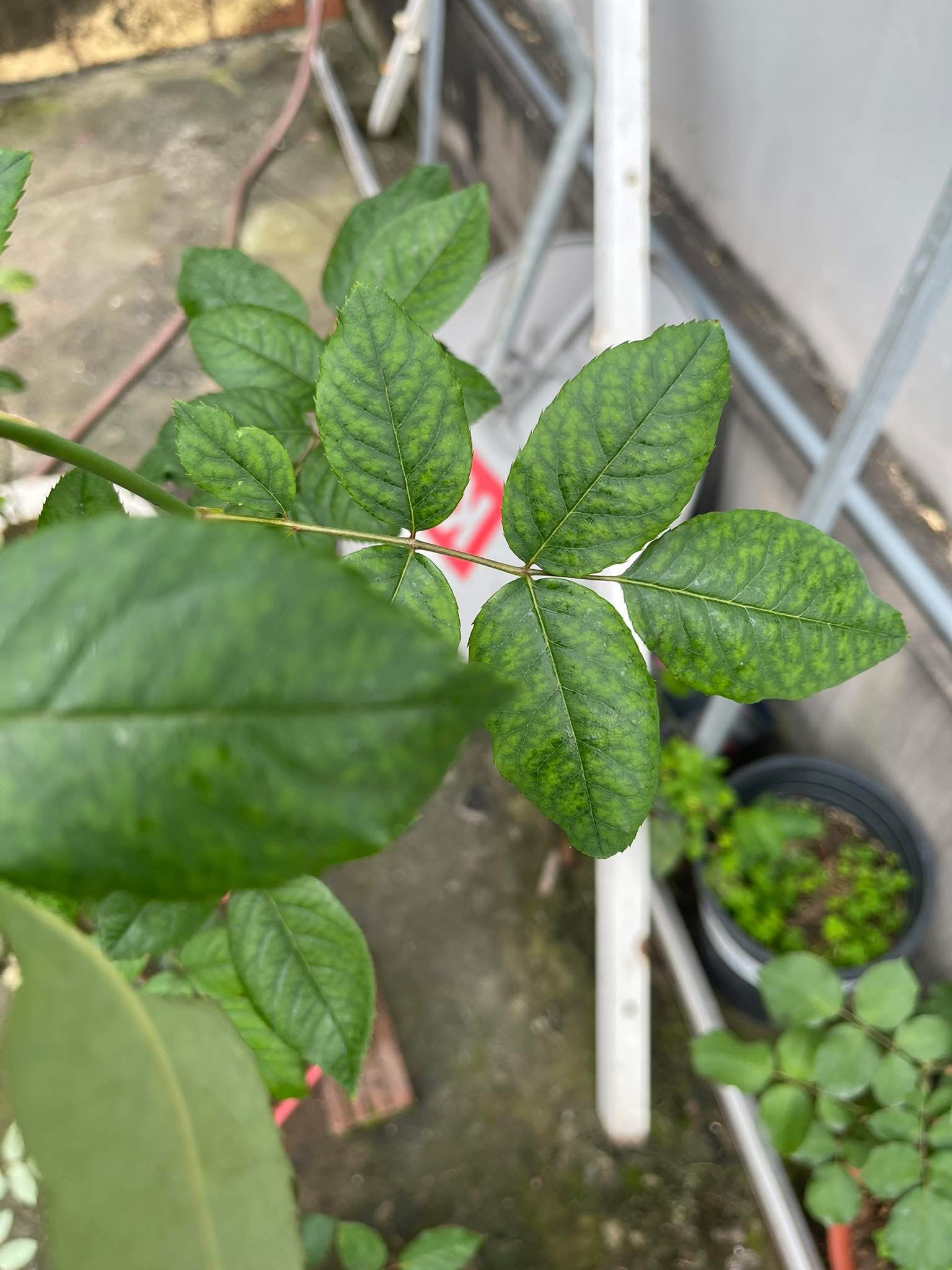
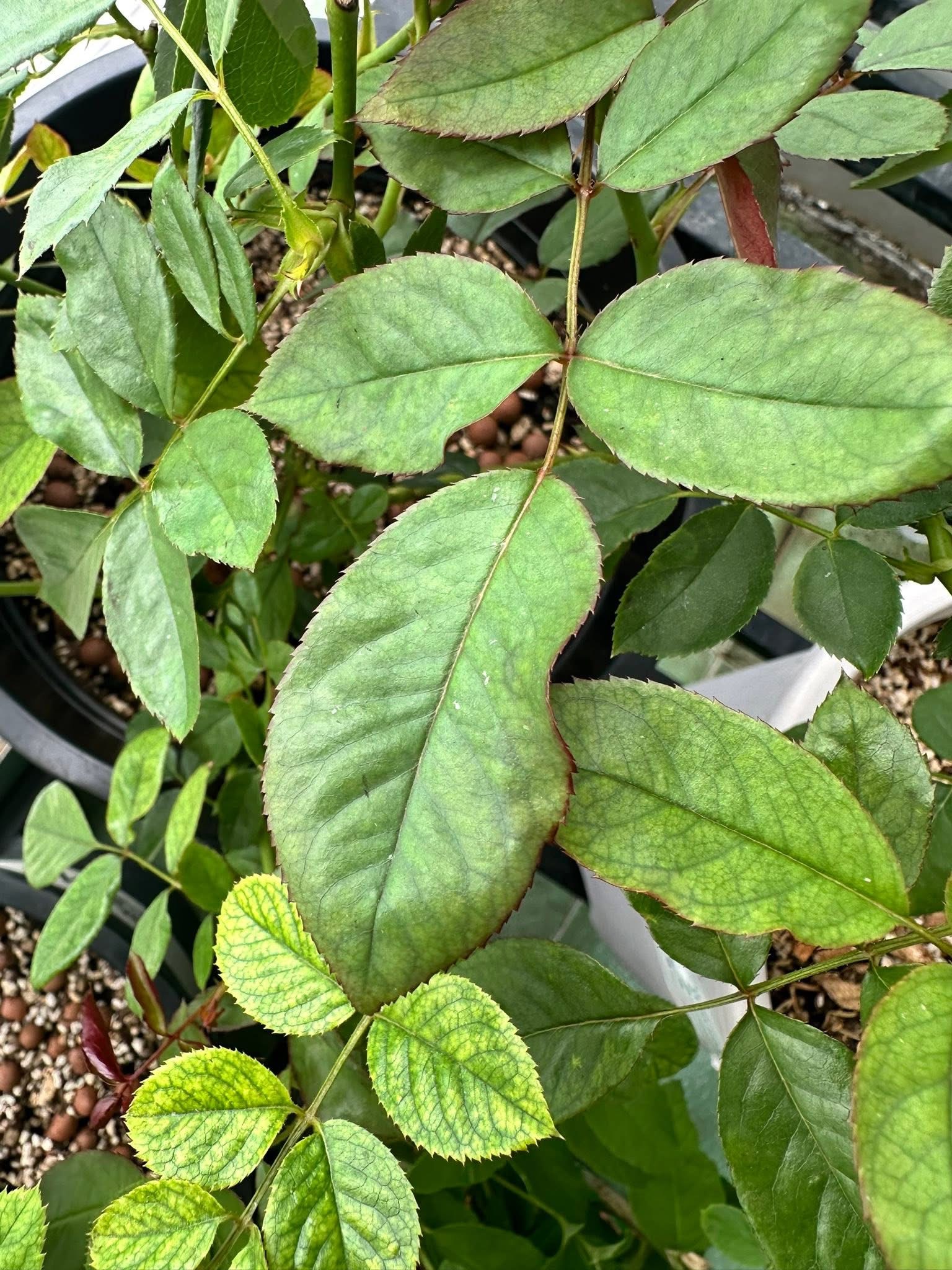
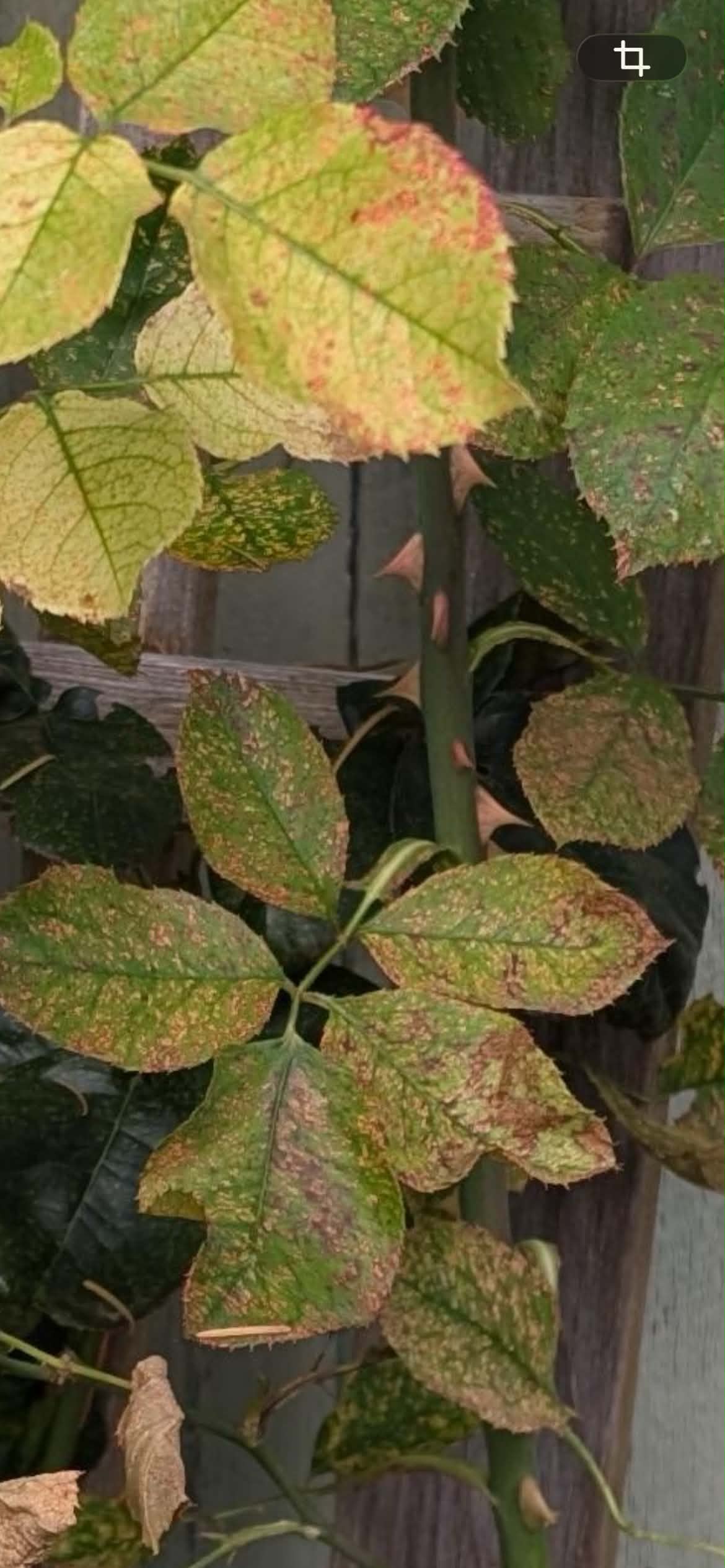
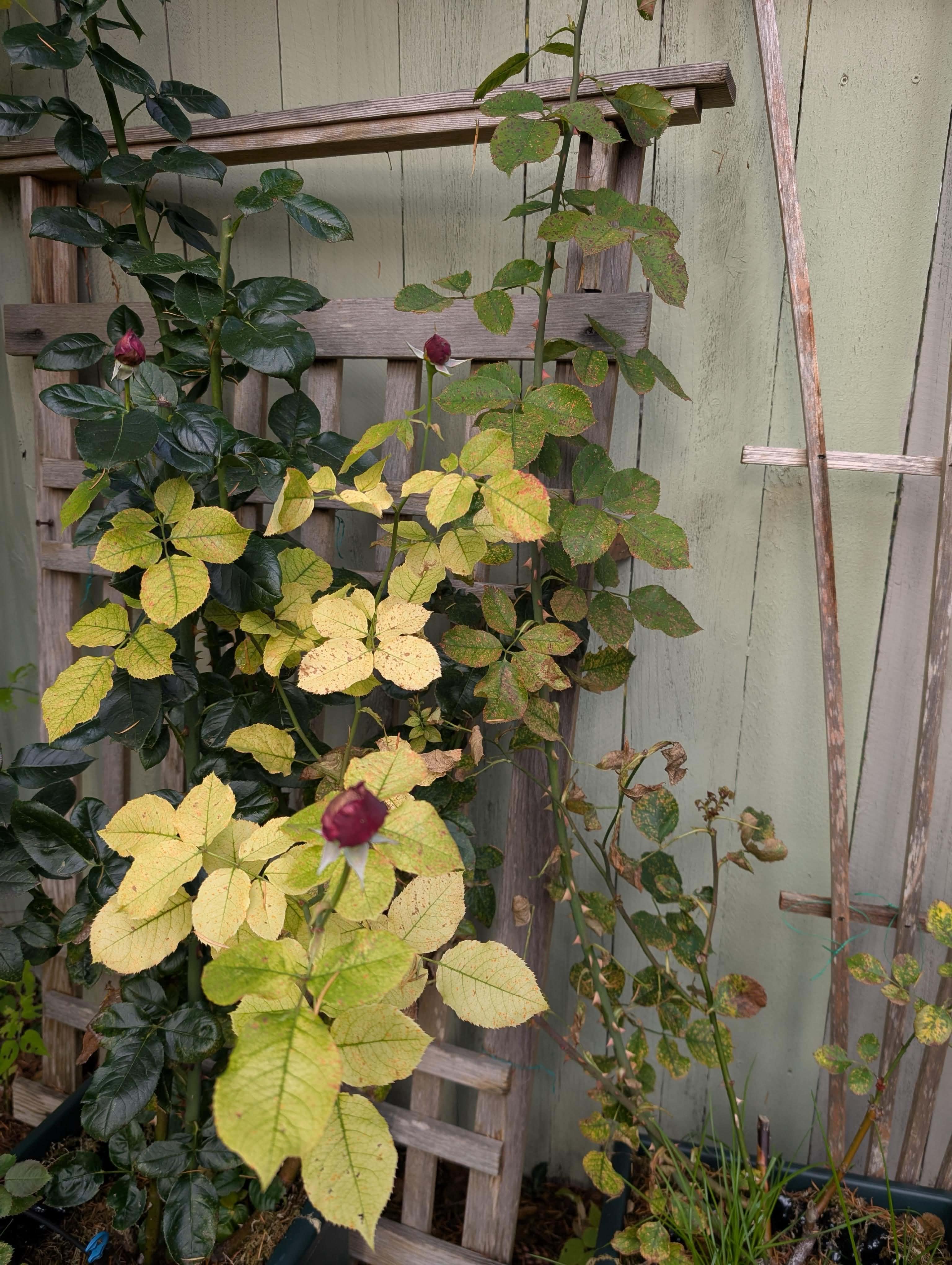
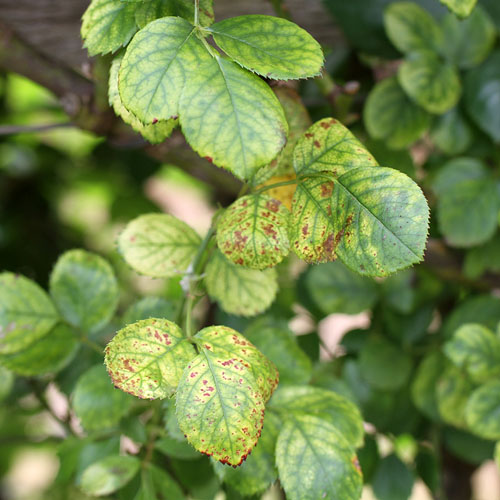
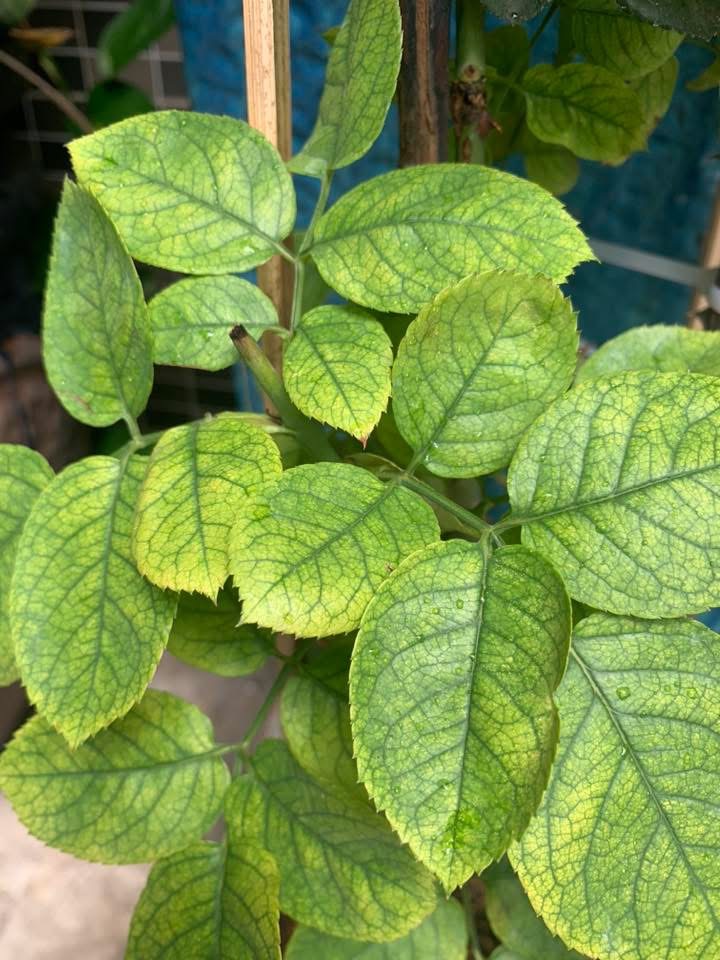
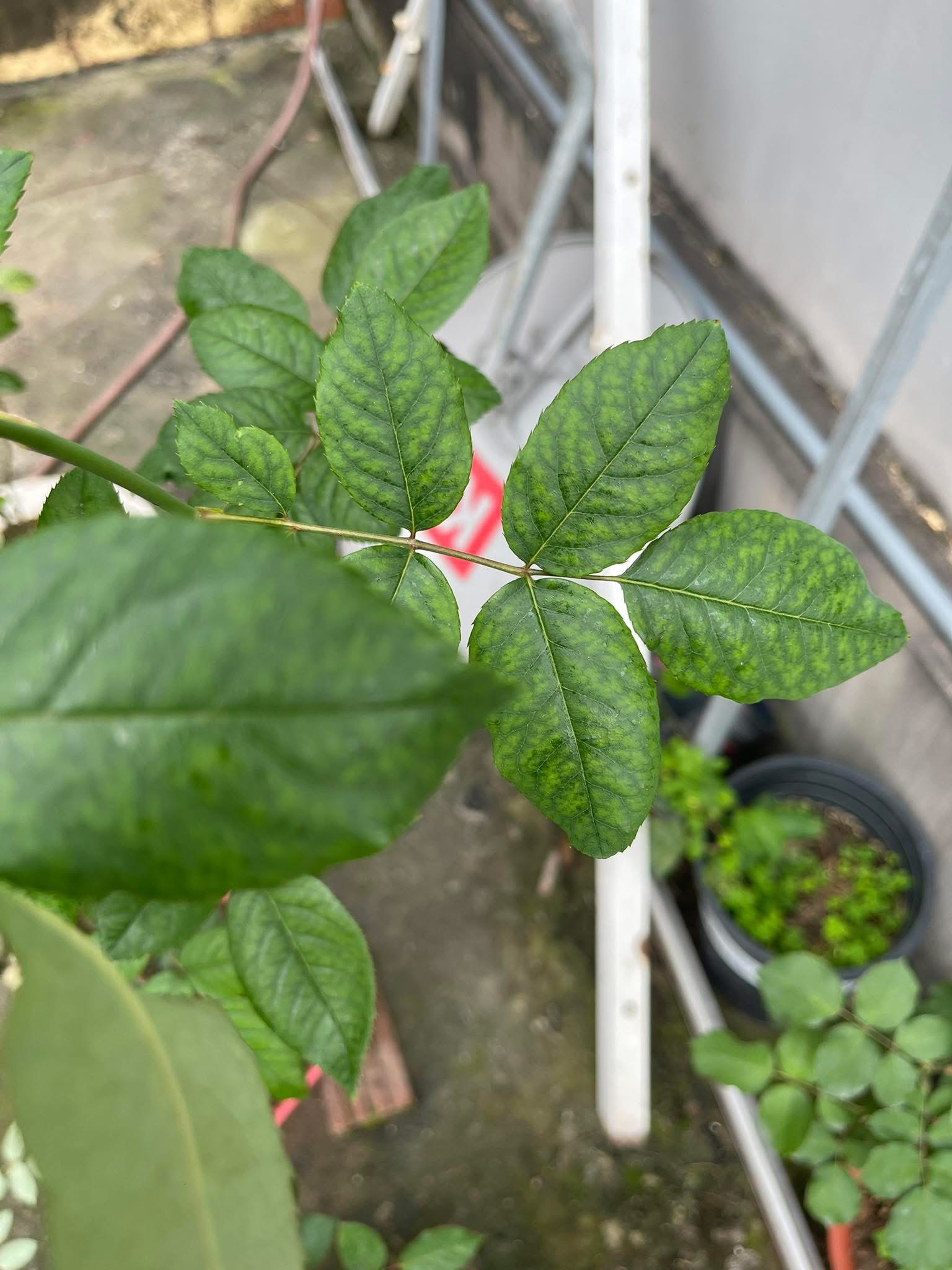
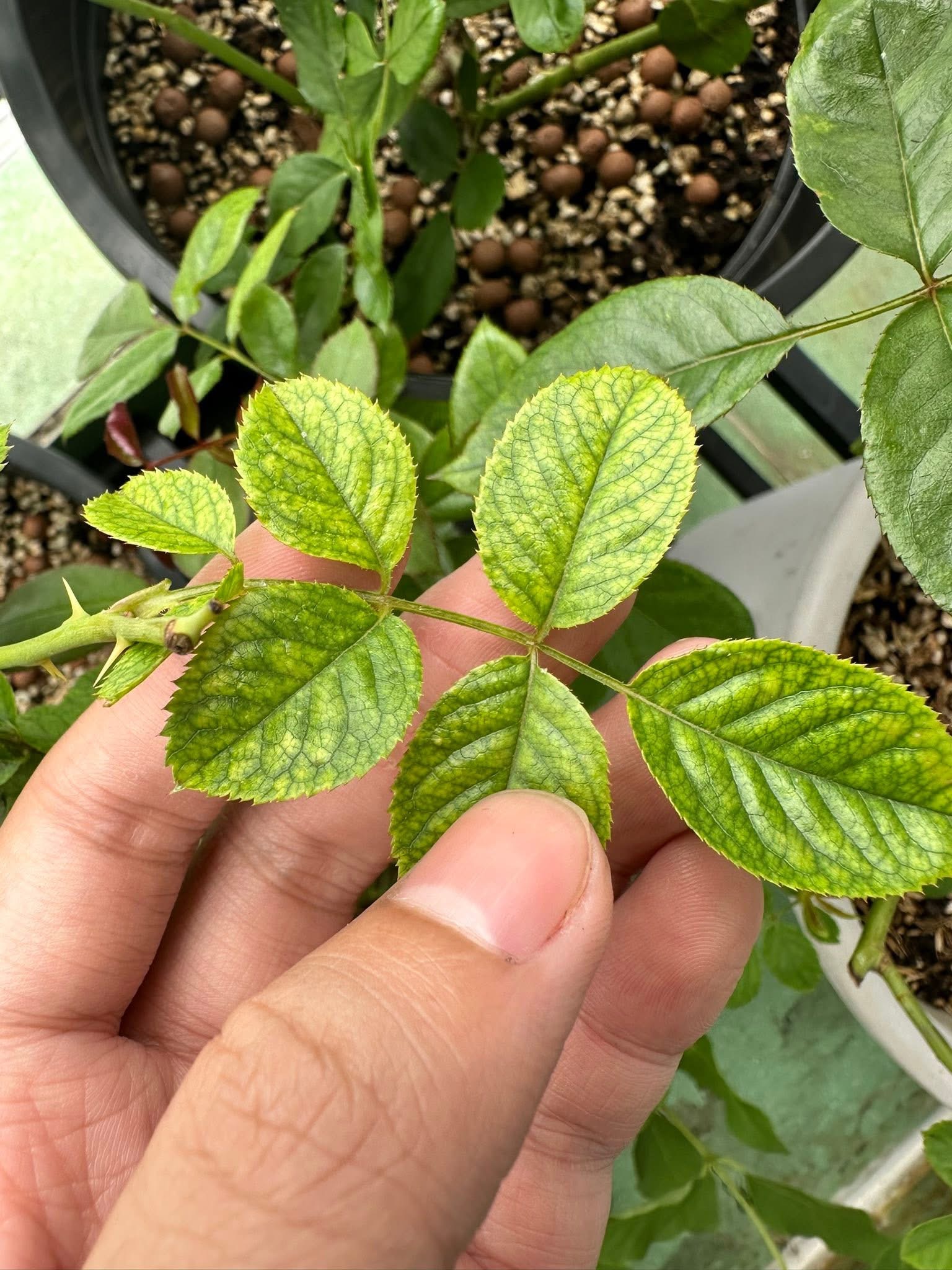
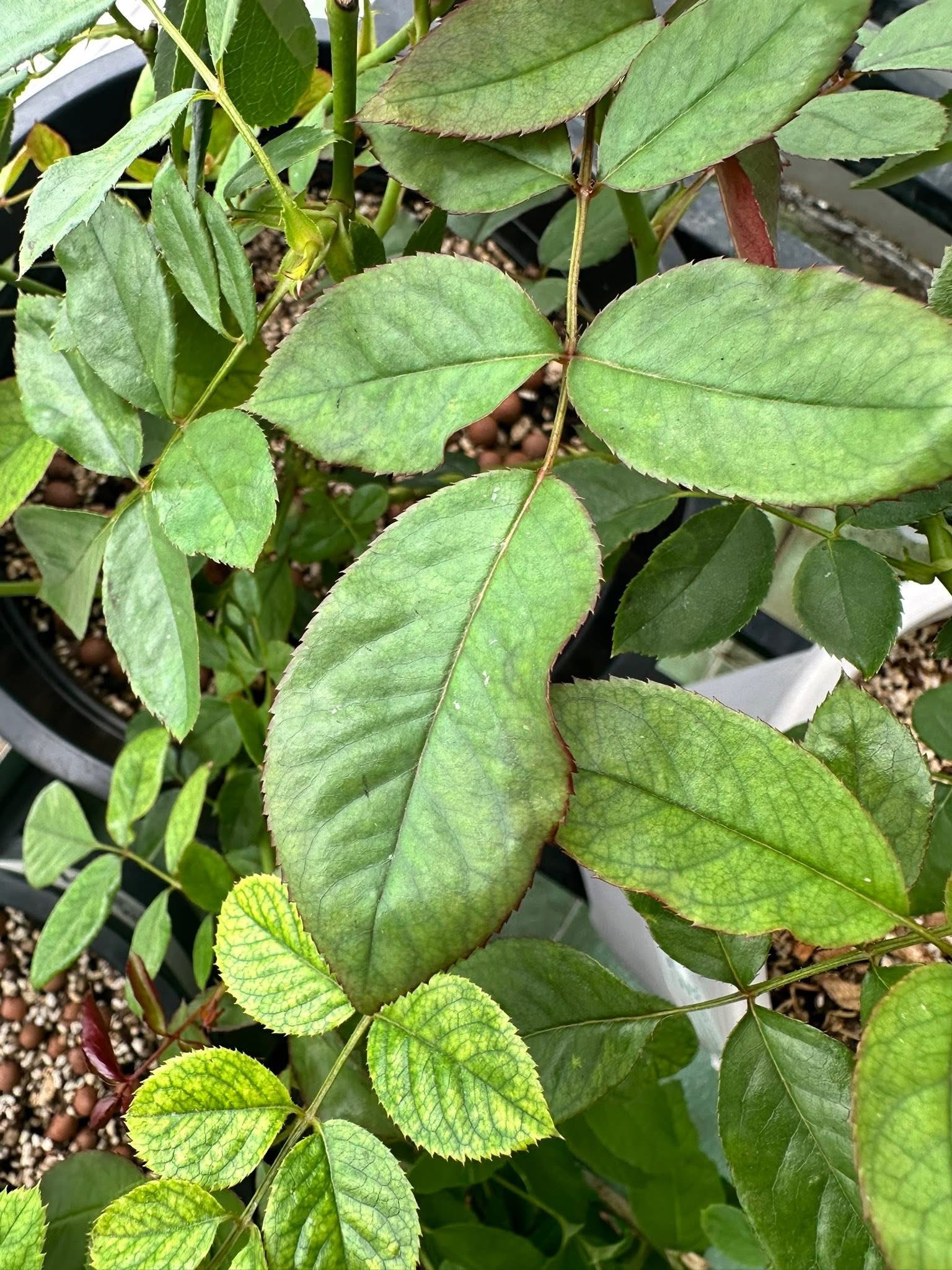
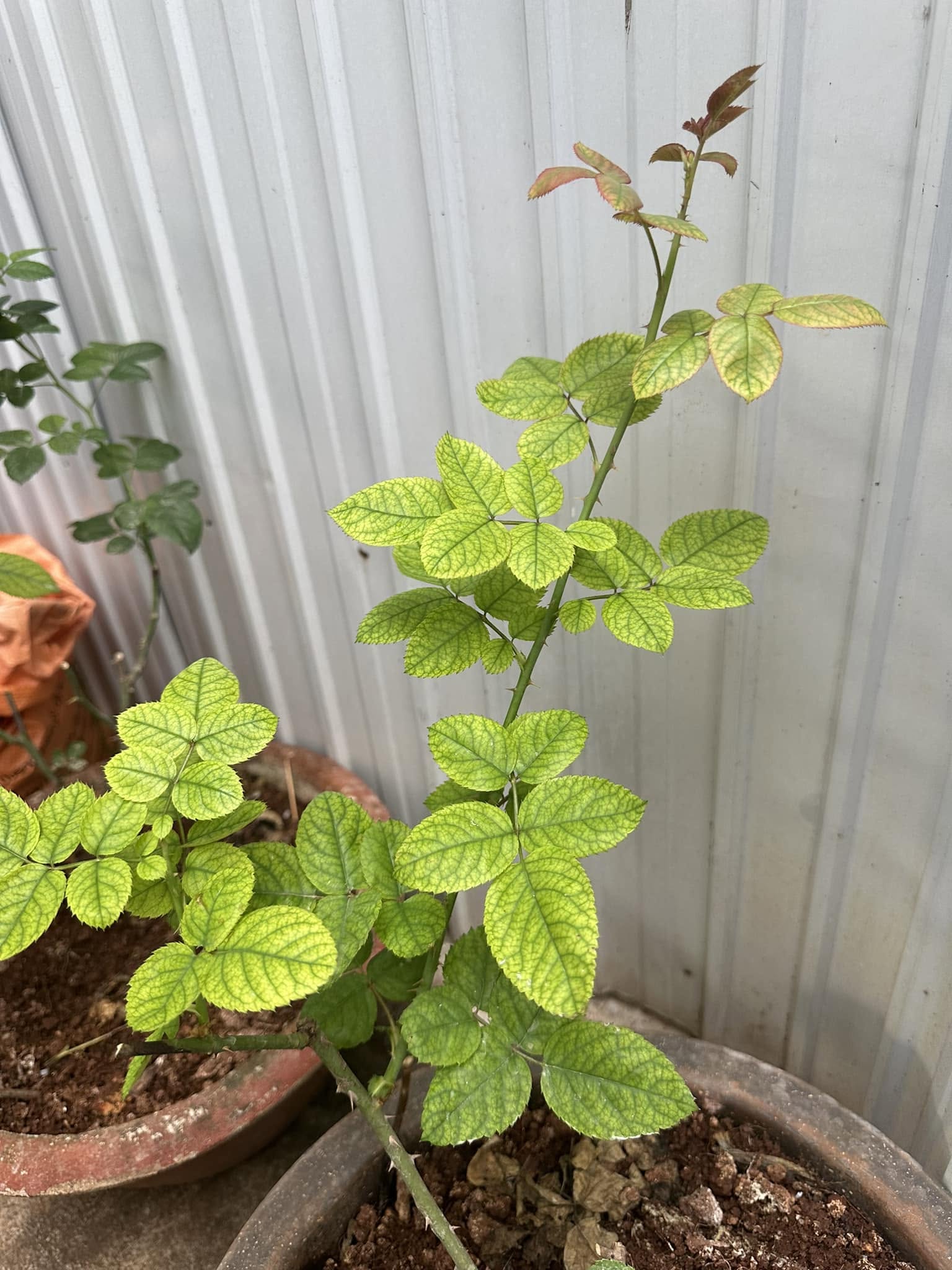
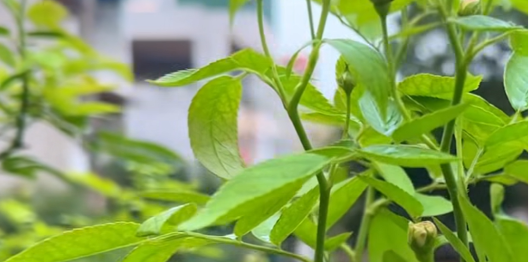
Early symptoms appear as yellowing on the inside of the older leaves between the veins (interveinal chlorosis) while the veins remain green. As the shortage becomes severe, the chlorotic tissue between the veins dies back into prominent necrotic brown blotches before the leaves drop prematurely. Note that signs and symptoms can vary significantly between rose varieties.

Symptoms

1

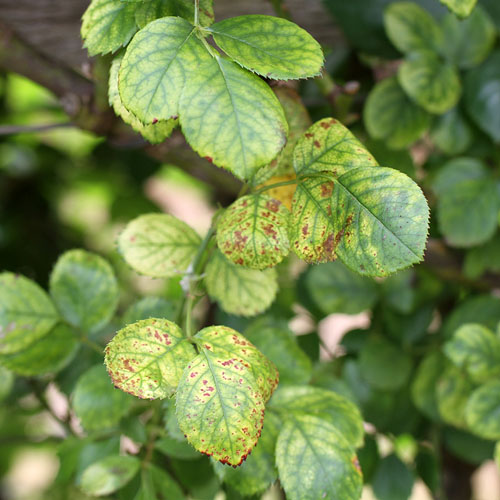
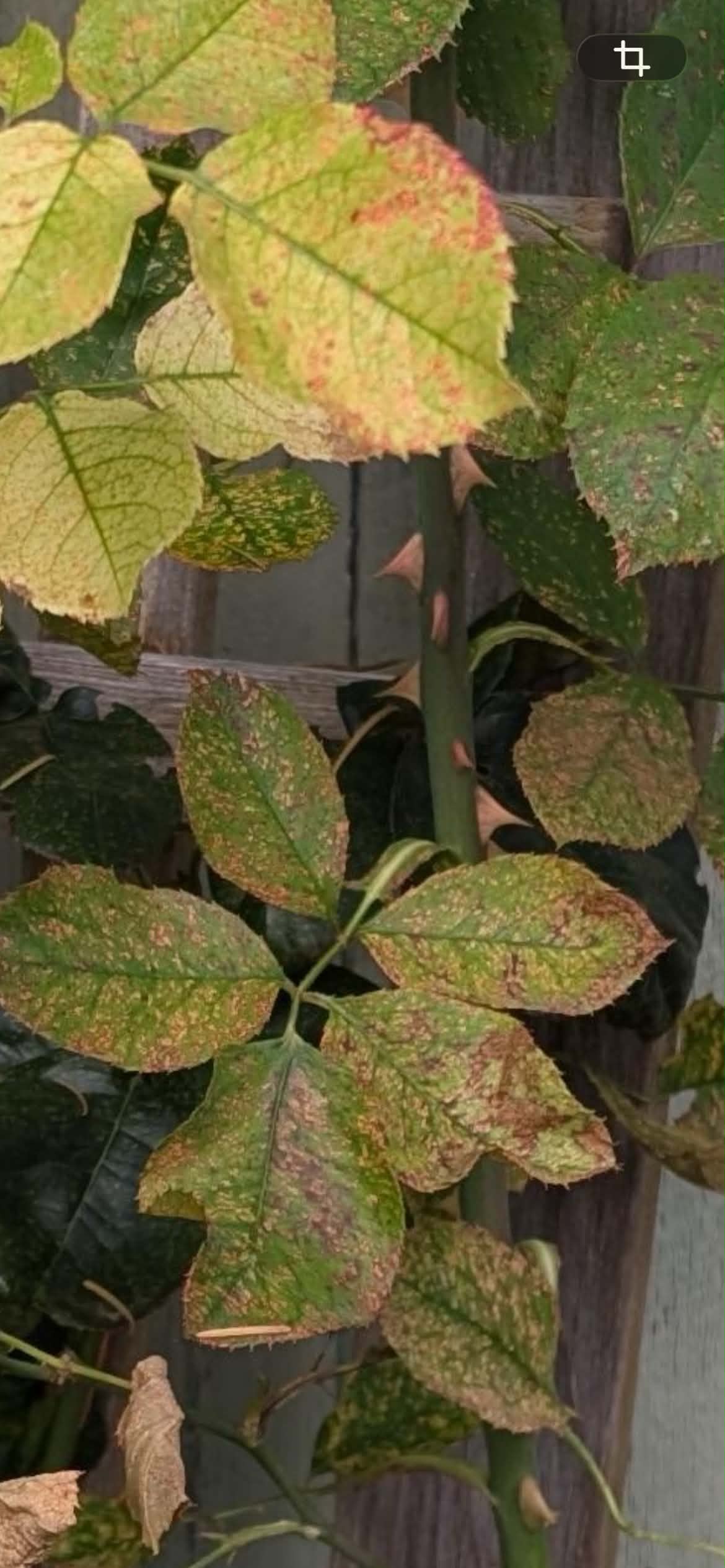
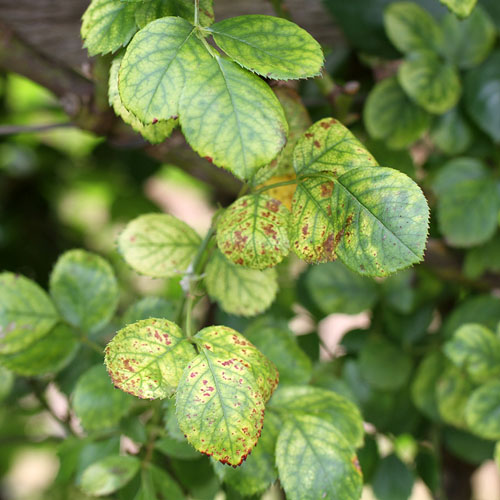
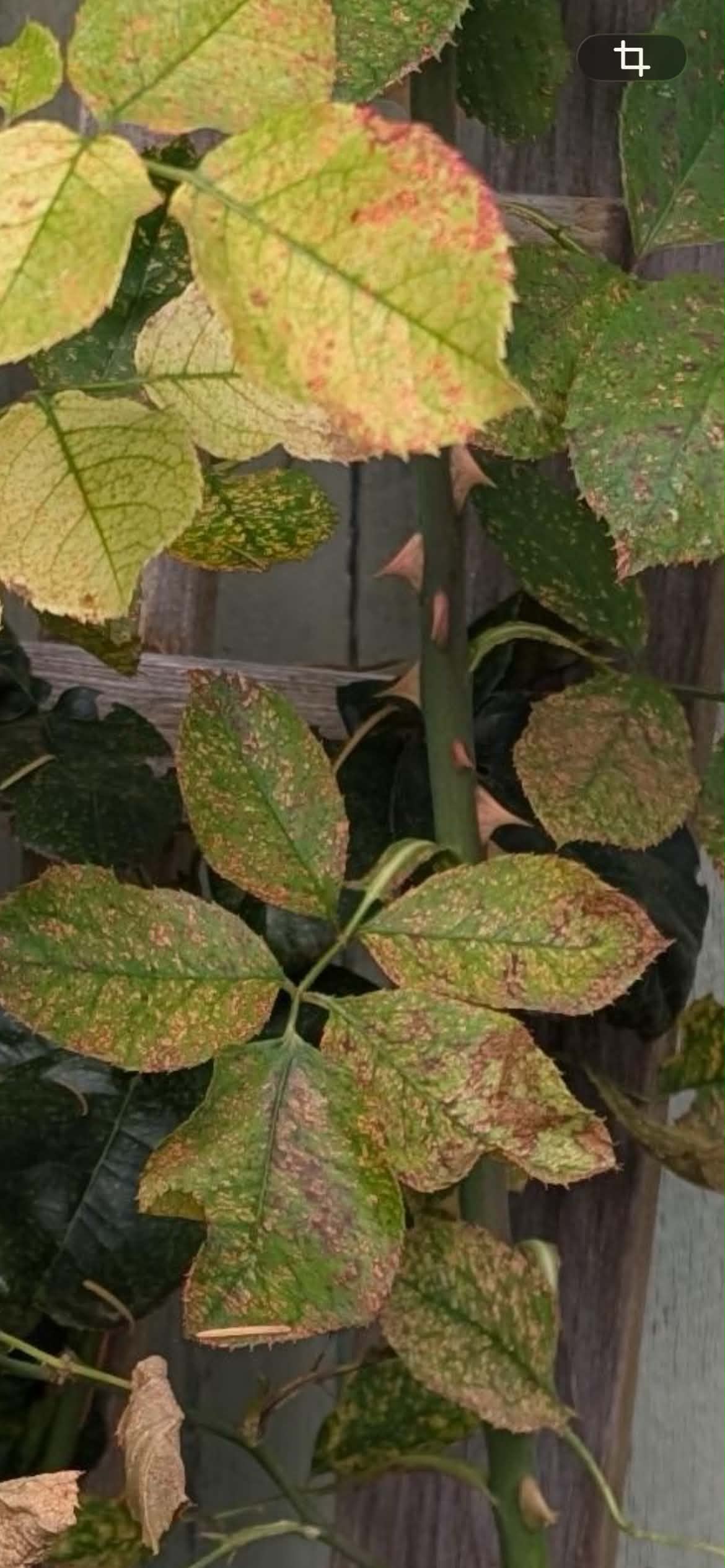
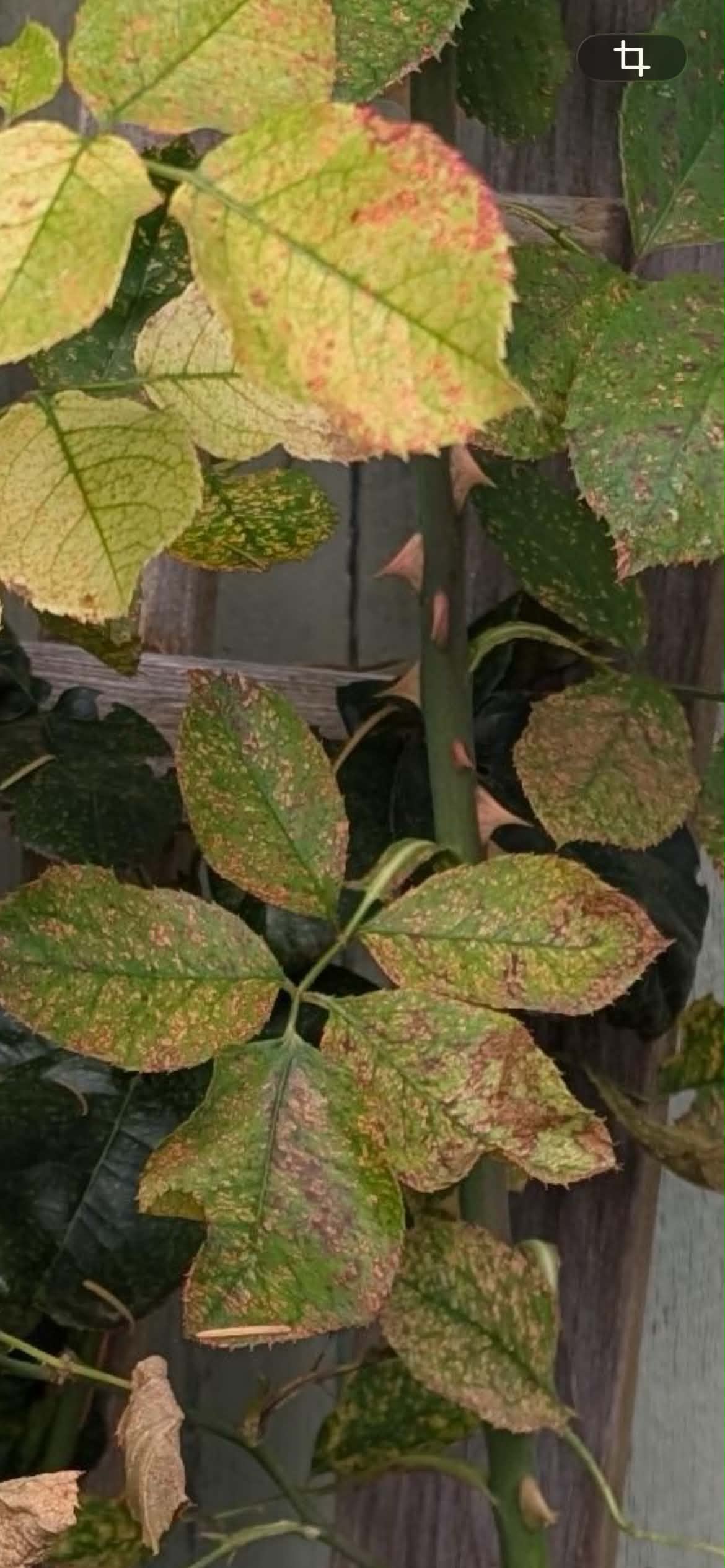
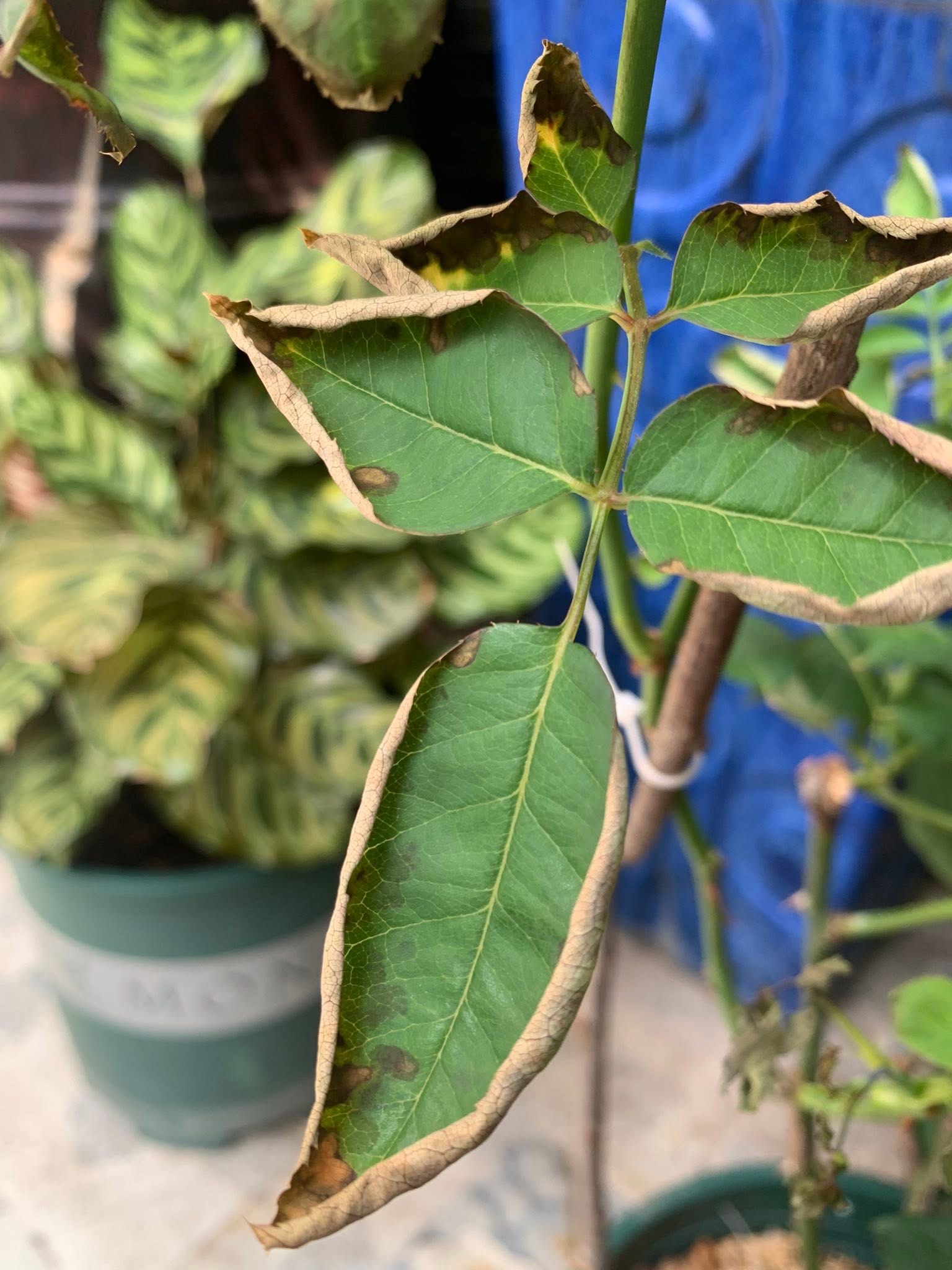
In severe cases, necrotic brown blotches or patches develop between the veins on older yellowing leaves while the veins themselves remain green

In severe cases, necrotic brown blotches or patches develop between the veins on older yellowing leaves while the veins themselves remain green
2

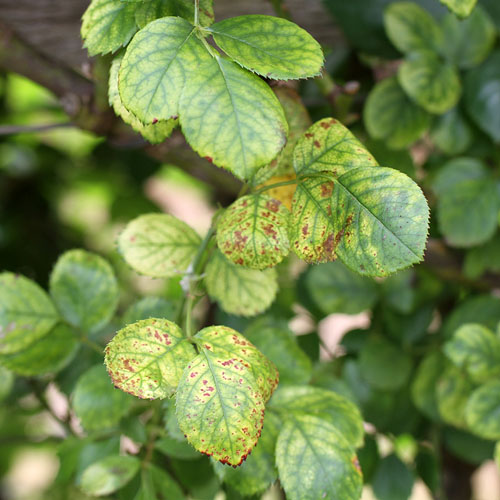
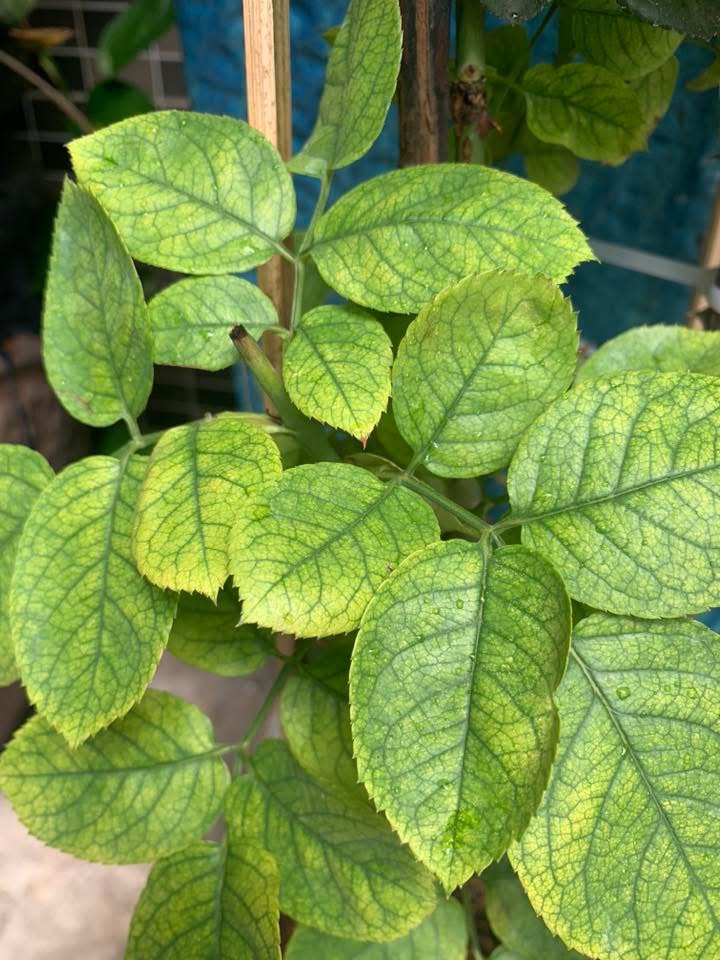
Interveinal chlorosis on the inside of older leaves — veins remain green while the tissue between them turns yellow or reddish-purple fairly uniformly

Interveinal chlorosis on the inside of older leaves — veins remain green while the tissue between them turns yellow or reddish-purple fairly uniformly
3

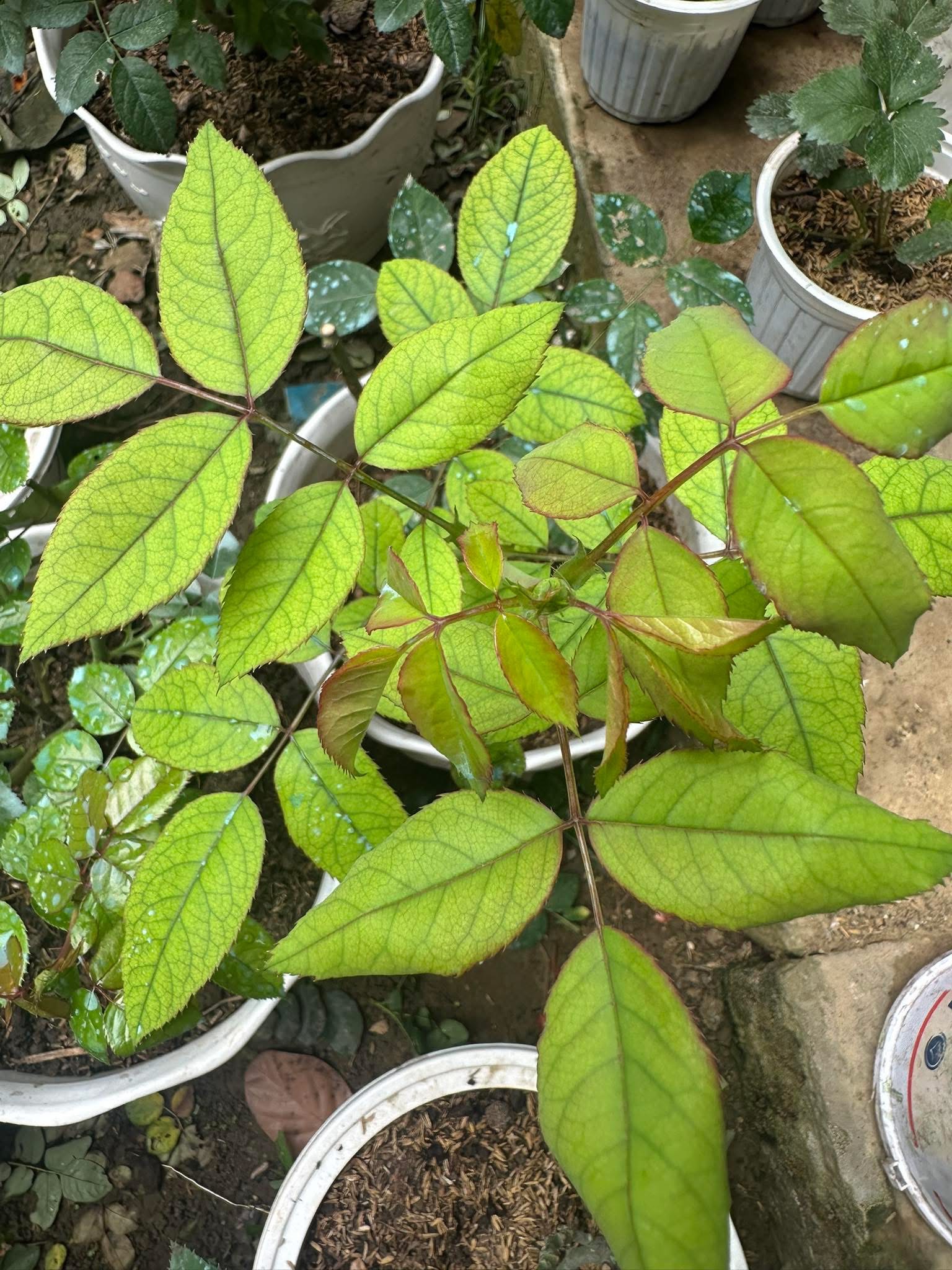
Symptoms begin and are worst on the oldest (lower) leaves, progressing upward

4

Premature leaf fall of heavily affected older leaves in advanced deficiency

Premature leaf fall of heavily affected older leaves in advanced deficiency
5

Brown necrotic blotches or spots appearing between the veins on older leaves when magnesium deficiency is severe (lacking fungal fruiting-body black dots)

Brown necrotic blotches or spots appearing between the veins on older leaves when magnesium deficiency is severe (lacking fungal fruiting-body black dots)

Treatment plan

Once interveinal yellowing and brown blotches are visible, combine fast foliar feeding (essential when weakened roots cannot absorb soil nutrients efficiently) with root-zone replenishment and root recovery:

  • Foliar spray immediately (fastest uptake): Dissolve Epsom salt (magnesium sulphate, MgSO₄) at 0.5–1% (5–10 g/L) or a chelated Mg-containing trace-element foliar feed and spray both leaf surfaces in the early morning or late afternoon. This bypasses compromised roots and delivers Mg directly to the foliage.
  • Soil drench with Epsom salt or Trace Elements: Dissolve Epsom salt crystals or a pack of Trace Elements in water and pour onto the ground around the affected plant. In most garden soils a single application is sufficient, though well-used, sandy, or heavily leached potting soils may require a repeat application after 10–14 days.
  • Inspect and restore root health (underlying cause): Check pot drainage and feeder-root condition. If the medium is soggy, compacted, or roots are weak, aerate the topsoil, adjust watering, and apply a root biostimulant (humic acid, Vitamin B1, or HB-101) so new feeder roots can resume mineral uptake.
  • Correct soil pH and fertiliser balance: Acidic soil (pH < 5.5) locks out Mg uptake; amend acidic soil with Dolomite lime (which supplies both Ca and Mg) and hold back on high-potassium feeds.

Recommended products

Below are the most widely available and effective options:

1. Epsom salt (magnesium sulphate, MgSO₄)

This is the cheapest and most effective remedy for Mg deficiency.

  • Description: White crystalline solid, fully water-soluble, supplying both magnesium (Mg) and sulphur (S).
  • Dosage: Mix 5–10 g per litre of water (0.5–1%) or at the rate stated on the label.
  • Application: Spray evenly over the foliage in the early morning or late afternoon and/or drench the root zone around the base.
  • Where to buy: Shopee — Epsom salt for plants

2. Mag-Phos micronutrient fertiliser (liquid or powder)

A specialist product that produces thick, glossy, dark-green leaves while supporting root recovery.

  • Description: High magnesium content combined with readily available phosphorus to stimulate feeder-root regeneration.
  • Dosage: Mix at the label rate.
  • Application: Spray periodically or drench the root zone while the plant is recovering.
  • Where to buy: Lazada — Magnesium micronutrient fertiliser

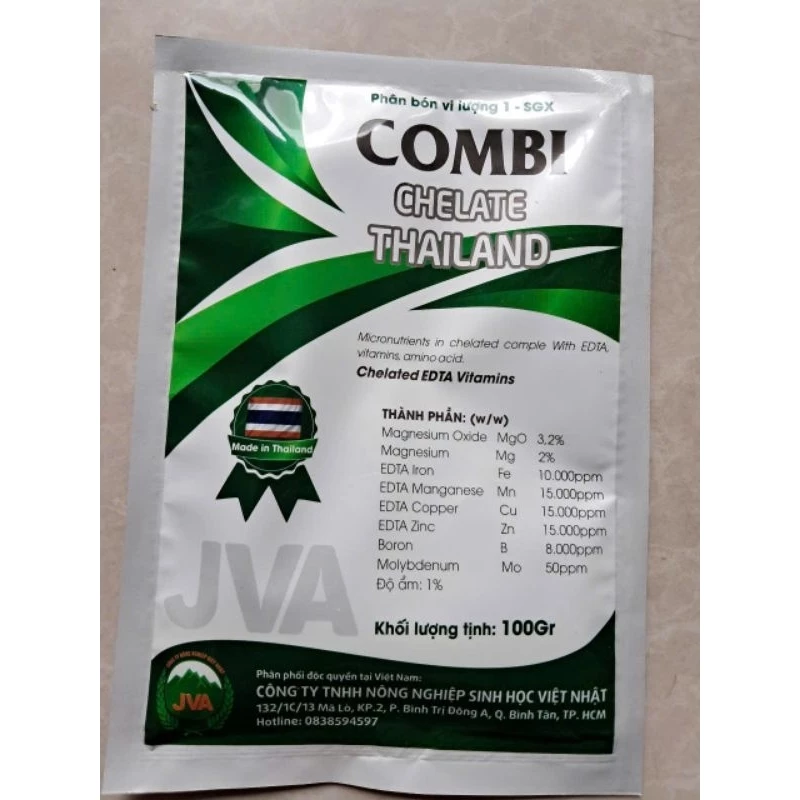
3. Combi mid- and micronutrient fertiliser (small sachet)

Suitable when weakened roots or poor soil cause multiple trace-element deficiencies alongside Mg.

  • Description: Contains Mg, Fe, Zn, Cu, and Mn in chelate form for rapid foliar and root uptake.
  • Dosage: Mix at the label rate.
  • Application: Spray to thoroughly wet the canopy or drench the root zone at the recommended interval.
  • Where to buy: Shopee — Combi micronutrient fertiliser

Recovery timeline: Any treatment will take a couple of weeks (2–3 weeks) before you see clear signs of improvement in the new growth. Older leaves that have already yellowed heavily or developed brown necrotic blotches will not turn green again — healthy, dark-green new shoots confirm that the treatment has worked.

Prevention

  • Apply a balanced NPK + Mg fertiliser on a regular schedule.
  • Use Dolomite instead of plain lime when pH adjustment is needed (Dolomite supplies Mg as well as Ca).

Recommended products

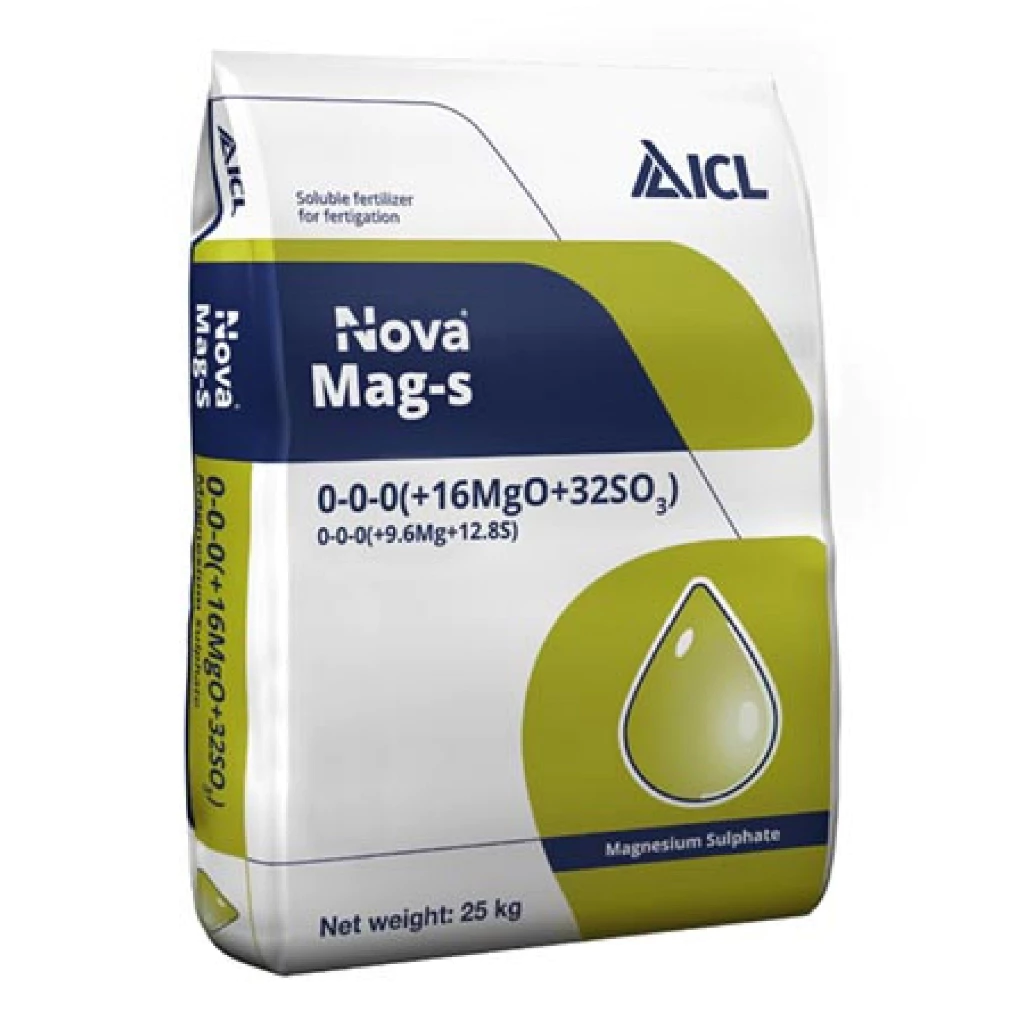
Epsom salt (magnesium sulphate, MgSO4)

Epsom salt (magnesium sulphate, MgSO4)

A highly effective nutrient source — white crystalline solid, fully water-soluble, supplying both magnesium and sulphur. Suitable for every growing system (hydroponics, drip irrigation, soil culture, aeroponics, etc.). The cheapest and most effective remedy for Mg deficiency. Mix at the label rate and spray evenly over the foliage in the early morning or late afternoon; combine with a soil drench for severe cases.

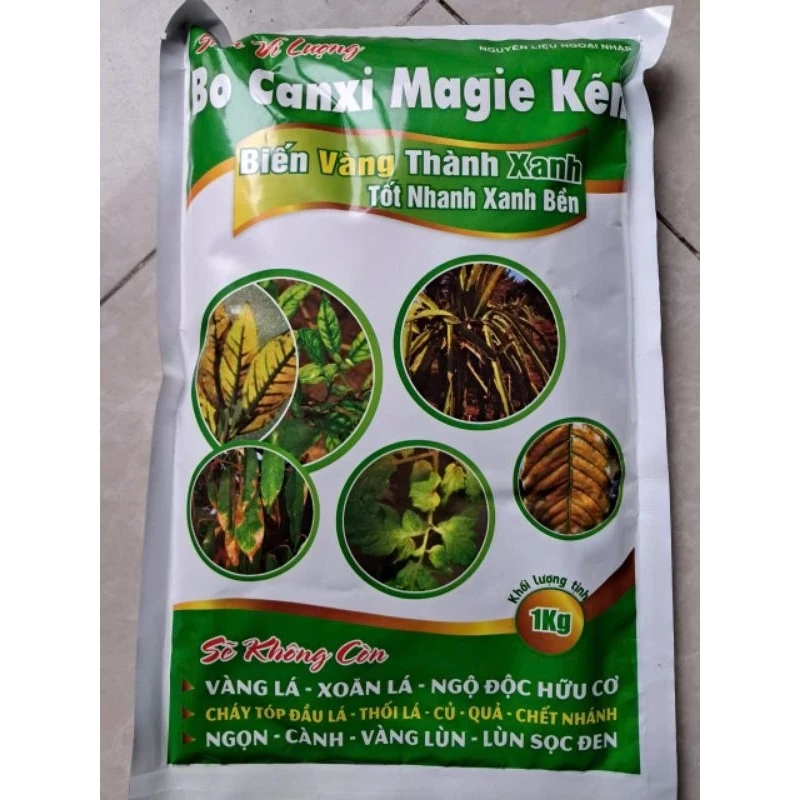
Super micronutrient Boron–Calcium–Magnesium–Zinc

Super micronutrient Boron–Calcium–Magnesium–Zinc

The Boron–Calcium–Magnesium–Zinc product is one of Viet Nhat's most popular lines. Visible results in use: - Promotes strong rooting and a robust root system; prevents yellow or rotting shoots; prevents leaf yellowing, root rot, wilting, and daytime droop. - Builds a large, sturdy plant resistant to lodging in adverse weather. - Enhances photosynthesis so new shoots flush vigorously and leaves are deep green, thick, and glossy. - Improves flowering and fruit set, giving large, glossy, heavy fruit. - Reduces acid-sulphate stress and helps detoxify organic residues; the plant recovers quickly after harvest. - Suitable for ornamentals, bonsai, flowering plants, fruit trees, and industrial crops. Dilute 1 kg in 1,000 L of water and either drench the root zone or spray the foliage.

COMBI Thailand 100 g sachet (mid- and micronutrient fertiliser)

COMBI Thailand 100 g sachet (mid- and micronutrient fertiliser)

Combi Thailand micronutrient fertiliser, 100 g sachet. A foliar mid- and micronutrient fertiliser containing the full set of essential trace elements (Mg, Fe, Zn, Cu, Mn) in chelate form so they are absorbed quickly and effectively. Helps prevent and correct micronutrient deficiencies and supports balanced overall growth. Mix at the label rate and spray to thoroughly wet the canopy at the recommended interval.

Share this page

Related articles

Related diseases

Next steps for your plant