RoseDoctor
K Deficiency

K Deficiency

Physiological

Description

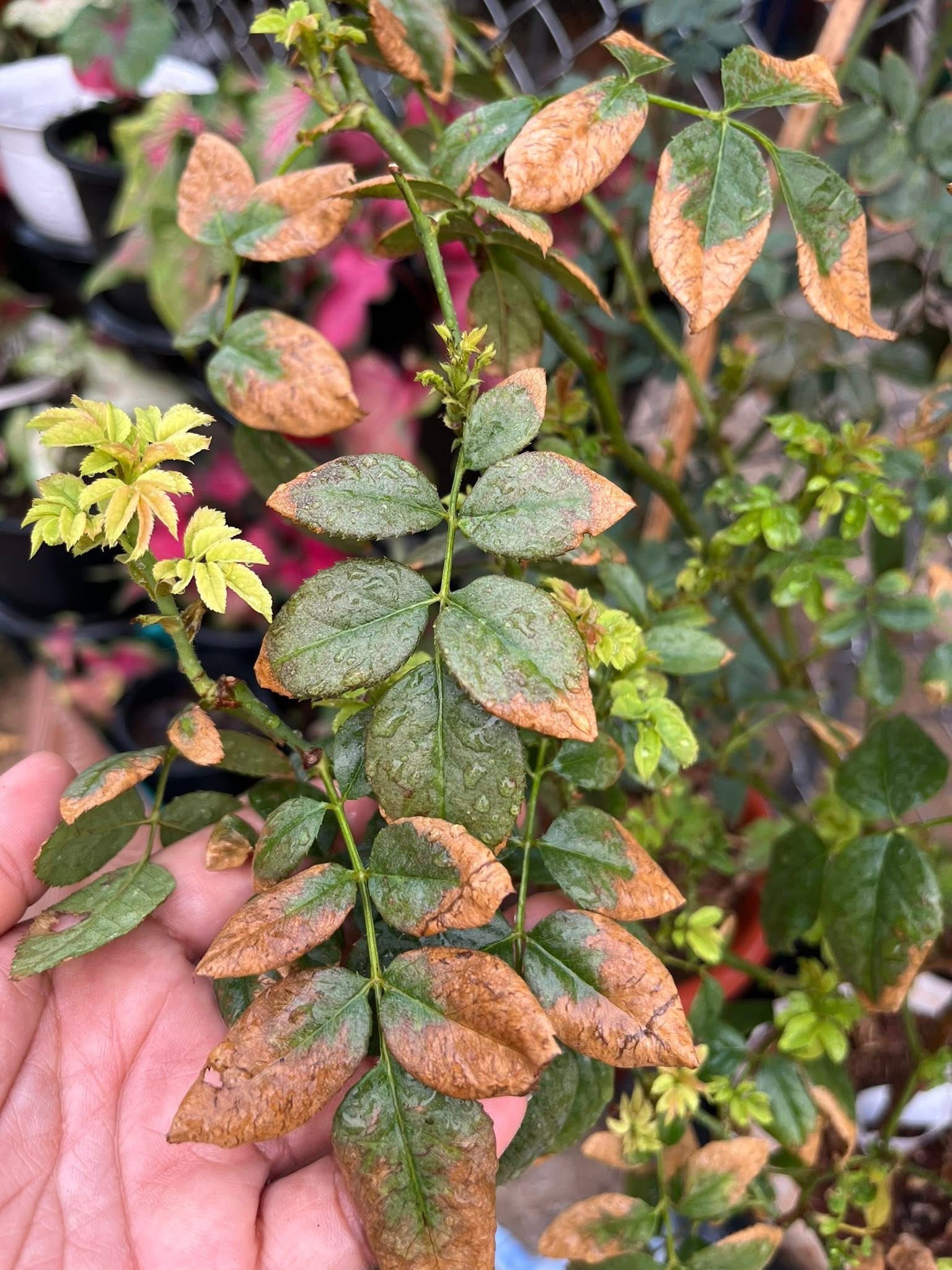
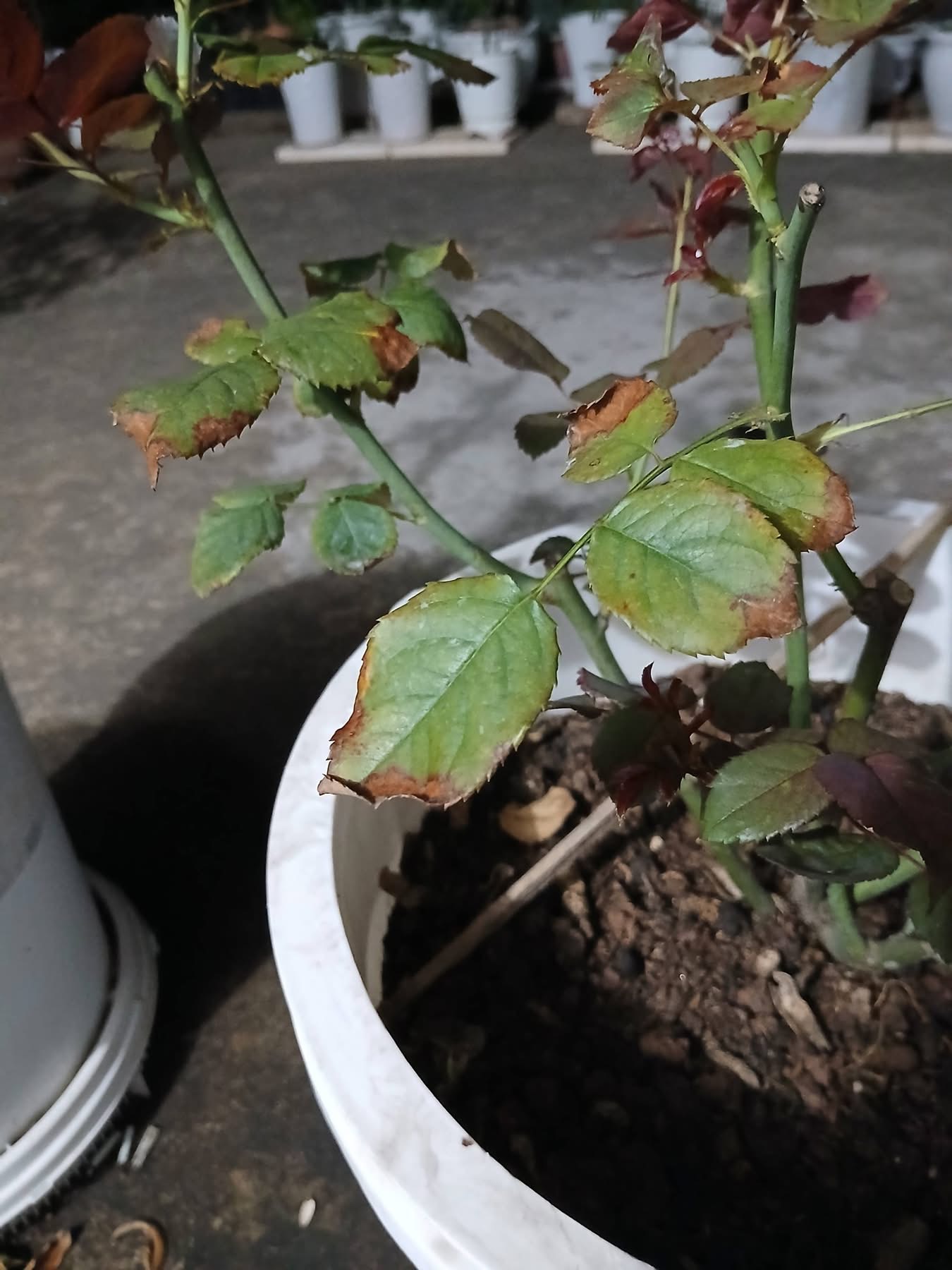
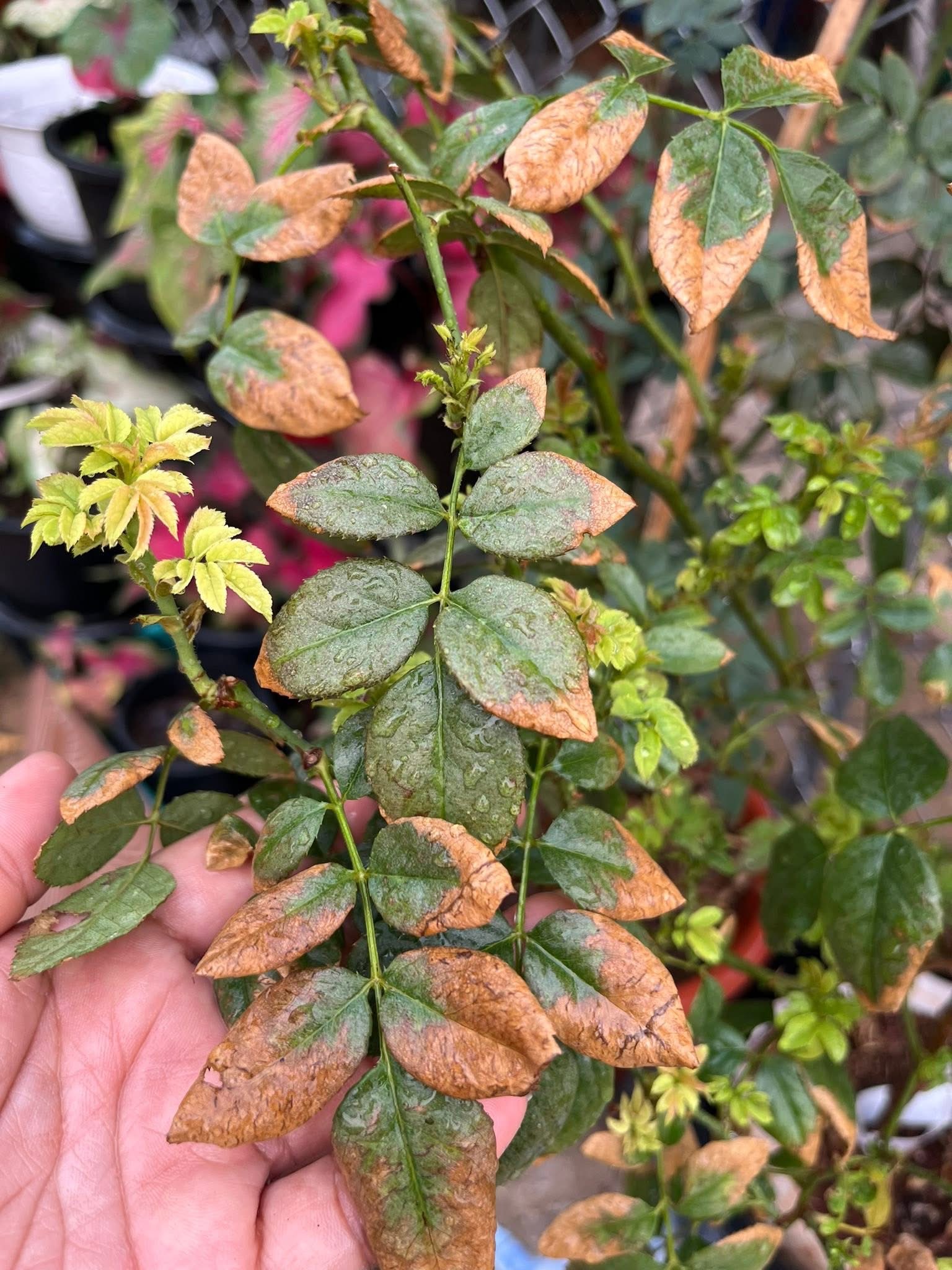
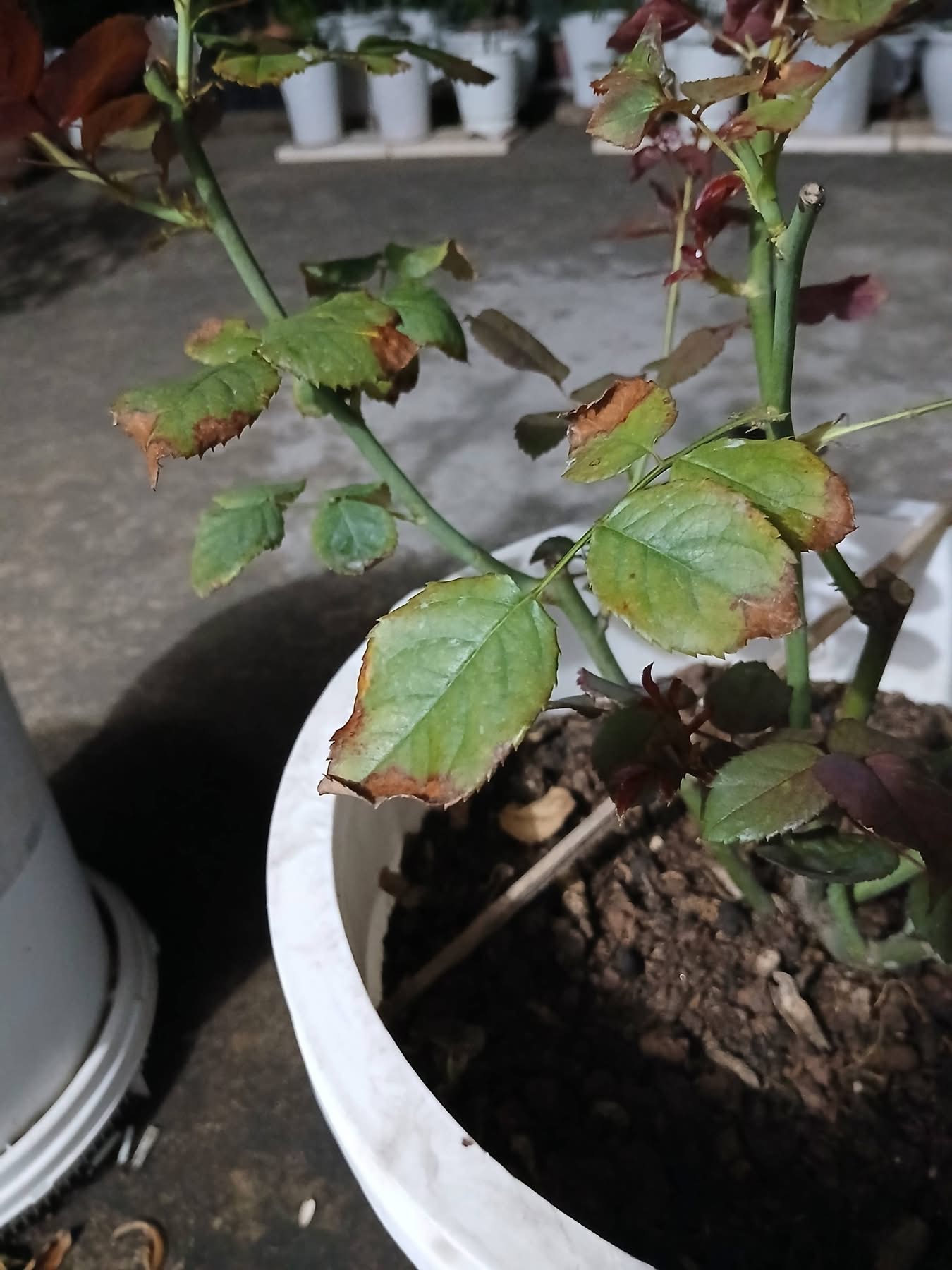
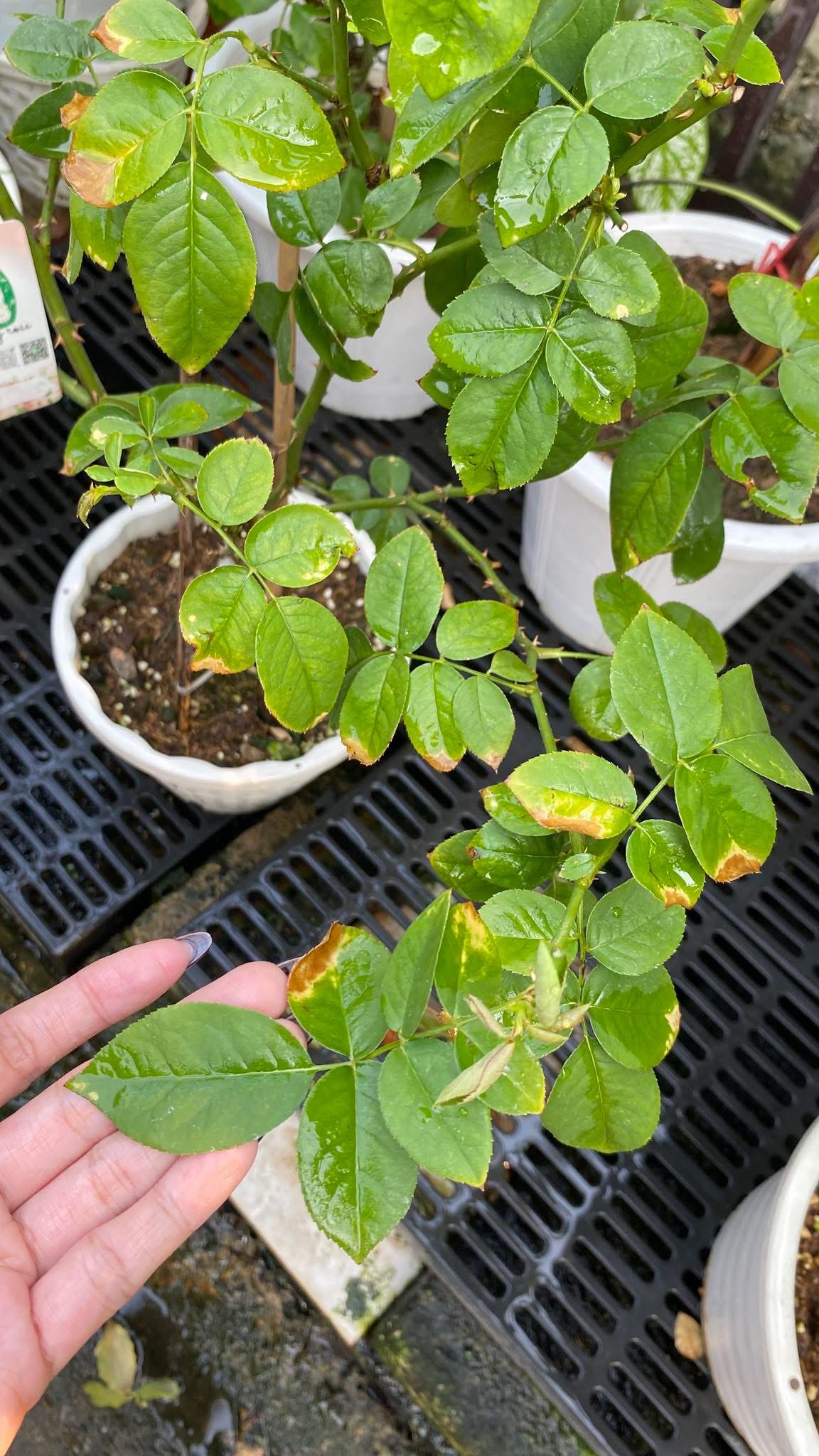
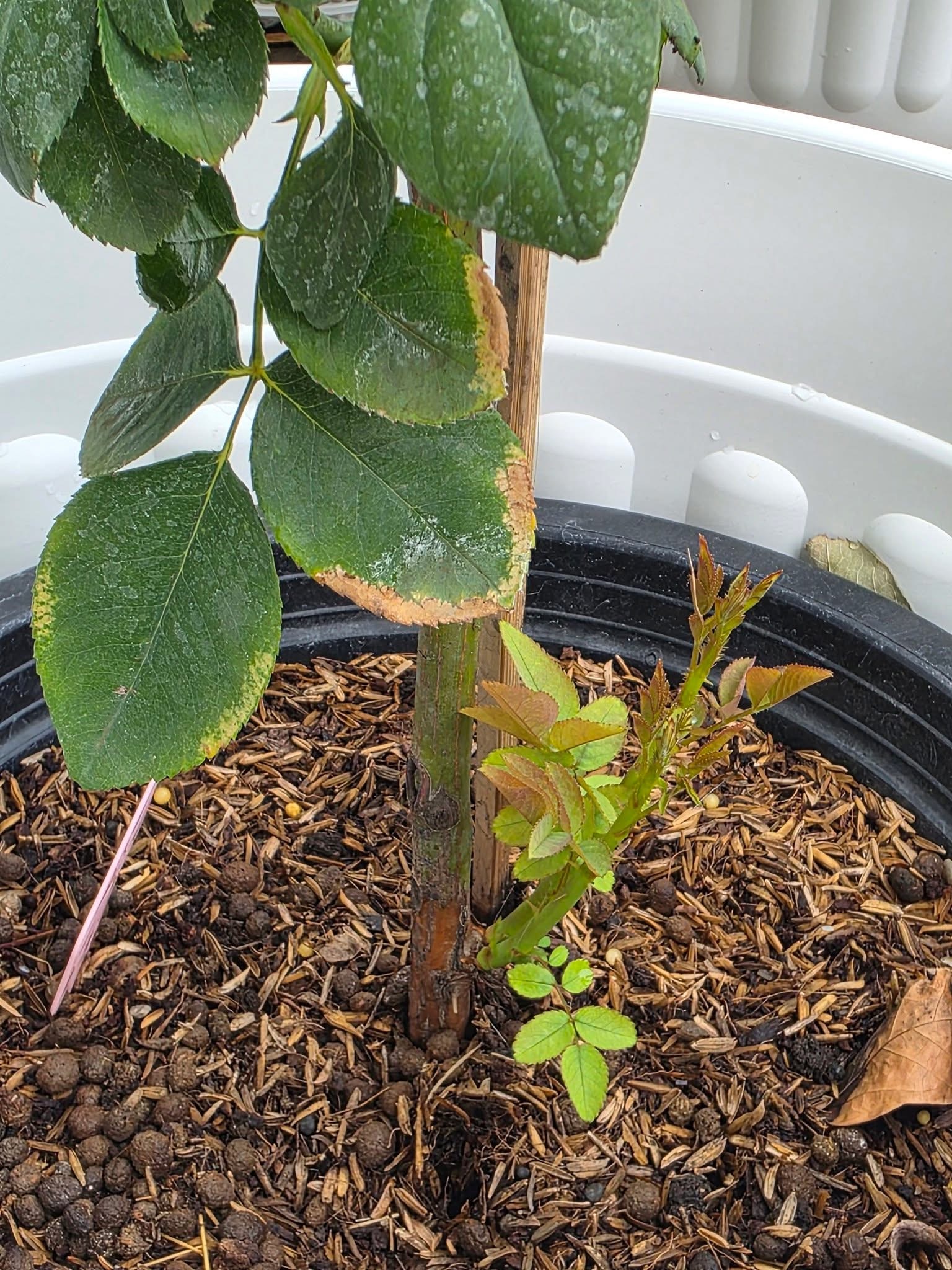
Potassium (K) deficiency is common on light (sandy) soils, leached substrates, or where nitrogen has been applied heavily without matching potassium. Potassium regulates water balance and nutrient translocation within the plant. The characteristic symptom is marginal leaf scorch — leaf edges turn brown and dry, with the necrosis advancing inward from the margin. Because K is a mobile nutrient, symptoms appear first on the older leaves.

Potassium is critical for maintaining the structural integrity and turgor of plant cell walls. A deficiency weakens these walls, diminishing the leaf's ability to retain water and making it highly susceptible to marginal scorching, especially under environmental stress.

Symptoms

  • Brown, dry leaf-edge necrosis advancing from the margin towards the midrib — most pronounced on older leaves
    Brown, dry leaf-edge necrosis advancing from the margin towards the midrib — most pronounced on older leavesBrown, dry leaf-edge necrosis advancing from the margin towards the midrib — most pronounced on older leaves
  • Leaves first take on a dark green hue, then yellow from the margin inwards, and finally scorch brown
    Leaves first take on a dark green hue, then yellow from the margin inwards, and finally scorch brownLeaves first take on a dark green hue, then yellow from the margin inwards, and finally scorch brown
  • Weak stems that bend or collapse under their own weight
  • Increased susceptibility to disease

Treatment plan

When older leaves show scorched margins (as if burned) or flower buds are small and fade quickly, potassium needs to be replenished promptly:

  • Pruning: Remove leaves with severe scorch — they will not recover — so the plant can direct its resources into new shoots.
  • Foliar feeding: This is the fastest route to uptake. Apply a foliar spray containing potassium (KNO₃ at 0.3–0.5% or potassium sulphate K₂SO₄) directly to the leaves.
  • Root drench: Drench the root zone with soluble potassium sulphate alongside the foliar spray.
  • pH correction: Test the soil pH. If the soil is too acidic (pH < 5.5), potassium uptake will be impaired no matter how much you apply. Add agricultural lime or well-rotted chicken manure to bring the pH back into balance.

Recommended products

Below are three widely available and effective options:

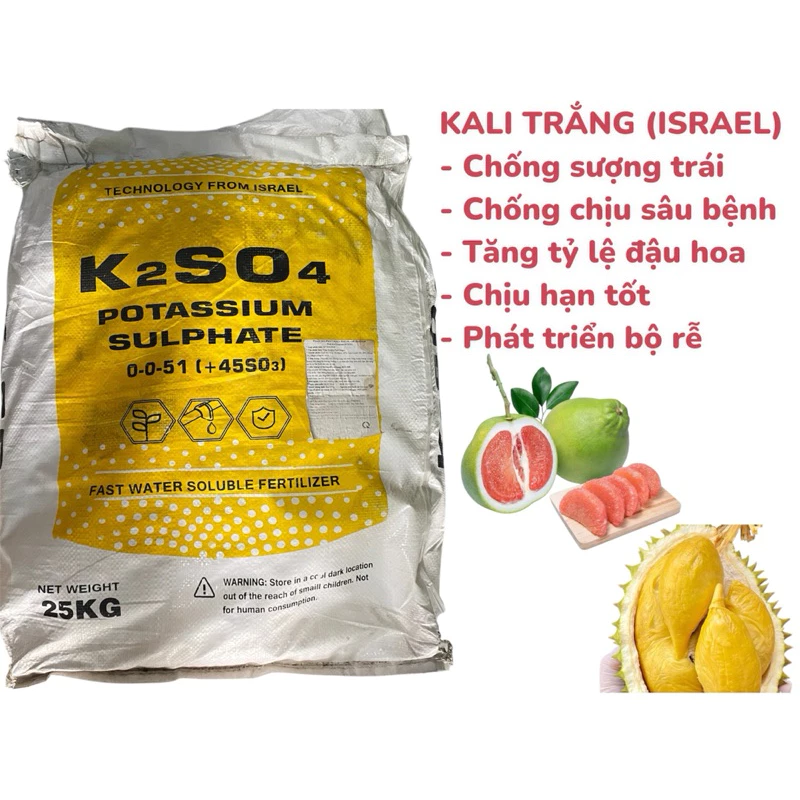
  1. Potassium sulphate (K₂SO₄) — "white potash" (fast-dissolving crystals)
  • Description: Deepens flower colour, thickens petals, and improves disease resistance. Chloride-free, so it will not burn the roots.
  • Dosage: Mix K₂SO₄ at the label rate — typically a small amount per large spray tank.
  • Application: Spray evenly over the foliage or drench the root zone in the early morning or late afternoon.
  • Frequency: Repeat at the label interval until new growth comes back healthy and green.
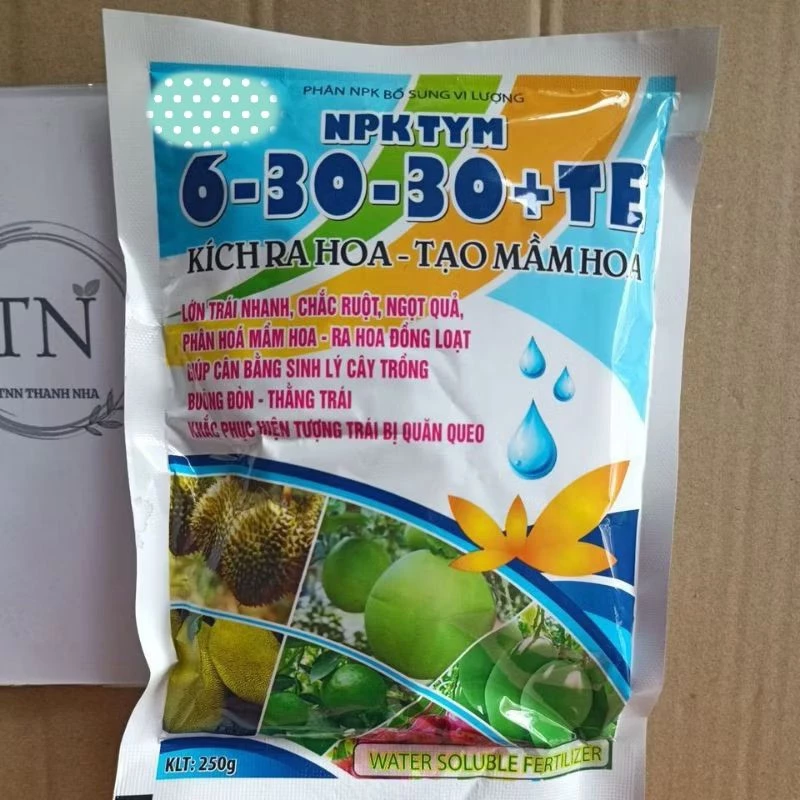
  1. Foliar NPK with a high potassium ratio (e.g. NPK 6-30-30 or similar)
  • Description: A compound foliar fertiliser used to push flowering and rapidly raise potassium levels in stressed plants.
  • Dosage: Mix at the rate stated on the label.
  • Application: Spray directly across the whole canopy.
  • Frequency: As stated on the label.
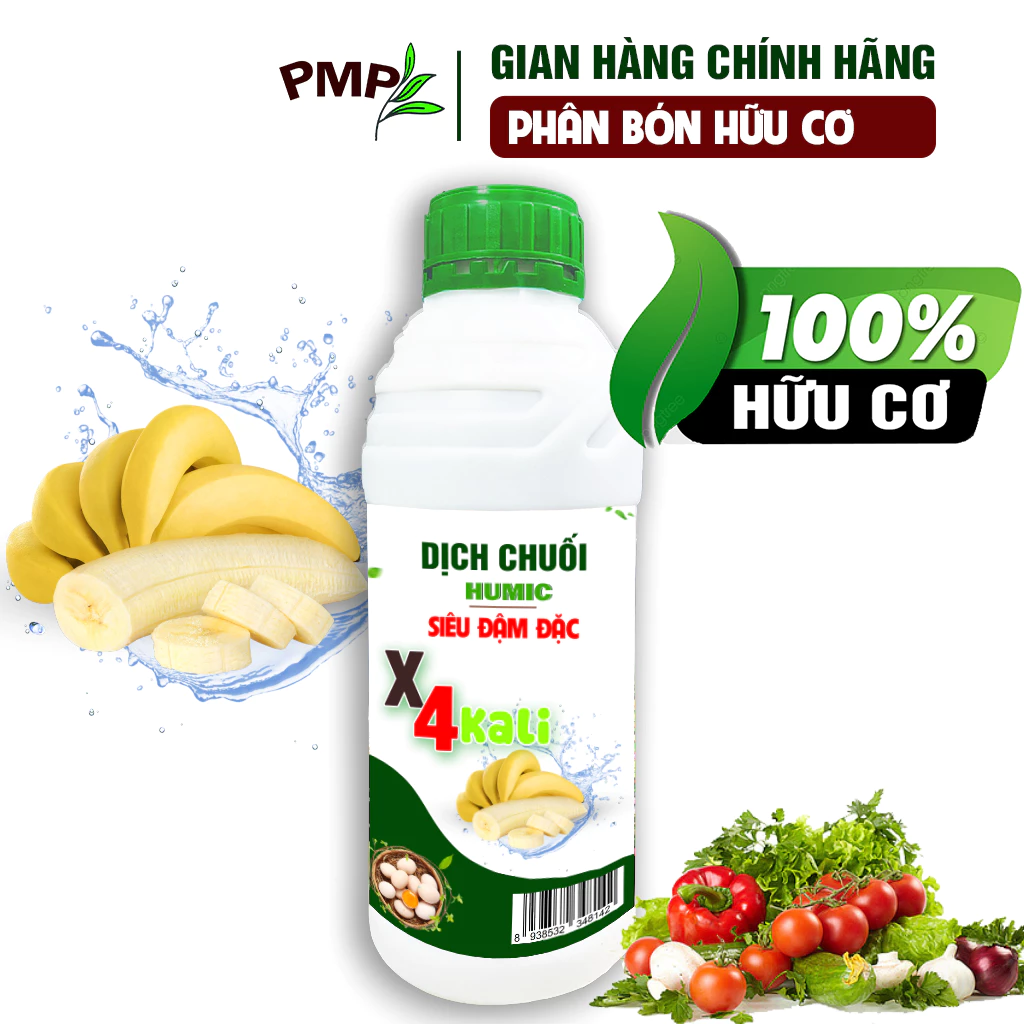
  1. Humic banana extract (an organic alternative)
  • Description: Provides organic potassium naturally derived from banana, combined with humic acids that strengthen roots and improve nutrient uptake.
  • Dosage: Dilute the banana extract as directed by the manufacturer.
  • Application: Water directly into the root zone.
  • Frequency: Apply at the recommended interval — excellent for sustained recovery.

Note: Always moisten the root zone with plain water before fertilising so the plant does not suffer fertiliser shock.

Prevention

  • Avoid heavy nitrogen feeding without proportional potassium.
  • Test the soil regularly.

Recommended products

Potassium sulphate (K2SO4) — "white potash"

Potassium sulphate (K2SO4) — "white potash"

Korean Potassium Sulphate K2SO4 0-0-51 supplies potassium (K2O) in a chloride-free form that dissolves completely in water — fine, dry white crystals with no impurities. Helps balance both alkaline and acidic soils: in alkaline or saline conditions it lowers the pH at the root surface and improves the availability of phosphorus, iron and other micronutrients; in acidic soils it limits ion leaching and the loss of potassium. Deepens flower colour, thickens petals and improves disease resistance; chloride-free so it will not burn the roots. Spray evenly over the foliage or drench the root zone in the early morning or late afternoon at the label rate and repeat until new growth comes back healthy and green.
NPK 6-30-30 fertiliser

NPK 6-30-30 fertiliser

Composition: N 6%, P2O5 30%, K2O 30%, plus trace elements. A high-potassium foliar NPK used to push flowering and rapidly raise potassium levels in stressed plants. Mix at the label rate and spray directly across the whole canopy.

Humic banana extract PMP X4 (natural potassium)

Humic banana extract PMP X4 (natural potassium)

An organic humic banana extract fermented with US-style microbial cultures, using 100% fresh nutrient-rich bananas from the famous Hiep Hoa - Bac Giang growing region. The fruit is finely milled and never cooked, preserving its vitamins; no chemicals are used in fermentation. Banana solids are hydrolysed by specialised microbes together with humic acid, providing natural organic potassium plus humic acids that strengthen roots and improve nutrient uptake. Dilute as directed and water directly into the root zone at the recommended interval for sustained recovery.

Share this page