
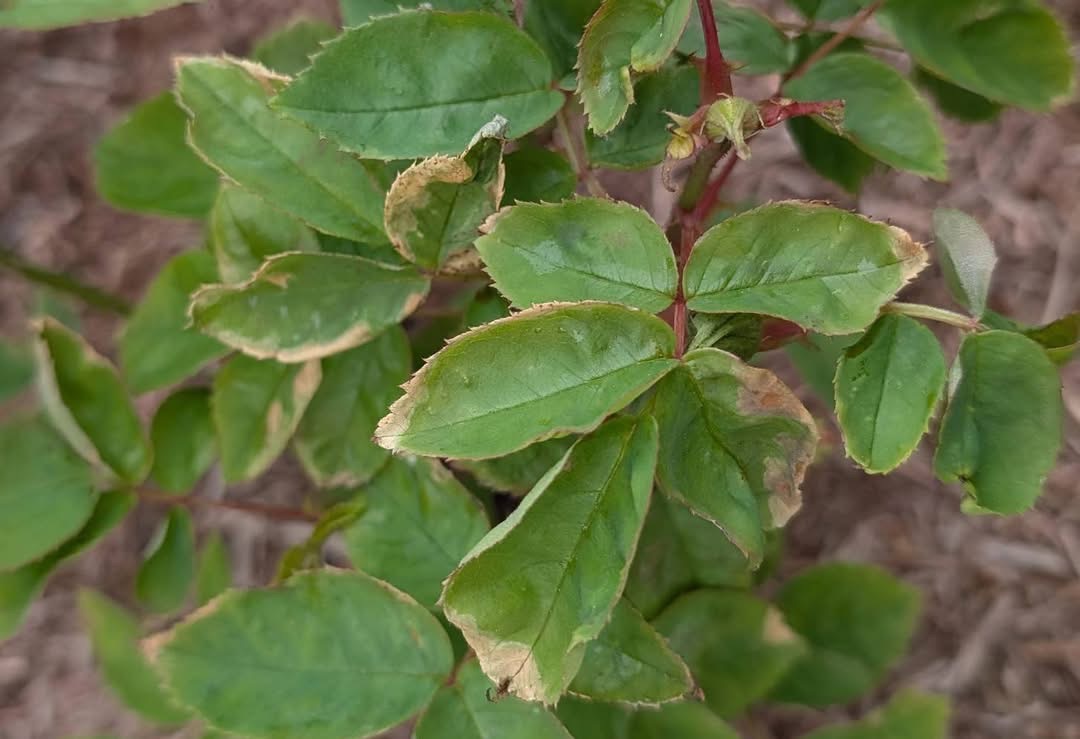
Identifying the Causes of Leaf Scorch in Roses: Water Deficiency, Potassium Deficiency, or Fertilizer Burn?
Why do leaf edges often burn first?
Leaf edges are the furthest from the water transport system and also where transpiration is most active. When a plant experiences issues with water balance or nutrient transport, the leaf edges will be affected first.
The process typically unfolds in the following order: first, the leaf edges begin to lose water, then turn pale yellow, followed by browning and drying, and finally, the necrotic area gradually spreads inward towards the leaf blade.
The difference lies in the cause of water loss, which then creates distinct symptoms.
1. Water Deficiency
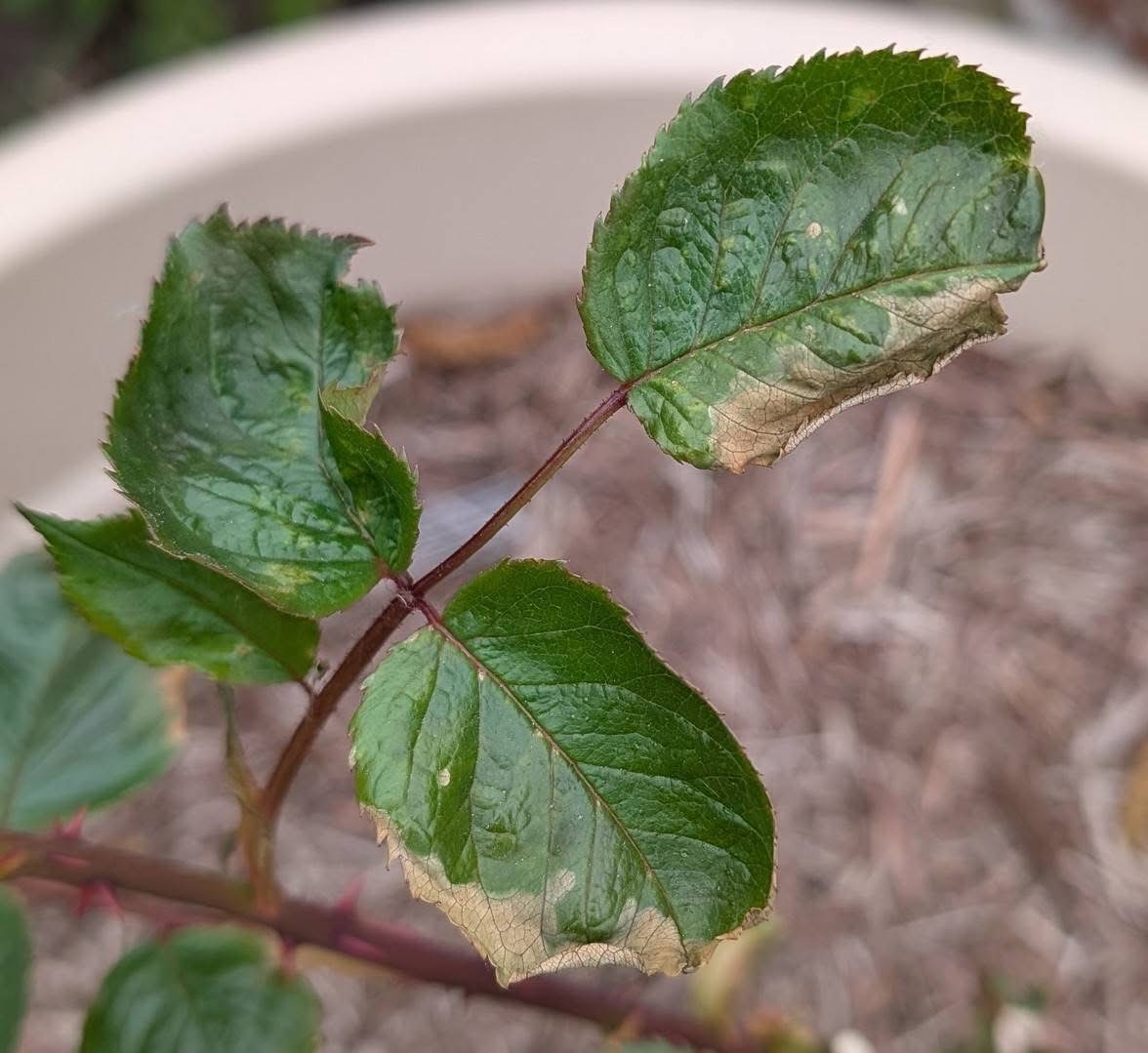
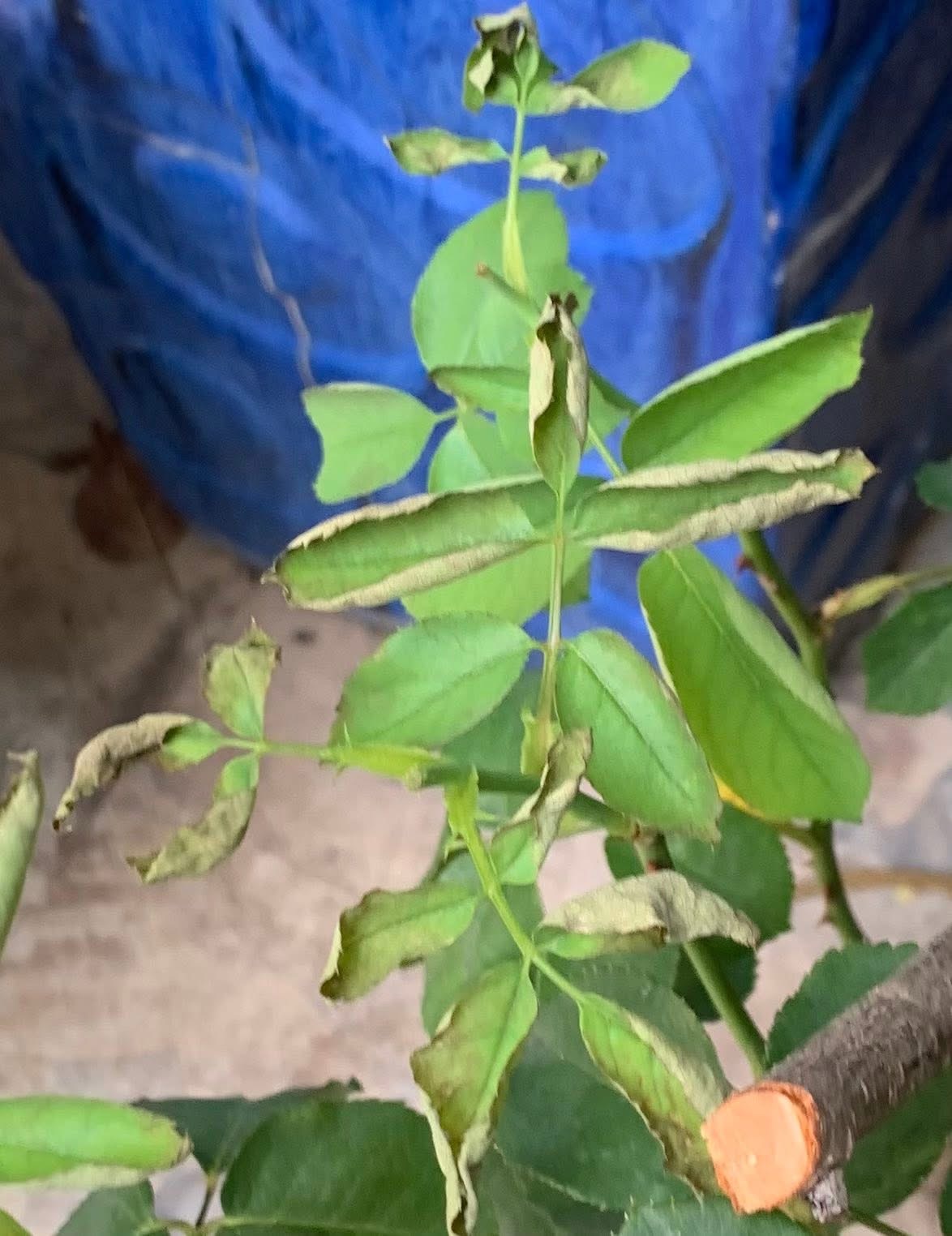
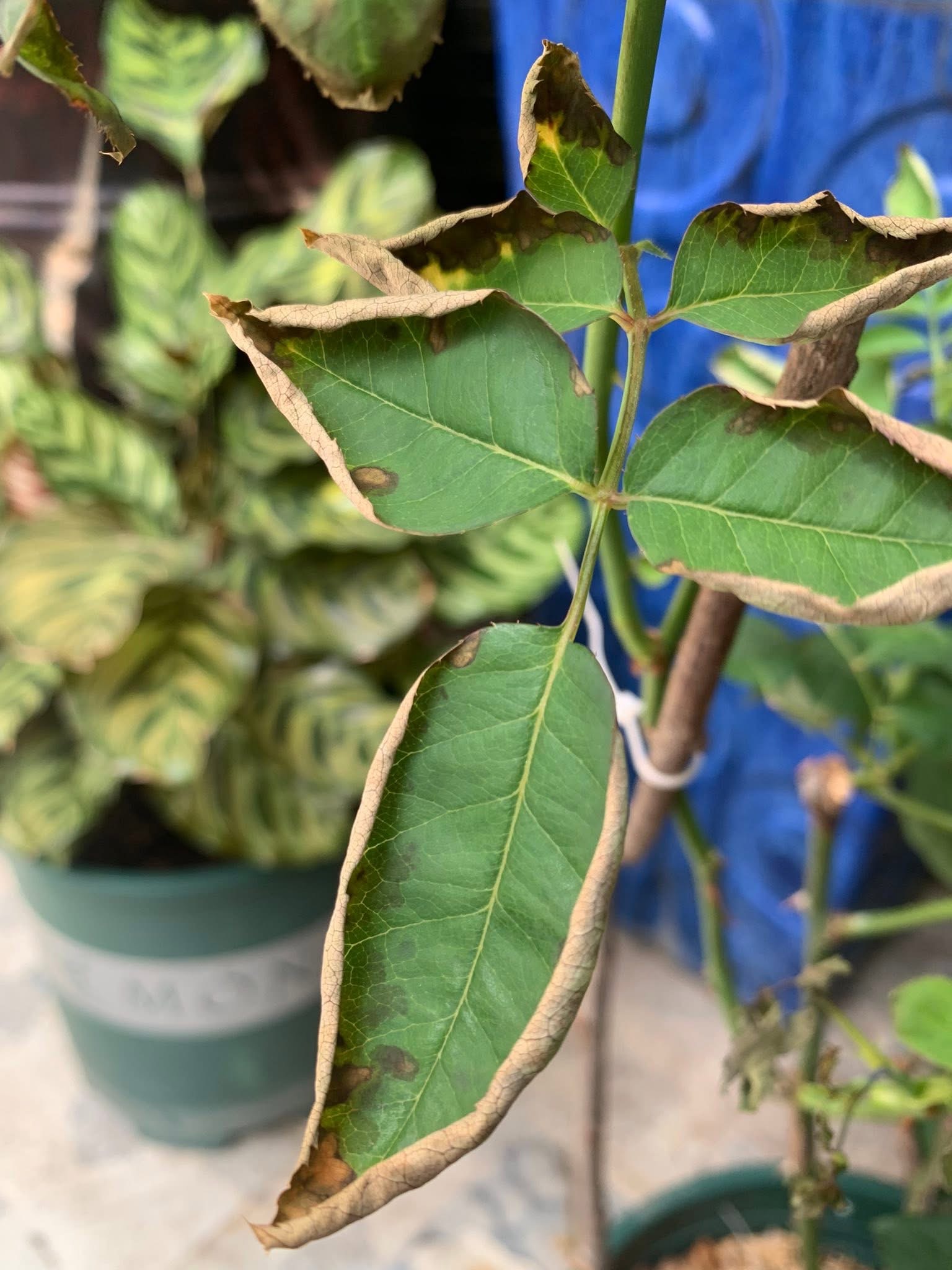
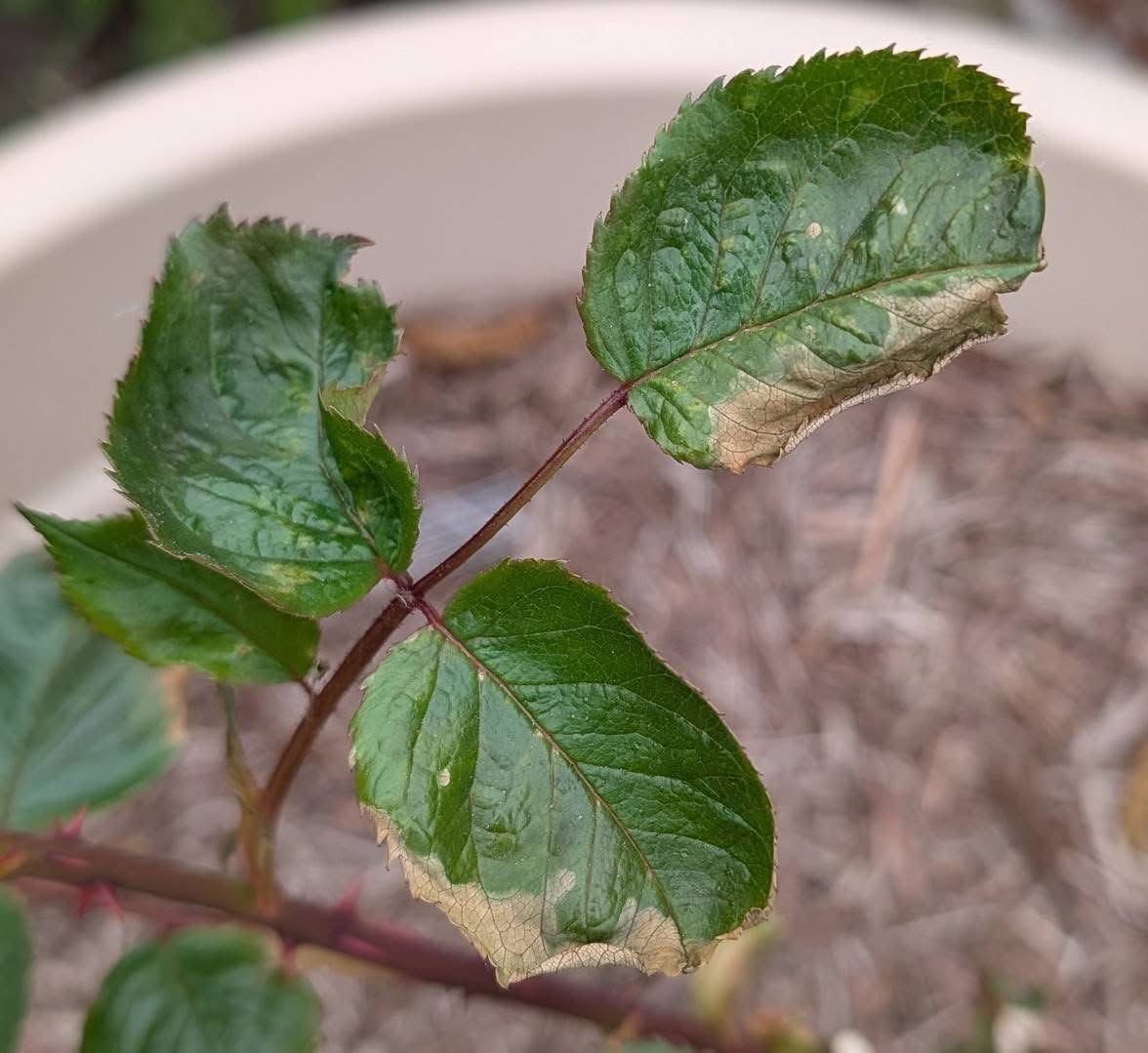
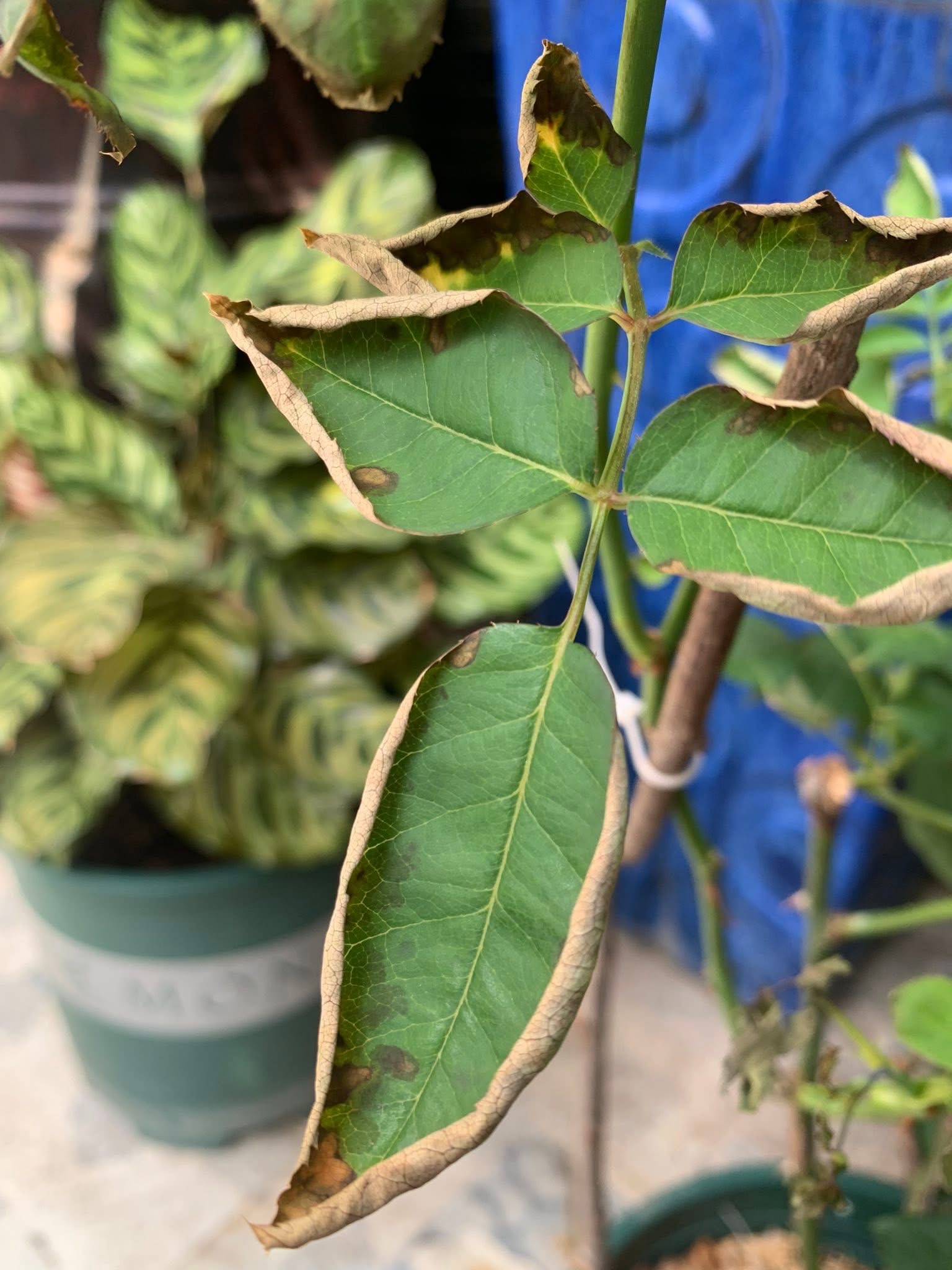
Mechanism
When the amount of water absorbed by the plant is less than the amount lost through the leaves, the water pressure in the cells decreases. Leaf edges are the first to experience water deficiency, thus quickly burning.
Possible causes include:
- Insufficient watering.
- Potting mix is too dry.
- Prolonged hot weather.
- Strong winds increasing transpiration.
- Weak root system leading to poor water absorption.
Symptoms
On leaves
- Burning starts from the leaf tip or edge.
- Symptoms often appear simultaneously on both young and old leaves, especially those at the ends of branches.
- Leaf blades lose their turgor, wilt, and droop before the edges dry out.
- Leaf edges become dry and brittle; the burnt areas can quickly turn dark grayish-brown.
- Less distinct yellow halo compared to nutrient deficiencies.
On the plant
- Plant clearly wilts at midday.
- Young buds and flowers may droop.
- May recover in the evening or after watering if roots are not severely damaged.
- New shoots develop slowly.
- Flowers are smaller than usual.
Easy-to-recognize signs
Water deficiency often causes the plant to wilt quite uniformly, especially during intense heat or when the potting mix dries out quickly. If watered in time, the plant can recover relatively fast, provided the roots are not severely damaged. Burnt areas due to water deficiency usually dry out very quickly, appearing as if from "heat shock" or sudden scorching.
2. Potassium (K) Deficiency
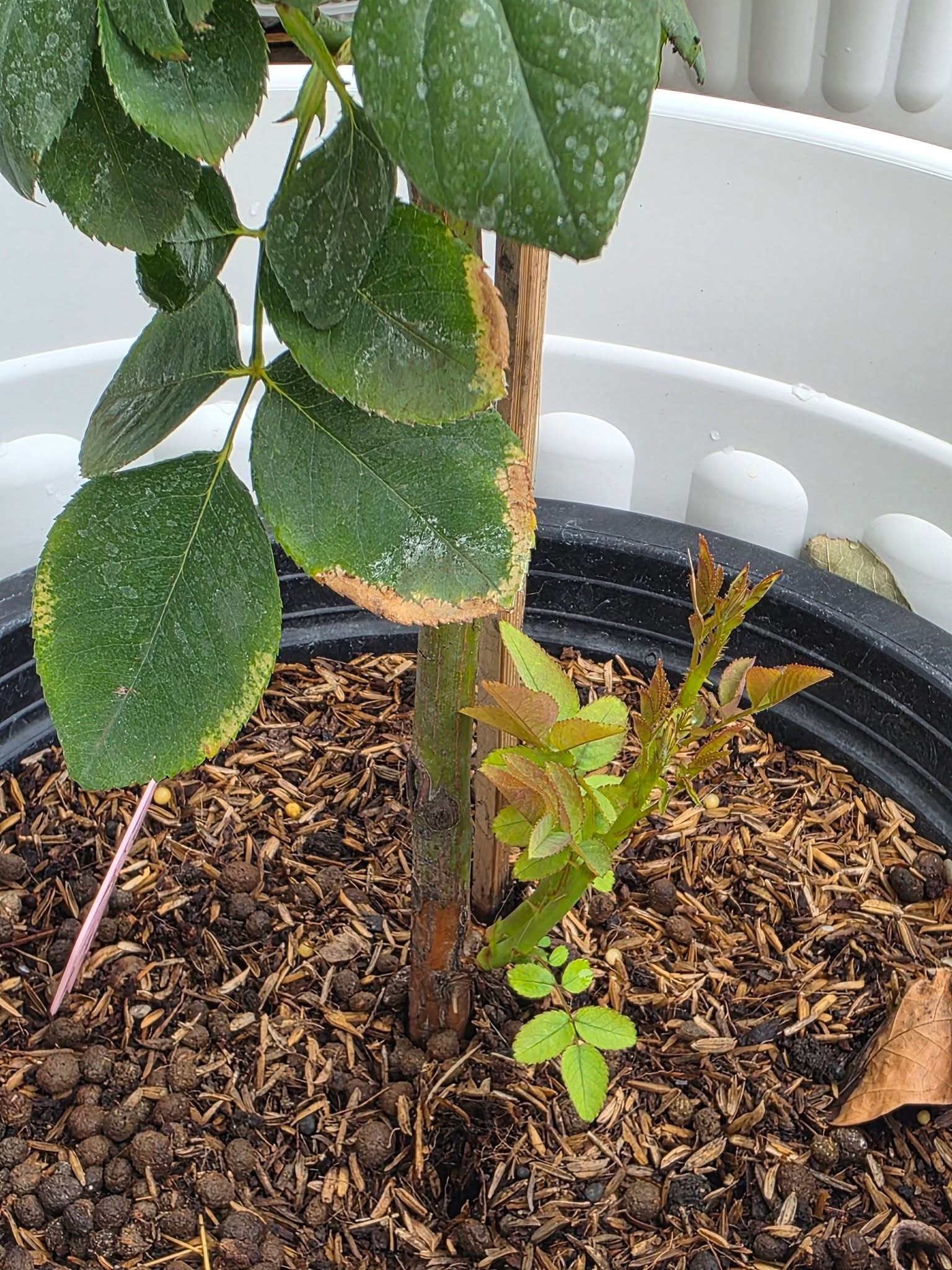
Role of Potassium
Potassium helps:
- Control stomatal opening and closing.
- Regulate water in cells.
- Increase drought tolerance.
- Strengthen cell walls.
- Support sugar and carbohydrate transport.
When potassium is deficient, leaf edges cannot withstand the pressure of water loss and thus become necrotic first.
Symptoms
On leaves
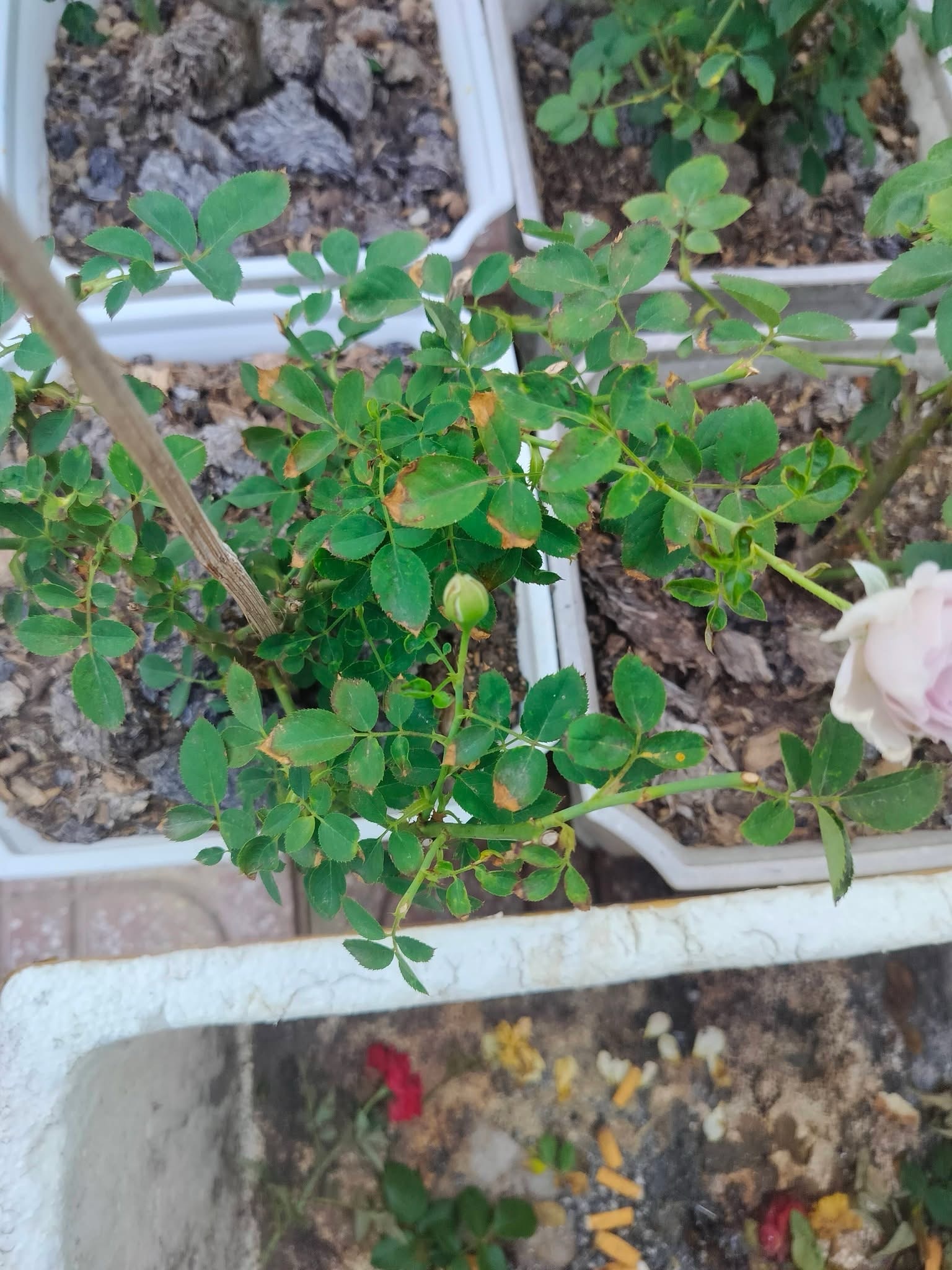
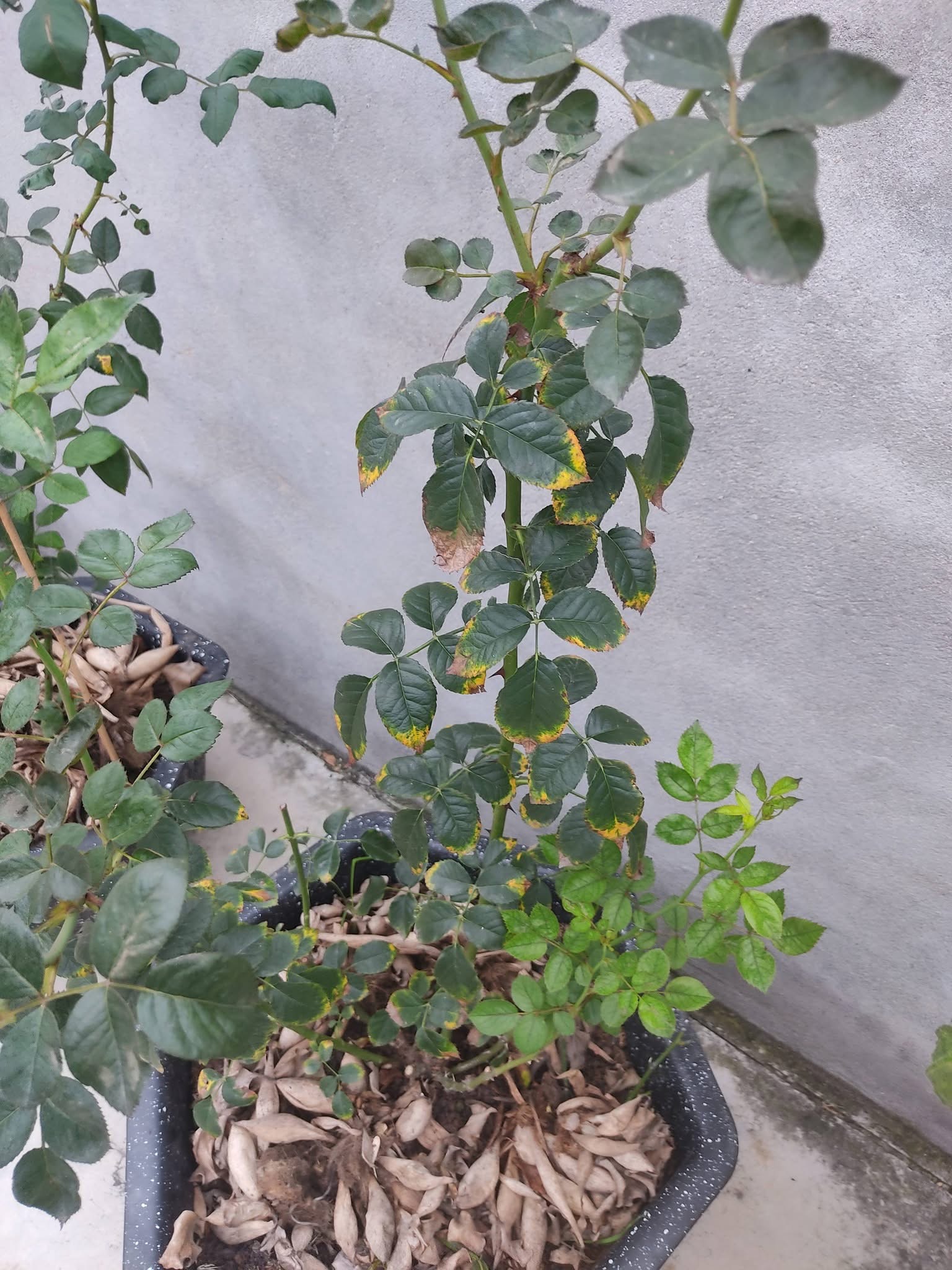
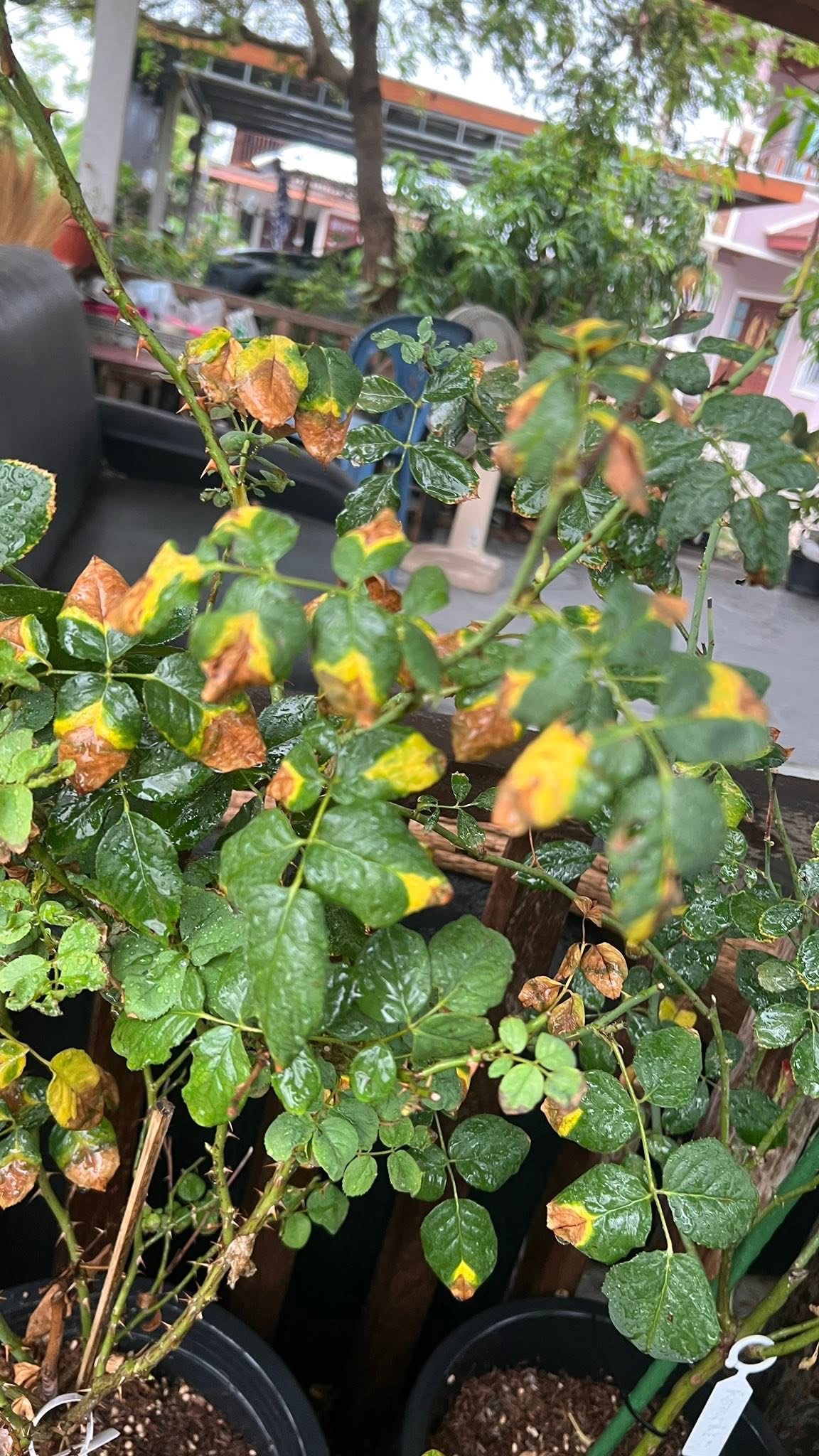
- Appears first on older leaves, typically those at the lower levels before gradually spreading upwards.
- Leaf edges turn pale yellow first, then dry and brown.
- The central part of the leaf and the midrib remain dark green for quite some time.
- Leaf blades usually remain flat or curl upwards at the edges, not wilting uniformly like with water deficiency.
- The burnt area spreads along the leaf margin, with a relatively clear boundary between the burnt and green areas.
On the plant
- Slow plant growth.
- Stems are thin and weak.
- Flower buds are small, potentially deformed.
- Blind shoots, few or no flowers.
- Reduced resistance to pests and diseases.
Important signs
Potassium deficiency usually does not appear suddenly but progresses slowly. The most common symptom is older leaves at the bottom or middle of the plant starting to yellow at the edges, then gradually drying and browning. The burnt area is often quite uniform along the leaf margin, while the midrib and central part of the leaf remain green for a period.
3. Fertilizer Burn (High EC)
Mechanism
This cause is very easily confused with water deficiency.
When too much fertilizer is applied or the potting mix accumulates excessive salts:
- Osmotic pressure around the roots increases significantly.
- Roots cannot absorb water.
- Water may even be drawn out of the roots.
The result is physiological drought, even though the soil remains moist.
Symptoms
On leaves
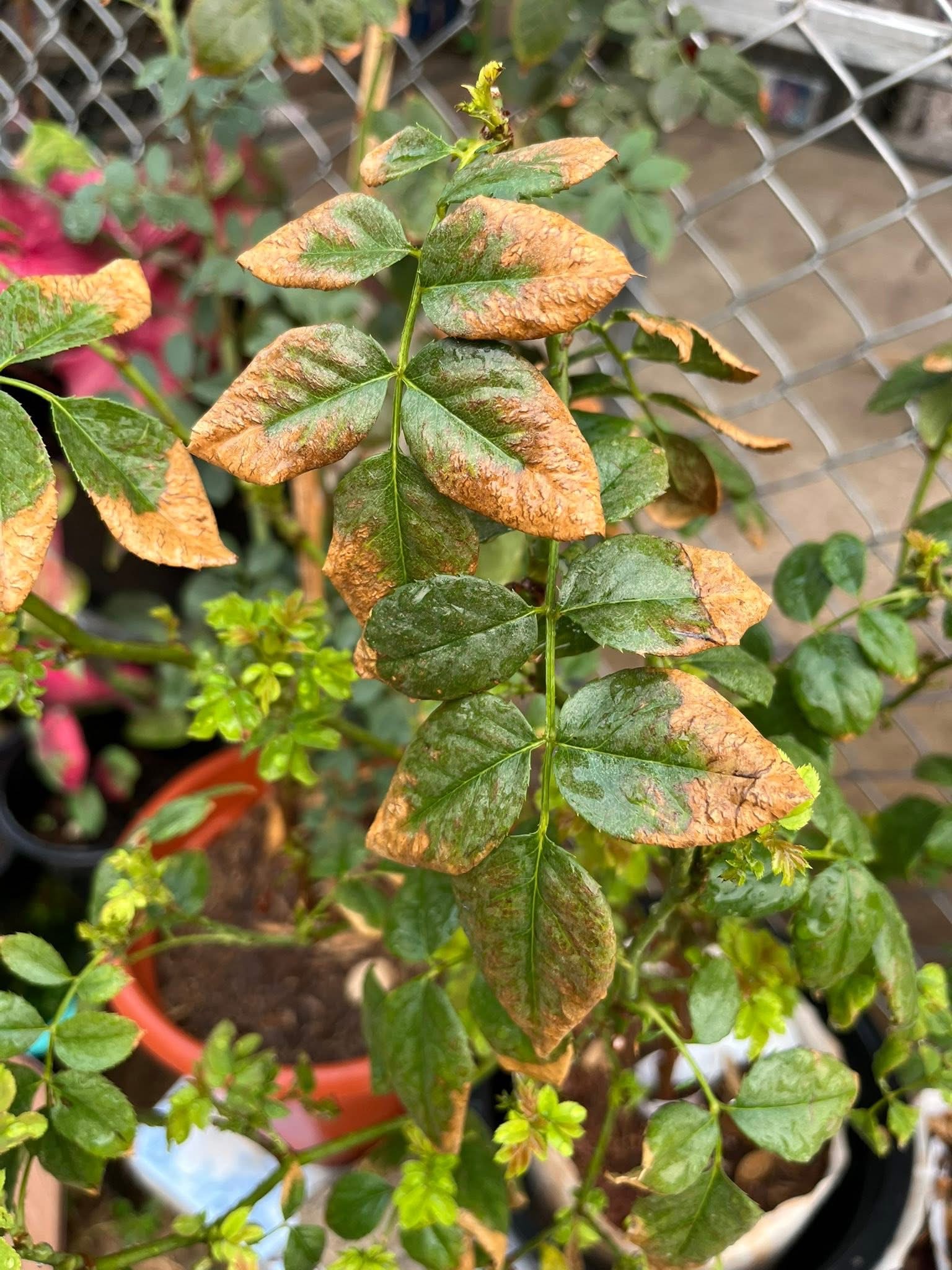
- Leaf tips burn first.
- Then spreads very quickly to the leaf edges.
- Burnt edges are dark brown.
- Leaves are thicker than normal.
- Leaves often curl downwards (cup).
- Leaf tips dry very sharply.
On the plant
- Appears hours to days after fertilizer application.
- New shoots stop growing.
- May experience rapid leaf drop.
- If severe, entire young branches may burn.
Distinctive signs
Potting mix:
- Still moist.
- May show a white salt crust on the surface.
- High potting mix EC.
If the plant is dug up for inspection:
- Tips of young roots may turn brown.
- Roots are burnt or dead.
Quick Comparison
| Identifying Feature | Water Deficiency | Potassium Deficiency | Fertilizer Burn |
|---|---|---|---|
| Leaf position affected first | Appears uniformly on both young and old leaves, especially those at the ends of branches | Starts consistently on older leaves at the lower levels first, then gradually spreads to upper leaves | Can appear on both young and old leaves, often prominent on new shoots and rapidly growing leaves |
| Leaf blade appearance | Entire leaf wilts, droops, loses turgor before leaf edges dry out | Leaf blade remains flat or curls upwards at the edges, midrib retains dark green color | Leaf blade is thick, stiff, may cup downwards; new shoots stop growing, leaves lose vitality even if potting mix is moist |
| Color of burnt area | Burnt areas dry quickly, turn dark grayish-brown and brittle abruptly, often due to intense heat shock | Leaf edges turn pale yellow, then dry and burn to brown; clear boundary between burnt and green areas | Edges and tips of leaves burn dark brown, dry sharply; can burn very quickly after fertilization |
| Rate of spread | Very fast, large areas of leaves dry and burn after just 1–2 days of intense sun without watering | Slow, gradual; initially just a thin border along the edge and tip, only spreading deeper into the leaf blade after several weeks | Very fast, can appear hours to days after fertilizer application or salt accumulation |
| Other accompanying signs | Soil in pot is bone dry, cracked; young buds and flowers droop | Stems are thin and weak; flower buds are small, deformed, or blind shoots with no flowers | Potting mix is still moist, may have a white salt crust on the surface; young roots burn brown or die |
| Quick identification tip | Uniform wilting, quick recovery after watering | Older leaves at lower levels burn first, midrib remains green | Appears immediately after fertilization, soil is moist but plant still wilts |
How to Check in Practice
Step 1: Check the potting mix
- Dry potting mix → prioritize water deficiency.
- Potting mix is still moist → proceed to Step 2.
Step 2: Observe the timing of appearance
- 1–3 days after fertilization → suspect fertilizer burn.
- Not related to fertilization → proceed to Step 3.
Step 3: Observe which leaves are affected first
- Older leaves at the lower levels burn first, midrib still green → suspect potassium deficiency.
- Both young and old leaves wilt simultaneously, especially those at the ends of branches → suspect water deficiency.
- Both young and old leaves burn after fertilization → suspect fertilizer burn.
Step 4: Observe leaf blade and curling direction
| Sign | High probability |
|---|---|
| Wilting, drooping, loss of turgor | Water deficiency |
| Leaf blade remains flat or curls upwards at the edges, midrib dark green | Potassium deficiency |
| Leaves thick, stiff, clearly cupping downwards | Fertilizer burn |
Note that these are only supporting signs and should not be used in isolation for conclusions.
Treatment Directions
If water deficient
- Water the entire root ball thoroughly.
- Adjust watering frequency according to weather conditions.
- Mulch the base to reduce evaporation.
- Check the root system if the plant still wilts despite watering.
If potassium deficient
- Supplement with potassium-rich fertilizer according to recommended dosage.
- Ensure balance with Nitrogen (N) and Phosphorus (P), avoid increasing potassium alone.
- Monitor new leaves, as burnt leaves will not recover.
If fertilizer burn
- Stop fertilizing immediately.
- Flush out salts by watering the potting mix thoroughly with clean water (if the potting mix drains well).
- Check the potting mix EC before re-fertilizing.
- Only resume fertilizing when the plant shows healthy new roots and shoots.
Conclusion
Although all cause leaf edge burn, water deficiency, potassium deficiency, and fertilizer burn have entirely different mechanisms. Growers should not rely solely on the color of the burnt area but need to combine multiple signs such as potting mix moisture, timing of appearance, location of affected leaves, leaf blade morphology, leaf curling direction, and fertilization history.
An important principle is not to rush to add more fertilizer before identifying the cause, because if the plant is suffering from fertilizer burn, adding more will exacerbate root damage. Observing the plant as a whole and checking growing conditions will help determine the correct course of action and limit damage.