
Whitefly
InsectDescription
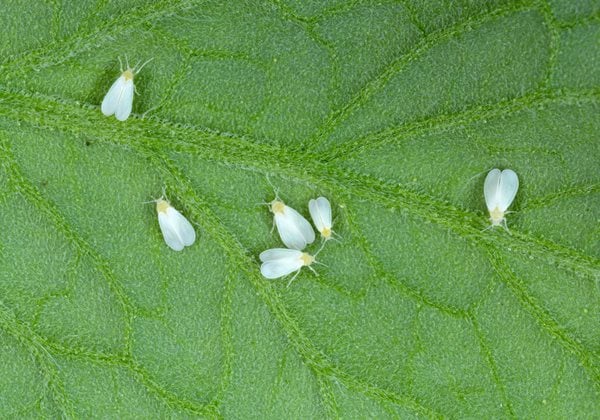
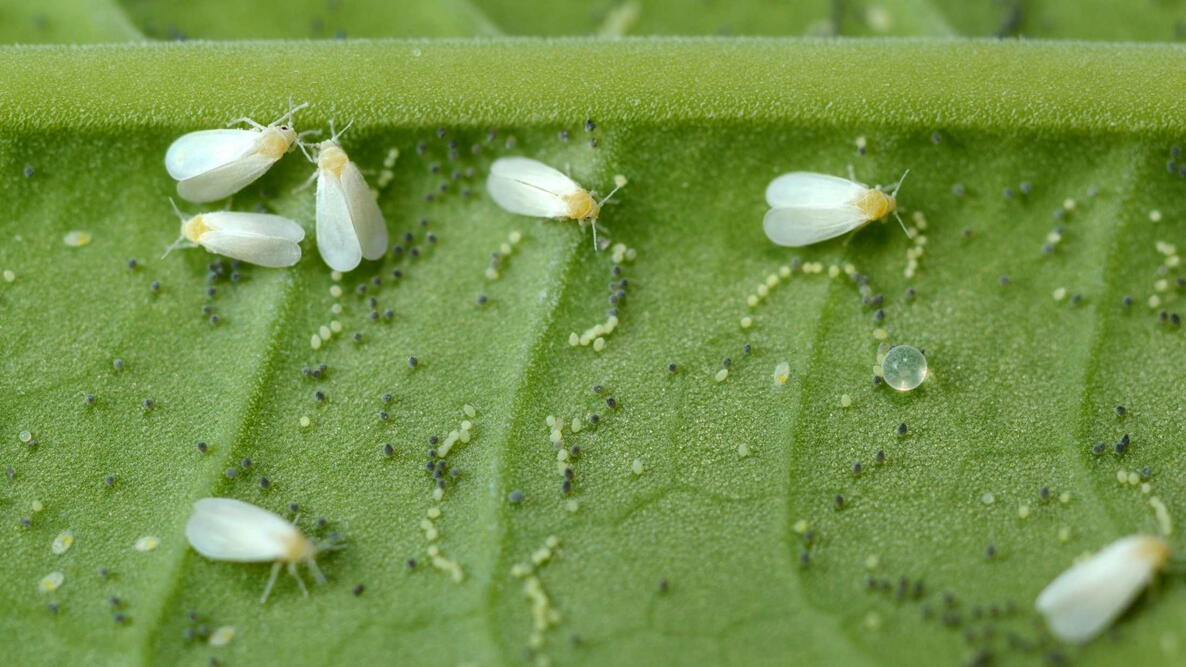
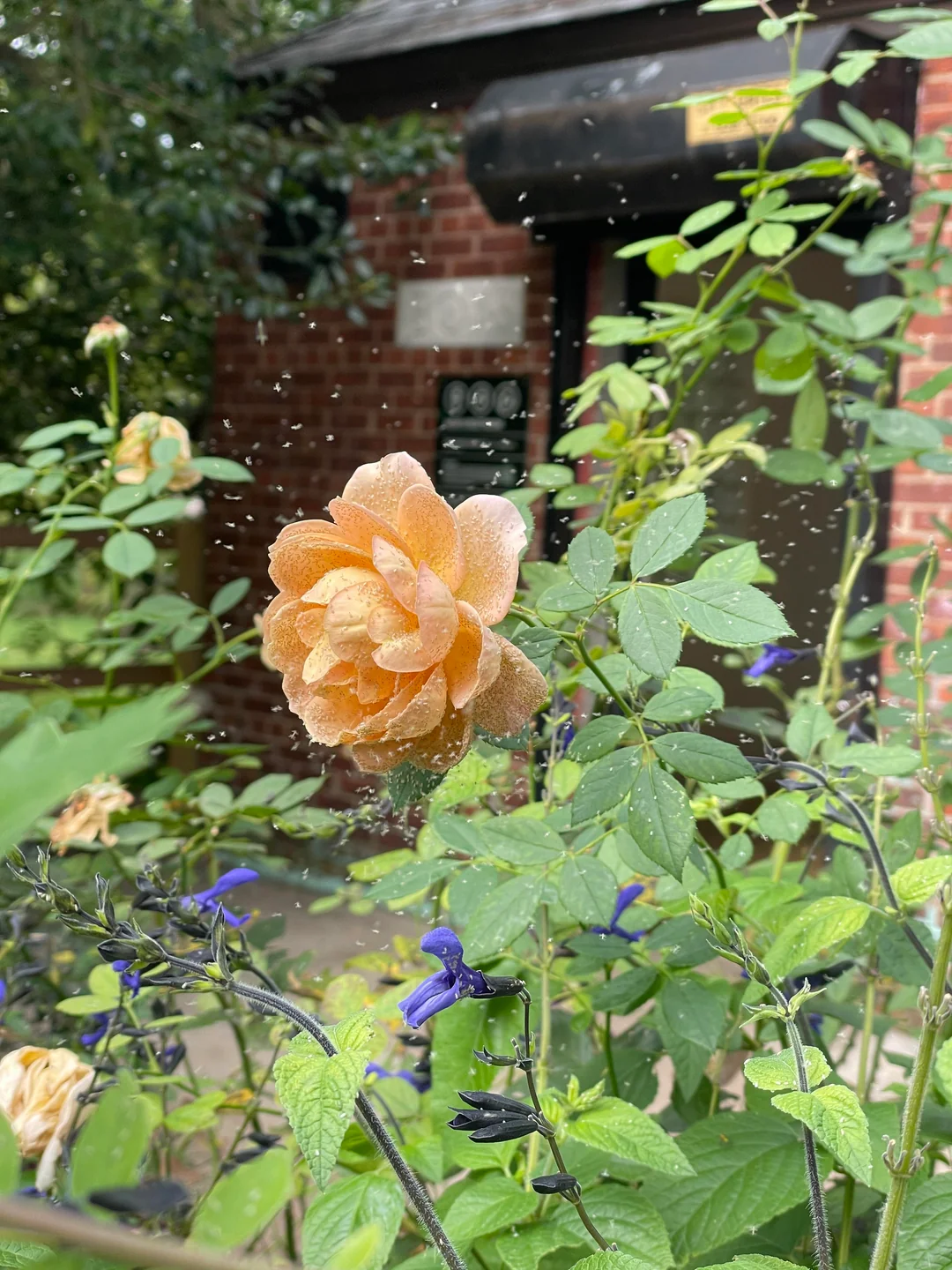
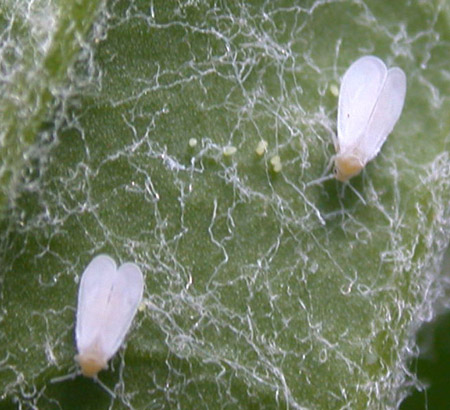
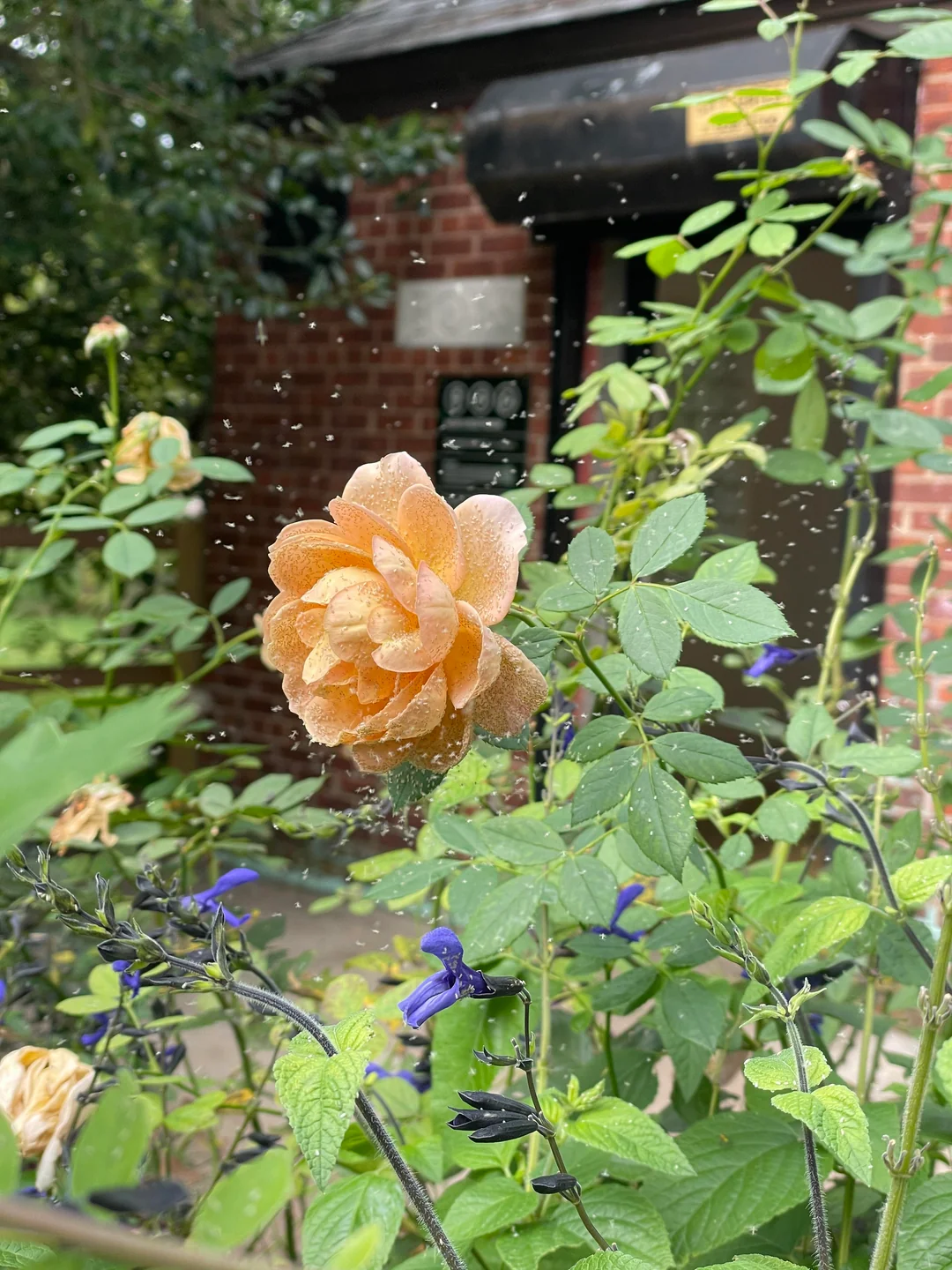
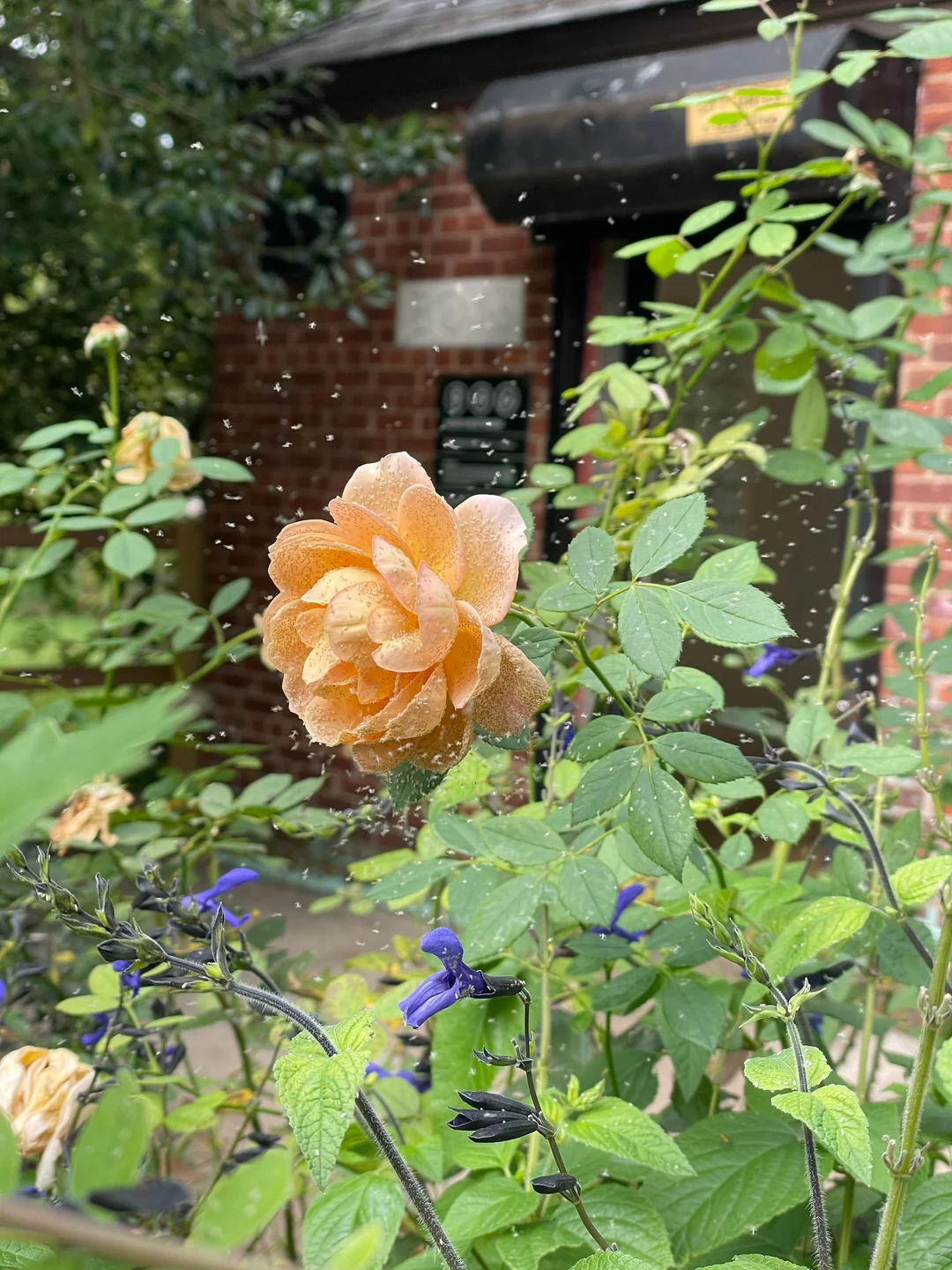
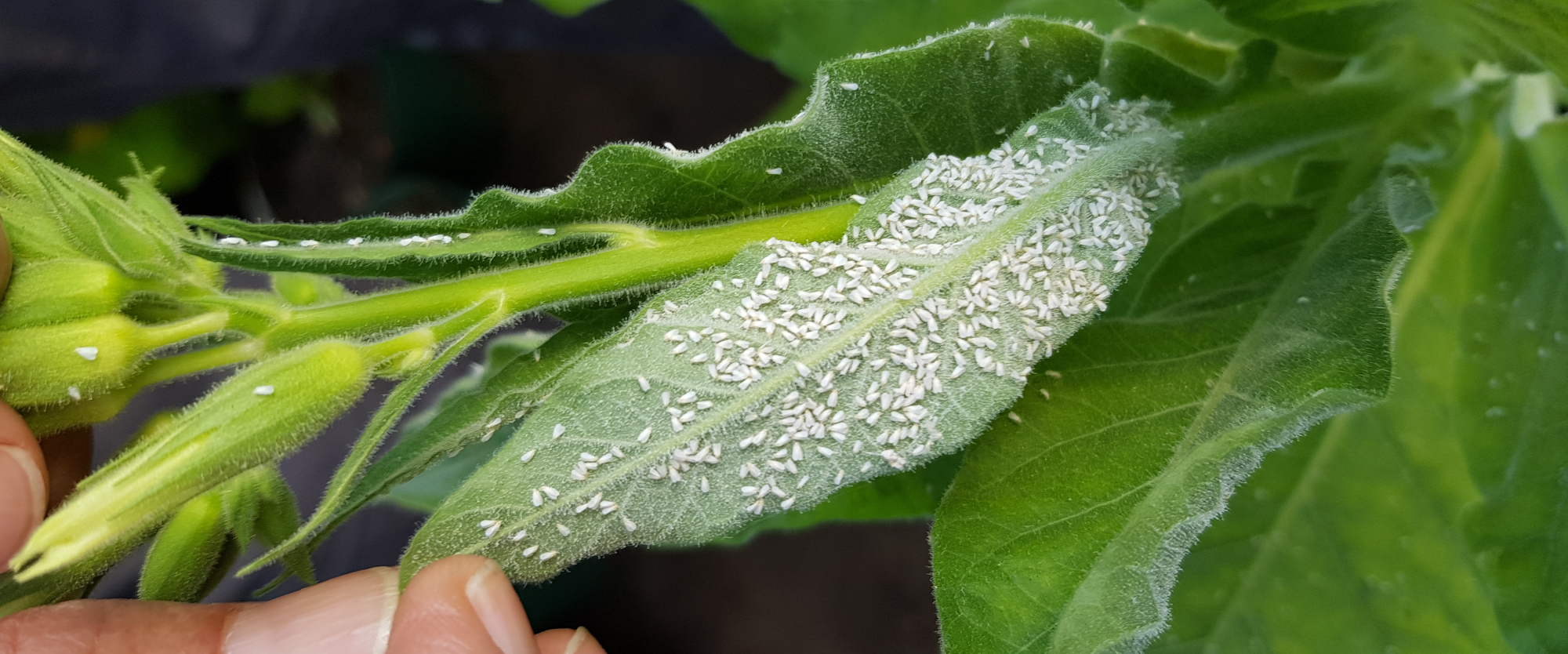
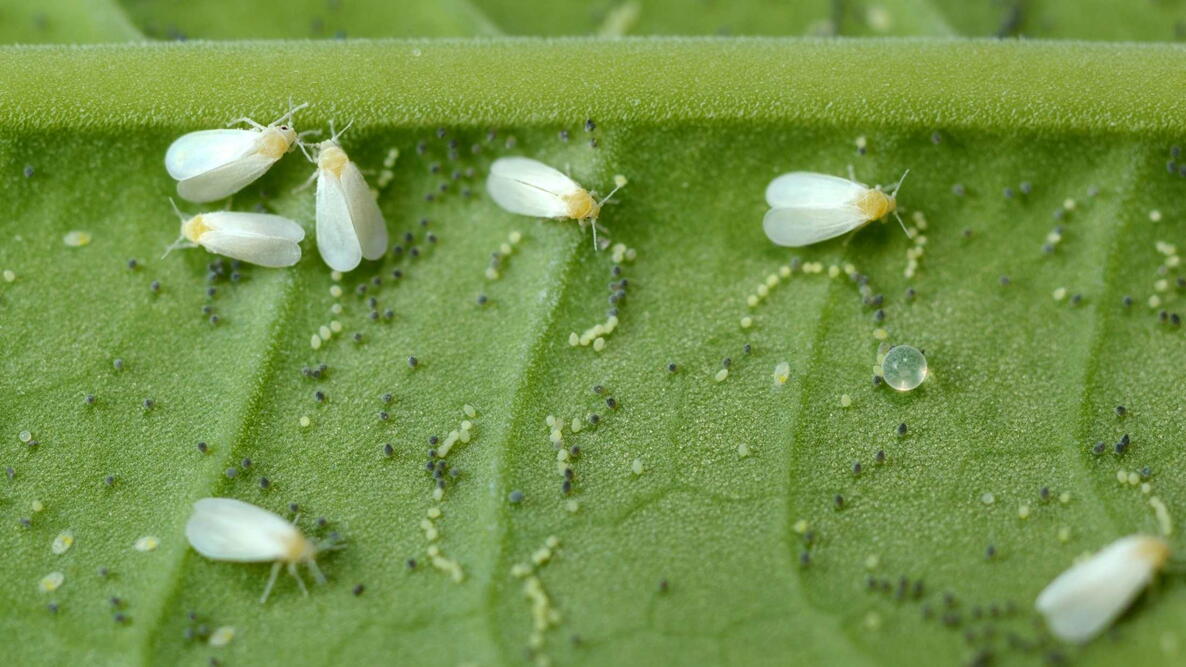
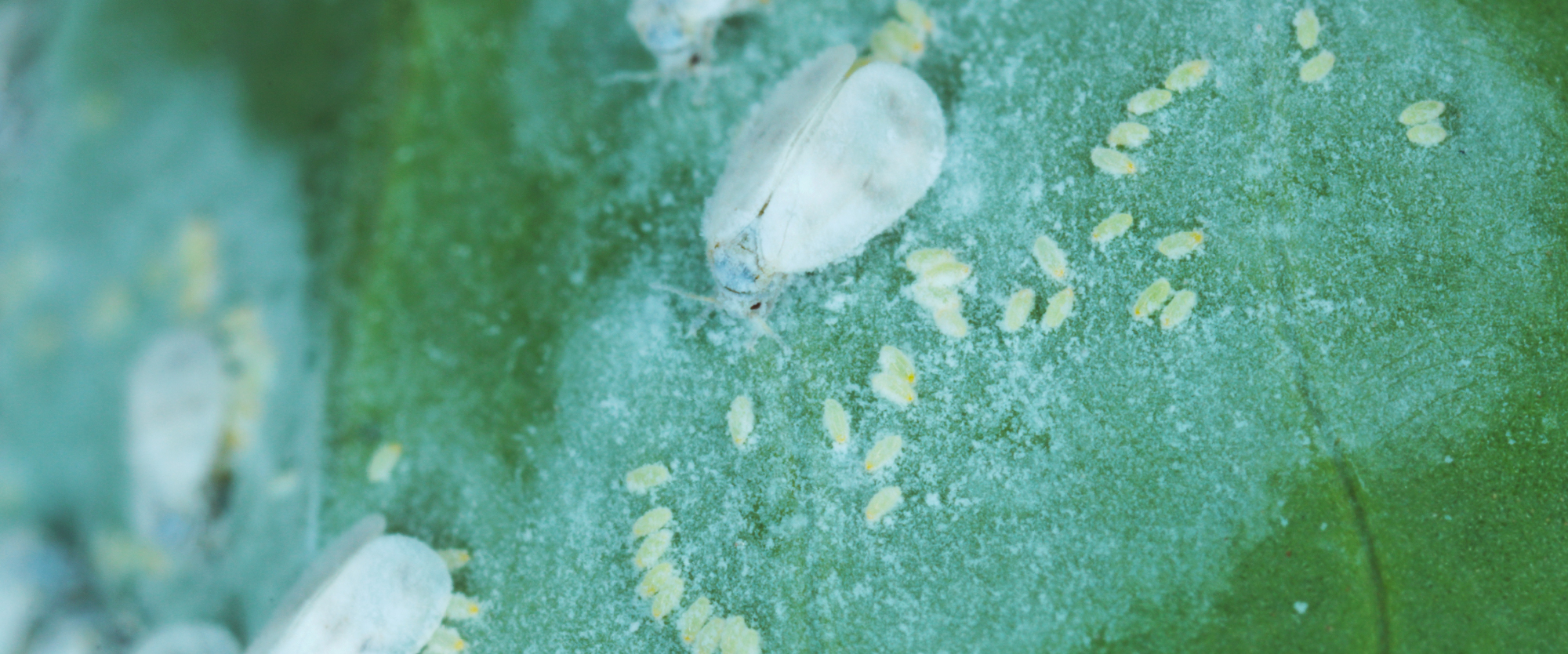
Whiteflies (family Aleyrodidae) are not true flies but close relatives of aphids and mealybugs. They are tiny insects, only 1–2 mm, with wings dusted in white waxy powder, resembling minute moths. They live in colonies on leaf undersides and fly up in clouds when the plant is disturbed. Piercing and sucking sap from leaves, shoots and flowers, they excrete honeydew that weakens and yellows the foliage while fostering black sooty mould. Their life cycle is short and they multiply rapidly in warm weather; roses are highly susceptible.
Symptoms
- Clouds of tiny white insects fly up when the plant is disturbed.
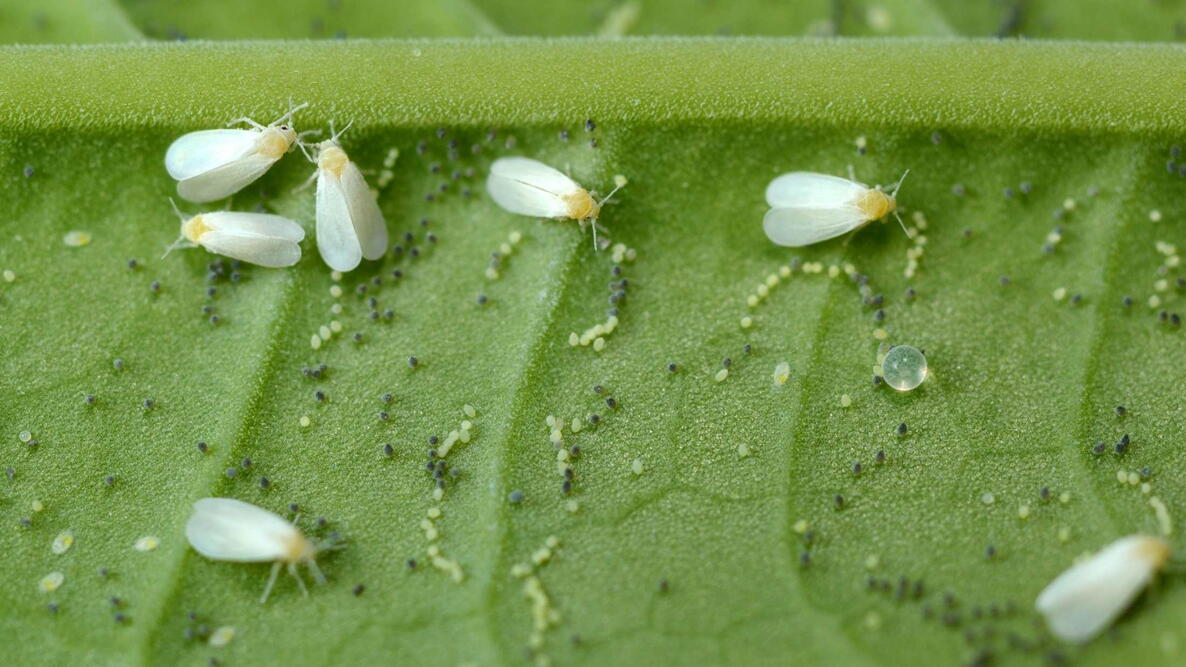
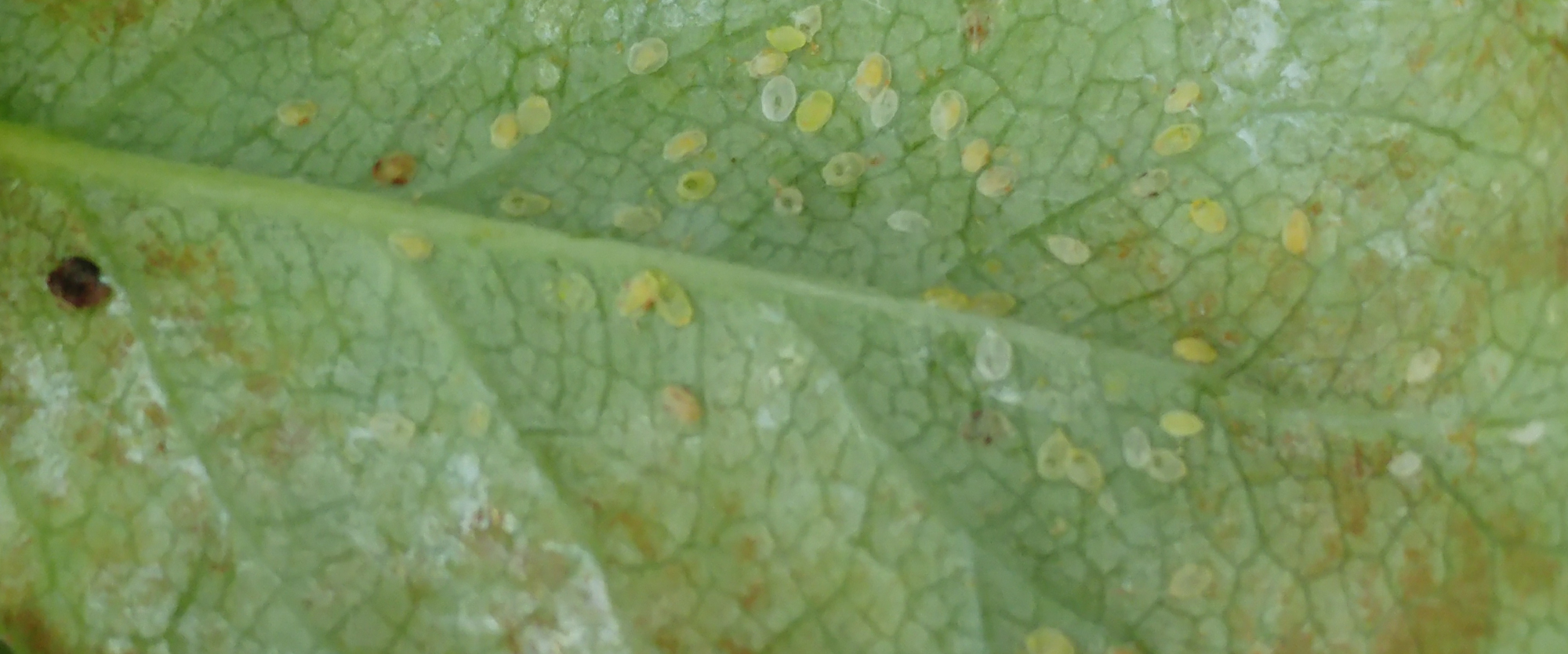
- Eggs and nymphs cling to the underside of leaves.
- Leaves are sticky with honeydew and coated in black sooty mould.
- Ants arrive to feed on the whitefly honeydew — an indirect sign of infestation.
- Leaves yellow and drop prematurely under heavy whitefly pressure.
- The plant weakens and grows slowly from continuous sap loss.
Treatment plan
- Hang yellow sticky traps to catch adults and monitor density.
- Blast leaf undersides with water to wash off eggs and nymphs; wipe the undersides or prune heavily infested parts.
- Spray neem oil or insecticidal soap on leaf undersides; repeat several times to catch successive generations.
- Encourage natural enemies such as ladybirds, lacewings and the parasitic wasp Encarsia formosa for biological control.
- Wash off sooty mould with mild soapy water once the whitefly is under control.
Prevention
- Keep the planting airy; avoid overcrowding.
- Inspect leaf undersides regularly; quarantine new plants before introducing them.
- Remove debris and weeds where whiteflies shelter.