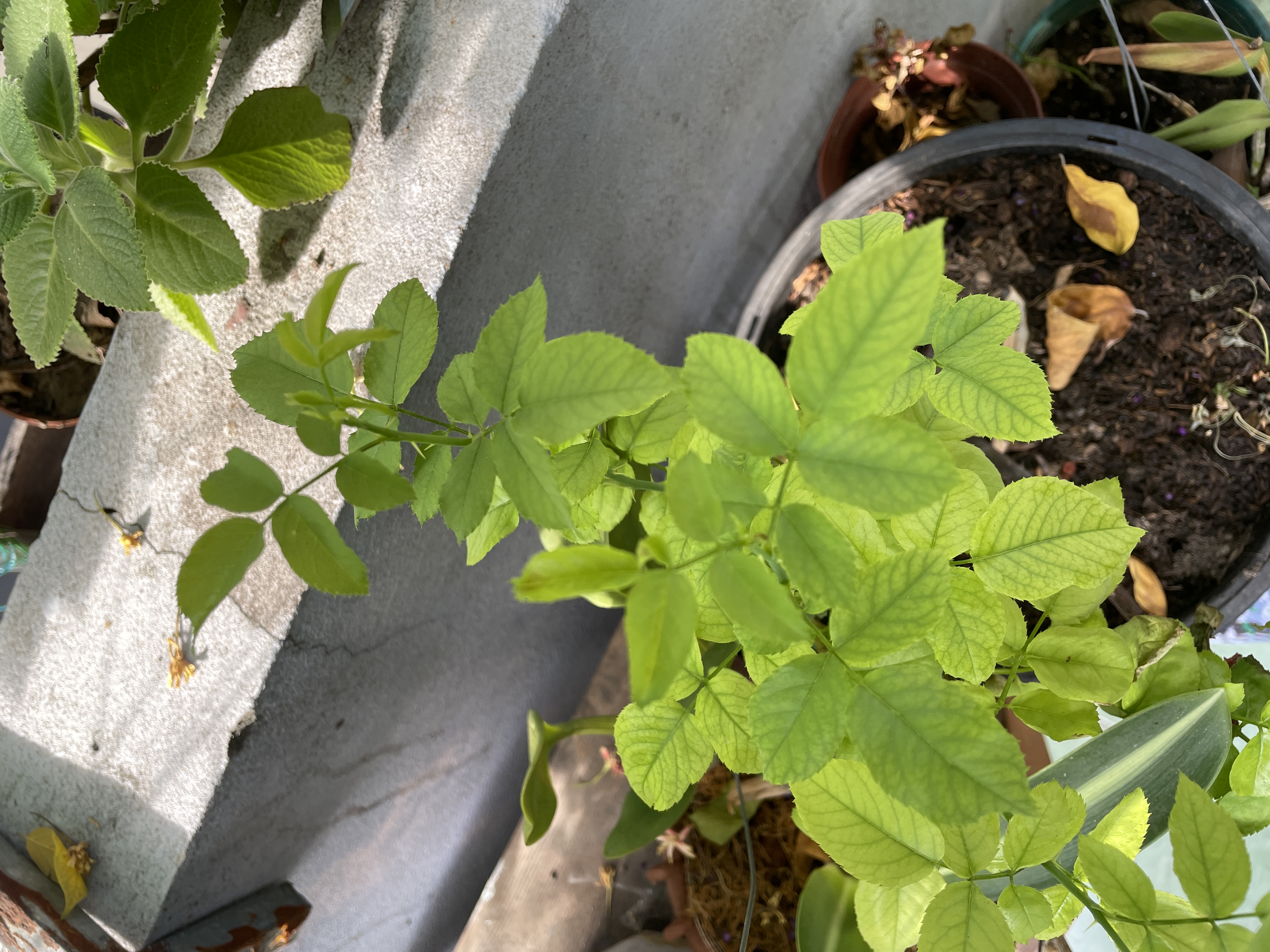
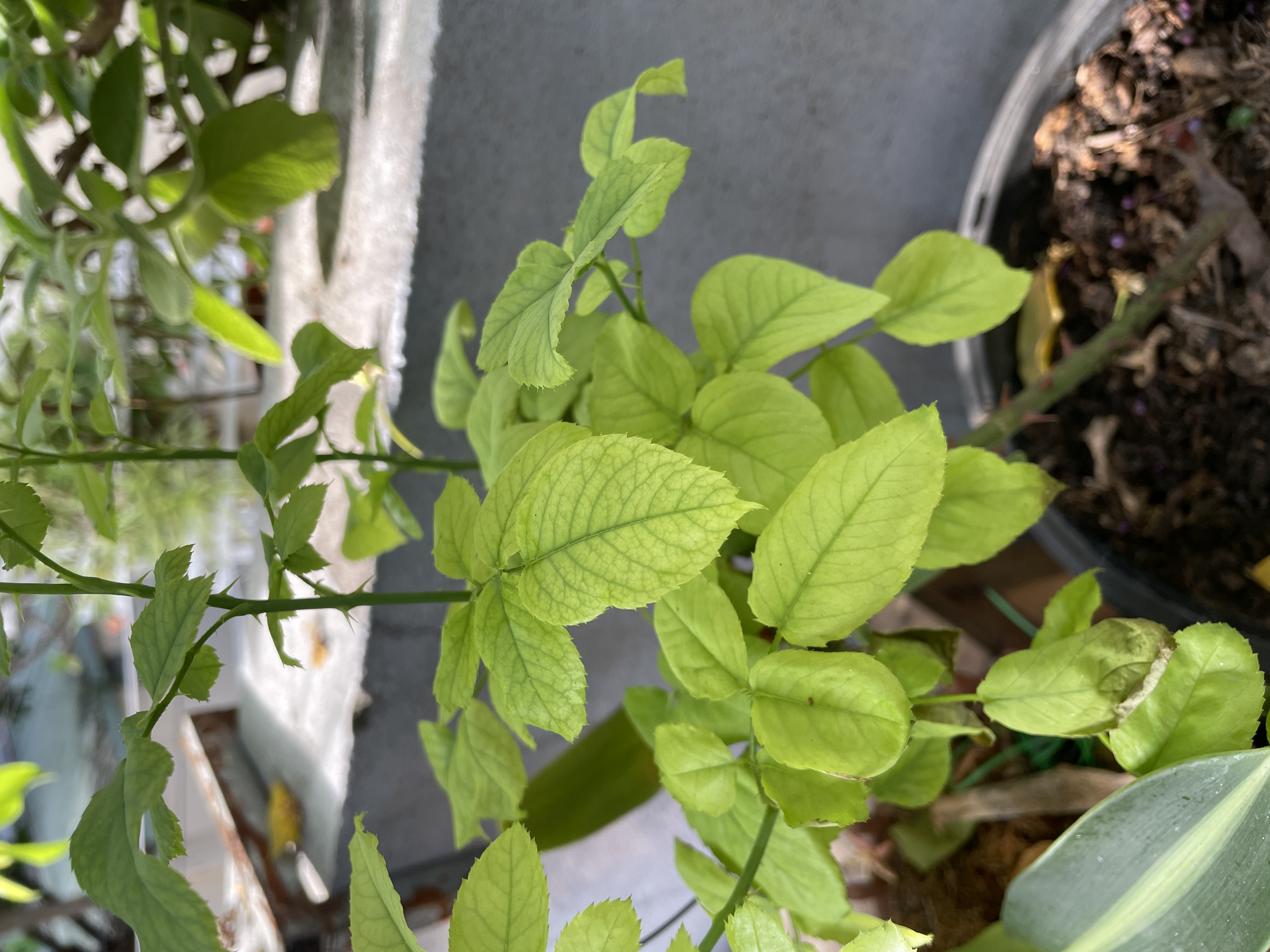
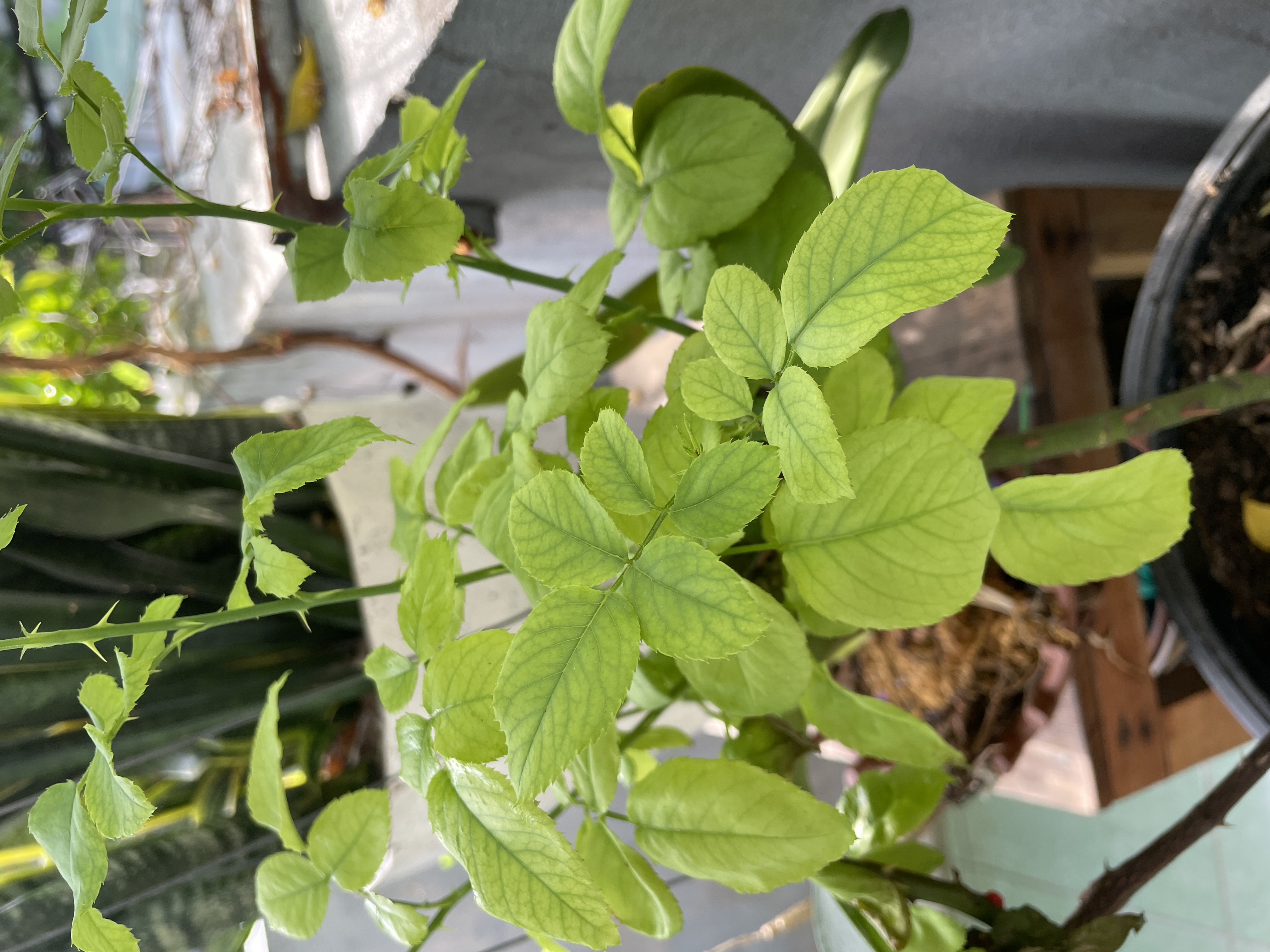
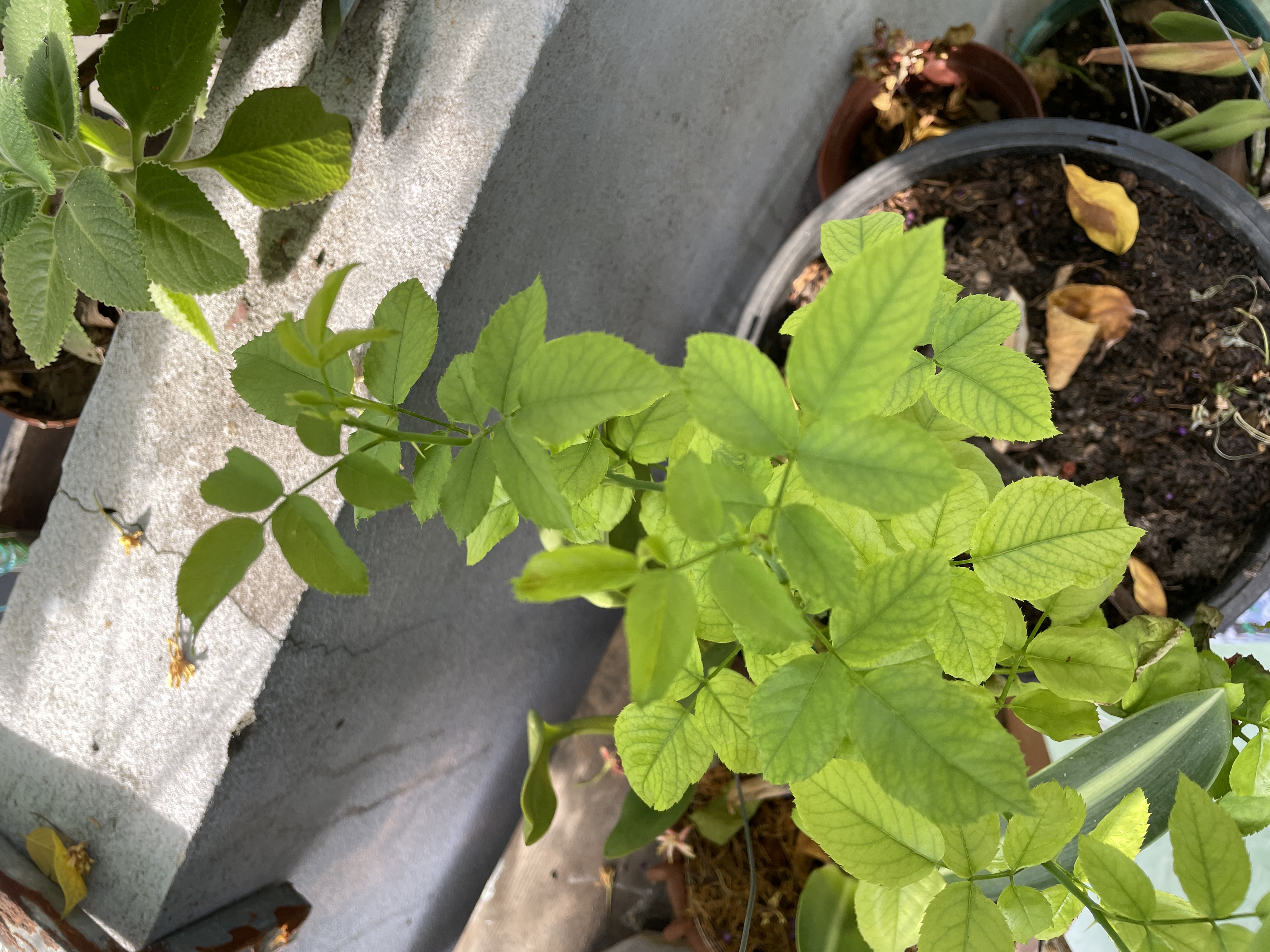
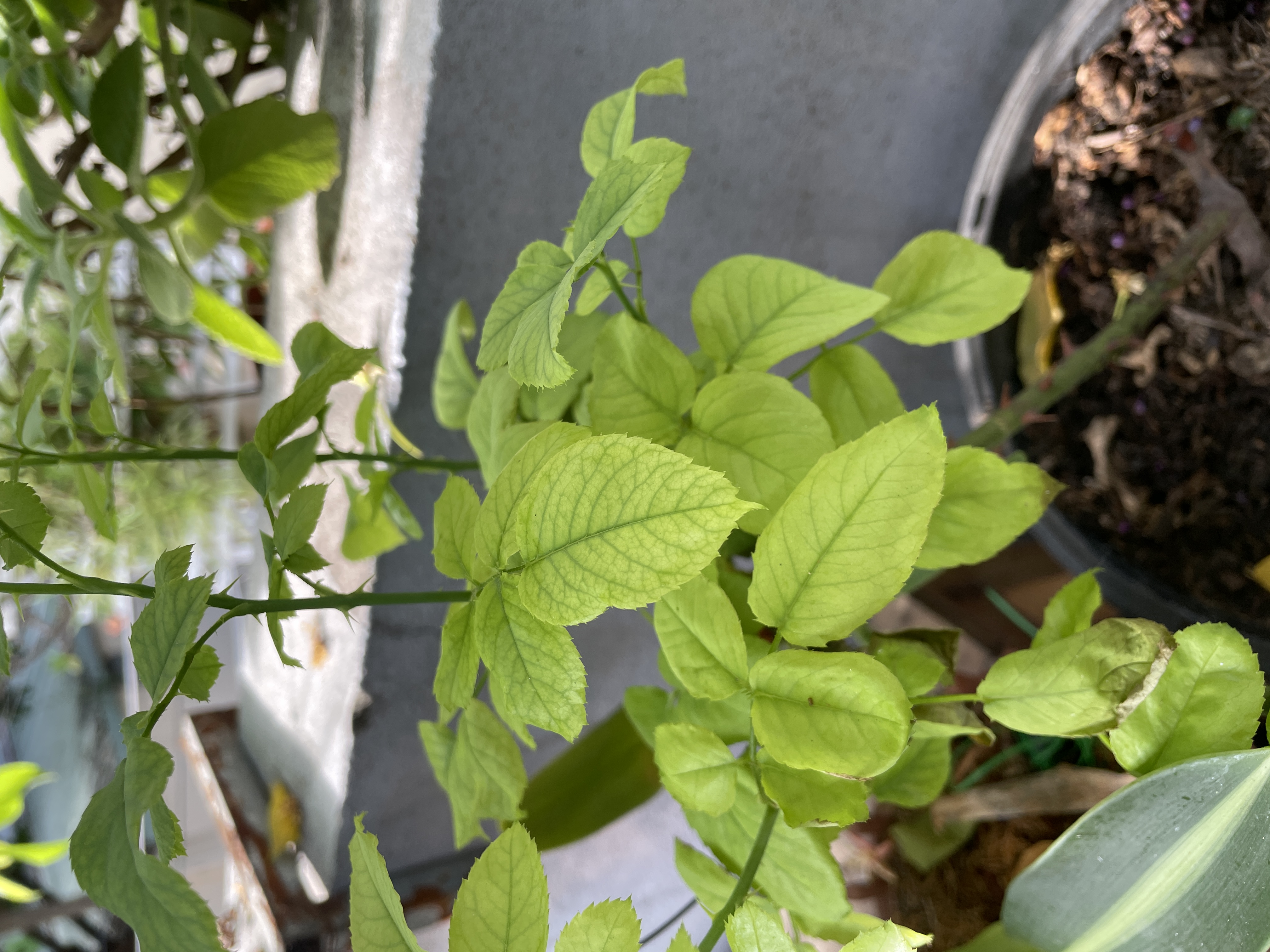
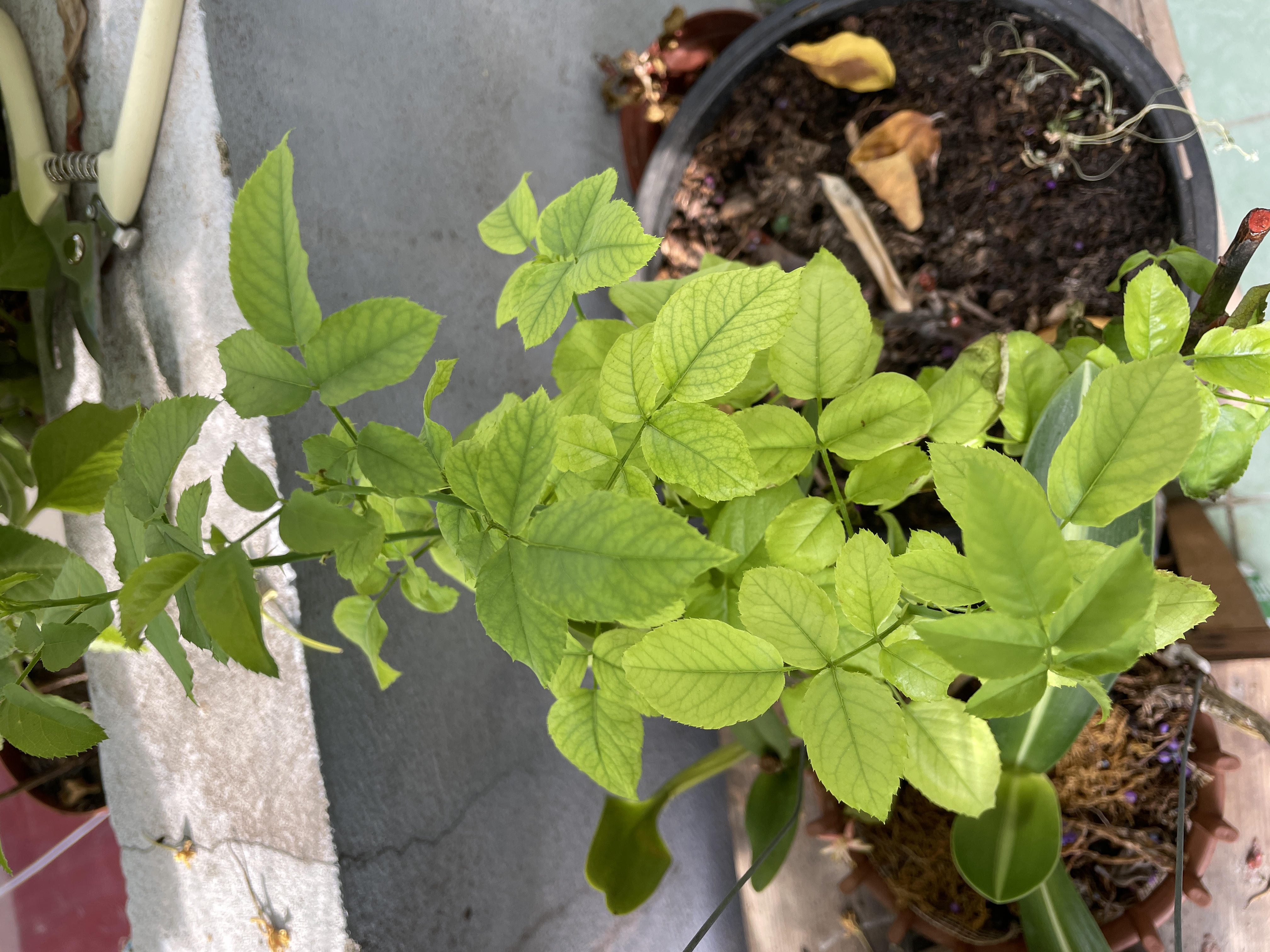
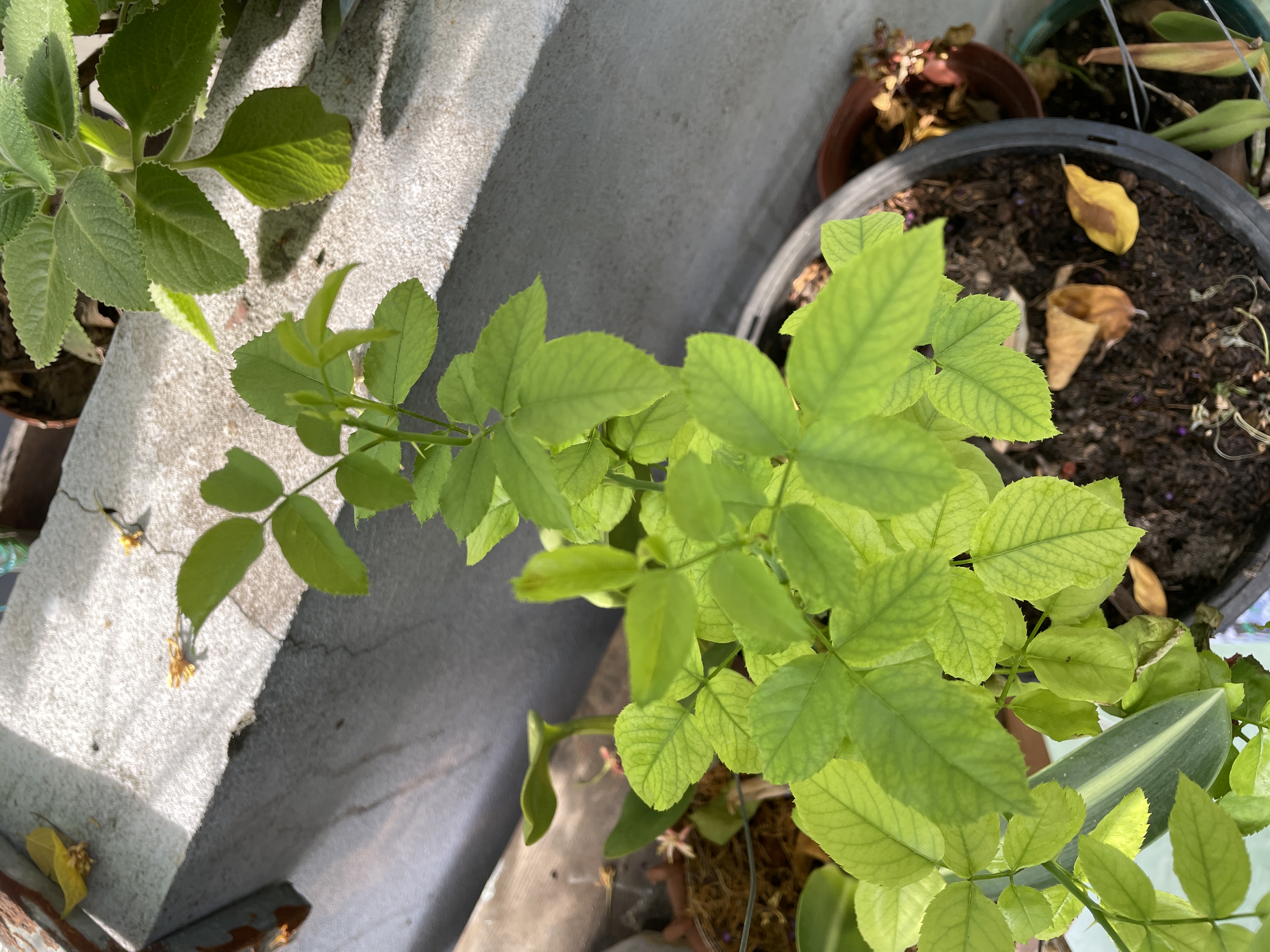
Sulfur (S) is often called the fourth major nutrient for roses, after nitrogen, phosphorus and potassium. It is a building block of the amino acids cysteine and methionine, forming the disulfide bridges that shape proteins and enzymes; without enough sulfur, enzymes lose their function and growth stalls. Sulfur is also involved in chlorophyll formation, so an adequate supply keeps foliage a deep, durable green while also producing thicker petals, longer-lasting colour and sturdier flower stalks.
The key to recognising the deficiency: sulfur is immobile in the plant (it cannot be withdrawn from old leaves to feed new growth), so symptoms always appear on the young leaves and shoot tips first. This is exactly what separates it from nitrogen deficiency, which begins on the old lower leaves.
Sulfur deficiency is most common on sandy, heavily-leached soils, on soils low in organic matter, or where only concentrated sulfur-free fertilisers (urea, DAP) have been used for a long time.