
Pestalotiopsis Leaf Spot & Blight
FungalDescription
Pestalotiopsis leaf spot and blight is caused by fungi of the family Pestalotiopsidaceae — chiefly Pestalotiopsis and Neopestalotiopsis species (historically lumped under Pestalotia). On roses, Neopestalotiopsis clavispora and N. rosae have been reported; N. clavispora has been shown to induce both leaf spot and stem canker on rose in pathogenicity tests. The pathogen causes necrotic leaf spots and blight, and cankers with twig dieback on canes.
These fungi are largely opportunistic, weak pathogens: they rarely penetrate intact tissue and instead enter through wounds (pruning cuts, broken canes, abrasions, insect feeding punctures) or colonise tissue already damaged by sun scorch, fertiliser burn or potassium deficiency. Disease develops and spreads fastest under high humidity, prolonged rain, or poorly ventilated greenhouses.
It is easily confused with anthracnose, black spot, potassium-deficiency scorch and sunburn:
- Anthracnose (Colletotrichum): well-defined circular spots with a pale grey, slightly sunken centre and a red-brown to black margin; the centre tears or shot-holes.
- Black spot (Diplocarpon rosae): black circular spots with feathery, fringed margins, followed by yellowing and leaf drop.
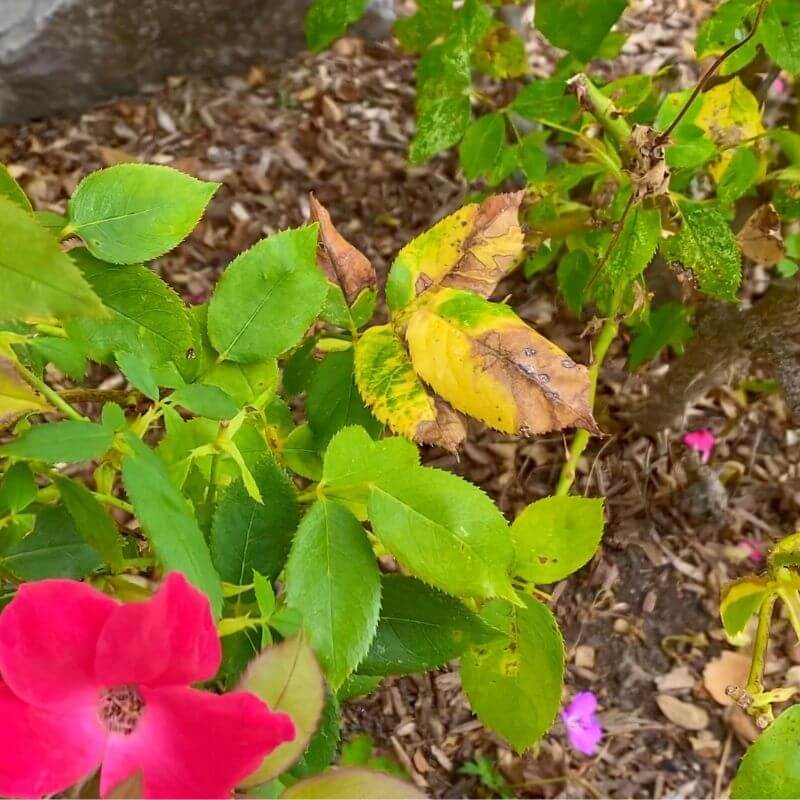
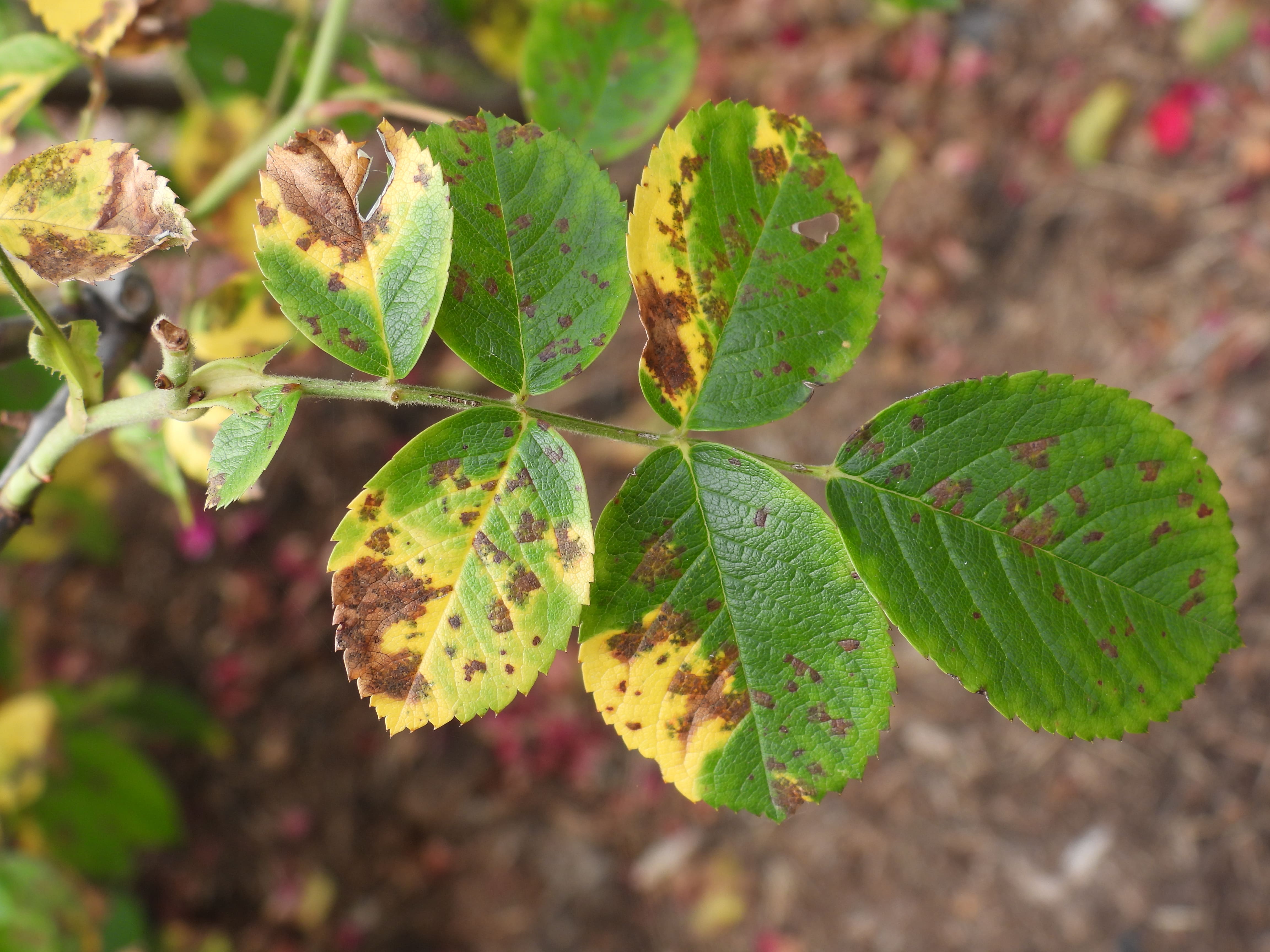
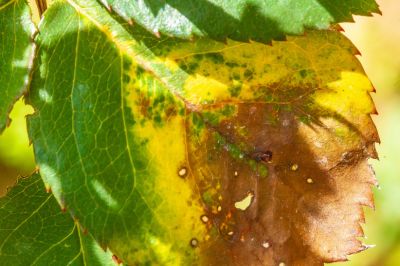
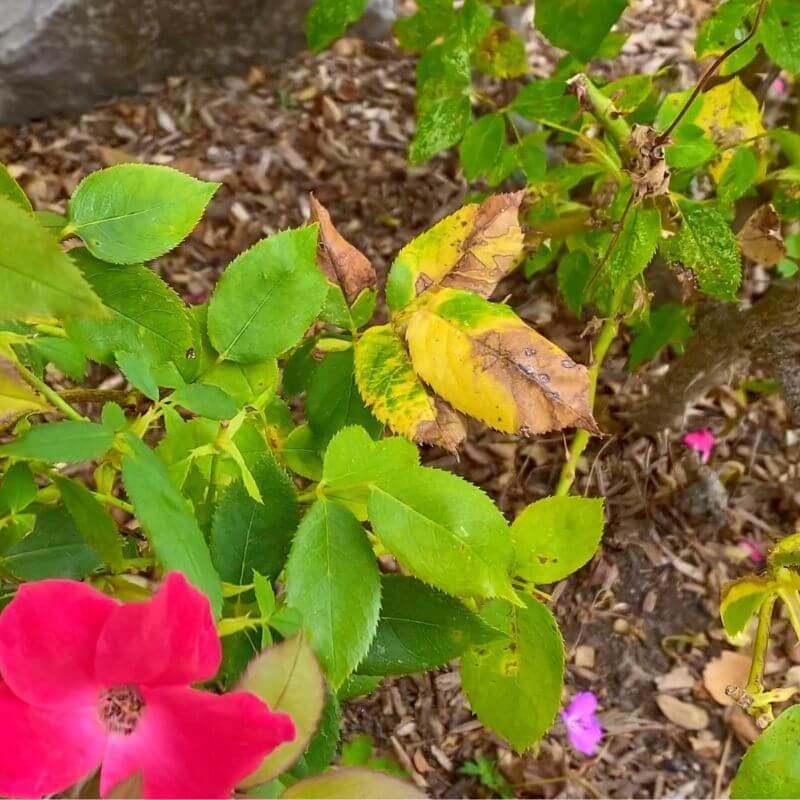
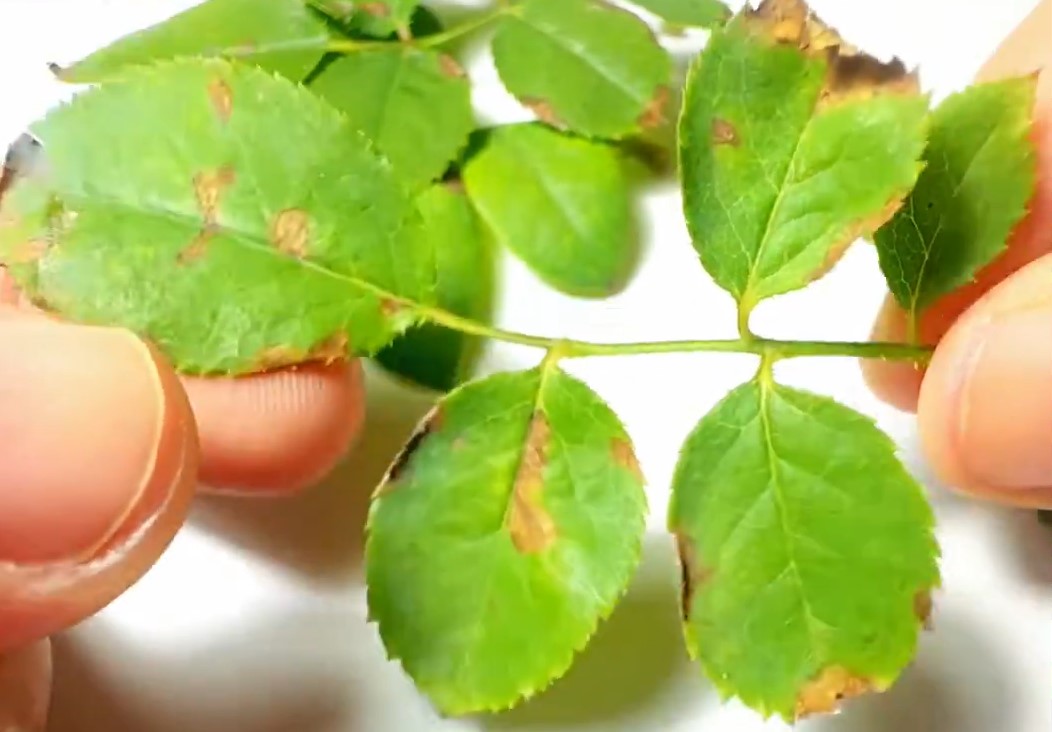
- Pestalotiopsis blight: irregular scorched blotches, usually starting at the leaf margin or tip, dry and brittle, surrounded by a yellow chlorotic halo, with tiny black acervuli embedded in the dead tissue.
- Sun, fertiliser or potassium scorch: also marginal and brittle, but with a clean necrotic margin — no lesion halo and no black fruiting bodies.
Note that acervuli on a scorched margin may represent secondary colonisation of a pre-existing abiotic injury, so management should address both the fungus and the underlying cause of the wound.
Symptoms
- Tiny, round black dots develop within the scorched tissue and cannot be rubbed off — these are the fungus's acervuli (fruiting bodies). They separate this disease from sun, fertiliser or potassium-deficiency scorch, which lack them.
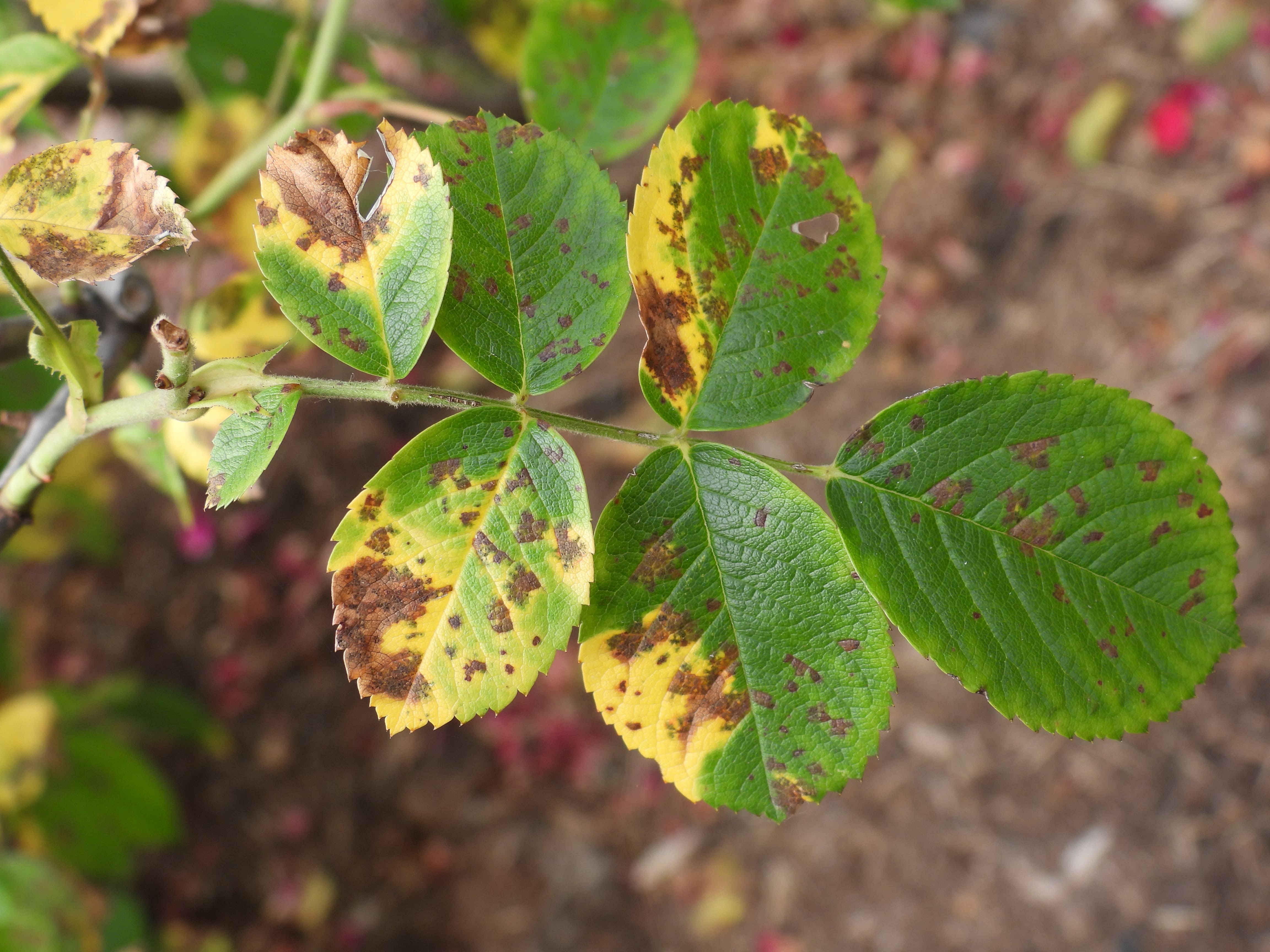
- The blight usually starts at the leaf margin or tip and spreads inward across the blade.
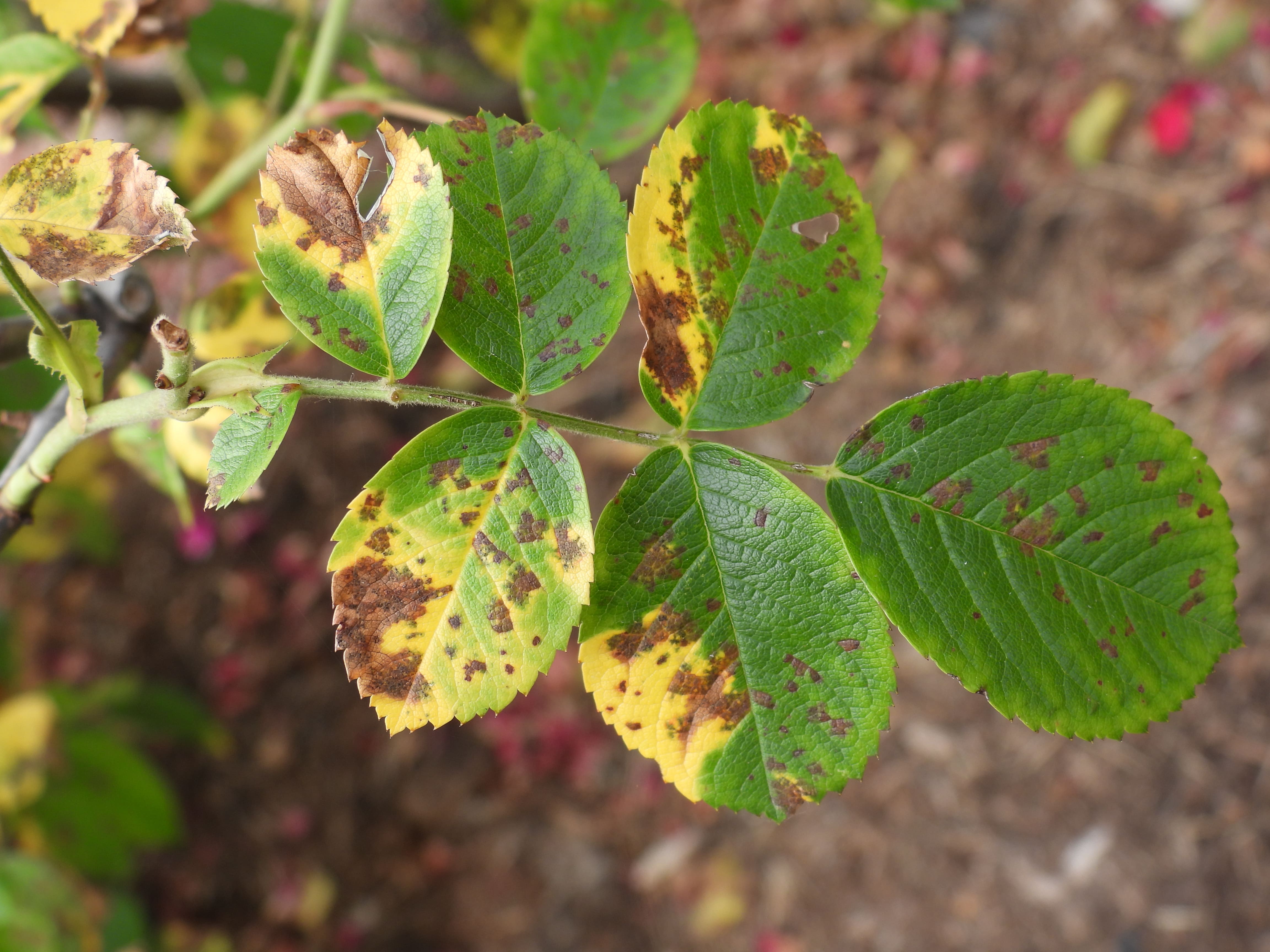
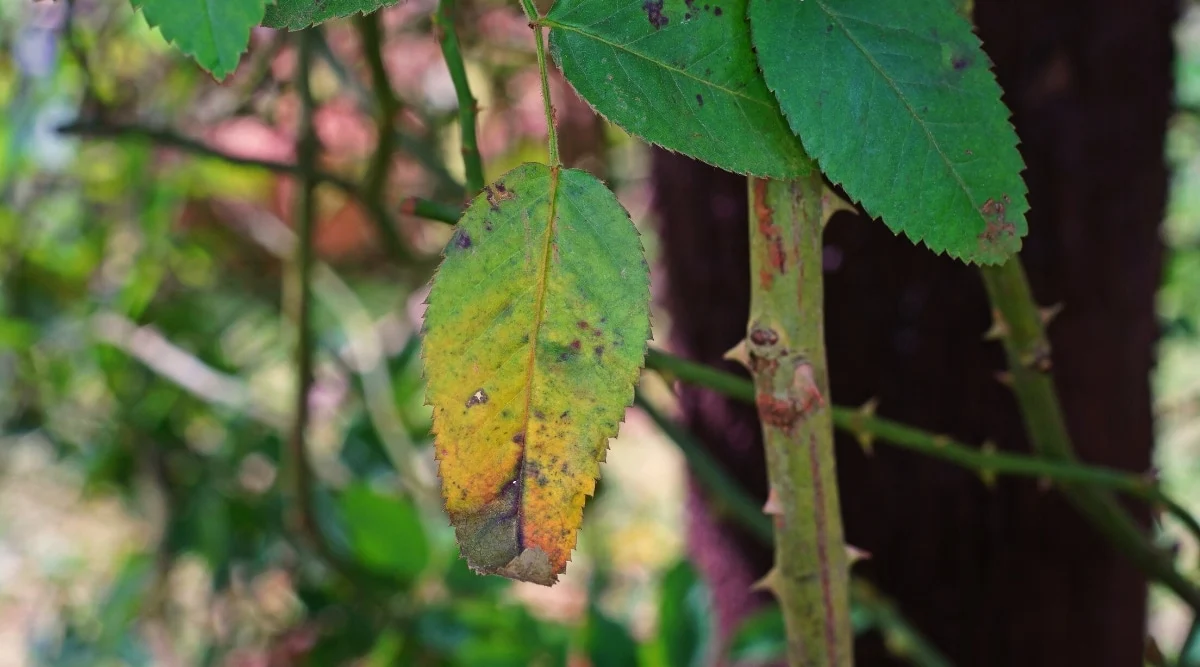
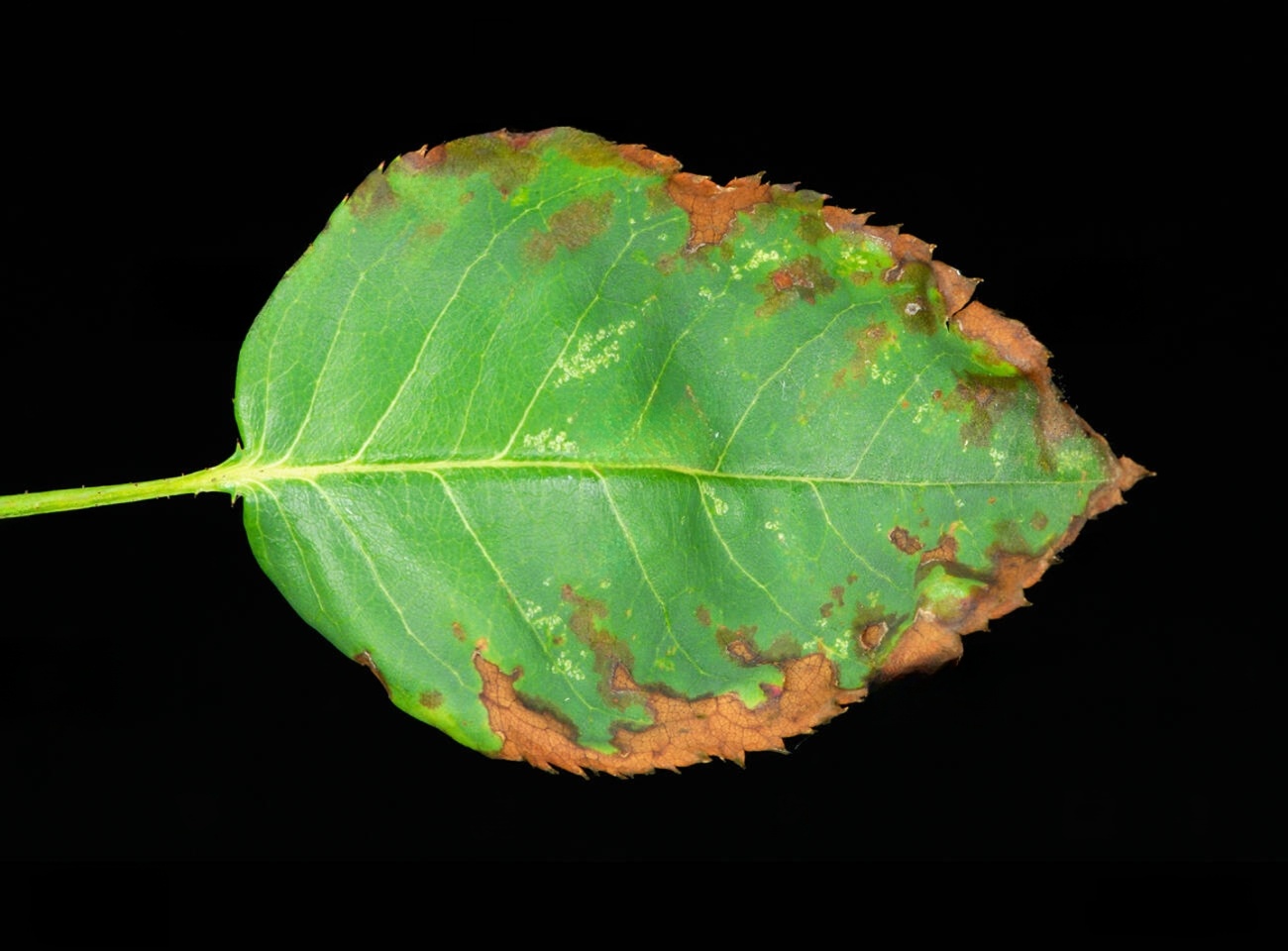
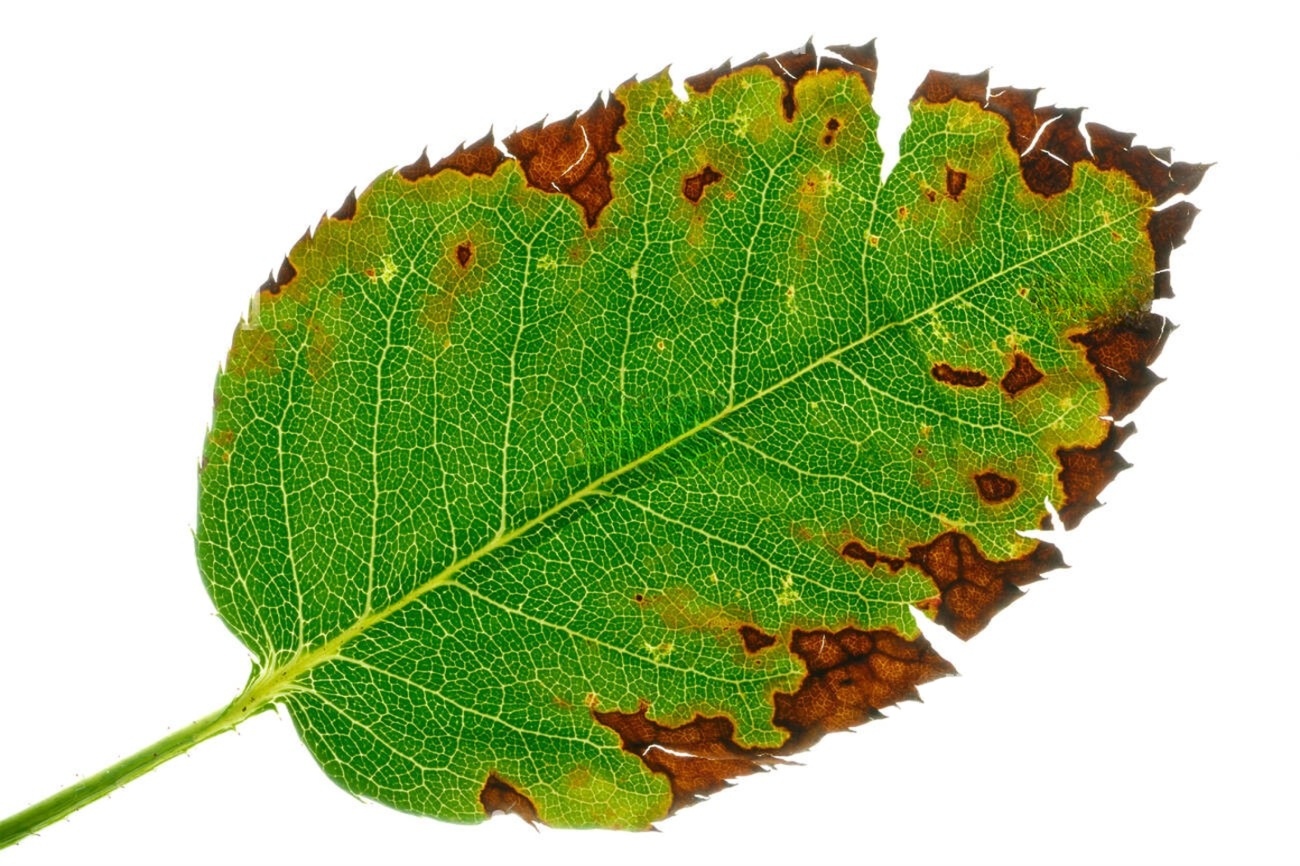
- Lesions have no defined shape and coalesce into irregular grey-brown to silvery scorched blotches — unlike the round, concentric target lesions of anthracnose.
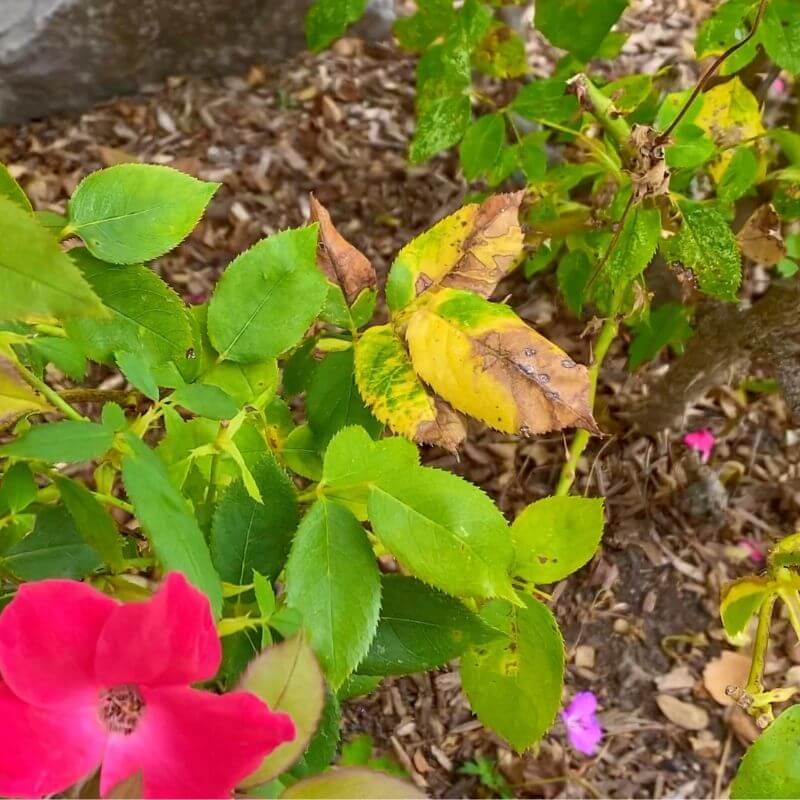
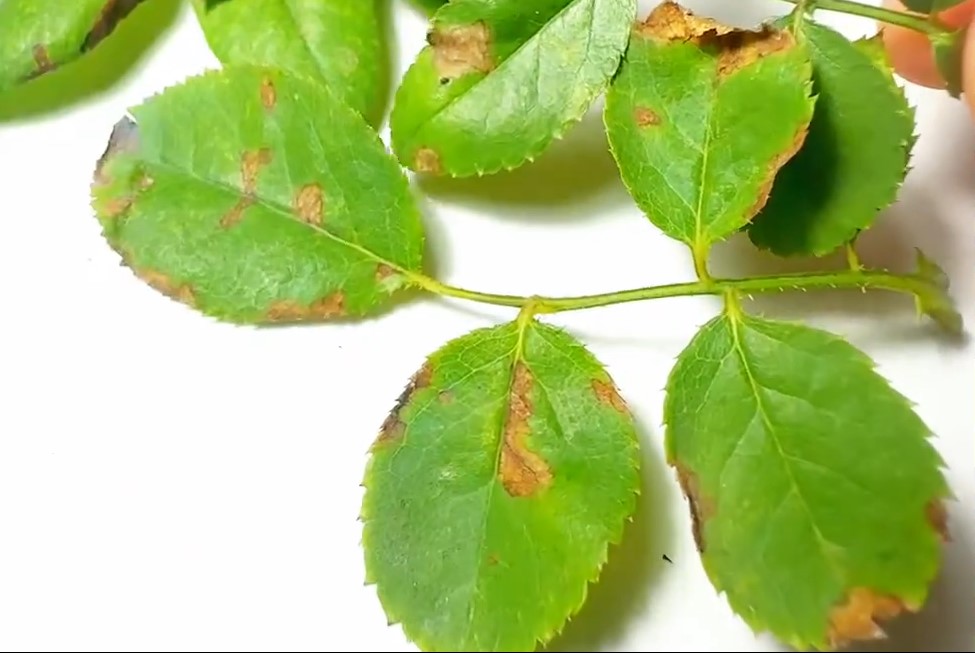
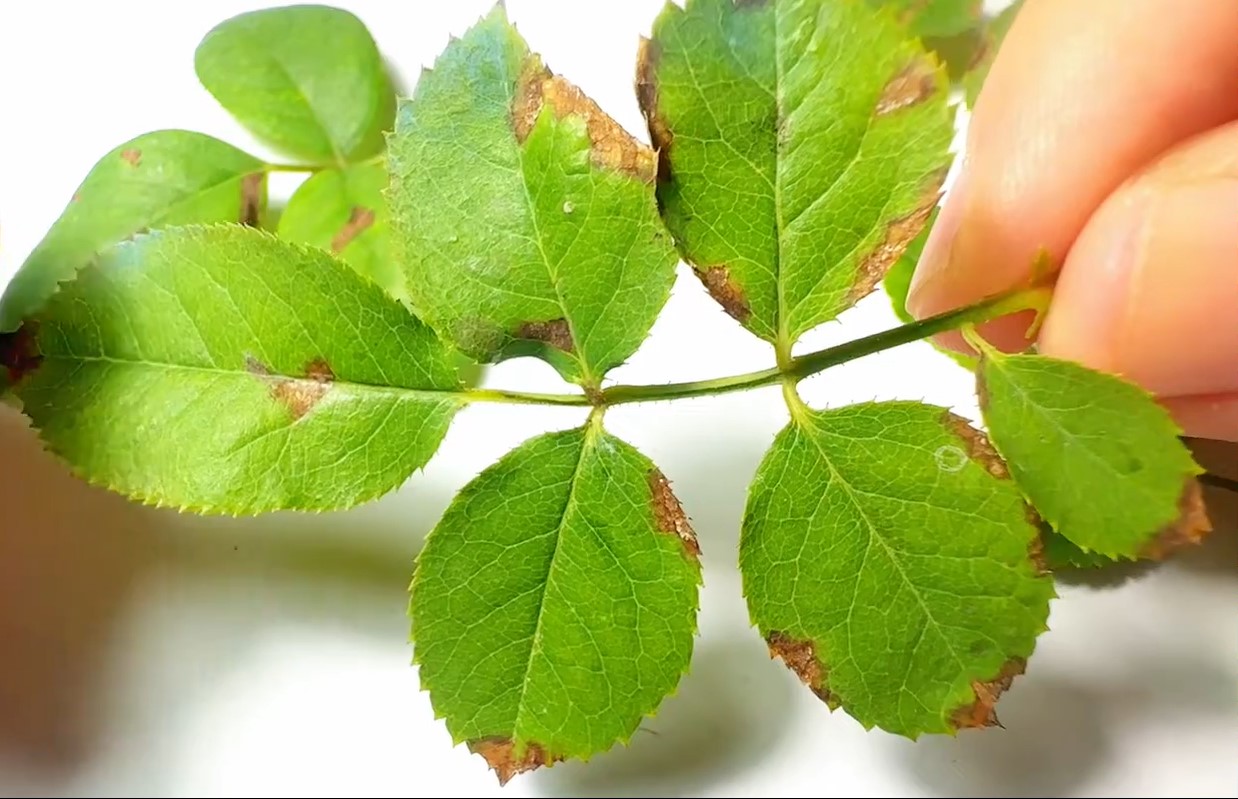
- A distinct yellow (chlorotic) halo surrounds the spots and blighted areas at the boundary between dead and green tissue — a hallmark of fungal infection that separates it from physiological scorch (sun, fertiliser burn, potassium deficiency), whose necrotic margin lacks a lesion halo.
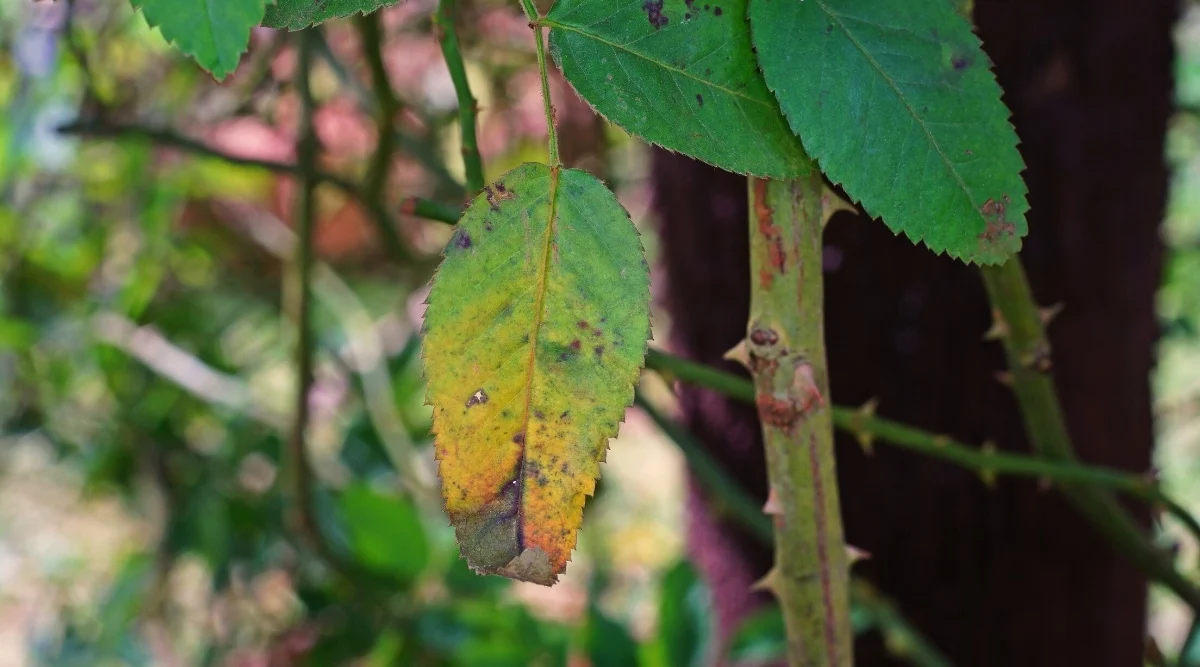
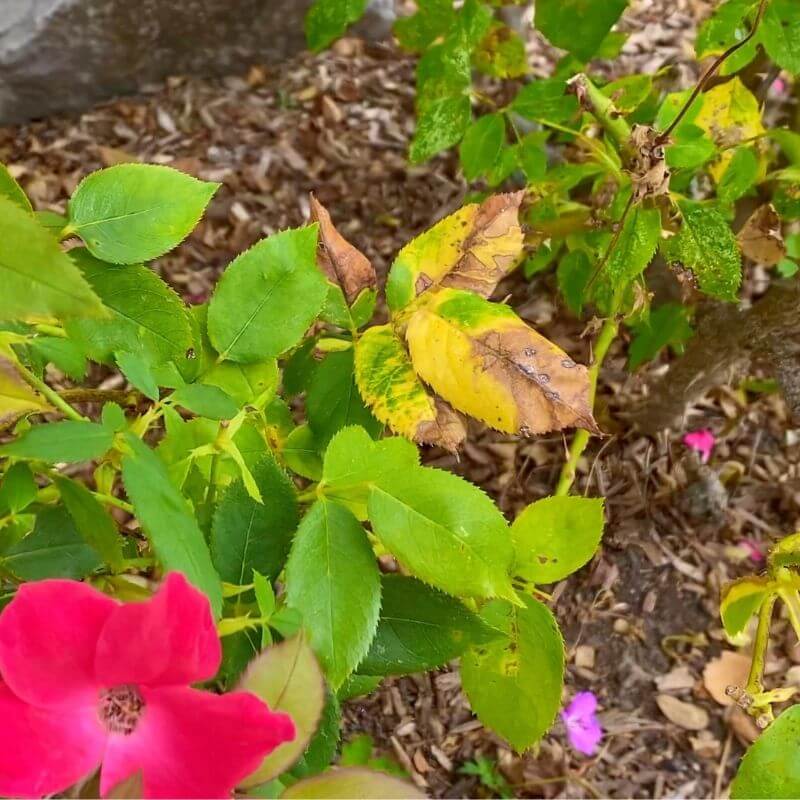
- Early lesions are brown to grey-brown necrotic spots on the leaf blade.
- Infected tissue turns dry and brittle, crumbling when touched; heavily infected leaves drop early.
- Brown-black cankers can develop from pruning cuts or wounds on the canes, causing the shoot above to wilt and die back.
Treatment plan
- Promptly remove blighted leaves; prune cankered canes 3–5 cm below the visible lesion into healthy wood. Collect and destroy all debris — do not leave it under the plant.
- Disinfect pruning tools with 70% alcohol between cuts; seal large cuts with a fungicide paste or pruning sealant.
- Apply a broad-spectrum fungicide: a DMI/triazole (difenoconazole, hexaconazole, propiconazole), a QoI (azoxystrobin; e.g. Amistar Top = azoxystrobin + difenoconazole), or a multi-site protectant (mancozeb, chlorothalonil).
- Rotate FRAC groups (3, 11, M) between applications to delay resistance.
- Identify and correct the predisposing injury: shade against intense sun, avoid fertiliser overdosing, correct potassium deficiency, and control sap-feeding insects.
- [After 7 days] Reapply fungicide using a different mode of action.
- [After 14 days] Inspect new growth and canes; if new blight or fresh acervuli appear, prune and treat again.
Prevention
- Space pots for good airflow and thin out congested interior growth.
- Water at the base and avoid wetting the foliage, especially in the evening.
- Minimise wounding; prune with sharp, clean tools and protect large cuts, particularly during the rainy season.
- Keep plants vigorous with balanced nutrition and adequate potassium; avoid sun scorch and fertiliser burn, which provide entry points for the fungus.
- Clear fallen infected leaves; during prolonged wet spells, apply a preventive fungicide every 7–10 days.