
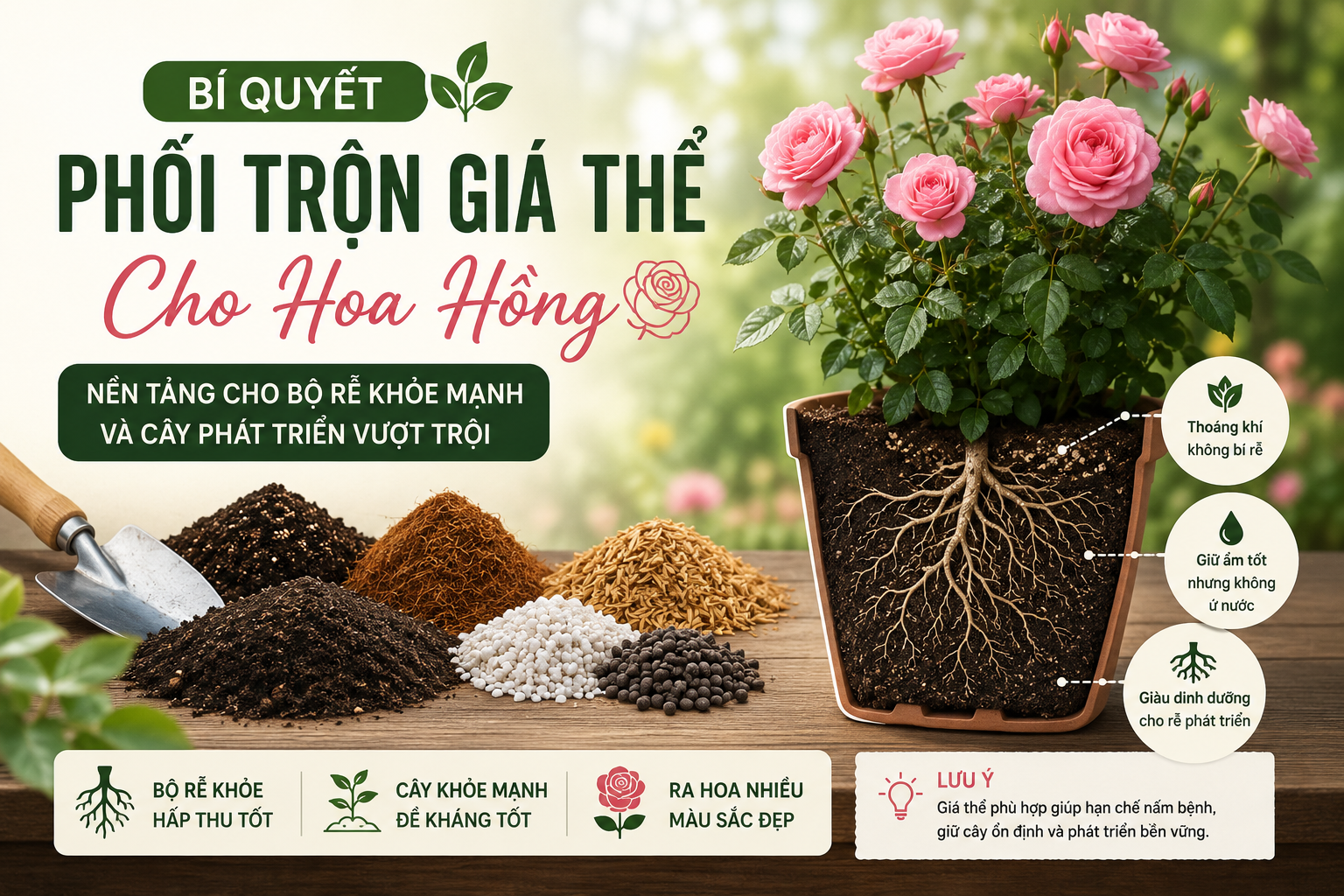
Successful rose cultivation largely depends on the physicochemical structure and biological health of the rhizosphere. Roses are high-nutrient demanding plants but are particularly sensitive to oxygen deficiency caused by waterlogging, as well as soil-borne pathogens like root rot fungi and nematodes. Establishing a potting mix formula with high aeration and good drainage, combined with biological solutions, is fundamental for sustainable root development.
1. Analysis of Key Potting Mix Components
To create an ideal blend, raw materials are divided into four main functional groups:
- Base Soil and Structural Materials: Basaltic red soil and clean loamy soil form a cohesive structure for the root system. Basaltic red soil has the advantage of a stable structure and is naturally disease-free, but its initial fertility is low. Light sandy loam is richer in humus but prone to compaction after a period of watering.
- Aeration and Drainage Materials:
- Perlite: Chemically inert, sterile, ultra-light, and has a porous structure that provides permanent drainage and creates air pockets for roots to "breathe."
- Pumice: Heavier than Perlite, it helps stabilize the root collar and can store moisture and nutrients within its internal pores without causing waterlogging.
- Biochar: Rich in Potassium and Silicon, it strengthens root cell walls and serves as an ideal habitat for beneficial microorganisms.
- Ground Peanut Shells: Contain high fiber content, creating physical spaces for roots to penetrate and providing slow-release organic nitrogen and potassium.
- Organic Moisture Retention Materials: Coco coir (Coco peat) is a popular moisture retainer due to its ability to absorb water many times its natural volume. However, if astringent substances (Tannin and Lignin) are not thoroughly processed, it will cause root shrinkage, hinder nutrient absorption, and kill the plant.
- Organic Microbial Nutrients:
- Vermicompost: Considered a "golden" source of nutrients due to its rich content of humic and fulvic acids and abundant microorganisms, with a neutral pH that doesn't burn roots.
- Well-rotted Manure (cow, goat): Improves fertility and friability, but must be fully composted to kill pathogens and insect eggs like grubs.
2. Material Processing Techniques to Prevent Root Diseases
Processing raw materials is mandatory to eliminate toxins and pathogens:
- Leaching Coco Coir: Soak coco peat in an agricultural lime solution (20g/L) or Calcium Nitrate (1g/L) for 24-48 hours to break down Lignin bonds, then rinse thoroughly with water multiple times until the EC is < 0.2 mS/cm.
- Sterilizing Soil: Soil needs to be broken up, sun-dried, and mixed with powdered lime to neutralize acidity and kill bacteria before mixing.
- Processing Goat/Cow Manure: Must be composted in a sealed environment with biological agents for at least 1 month to eliminate root-eating grubs.
3. Optimal Potting Mix Ratios
Depending on plant health and growing conditions, the following formulas can be applied:
- Standard Formula (Potted Plants): 30% Clean Soil + 30% Processed Coco Coir + 30% Well-rotted Organic Fertilizer (cow/vermicompost) + 10% Mineral Aggregates (Perlite/Pumice).
- Formula for Weak Root Recovery: 75% - 80% Processed Coco Coir + 10% - 15% Organic Fertilizer + 10% Perlite (Low fertilizer content reduces osmotic pressure, preventing burning of delicate root hairs).
- Lightweight Formula (Balcony/Rooftop): 25% Perlite + 20% Pumice + 20% Vermicompost + 10% Processed Coco Coir.
- Strong Nutrient Supplement Formula: 50% Alluvial Soil + 25% Biochar/Coco Coir + 15% Vermicompost + 5% Clay Pebbles + 4% Perlite + 1% Trichoderma.
4. Biological Solutions for Root Respiration and Protection
To ensure good root respiration and protection from fungal diseases, regularly supplement with microorganisms:
- Trichoderma Antagonistic Fungi: Secretes enzymes that break down the chitin cell walls of harmful fungi (Fusarium, Phytophthora), competes for nutrients, and strongly stimulates root growth.
- Mycorrhizal Symbiotic Fungi: Forms a network of fungal hyphae like a "second root system," significantly increasing the surface area for absorbing water and minerals (especially Phosphorus). They also secrete Glomalin, which helps aerate the soil and increases root respiration.
- Neem Cake: Contains the active ingredient Azadirachtin, which inhibits nematode reproduction and repels pests like grubs and millipedes.
5. Composting and Soil Maintenance Process
- Composting Phase: After mixing, moisten to 60% humidity, cover tightly with a tarp, and compost for 12-15 days before planting for microorganisms to decompose organic matter. Turn over/aerate every 3 days to provide oxygen.
- Isolation Principle: Absolutely do not apply lime or chemical pesticides simultaneously with microbial products (Trichoderma, Mycorrhizae). Wait at least 7-10 days after applying lime before adding microbes.
- Regular Soil Replacement: After 6-12 months, potted soil often degrades and compacts, leading to poor aeration. When plants show slow growth, unusually small leaves, or slow drainage, it's time to replace the potting mix to rejuvenate the root environment.